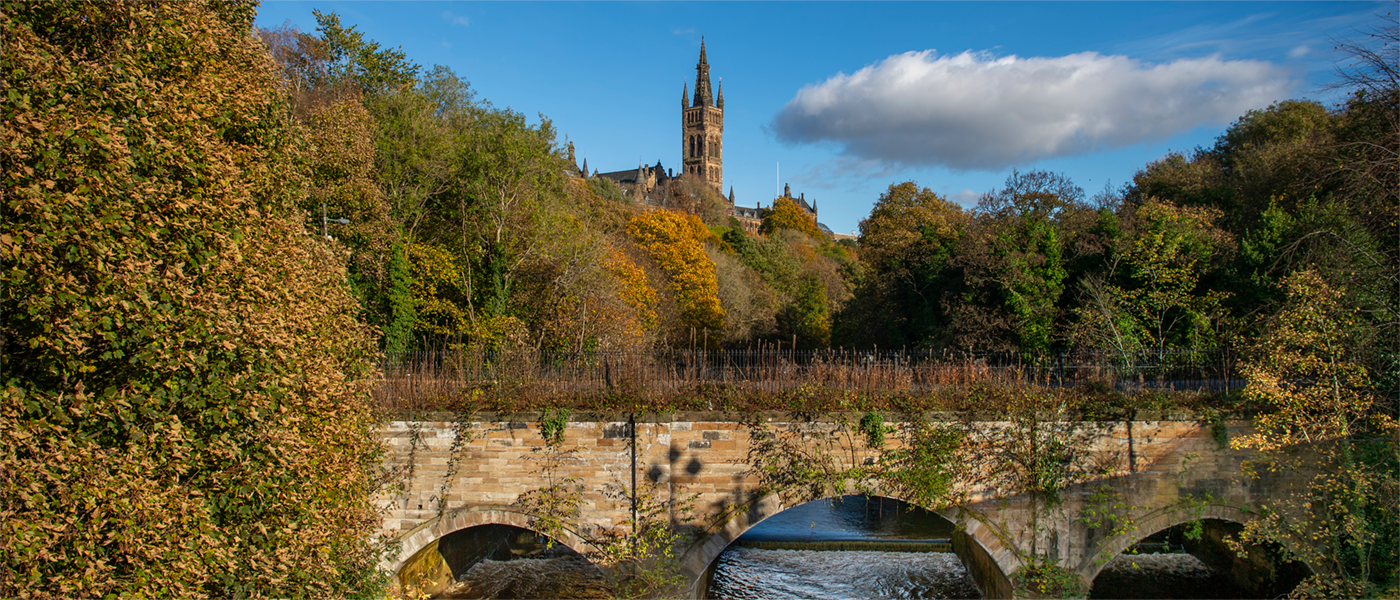
Geography (faster route) BSc
Geography is the study of the surface of the Earth as the site of human living and working. It considers the variability in physical and human landscapes, along with the interrelationships binding them together. It is a dynamic, relevant and ever-changing subject at the heart of many local and global current issues, ranging widely from coastal management and environment hazards to migration, solidarity and urban geography. Through the geography you develop a number of key skills and experience such as qualitative and statistical data analysis and independent research which are attractive to a range of employers.
Our highly flexible Honours programme gives you the opportunity to customise your degree through a combination of core and optional courses, helping you build expertise aligned with your academic interests and future career goals.
The Geography Faster Route offers focused, high achieving candidates joining us straight from school the option to complete the Honours Degree in 3 years.
Faster route students receive an additional week of study during welcome week (the week before academic classes commence) to benefit from a series of learning and technical induction activities to prepare for success.
- September start
- Session dates
- Geography (faster route) BSc (Hons): F850 3 year degree
Programme structure
Year 1
Students on the Geography Faster Route do not undertake Year 1.
Year 2
In this year you will focus on key aspects of physical, human and environmental geography. You will engage with key debates relating to how to understand and engage with human and physical processes and the links between them. You will be trained in different methods relating to statistical methods, geographic information systems (GIS) and urban ecologies. These research skills are developed through the level 2 field class where you have the opportunity to apply your learning and engage with these skills in real world contexts.
You will also study other subjects to pursue your interests and ensure maximum flexibility. See Flexible degrees
Year 3
In the third year the core courses help you to develop an understanding of different geographical approaches that are designed to support research methods for your dissertation and to help you develop independent research skills.
Core courses are related to advanced training methods such as data management, modelling, GIS, interviewing & interpretative methods and dissertation training. This training will ensure you have the relevant skills to develop your dissertation research. In the second half of the third year, you will start to develop the focus of your dissertation project and begin to plan your research.
Year 4
In the fourth year you will write and research your dissertation utilisiing the research training and support through the degree. You will be assigned a specialist advisor to support your dissertation who will have relevant expertise and will guide you through the exciting process of developing and designing your own research project. The Geography Beyond the Academy core course is informed by the ethos of engagement and social justice that informs the degree as a whole. On the course you will work in groups to develop projects based on fieldwork in and around Glasgow. The course supports the development and articulation of graduate attributes and communication strategies to engage with publics beyond the university.
Course details
Year 1
Students on the Geography (faster route) do not undertake Year 1.
Year 2
Core courses
Year 3 and 4
Core courses:
If you progress to Honours (years 3 and 4) you will study both core and optional courses. Core courses are related to advanced training methods such as data management, modelling, geographical information systems, interviewing and interpretative methods, dissertation training and development of key graduate attributes. A wide range of optional courses complement the core courses. These are informed by cutting edge research in human, physical and environmental geography and also reflect the School's expertise in relation to geographical education. They allow you to build a programme around your particular interests. Some Earth Science optional courses may also be available to Geography students.
Programme alteration or discontinuation
The University of Glasgow endeavours to run all programmes as advertised. In exceptional
circumstances, however, the University may withdraw or alter a programme. For more information,
please see: Student contract.
Our international links
You will have the opportunity to study abroad at one of our partner universities as part of your degree. This will not add any extra time to your studies. See Study abroad.
Entry requirements
for entry in 2027
Admissions guidance
English language
For applicants from non-English speaking countries, as defined by the UK Government, the University sets a minimum English Language proficiency level.
English language requirements
International English Language Testing System (IELTS) Academic and Academic Online (not General Training)
- 6.5 with no subtests under 6.0
- IELTS One Skill Retake Accepted
- Tests must have been taken within 2 years 5 months of start date. Applicants must meet the overall and subtest requirements using a single test.
+++
Common equivalent English language qualifications for entry to this programme
TOEFL (ibt, mybest or athome)
Tests taken up to 20 January 2026
- 90 Overall, no subtest lower than Reading 20; Listening 19; Speaking 19; Writing 21
- Tests must have been taken within 2 years 5 months of programme start date. Applicants must meet the overall and subtest requirements using a single test, this includes TOEFL mybest.
Tests taken from 21 January 2026
- 92 Overall, no subtest lower than Reading 22; Listening 20; Speaking 23; Writing 21
- Tests must have been taken within 2 years 5 months of programme start date. Applicants must meet the overall and subtest requirements using a single test, this includes TOEFL mybest.
Pearsons PTE Academic
- 59 with minimum 59 in all subtests
- Tests must have been taken within 2 years 5 months of start date. Applicants must meet the overall and subtest requirements using a single test.
Cambridge Proficiency in English (CPE) and Cambridge Advanced English (CAE)
- 176 overall, no subtest less than 169
- Tests must have been taken within 2 years 5 months of start date. Applicants must meet the overall and subtest requirements using a single test.
Oxford ELLT
- 7 overall with no subtest less than 6
- Tests must have been taken within 2 years 5 months of start date. Applicants must meet the overall and subtest requirements using a single test.
LanguageCert Academic SELT
- 70 overall with no subtest less than 60
- Tests must have been taken within 2 years 5 months of start date. Applicants must meet the overall and subtest requirements using a single test.
Password Skills Plus
- 6.5 overall with no subtest less than 6.0
- Tests must have been taken within 2 years 5 months of start date. Applicants must meet the overall and subtest requirements using a single test.
Trinity College Tests
- Integrated Skills in English II & III & IV: ISEII Distinction with Distinction in all sub-tests
- Tests must have been taken within 2 years 5 months of start date. Applicants must meet the overall and subtest requirements using a single test.
University of Glasgow Pre-sessional courses
- Tests are accepted for 2 years following date of successful completion.
School Qualifications
- IGCSE English First Language, grade C
- IGCSE English Second Language, grade A
- A Level English, grade C
- International Baccalaureate English A SL5 or HL5
- International Baccalaureate English B SL6 or HL5
- SQA National 5 English or ESOL, grade B
- SQA Higher English or ESOL, grade C
International School Qualifications
- Brunei: O-Level English Language 1120 grade B and above
- Denmark: Studentereksamen English at 7
- European Baccalaureate: English as Language 1 pass, if taken as Language 2 grade 7, if taken as Language 3 grade 7.5
- Finland: Ylioppilastutkinto / studentexamen English grade C or 4
- France: International Option Baccalaureate (OIB) / Baccalauréat Français International (BFI) grade 12
- Gambia, Ghana, Liberia, Nigeria, Sierra Leone: West African Examination Council (WAEC) / Senior Secondary School Certificate English grade C6
- Germany: German Abitur English Grade 11
- Hong Kong: Hong Kong Diploma of Secondary Education, English Language grade 4
- India: Central Board of Secondary Education (CBSE) / All India School Certificate (ISC) English at 80%
- Kenya: Kenya Certificate of Secondary Education (KCSE) English grade B
- Netherlands: Voorbereidend Wetenschappelijk Onderwijs (VWO) grade 7
- Norway: Vitnemal English grade 4 or above
- Singapore: Cambridge International O Level English Language (1128 Singapore only) at Grace C; Singapore Integrated Programme Secondary 4 English Language at grade B
- South Africa: National Senior Certificate (NSC) / Independent Exam Board (IEB) Grade 4 (English as Home Language) OR Grade 4 (English as First Additional Language)
- Sweden: Avgangsbetyg / Fullständigt Slutbetyg fran Gymnasieskolan English grade VG
- Zimbabwe: Zimbabwe General Certificate of Education at English at Ordinary Level grade C
---
+++
Alternatives to English Language qualification
- Degree from majority-English speaking country (as defined by the UKVI including Canada if taught in English)
- students must have studied for a minimum of 2 years at Undergraduate level, or 9 months at Master's level, and must have completed their degree in that majority-English speaking country within the last 6 years.
- Undergraduate 2+2 degrees from majority-English speaking country (as defined by the UKVI including Canada if taught in English)
- students must have completed their final two years study in that majority-English speaking country within the last 6 years.
For international students, the Home Office has confirmed that the University can choose to use these tests to make its own assessment of English language ability for visa applications to degree level programmes. The University is also able to accept UKVI approved Secure English Language Tests (SELT) but we do not require a specific UKVI SELT for degree level programmes. We therefore still accept any of the English tests listed for admission to this programme.
---
+++
Pre-sessional courses
We would strongly encourage you to consider the pre-sessional courses at the University of Glasgow's English for Academic Study (EAS) Unit. Our Pre-sessional courses are the best way to bring your English up to entry level for University study. Our courses give you:
- direct entry to your University programme for successful students (no need to take IELTS)
- essential academic skills to help you study effectively at University
- flexible entry dates so you can join the right course for your level.
For more detail on our pre-sessional courses please see:
- English for Academic Study: Pre-sessional courses
We can also consider the pre-sessional courses accredited by the below BALEAP approved institutions to meet the language requirements for admission to our postgraduate taught degrees:
- Heriot Watt
- Kingston Upon Thames
- Middlesex University
- Manchester University
- Reading University
- Edinburgh University
- St Andrews University
- UCL
- Durham
---
FAQs
What do I do if...
my language qualifications are below the requirements?
The University's School of Modern Languages and Cultures offers a range of Pre-sessional courses to bring you up to entry level. The course is accredited by BALEAP, the UK professional association for academic English teaching.
my language qualifications are not listed here?
Please contact External Relations
If you require a Tier 4 student visa, your qualification must be one of the secure English language tests accepted by UK Border Agency:
- UK Border Agency Tier 4 English Language requirements
- UKBA list of approved English language tests [pdf]
Visa requirements and proof of English language level
It is a visa requirement to provide information on your level of English based on an internationally recognised and secure English language test. All test reports must be no more than 2 years old. A list of these can be found on the UK Border Agency website. If you have never taken one of these tests before, you can get an initial idea of your level by using the Common European Framework self-assessment grid which gives you a level for each skill (e.g. listening B1/writing B2 etc.) However, please note that this is not a secure English language test and it is not sufficient evidence of your level of English for visa requirements.
Further information about English language: English for Academic Study
Careers and future opportunities
Graduate destinations
The following are examples of roles that graduates are in 15 months after completing their programme:
- Teacher
- Zero Carbon Living Advisor
- Carbon Neutral Islands Community Development Officer
- Civil Servant
- Development Finance Graduate Analyst
- Energy Management Officer
- Environmental Technician
- Flooding Officer
- GIS Data Technician
- Settlement Projects Support Officer.
Example job titles are taken from responses received through the HESA Graduate Outcomes survey. Graduates surveyed 15 months after graduation. Includes single and joint honours programmes.
Job prospects
Graduate Outcomes data shows that:
- 93.3% of students are in work or further study within 15 months of graduating
- 75.4% of those in work are in graduate-level employment
- The average professional salary after 15 months is £29,161.
This university-level data is from HESA Graduate Outcomes survey. It relates to graduates who completed their programme in 2023–24 and were surveyed 15 months after graduation. Includes single and joint honours programmes.
Skills development
As well as building subject specific knowledge and skills throughout your degree, you’ll also develop transferable skills by:
- Analysing human and physical processes independently, interpreting how environments, places and landscapes interact across scales.
- Critically evaluating geographical evidence using qualitative, quantitative, spatial and field methods to build robust arguments.
- Communicating geographical ideas clearly through essays, presentations, maps and data visualisations for varied audiences.
- Applying GIS, fieldwork, laboratory and social research techniques to investigate environmental and societal issues.
- Conducting independent geographical research by designing studies, generating data and presenting well‑reasoned interpretations.
Careers & employability support
Our Careers, Employability & Opportunity team are here to support you at every stage of your career journey. They’ll provide you with opportunities to explore your options, connect with employers in the UK and abroad, build your confidence and develop in demand skills.
You’ll have access to a wide range of support and resources that are designed to help you plan and prepare for your future including: masterclasses, 1:1 career coaching, a dedicated jobs board, employer events and much more.
Accreditation
This programme has been designed to align with the accreditation standards of the Royal Geographical Society with the Institute of British Geographers and the Institution of Environmental Sciences and accreditation will be sought.
Degrees and UCAS codes
When applying you will need to know the UCAS code for the subject or subject-combination that you wish to apply to:
BSc (Hons)
Fees and funding
Tuition fees
How and when you pay tuition fees depends on where you’re from: see Tuition fees for details.
Scholarships
The University is committed to supporting students and rewarding academic excellence. That's why we've invested more than £1m in additional scholarship funding in recent years.
World Changers Undergraduate Sport Excellence Scholarship
The World Changers Undergraduate Sport Excellence Scholarship recognises exceptional international student-athletes who have demonstrated excellence in both their academic studies and sporting performance. The scholarship is designed to support talented athletes who will make a significant contribution to the University of Glasgow's Performance Sport Programme while pursuing their degree.
The scholarships above are relevant to this programme. For more funding opportunities search the scholarships database
How to apply
Full-time students must apply through the Universities & Colleges Admissions Service (UCAS).
SQA applicants who are eligible for our Widening Participation programmes are encouraged to participate in one or more of these programmes, including Summer School, to support your application and the transition to higher education.
International students to Arts, Engineering, Law, Nursing, Science, and Social Sciences can also apply using The Common Application: however, if applying to more than one UK university, we recommend using UCAS. Applications to Dentistry, Education, Medicine, and Veterinary Medicine must be made through UCAS.
Application deadlines
- 15 October: if including Dentistry, Medicine, Veterinary Medicine or also applying to Oxford or Cambridge
- 13 January: all other UK applicants (unless otherwise stated on the UCAS website)
- 30 June: international students.
We do not usually accept any applications after these deadlines.
It's your responsibility to ensure the accuracy of your application before submission. Requests to correct application content, change degree programme or change college of entry, will not be accepted after these deadlines. This policy is in place to ensure fairness and consistency to all applicants, and no exceptions will be made.
- Apply at www.ucas.com or through your school or college
- Contact UCAS on 0871 468 0468
- Apply at commonapp.org (international students to certain areas only)
Subject league tables

Times & Sunday Times Good University Guide [Geography & Environmental Science]

QS World University Rankings [Geography]

Complete University Guide [Geography & Environmental Science]

ShanghaiRanking's Global [Geography]

Times Higher Education World University Rankings [Social Sciences]