

Impact
The Centre supports the research community through skills and expertise development, making connections and collaborations, creating opportunities and engaging with wider communities.
Through strategic initiatives, town halls, events, funding to support PhD students and researchers in presenting their work at conferences and public engagement activities, our aim is to bring people together across disciplines and sectors, strengthen university research networks and create opportunities for knowledge exchange, research and innovation.
Supporting researchers and students in building their skills, experience and career development through training, workshops and international conference participation.
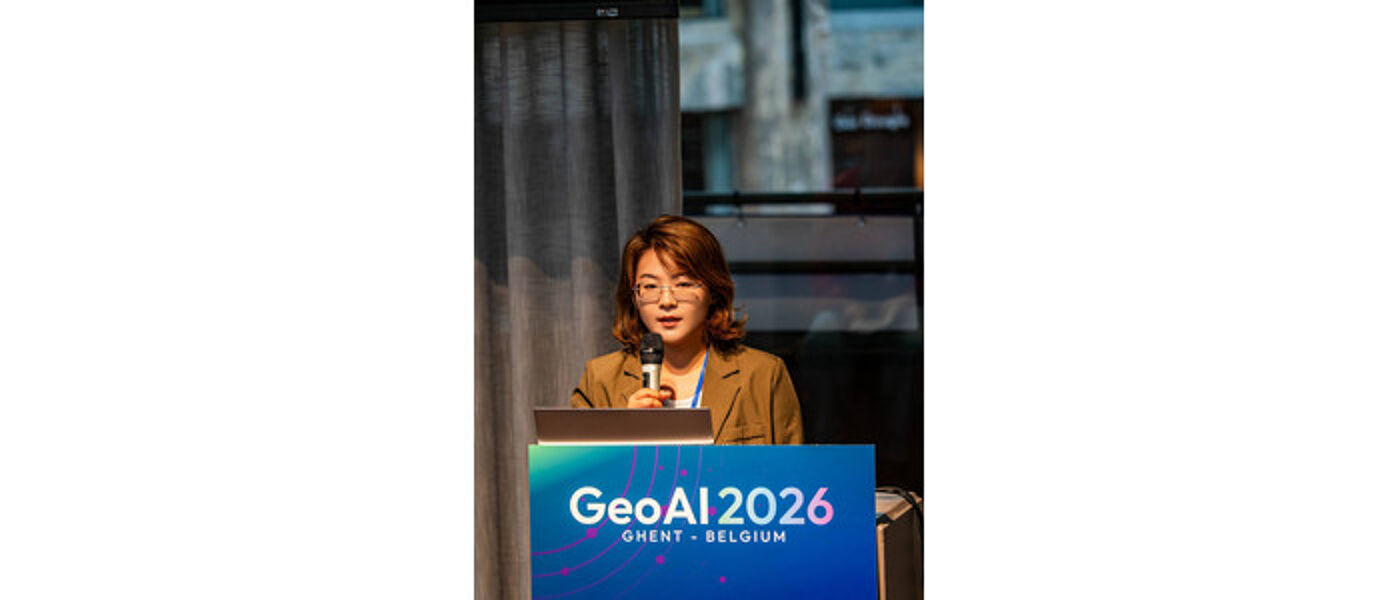
Speaker at the 1st International Conference on GeoAI
Location: Ghent, Belgium
Date: June 2026
Fengjiao Li, a Geospatial Data Science PhD student, presented her research at the International Conference on GeoAI in Ghent, in June 2026. Presenting two papers at the conference gained visibility and valuable feedback from researchers with expertise in GeoAI, machine learning and geospatial analysis.
"Presenting my work at an international conference has strengthened my communication and presentation skills, supporting my long-term career development as an academic researcher."
- Fengjiao Li, PhD student in Geospatial Data Science

International teaching engagement
Location: University of Pompeu Fabra (UPF)
Date: May 2026
The Centre supported Dr Ourania Varsou, a University of Glasgow Senior Lecturer and Researcher from the School of Medicine, Dentistry & Nursing, by providing funding to deliver a newly designed interactive workshop titled ‘Ethics, Judgement & Agency in Healthcare Decision-Making: The Role of AI’ as an invited international teaching engagement.
“The Centre’s funding has genuinely been instrumental in enabling me to attend and contribute to events and educational activities abroad, particularly where these opportunities can be difficult to support through more traditional funding routes.”
- Dr Ourania Varsou, Senior Lecturer in Anatomy
Insights gained through the engagement with UPF and observation with teaching are being incorporated into the redesign of the Anatomical Imaging course, which will run in January 2027 as ‘Applied GenAI and Data-Informed Practice in Anatomical Imaging’.
Alan Turing Workshop
A School of Computing Science PhD student participated in The Alan Turing Institute PhD Student Presentations and Networking Day in February 2026. The workshop was an opportunity to engage and network with fellow PhD students and learn about diverse research areas and interdisciplinary application.
"Attending the PhD student presentation and networking day at the Alan Turing Institute has been a significant step in supporting my career development, particularly given my non-traditional background in AI research. Coming from a different academic discipline, events like this are essential for me on multiple levels: they allow me to build connections that I would not have naturally developed through a prior degree in a directly related field, and they provide exposure to researchers who have successfully transitioned into technical AI roles, offering both inspiration and practical insight into how interdisciplinary expertise can be meaningfully integrated into AI research."
- Antonella Maria Aurelia Marsella, Doctoral Researcher at DiveIn CDT
Bringing together researchers, industry, policymakers and the public to exchange ideas and explore the opportunities and challenges of data science and AI.
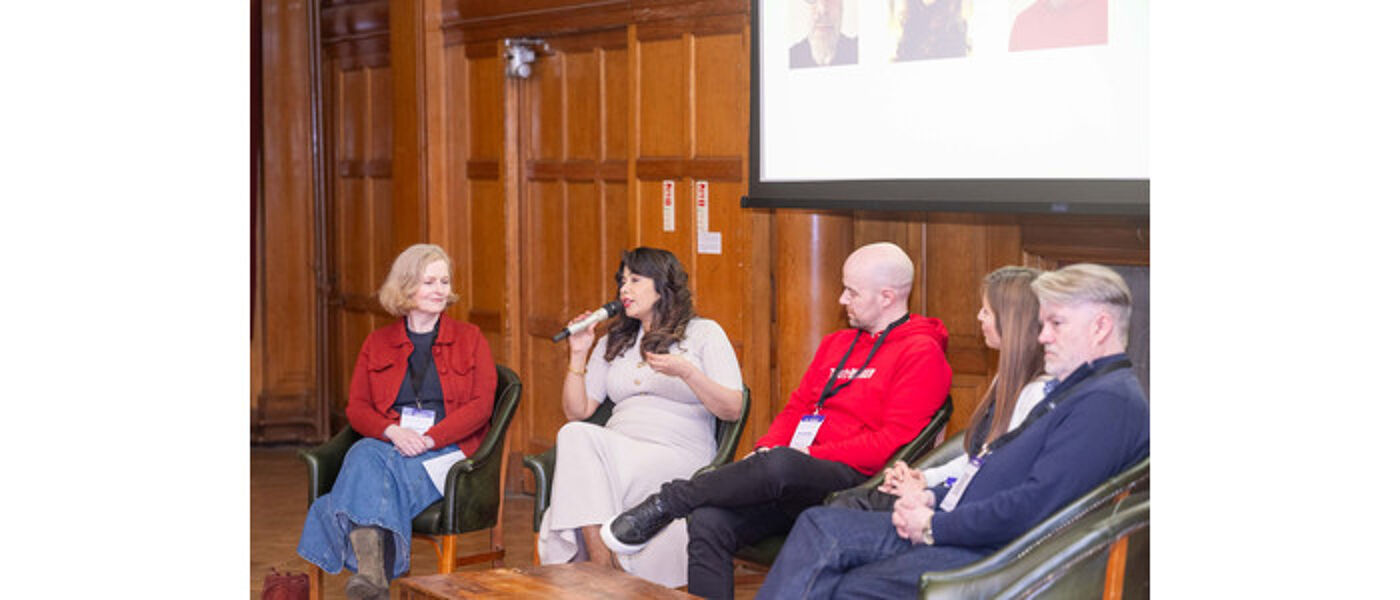
AI in Industry
Location: Glasgow University Union
Date: 23rd March 2026
Throughout March 2026, the College of Science and Engineering Graduate School hosted AI Connect - a programme of workshops, events and conversations exploring AI from multiple perspectives.
As part of AI Connect, the Centre for Data Science & AI, alongside the College of Science & Engineering (CoSE), hosted an EPSRC-sponsored “AI in Industry” event.
Bringing together 3rd and 4th year undergraduate and postgraduate students within the College of Science & Engineering, this event explored how AI and machine learning are applied in real-world industry settings such as healthcare, finance, electronics and energy, and what skills, training, and career pathways can help students get there.
The event brought together speakers and panellists representing a range of industry sectors, including from companies Seluna, ST Microelectonics, Barclays Bank, Scottish Power, Tyre Runner, Cherpa.ai, Edge Impulse, and the Scottish Government's Head of AI and Digital Growth.
A mentorship session followed where PGRs had the opportunity to learn about career, academic and policy options from the company representatives.
Catch up with our speakers' reflections on the event and their perspectives on AI in industry.
Explore video highlights from all the AI Connect events.
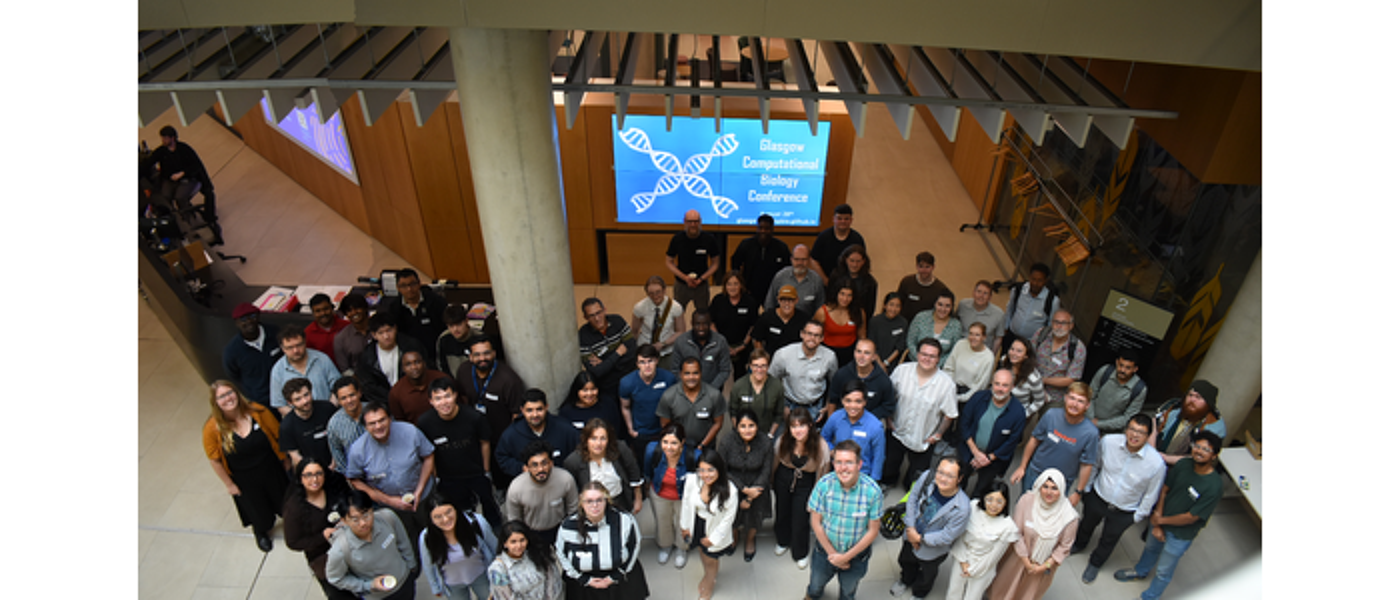
University of Glasgow Computational Biology Conference 2026
Location: Advanced Research Centre, University of Glasgow
Date: 28th August 2026
The University of Glasgow Computational Biology Conference 2026 brought together researchers from across computational biology, bioinformatics, data science and related biological disciplines. The conference included scientific talks from researchers at different career stages, keynote presentations, poster sessions and dedicated networking opportunities, with topics spanning areas such as genomics, structural biology, evolutionary biology, systems biology and machine learning/AI in biology.
The Centre provided funding towards the organisation of the event.
"As a member of the organising committee, I gained valuable experience in planning and delivering a large interdisciplinary academic event. This included contributng to conference organisaton, coordinating with other committee members and supporting an event designed to encourage interaction between researchers from different Schools and research backgrounds.
Research wise, the conference gave me broader exposure to computational approaches being applied across biological research and highlighted methods and research questions outside my immediate area of virology. Discussions during the talks, poster sessions and networking activities were particularly useful for exchanging ideas and identifying potential connections with my own research. Overall, the experience strengthened both my academic network and my understanding of how interdisciplinary computational biology communities can support collaboration and knowledge exchange."
- Dr Haley Stone, Research Assistant in Computational Biology
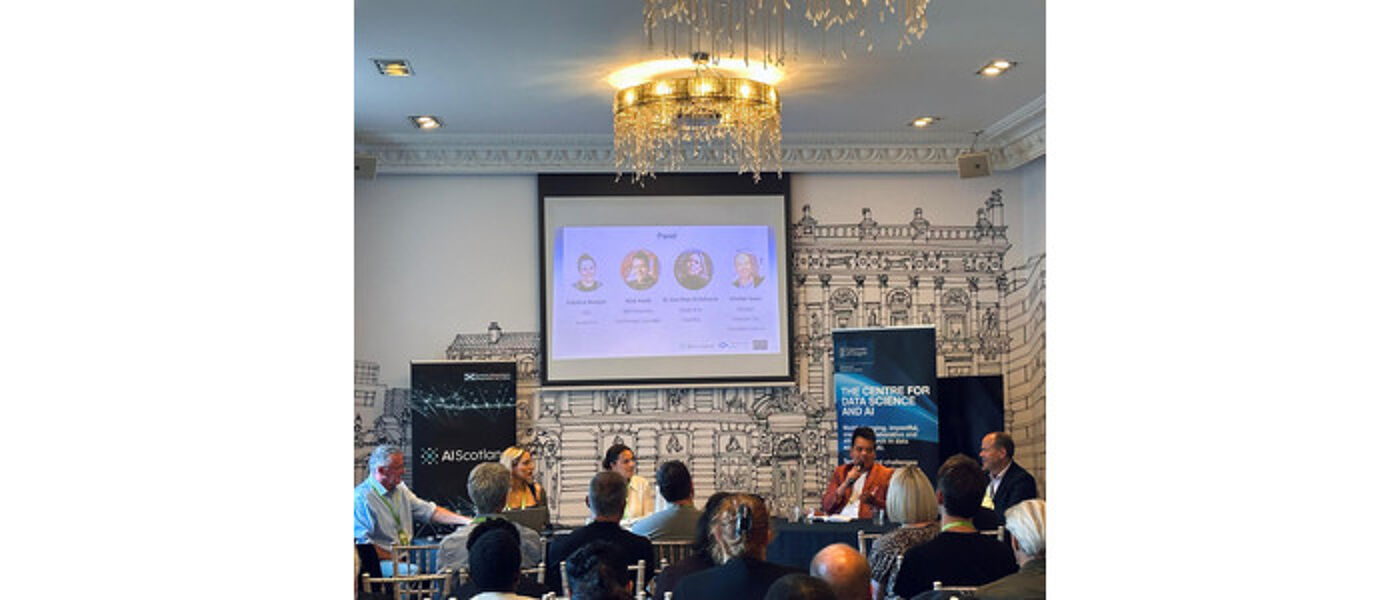
Scotland's AI Opportunity - Commonwealth Games Conversation
Location: Team Scotland House, Corinthian Club, Glasgow
Date: 23rd July 2026
On the night of the official opening of the Glasgow 2026 Commonwealth Games, the Centre supported the Commonwealth Games Conversation on 'Scotland’s AI Opportunities', in partnership with the Scottish Government.
The evening began with an opening on Scotland's AI Strategy from Chris Boyland, Head of AI & Digital Growth at Scottish Government. There was an excellent keynote presentation from Professor Ross Tuffee of MotionLabs on Scotland’s SportsTech opportunity. Prof Tuffee shared a compelling talk about the opportunities in Scotland through building an innovation ecosystem around centres of sporting excellence, harnessing data to build and test new technologies and business ideas.
The keynote was followed by a panel discussion between Dr Ana Rojo-Echeburúa, Fidelma Beagan, Nick Kwek and Alisdair Gunn.

Glasgow Science Festival
Location: Riverside Museum, Glasgow
Date: June 2026
Centre Research Fellow Dr James Tanner presented an activity at the Riverside Museum as part of the Glasgow Science Festival.
Artificial Intelligence is becoming a greater part of peoples’ everyday lives, and we are becoming more aware of both the risks and possibilities associated with using AI to generate lifelike speech.
In this activity, attendees were able to see how well you can tell between real and fake (AI-generated) voices, and learn more about the ongoing work at the University of Glasgow and the Centre for Data Science & AI to help people and organisations ensure that AI speech can be used in safe and responsible ways.
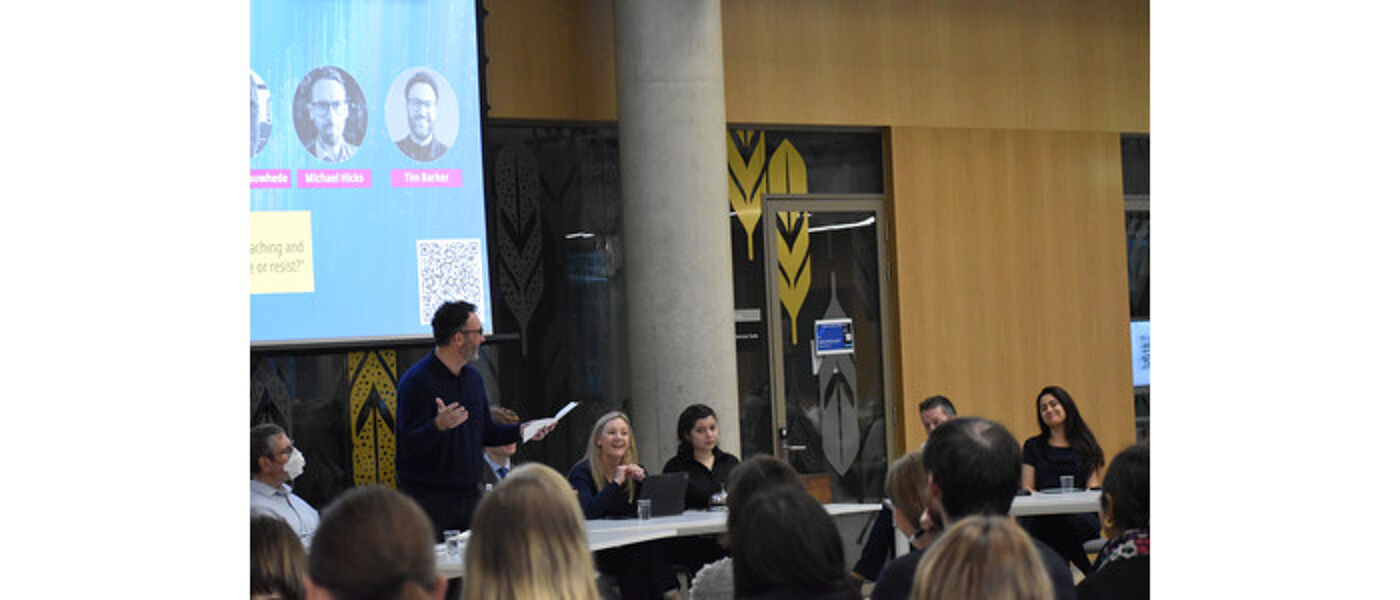
AI in academia: embrace or resist?
Location: ARC
Date: October 2025
As part of the Festival for Data Science and AI, the Centre hosted a stimulating debate:
AI in academia: embrace or resist?
The expert panel posed compelling arguments on both the advantages and dangers of AI's role in research, teaching & academic practice - exploring everything from
- the benefits of researchers using machine learning in healthcare vs the dangers of students being dependent on generative AI
- the dangers of a few coroporations controling our data vs the advantages of technologies that can reduce work load
- what all of it means for integrity, progress, and ethical practice
Most importantly - what are Universities' roles in all of this?
A huge thank you to our participants Bridgette Wessels, David Lowe, Anahid Basiri, Wim Vanderbauwhede, Michael Townsen Hicks, and Tim Barker.
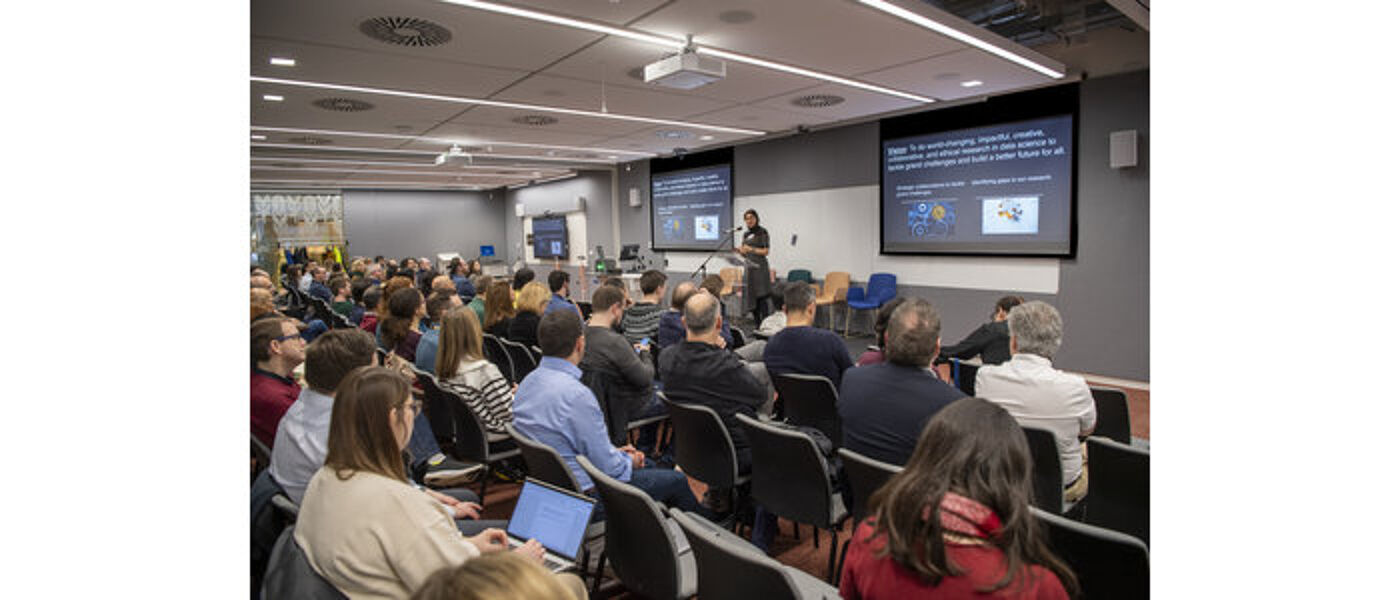
Townhall: Spotlight on AI in Healthcare & Life Sciences
Location: ARC
Date: January 2025
In January 2025, we hosted a Townhall that brought together leading experts, researchers, and the wider university community to spotlight AI in Healthcare & Life Sciences.
The event included updates from the Centre for Data Science & AI, including the announcement of our new Programme Directors and funding schemes. We were also honoured to hear from some of the most distinguished figures in academia and research, such as:
Prof Anna Dominiczak DBE, MD, FRCP, FAHA, FRSE, FAMSci (Chief Scientific Advisor for Health, Scottish Government)
Prof Iain McInnes (Head of MVLS College)
Prof Sandosh Padmanabhan (Pontecorvo Chair of Pharmacogenomics)
and many more researchers leading groundbreaking work in Healthcare and Life Sciences.
Watch the Townhall video for a recap of the discussions and highlights of the day.
Providing support and funding to help researchers develop ideas, share their findings, build collaborations and turn opportunities into research outputs and activity.
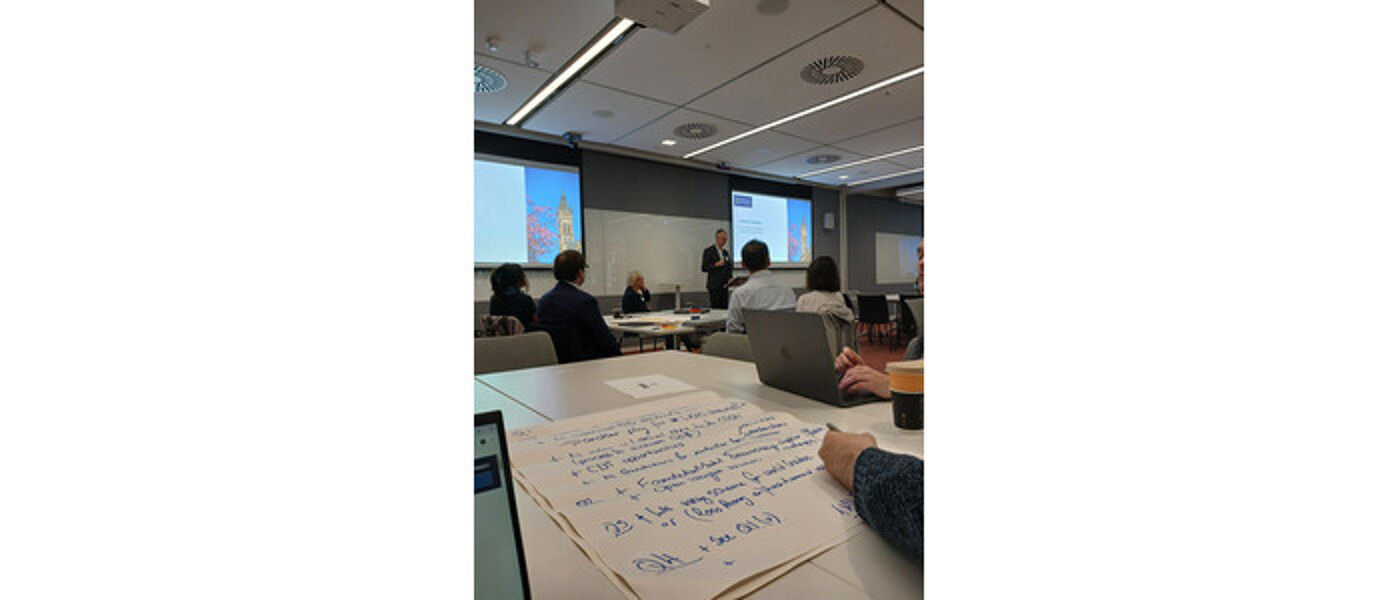
Centre and CoSE Programme launch
Location: Advanced Research Centre, University of Glasgow
Date: 22nd September 2026
The Centre and CoSE launched our new AI in Physical Sciences and Engineering Programme on the 22nd September, with colleagues from across the University coming together to explore how AI can support research, innovation and collaboration across the College.
Thank you to everyone who participated and shared their ideas. The insights gathered during the workshop will help shape the next phase of the programme and inform future activities.
Special thanks to our Programme Director, Dr Katy Tant, for leading the initiative and helping set out an ambitious vision for the future.
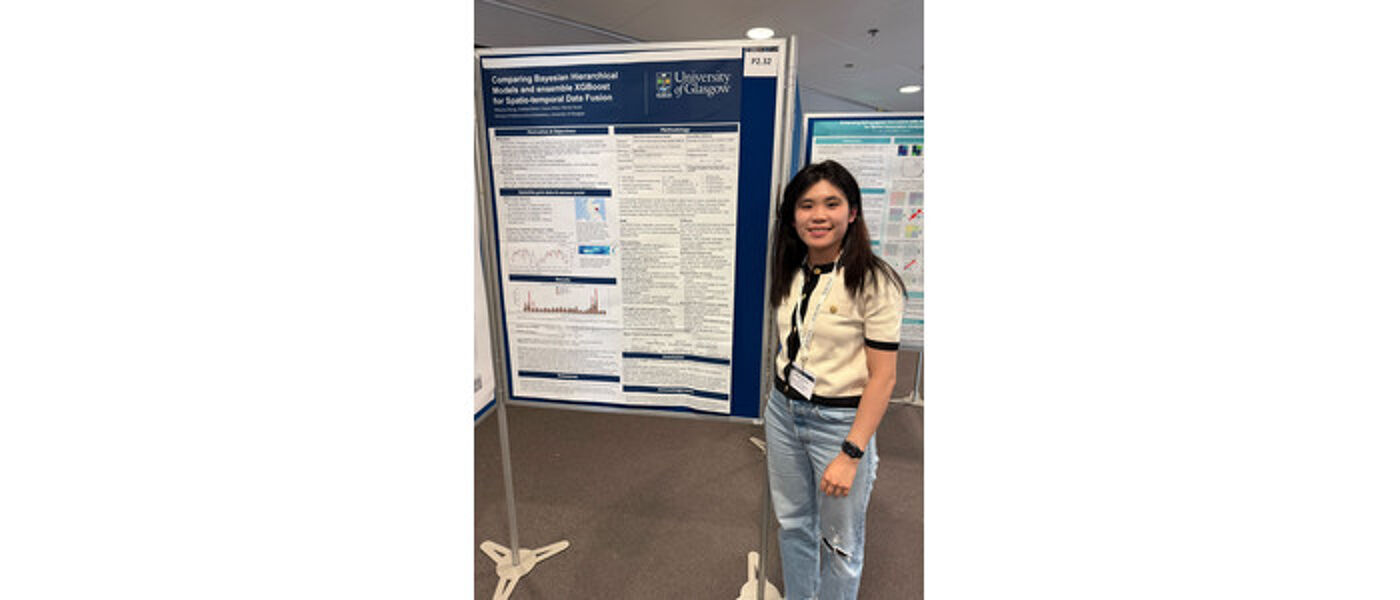
Poster presentation at Spatial Statistics 2025 | Paper publication
Conference: Spatial Stastics 2025: At the Dawn of AI
Location: Noordwijk, The Netherlands
Date: July 2025
Dr Weiyue Zheng of the School of Mathematics and Statistics attended Spatial Statistics 2025: At the Dawn of AI, an international conference held in July 2025 to present a poster and attend a series of sessions across environmental statistics, machine learning, remote sensing, and spatial modelling.
The work presented by Dr Zheng at the conference was subsequently developed into the paper "A Bayesian INLA-SPDE Approach to Spatio-Temporal Point-Grid Fusion with Change-of-Support and Misaligned Covariates", which was accepted and published in the journal Spatial Statistics.
The opportunity to present this work at the conference and receive feedback and discuss the research with others in the field was very helpful in the further development of the paper. I am very grateful to the Centre for supporting my attendance."
- Dr Weiyue Zheng
Doing AI Differently: An international initiative integrating humanities into the core of AI development
Location: London
Date: March 2025
Dr Deven Parker, Leverhulme Early Career and LKAS Postdoctoral Fellow at the School of Critical Studies, College of Arts, attended "Doing AI Differently", a workshop sponsored by the Turing Institute and the University of Edinburgh, which asked participants to explore the ways that humanities perspectives might help to innovate AI development.
The first day consisted of talks by AI industry professionals about where they saw room for expertise from humanities researchers and, separately, from academics about using AI for humanities research.
The second day of the workshop was hands on, with sandbox activities to collectively develop a list of problems facing the integration of humanities methods in AI, and brainstormed solutions responding to the prompt, “what would it mean to situate humanities methodologies upstream in the development of new AI architectures?”
These sessions laid the groundwork for a co-authored publication on integrating the humanities concept of hermeneutics in LLMs: Computational hermenuetics: evaluating generative AI as a cultural technology published in Frontiers in Artificial Intelligence
Watch a video about the workshop.
"The workshop has directly led to my participation in a co-authored article. Touching on the theme of integrating humanities methods in AI development, the article considers how “hermeneutics” - the humanities concept of multiple interpretation and textual ambiguity—should be a crucial aspect of LLM development. My fellow co-authors and I plan are in the process of drafting the article and plan to submit it to Nature next month.
Beyond this in-progress application, the workshop connected me to several other researchers working at the interstices of humanities and AI. I plan to reach out to 3 researchers based at the University of Edinburgh to invite them to participate in a conference on AI and authorship that I’m organizing with CREATe next year."
- Dr Deven Parker
Speaker at the International Fuzzing Workshop
A Research Fellow from the School of Computing Science presented an accepted paper at the Network and Distributed System Security Symposium (NDSS) and its co-located International Fuzzing Workshop in February 2026.
The presentation helped to increase the visibility of his research, established a collaboration with a researcher at the University of British Columbia, and led to an invitation for an international speaker to give a seminar talk at the University of Glasgow.
- Dr Kai Feng, Honorary Research Fellow, School of Computing Science