

Why Sport?


Why Sport?
Why Sport? is a storytelling and research project from UofG Sport exploring the positive impact physical activity has on our lives.
Through personal stories, real experiences, and University of Glasgow research, the project highlights how staying active can support physical health, mental wellbeing, brain health, social connection and overall quality of life.
We're inviting students, staff and the wider University community to share their experiences and help showcase the many ways sport and physical activity make a difference.
Interested in getting involved? We'd love to hear from you.

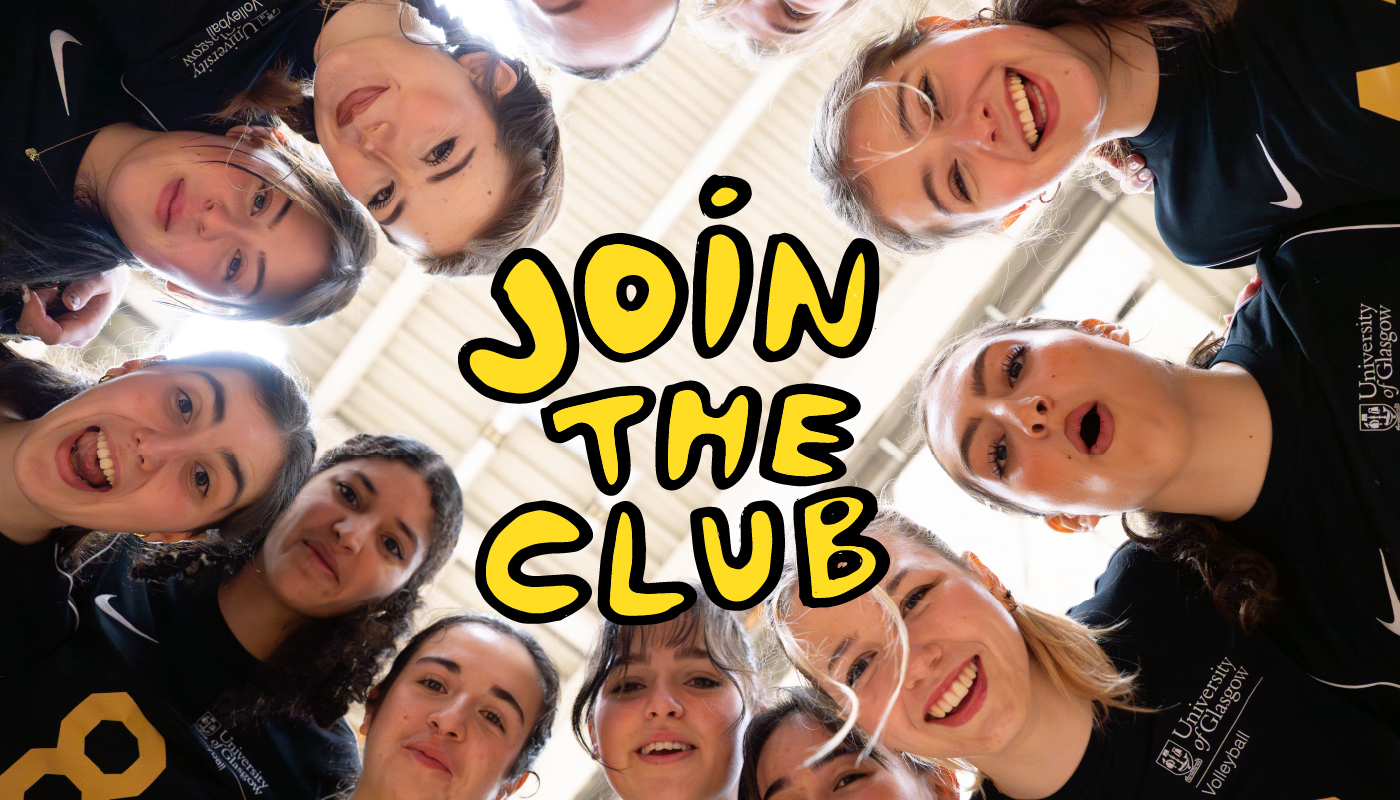
Play Sports with GUSA
Discover how sport can improve your student experience at the University of Glasgow with GUSA (Glasgow University Sports Association).
Join thousands of students who use sport to stay healthy, build friendships and make the most of university life.
Stay active and get involved in sport at the University of Glasgow with GUSA.


Connecting through Sport
University of Glasgow student Aaron Purba shares how tennis, volunteering with GUSA, and university sport have shaped his student experience.
From competing at the highest level of British university sport to building lifelong friendships, Aaron reflects on the opportunities, sense of belonging and positive impact on his wellbeing that sport has provided throughout his time at Glasgow.
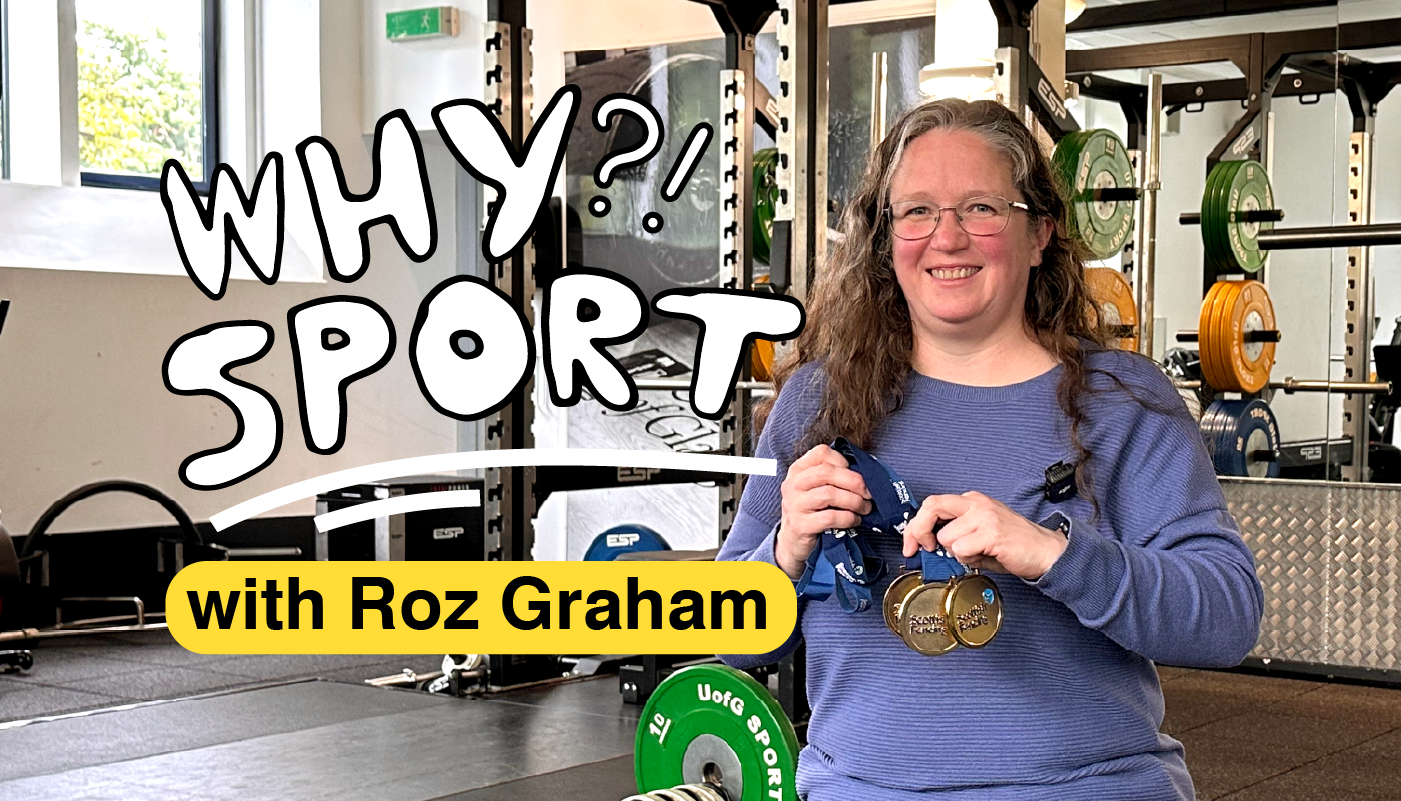
More than Sport
Meet Roz Graham, UofG's Contract Supervisor for Commercial Services and an accomplished sabre fencer. From being inspired by swashbuckling films at school to competing on the GB World Cup circuit, Roz shares her remarkable journey in fencing and her return to competition as a veteran athlete.
Roz reflects on one of her proudest sporting achievements, helping her team defeat England at the Veterans Home International, and explains how staying active gives her a sense of identity beyond work and family life. She also talks about the mental and physical benefits of sport and how it helps her stay connected, resilient and ready for whatever comes next.


Finding Your People
Double world champion track cyclist and two-time Olympic silver medallist Neah Evans (BVMS 2014, MSc 2021, PgDip 2024) is quick to highlight the benefits of taking part in sport while at university.
"There’s the health benefits – not just physical, but mental too," she says. "It can be highly stressful being a student, and being able to go out for a run, go to the gym, get that endorphin hit, is crucial.”
Neah found her sporting community at UofG as a runner with the University's century-old Hares & Hounds club. The experience not only helped her stay active, but also led to friendships that have lasted well beyond graduation.
“Without the running club, I would never have met them, because we were all doing completely different courses. Sport gives so many opportunities to find your niche, your group of people, and it just makes the university experience so much more well rounded.”

Community Through Sport at University
For curler Fay Henderson (BSc 2024), who represented Team GB at the 2026 Winter Olympics in Milan–Cortina, sport became a vital part of university life beyond the lecture theatre.
Fay also highlights the benefits of staying active while studying, offering opportunities to meet new people, build connections, and find a sense of belonging.

Brain Health with Mia Kirkwood
Brain health is about keeping your brain working at its best throughout life. Good brain health helps us think, learn, remember, communicate and stay independent.
There are simple steps we can all take to support our brains:
- Stay active
- Keep learning
- Stay socially connected
- Look after your body with healthy habits
- Protect your head from injury
It's never too early or too late to invest in your brain health!
Find out more about Mia's research!
BRAIN HEALTH
What is it?
The maintenance of brain structure and function, allowing us to live our lives to our full potential.(1)
Good brain health can help us think, learn, remember, communicate, move, and stay independent throughout life. (2)
What can we do now to keep our brains healthy? And in turn help ourselves
STAY ACTIVE
Regular physical activity can support memory, thinking, mood, and overall wellbeing. (3)
CONTINUE LEARNING
Continuously challenging your brain through learning can help build and maintain the ability to think, learn and remember throughout life. You’re never too old (or too young) to learn! (4,5)
SOCIALISE
Staying socially connected can support emotional wellbeing and keep the brain active and engaged.(6)
LOOK AFTER YOUR BODY
Healthy habits such as a balanced diet, good sleep, and limiting alcohol can support brain health long-term. What’s good for your body is often good for your brain too. (7)
PROTECT YOUR HEAD
Preventing injury can help protect your brain for the future. Your brain is irreplaceable, wear a helmet when cycling (!) and take steps to prevent falls. If participating in contact sport like rugby or football, remember ‘if in doubt, sit them out’. (8)
It’s never too early or too late to invest in your brain health!
You can discover more research with the Behavioural Epidemiology Group!
References
1) Gorelick PB, Sorond FA. What is brain health? Cereb Circ Cogn Behav. 2024;6:100190.
2) World Health Organization. Brain health [Internet]. Geneva: World Health Organization; [cited 2026 Aug 20]. Available from: https://www.who.int/health-topics/brain-health
3) Di Liegro CM, Schiera G, Proia P, Di Liegro I. Physical Activity and Brain Health. Genes (Basel). 2019;10(9).
4) Rizvi B, Posis AIB, Colbeth HL, George KM, Brickman AM, Maillard P, et al. Does education promote resilience and brain health in those with exceptional longevity? The LifeAfter90 study. Alzheimers Dement. 2025;21(10):e70820.
5) Wang N, Xu H, Dhingra R, Xian Y, McConnell ES, Wu B, et al. The Impact of Later-Life Learning on Trajectories of Cognitive Function Among U.S. Older Adults. Innovation in Aging. 2025;9(5).
6) Samtani S, Mahalingam G, Lam BCP, Lipnicki DM, Lima-Costa MF, Blay SL, et al. Associations between social connections and cognition: a global collaborative individual participant data meta-analysis. Lancet Healthy Longev. 2022;3(11):e740–e53.
7) Puri S, Shaheen M, Grover B. Nutrition and cognitive health: A life course approach. Front Public Health. 2023;11:1023907.
8) Department for Culture, Media and Sport. Landmark concussion guidance for grassroots sport published [Internet]. London: GOV.UK; 2023 Apr 28 [cited 2026 Aug 25]. Available from: https://www.gov.uk/government/news/landmark-concussion-guidance-for-grassroots-sport-published

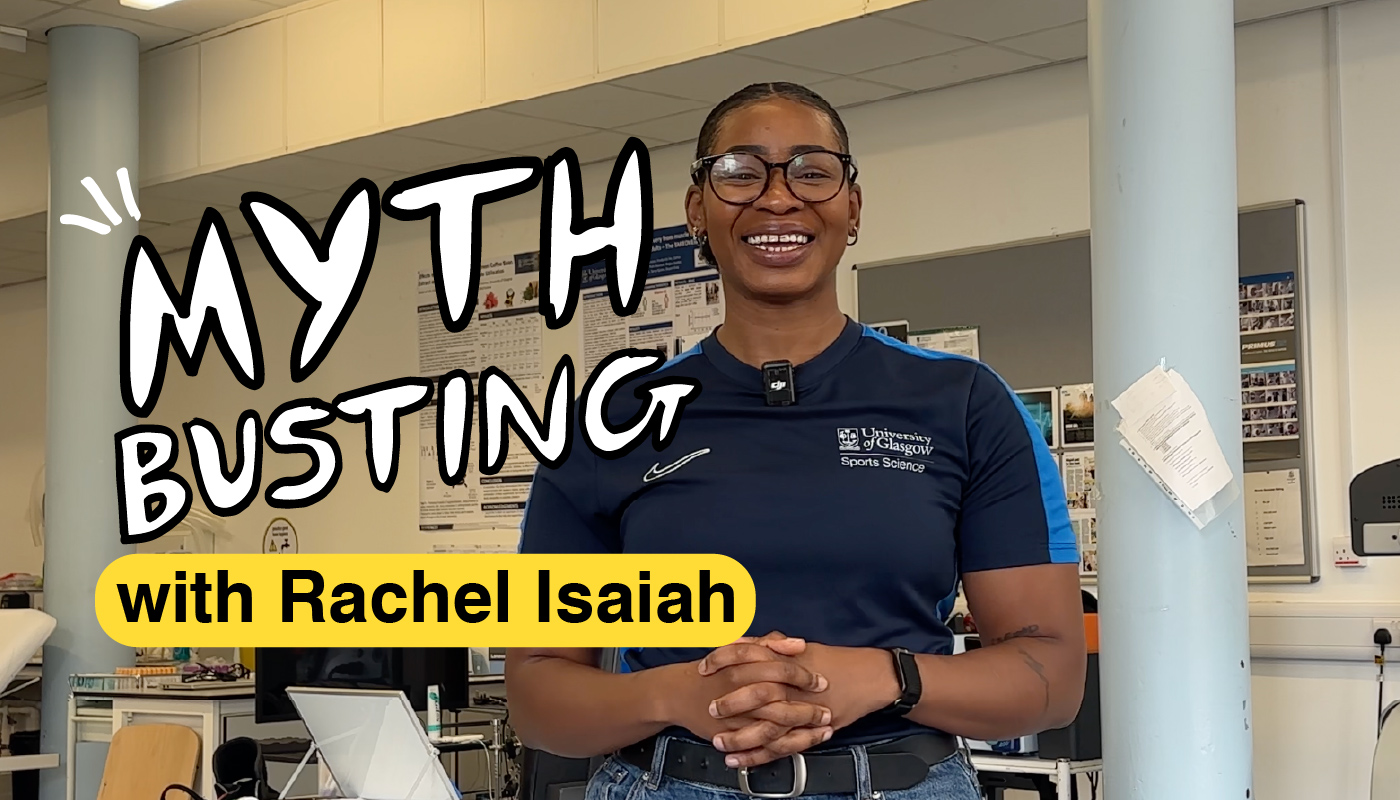
Myth Busting with Rachel Isaiah
Do you need to cycle-sync your training?
Should you avoid exercise during your period?
Can women lift heavy weights?
Rachel Isaiah from the University of Glasgow breaks down four common myths about the menstrual cycle, strength training and performance using the latest sports science research.
Rachel is currently conducting research on strength performance across the menstrual cycle. If you're a naturally cycling woman who strength trains regularly, Rachel needs you!
Find out more about Rachel's research!
When it comes to women and sport, there are a lot of things we think we know. But how much of it is actually supported by science?
I'm a researcher at the University of Glasgow studying the relationship between the menstrual cycle and exercise, and today we're going to bust four common myths.
MYTH 1: “You need to cycle-sync your training.”
That is not necessarily true. There is very little evidence that women need to adopt a different training programme for every phase of the menstrual cycle. Research shows that any average changes in exercise performance across the cycle tend to be small and not statistically significant, and responses can vary considerably between individuals.
Some people experience symptoms that affect how they train, and that is important. There are ways to manage those symptoms so that you can continue to train, perform, and improve. However, if your symptoms are individual to you, then any training adjustments should be individual too.
The key takeaway is this: rather than following a rigid, cycle-synchronised training programme, we should tailor any cycle-related adjustments to the person, not the phase.
McNulty, K. L., Elliott-Sale, K. J., Dolan, E., Swinton, P. A., Ansdell, P., Goodall, S., Thomas, K., & Hicks, K. M. (2020). The effects of menstrual cycle phase on exercise performance in eumenorrheic women: A systematic review and meta-analysis. Sports Medicine, 50, 1813–1827. https://doi.org/10.1007/s40279-020-01319-3
Colenso-Semple, L. M., D’Souza, A. C., Elliott-Sale, K. J., & Phillips, S. M. (2023). Current evidence shows no influence of women's menstrual cycle phase on acute strength performance or adaptations to resistance exercise training. Frontiers in Sports and Active Living, 5, 1054542. https://doi.org/10.3389/fspor.2023.1054542
MYTH 2: “You shouldn’t train when you’re on your period.”
Your period is the bleeding phase of the menstrual cycle. It is not a performance ban, nor is it a reason or excuse to stop exercising. However, symptoms such as pain, fatigue, headaches, and heavy bleeding can genuinely affect participation.
Some studies have shown that exercise can help reduce menstrual pain for some people. So, the message should not be, “If you’re bleeding, do nothing,” or, “Push through no matter what.” Instead, it should be: “You can be active and you can adapt your training when you need to.”
Armour, M., Ee, C. C., Naidoo, D., Ayati, Z., Chalmers, K. J., Steel, K. A., de Manincor, M. J., & Smith, C. A. (2019). Exercise for dysmenorrhoea. Cochrane Database of Systematic Reviews, 9, CD004142. https://doi.org/10.1002/14651858.CD004142.pub4
Buchanan-Smith, L. I., Ho Pang, A., Yeshitila, N. K., Parsons, E. N., & Blodgett, J. M. (2025). Impact of symptoms, experiences, and perceptions of the menstrual cycle on recreational physical activity of cyclically menstruating individuals: A systematic review. Journal of Women's Health. https://doi.org/10.1177/15409996251365804
MYTH 3: “Women shouldn’t lift heavy weights.”
Absolutely not. Women can build muscle and gain strength at a similar rate to men. Muscle-strengthening exercise, resistance training, and strength training all help to build and develop physical capacity.
Lifting heavy weights is not just for elite athletes or people who want to change how they look. Our muscles are essential for movement, protection, and posture. They support nearly every system in the body and contribute to metabolic efficiency, bone density, and mental well-being.
Kassiano, W., Nunes, J. P., Resende, B., & others. (2020). The effect of resistance training in women on dynamic strength and muscular hypertrophy: A systematic review with meta-analysis. Sports Medicine, 50, 1209–1220. https://doi.org/10.1007/s40279-020-01300-0
Isenmann, E., Geisler, S., Havers, T., Siegert, F., Hemke, F., & Held, S. (2026). It's never too late: The impact of resistance training on strength and body composition in females across the lifespan: A systematic review and meta-analysis. Journal of Science and Medicine in Sport, 29(10), 1174–1185. https://doi.org/10.1016/j.jsams.2026.03.002
MYTH 4: “Your menstrual cycle determines your performance.”
It’s a little more complex than that. Hormones change throughout the menstrual cycle, but that does not mean your cycle can predict whether you’ll have a good or bad training session.
Research findings so far are mixed, the effects are generally small, and there is considerable individual variation. This means that performance can depend on factors such as your training status, your sport, your training methods, and your goals.
In fact, many factors outside of the menstrual cycle may be more important, including sleep, nutrition, stress, your training plan, recovery strategies, and overall health.
I am currently conducting a study examining strength performance across the menstrual cycle. Participants complete a battery of upper- and lower-body strength and muscular endurance tests once a week for two menstrual cycles. We track the menstrual cycle using ovulation testing and blood samples.
McNulty, K. L., Elliott-Sale, K. J., Dolan, E., Swinton, P. A., Ansdell, P., Goodall, S., Thomas, K., & Hicks, K. M. (2020). The effects of menstrual cycle phase on exercise performance in eumenorrheic women: A systematic review and meta-analysis. Sports Medicine, 50, 1813–1827. https://doi.org/10.1007/s40279-020-01319-3
Niering, M., Wolf-Belala, N., Seifert, J., & Mühlbauer, T. (2024). The influence of menstrual cycle phases on maximal strength performance in healthy female adults: A systematic review with meta-analysis. Sports, 12(1), 31. https://doi.org/10.3390/sports12010031
If you are a naturally cycling woman who regularly participates in strength training, I’d love to hear from you!
So, if there’s one thing I’d like you to take away, it’s this: your menstrual cycle is part of your physiology, not a set of rules that determines what you can and can’t do.
It can be frustrating when it feels like something else is dictating how you feel and how you perform, but it’s important to remember that women can train, get stronger, and participate in sport throughout the menstrual cycle.
The goal is to use science to support women as individuals, rather than placing them into boxes.
Evidence note
The current literature does not suggest that the effects of the menstrual cycle on performance are zero. Rather, the evidence is heterogeneous, with some reviews reporting small average differences in certain performance outcomes.
The key public-facing message is that the menstrual cycle does not reliably or universally determine performance, nor does it require phase-specific training for every woman.