

Professor Barbara Mable
- Professor of Evolutionary Genetics, Director of Education (Evolution & Diversity) (Evolution & Diversity)
telephone:
3532
email:
Barbara.Mable@glasgow.ac.uk
R404 Level 4, Institute of BAH&CM, Graham Kerr Building, Glasgow G12 8QQ
 https://orcid.org/0000-0001-7118-4116
Research interests
Evolutionary genetics of mating systems in plants.
Evolutionary consequences of polyploidy in plants and animals.
Conservation genetics of plants, amphibians, fish and mammals
Host-vector-pathogen dynamics
Evolution of resistance in pests and parasites
Research Interests - further information
Google Scholar - Publications Profile
Research groups
Publications
2026
Sanda, Mark K., Metcalfe, Neil B.  ORCID: https://orcid.org/0000-0002-1970-9349, Capstick, Maria ORCID: https://orcid.org/0009-0004-2567-8579, Nichols, Jenna ORCID: https://orcid.org/0000-0003-0093-7170 and Mable, Barbara K. ORCID: https://orcid.org/0000-0001-7118-4116
(2026)
Genetic diversity, population structure and differentiation of farmed and wild African catfish (Clarias gariepinus) in Nigeria.
Evolutionary Applications, 19(2),
e70204.
(doi: 10.1111/eva.70204)
(PMID:41626593)
ORCID: https://orcid.org/0000-0002-1970-9349, Capstick, Maria ORCID: https://orcid.org/0009-0004-2567-8579, Nichols, Jenna ORCID: https://orcid.org/0000-0003-0093-7170 and Mable, Barbara K. ORCID: https://orcid.org/0000-0001-7118-4116
(2026)
Genetic diversity, population structure and differentiation of farmed and wild African catfish (Clarias gariepinus) in Nigeria.
Evolutionary Applications, 19(2),
e70204.
(doi: 10.1111/eva.70204)
(PMID:41626593)
2025
Mellya, R. V.K. et al. (2025) Natural dispersal is better than translocation for reducing risks of inbreeding depression in eastern black rhinoceros (Diceros bicornis michaeli). Proceedings of the National Academy of Sciences of the United States of America, 122(23), e241441212. (doi: 10.1073/pnas.2414412122) (PMID:40460127)
Khan, A. et al. (2025) Swatting flies: Biting insects as non-invasive samplers for mammalian population genomics. Molecular Ecology, (doi: 10.1111/mec.17661) (PMID:39838904) (Early Online Publication)
Hough, Denise ORCID: https://orcid.org/0000-0002-5478-693X, Patterson, Victoria and Mable, Barbara K. ORCID: https://orcid.org/0000-0001-7118-4116
(2025)
Making research reasoning visible: redesigning a final-year literature review for a GenAI-enabled world: Published in Assessment and Feedback Case Study Compendium 2026.
Advance HE Assessment and Feedback Symposium, 4 November 2025.
2024
Keating, Ciara ORCID: https://orcid.org/0000-0001-9199-3068, Kilbride, Elizabeth, Stalham, Mark A., Nellist, Charlotte, Milner, Joel ORCID: https://orcid.org/0000-0003-3702-4295, Humphris, Sonia, Toth, Ian ORCID: https://orcid.org/0000-0002-4966-4727, Mable, Barbara K. ORCID: https://orcid.org/0000-0001-7118-4116 and Ijaz, Umer Zeeshan ORCID: https://orcid.org/0000-0001-5780-8551
(2024)
Balancing the scales: assessing the impact of irrigation and pathogen burden on potato blackleg disease and soil microbial communities.
Microbiome, 12,
210.
(doi: 10.1186/s40168-024-01918-6)
Dennis, Tristan P.W., Essandoh, John, Mable, Barbara K. ORCID: https://orcid.org/0000-0001-7118-4116, Viana, Mafalda S. ORCID: https://orcid.org/0000-0001-5975-6505, Yawson, Alexander E. and Weetman, David
(2024)
Signatures of adaptation at key insecticide resistance loci in Anopheles gambiae in Southern Ghana revealed by reduced-coverage WGS.
Scientific Reports, 14,
8650.
(doi: 10.1038/s41598-024-58906-x)
(PMID:38622230)
(PMCID:PMC11018624)
Sanda, Mark K., Metcalfe, Neil B. ORCID: https://orcid.org/0000-0002-1970-9349 and Mable, Barbara K. ORCID: https://orcid.org/0000-0001-7118-4116
(2024)
The potential impact of aquaculture on the genetic diversity and conservation of wild fish in sub-Saharan Africa.
Aquatic Conservation: Marine and Freshwater Ecosystems, 34(2),
e4105.
(doi: 10.1002/aqc.4105)
2023
Le Veve, Audrey, Burghgraeve, Nicolas, Genete, Mathieu, Lepers-Blassiau, Christelle, Takou, Margarita, De Meaux, Juliette, Mable, Barbara K. ORCID: https://orcid.org/0000-0001-7118-4116, Durand, Eléonore, Vekemans, Xavier and Castric, Vincent
(2023)
Long-term balancing selection and the genetic load linked to the self-incompatibility locus in Arabidopsis halleri and A. lyrata.
Molecular Biology and Evolution, 40(6),
msad120.
(doi: 10.1093/molbev/msad120)
(PMID:37210585)
(PMCID:PMC10243990)
Mellya, Ronald V. K., Hopcraft, J. Grant C. ORCID: https://orcid.org/0000-0002-9617-9951, Eblate, Ernest M., Kariuki, Linus, Otiende, Moses, Chuma, Idrissa S., Macha, Emmanuel S., Wambura, Dickson, Kilbride, Elizabeth and Mable, Barbara K. ORCID: https://orcid.org/0000-0001-7118-4116
(2023)
Mitochondrial DNA diversity of the eastern black rhinoceros (Diceros bicornis michaeli) in Tanzania: implications for future conservation.
Conservation Genetics, 24,
pp. 905-919.
(doi: 10.1007/s10592-023-01545-y)
2022
Doyle, S. R. et al. (2022) Genomic landscape of drug response reveals mediators of anthelmintic resistance. Cell Reports, 41(3), 111522. (doi: 10.1016/j.celrep.2022.111522) (PMID:36261007) (PMCID:PMC9597552)
Dennis, Tristan P.W., Mable, Barbara K. ORCID: https://orcid.org/0000-0001-7118-4116, Brunelle, Brian, Devault, Alison, Carter, Ryan W., Ling, Clare L., Mmbaga, Blandina T., Halliday, Jo E.B. ORCID: https://orcid.org/0000-0002-1329-9035, Oravcova, Katarina ORCID: https://orcid.org/0000-0001-5930-6803 and Forde, Taya L. ORCID: https://orcid.org/0000-0001-9058-7826
(2022)
Target-enrichment sequencing yields valuable genomic data for challenging-to-culture bacteria of public health importance.
Microbial Genomics, 8(5),
000836.
(doi: 10.1099/mgen.0.000836)
(PMID:35622897)
(PMCID:PMC9465068)
2021
Channumsin, Manun, Ciosi, Marc ORCID: https://orcid.org/0000-0002-7663-4080, Masiga, Dan, Auty, Harriet ORCID: https://orcid.org/0000-0002-6181-3780, Turner, C. Michael, Kilbride, Elizabeth and Mable, Barbara K. ORCID: https://orcid.org/0000-0001-7118-4116
(2021)
Blood meal analysis of tsetse flies (Glossina pallidipes: Glossinidae) reveals higher host fidelity on wild compared with domestic hosts.
Wellcome Open Research, 6,
213.
(doi: 10.12688/wellcomeopenres.16978.1)
(PMCID:PMC8513123)
Burgon, J. D. et al. (2021) Phylogenomic inference of species and subspecies diversity in the Palearctic salamander genus Salamandra. Molecular Phylogenetics and Evolution, 157, 107063. (doi: 10.1016/j.ympev.2020.107063) (PMID:33387650)
2020
Mittell, Elizabeth A., Cobbold, Christina A. ORCID: https://orcid.org/0000-0001-8814-7688, Ijaz, Umer Zeeshan ORCID: https://orcid.org/0000-0001-5780-8551, Kilbride, Elizabeth A., Moore, Karen A. and Mable, Barbara K. ORCID: https://orcid.org/0000-0001-7118-4116
(2020)
Feral populations of Brassica oleracea along Atlantic coasts in western Europe.
Ecology and Evolution, 10(20),
pp. 11810-11825.
(doi: 10.1002/ece3.6821)
(PMID:33145003)
(PMCID:PMC7593181)
2019
Buckley, James, Daly, Rónán ORCID: https://orcid.org/0000-0002-1275-6820, Cobbold, Christina A. ORCID: https://orcid.org/0000-0001-8814-7688, Burgess, Karl and Mable, Barbara K. ORCID: https://orcid.org/0000-0001-7118-4116
(2019)
Changing environments and genetic variation: natural variation in inbreeding does not compromise short-term physiological responses.
Proceedings of the Royal Society of London Series B: Biological Sciences, 286(1915),
20192109.
(doi: 10.1098/rspb.2019.2109)
(PMID:31744436)
(PMCID:PMC6892046)
Theonest, N. O. et al. (2019) Molecular detection and genetic characterization of Bartonella species from rodents and their associated ectoparasites from northern Tanzania. PLoS ONE, 14(10), e0223667. (doi: 10.1371/journal.pone.0223667) (PMID:31613914) (PMCID:PMC6793857)
Hodgkinson, J. E. et al. (2019) Refugia and anthelmintic resistance: concepts and challenges. International Journal for Parasitology, 10, pp. 51-57. (doi: 10.1016/j.ijpddr.2019.05.001) (PMID:31125837) (PMCID:PMC6531808)
Purisotayo, Tarid, Jonsson, Nicholas N. ORCID: https://orcid.org/0000-0003-3245-9783, Mable, Barbara K. ORCID: https://orcid.org/0000-0001-7118-4116 and Verreyenne, Frederick J.
(2019)
Combining molecular and incomplete observational data to inform management of southern white rhinoceros (Ceratotherium simum simum).
Conservation Genetics, 20(3),
pp. 639-652.
(doi: 10.1007/s10592-019-01166-4)
Mable, Barbara K. ORCID: https://orcid.org/0000-0001-7118-4116
(2019)
Conservation of adaptive potential and functional diversity: integrating old and new approaches.
Conservation Genetics, 20(1),
pp. 89-100.
(doi: 10.1007/s10592-018-1129-9)
2018
Channumsin, Manun, Ciosi, Marc ORCID: https://orcid.org/0000-0002-7663-4080, Masiga, Dan, Turner, C. Michael R. and Mable, Barbara K. ORCID: https://orcid.org/0000-0001-7118-4116
(2018)
Sodalis glossinidius presence in wild tsetse is only associated with presence of trypanosomes in complex interactions with other tsetse-specific factors.
BMC Microbiology, 18(Supp1.),
163.
(doi: 10.1186/s12866-018-1285-6)
(PMID:30470184)
(PMCID:PMC6251152)
Hume, John B., Recknagel, Hans ORCID: https://orcid.org/0000-0003-2728-0690, Bean, Colin W, ORCID: https://orcid.org/0000-0003-3502-0995, Adams, Colin E. ORCID: https://orcid.org/0000-0003-2470-9754 and Mable, Barbara K. ORCID: https://orcid.org/0000-0001-7118-4116
(2018)
RADseq and mate choice assays reveal unidirectional gene flow among three lamprey ecotypes despite weak assortative mating: Insights into the formation and stability of multiple ecotypes in sympatry.
Molecular Ecology, 27(22),
pp. 4572-4590.
(doi: 10.1111/mec.14881)
(PMID:30252984)
Mable, Barbara K. ORCID: https://orcid.org/0000-0001-7118-4116, Brysting, Anne K., Jørgensen, Marte H., Carbonell, Anna K.Z., Kiefer, Christiane, Ruiz-Duarte, Paola, Lagesen, Karin and Koch, Marcus A.
(2018)
Adding complexity to complexity: gene family evolution in polyploids.
Frontiers in Ecology and Evolution, 6,
114.
(doi: 10.3389/fevo.2018.00114)
Buckley, James, Holub, Eric B., Koch, Marcus A., Vergeer, Philippine and Mable, Barbara K. ORCID: https://orcid.org/0000-0001-7118-4116
(2018)
Restriction associated DNA-genotyping at multiple spatial scales in Arabidopsis lyrata reveals signatures of pathogen-mediated selection.
BMC Genomics, 19(1),
p. 496.
(doi: 10.1186/s12864-018-4806-7)
(PMID:29945543)
(PMCID:PMC6020377)
Crow, Jenny ORCID: https://orcid.org/0000-0002-7990-2757, Mable, Barbara ORCID: https://orcid.org/0000-0001-7118-4116 and Murray, Jo-Anne ORCID: https://orcid.org/0000-0002-8501-2742
(2018)
Virtual Reality Poster Feedback Session Within Second Life.
11th Annual University of Glasgow Learning and Teaching Conference, Glasgow, UK, 28-29 Mar 2018.
Doyle, S. R. et al. (2018) A genome resequencing-based genetic map reveals the recombination landscape of an outbred parasitic nematode in the presence of polyploidy and polyandry. Genome Biology and Evolution, 10(2), pp. 396-409. (doi: 10.1093/gbe/evx269) (PMID:29267942) (PMCID:PMC5793844)
2017
Bakuza, Jared S., Gillespie, Robert, Nkwengulila, Gamba, Adam, Aileen, Kilbride, Elizabeth and Mable, Barbara K. ORCID: https://orcid.org/0000-0001-7118-4116
(2017)
Assessing S. mansoni prevalence in Biomphalaria snails in the Gombe ecosystem of western Tanzania: the importance of DNA sequence data for clarifying species identification.
Parasites and Vectors, 10(1),
584.
(doi: 10.1186/s13071-017-2525-6)
(PMID:29169384)
(PMCID:PMC5701381)
Rodríguez, A. et al. (2017) Inferring the shallow phylogeny of true salamanders (Salamandra) by multiple phylogenomic approaches. Molecular Phylogenetics and Evolution, 115, pp. 16-26. (doi: 10.1016/j.ympev.2017.07.009) (PMID:28716741)
Bakuza, Jared S., Denwood, Matthew J., Nkwengulila, Gamba and Mable, Barbara K. ORCID: https://orcid.org/0000-0001-7118-4116
(2017)
Estimating the prevalence and intensity of Schistosoma mansoni infection among rural communities in Western Tanzania: the influence of sampling strategy and statistical approach.
PLoS Neglected Tropical Diseases, 11(9),
e0005937.
(doi: 10.1371/journal.pntd.0005937)
(PMID:28934206)
(PMCID:PMC5626504)
Mable, B.K. ORCID: https://orcid.org/0000-0001-7118-4116, Hagmann, J., Kim, S.-T., Adam, A., Kilbride, E., Weigel, D. and Stift, M.
(2017)
What causes mating system shifts in plants? Arabidopsis lyrata as a case study.
Heredity, 118(1),
pp. 52-63.
(doi: 10.1038/hdy.2016.99)
(PMID:27925617)
(PMCID:PMC5176115)
2016
Reynolds, Alan, Lindstrom, Jan ORCID: https://orcid.org/0000-0001-5630-6680, Johnson, Paul C.D. ORCID: https://orcid.org/0000-0001-6663-7520 and Mable, Barbara K. ORCID: https://orcid.org/0000-0001-7118-4116
(2016)
Evolution of drug-tolerant nematode populations in response to density reduction.
Evolutionary Applications, 9(5),
pp. 726-738.
(doi: 10.1111/eva.12376)
(PMID:27247622)
(PMCID:PMC4869413)
Buckley, James, Kilbride, Elizabeth, Cevik, Volkan, Vicente, Joana G., Holub, Eric B. and Mable, Barbara K. ORCID: https://orcid.org/0000-0001-7118-4116
(2016)
R-gene variation across Arabidopsis lyrata subspecies: effects of population structure, selection and mating system.
BMC Evolutionary Biology, 16,
93.
(doi: 10.1186/s12862-016-0665-5)
(PMID:27150007)
(PMCID:PMC4858910)
Murray, J.M.D. ORCID: https://orcid.org/0000-0002-8501-2742, Crow, J. ORCID: https://orcid.org/0000-0002-7990-2757 and Mable, B. ORCID: https://orcid.org/0000-0001-7118-4116
(2016)
Avatars in Assessment: On-campus student Presentations in a Virtual World.
Evaluations of E-learner Experiences Special Interest Group Meeting, Glasgow, UK, 21 Nov 2016.
2015
Tinsley, Richard C., Stott, Lucy C., Viney, Mark E., Mable, Barbara ORCID: https://orcid.org/0000-0001-7118-4116 and Tinsley, Matthew C.
(2015)
Extinction of an introduced warm-climate alien species, Xenopus laevis, by extreme weather events.
Biological Invasions, 17(11),
pp. 3183-3195.
(doi: 10.1007/s10530-015-0944-x)
(PMID:26430383)
(PMCID:PMC4581400)
Mable, Barbara K. ORCID: https://orcid.org/0000-0001-7118-4116, Kilbride, Elizabeth, Viney, Mark E. and Tinsley, Richard C.
(2015)
Copy number variation and genetic diversity of MHC Class IIb alleles in an alien population of Xenopus laevis.
Immunogenetics, 67(10),
pp. 591-603.
(doi: 10.1007/s00251-015-0860-3)
(PMID:26329765)
(PMCID:PMC4572066)
Muir, A. P., Kilbride, E. and Mable, B. ORCID: https://orcid.org/0000-0001-7118-4116
(2015)
Spatial variation in species composition of Saprolegnia, a parasitic oomycete of amphibian eggs, in Scotland.
Herpetological Journal, 25(4),
pp. 257-263.
Freer, Jennifer J., Mable, Barbara K. ORCID: https://orcid.org/0000-0001-7118-4116, Clucas, Gemma, Rogers, Alex D., Polito, Michael J., Dunn, Michael, Naveen, Ron, Levy, Hila and Hart, Tom
(2015)
Limited genetic differentiation among chinstrap penguin (Pygoscelis antarctica) colonies in the Scotia Arc and Western Antarctic Peninsula.
Polar Biology, 38(9),
pp. 1493-1502.
(doi: 10.1007/s00300-015-1711-2)
Muir, Graham, Ruiz-Duarte, Paola, Hohmann, Nora, Mable, Barbara K. ORCID: https://orcid.org/0000-0001-7118-4116, Novikova, Polina, Schmickl, Roswitha, Guggisberg, Alessia and Koch, Marcus A.
(2015)
Exogenous selection rather than cytonuclear incompatibilities shapes asymmetrical fitness of reciprocal Arabidopsis hybrids.
Ecology and Evolution, 5(8),
pp. 1734-1745.
(doi: 10.1002/ece3.1474)
(PMID:25937915)
(PMCID:PMC4409420)
2014
Muir, Anna P, Biek, Roman ORCID: https://orcid.org/0000-0003-3471-5357 and Mable, Barbara K ORCID: https://orcid.org/0000-0001-7118-4116
(2014)
Behavioural and physiological adaptations to low-temperature environments in the common frog, Rana temporaria.
BMC Evolutionary Biology, 14(1),
p. 110.
(doi: 10.1186/1471-2148-14-110)
(PMID:24885261)
(PMCID:PMC4037278)
Muir, A.P., Biek, R. ORCID: https://orcid.org/0000-0003-3471-5357, Thomas, R. and Mable, B.K. ORCID: https://orcid.org/0000-0001-7118-4116
(2014)
Local adaptation with high gene flow: temperature parameters drive adaptation to altitude in the common frog (Rana temporaria).
Molecular Ecology, 23(3),
pp. 561-574.
(doi: 10.1111/mec.12624)
Dufresne, F., Stift, M., Vergilino, R. and Mable, B.K. ORCID: https://orcid.org/0000-0001-7118-4116
(2014)
Recent progress and challenges in population genetics of polyploid organisms: an overview of current state-of-the-art molecular and statistical tools.
Molecular Ecology, 23(1),
pp. 40-69.
(doi: 10.1111/mec.12581)
2013
Muir, A.P., Thomas, R., Biek, R. ORCID: https://orcid.org/0000-0003-3471-5357 and Mable, B.K. ORCID: https://orcid.org/0000-0001-7118-4116
(2013)
Using genetic variation to infer associations with climate in the common frog,Rana temporaria.
Molecular Ecology, 22(14),
pp. 3737-3751.
(doi: 10.1111/mec.12334)
Hume, J.B., Adams, C.E. ORCID: https://orcid.org/0000-0003-2470-9754, Mable, B. ORCID: https://orcid.org/0000-0001-7118-4116 and Bean, C.W.
(2013)
Sneak male mating tactics between lampreys (petromyzontiformes) exhibiting alternative life-history strategies.
Journal of Fish Biology, 82(3),
pp. 1093-1100.
(doi: 10.1111/jfb.12047)
Marsden, C.D., Verberkmoes, H., Thomas, R., Wayne, R.K. and Mable, B.K. ORCID: https://orcid.org/0000-0001-7118-4116
(2013)
Pedigrees, MHC and microsatellites: an integrated approach for genetic management of captive African wild dogs (Lycaon pictus).
Conservation Genetics, 14(1),
pp. 171-183.
(doi: 10.1007/s10592-012-0440-0)
Stift, M., Hunter, B.D., Shaw, B., Adam, A., Hoebe, P.N. and Mable, B.K. ORCID: https://orcid.org/0000-0001-7118-4116
(2013)
Inbreeding depression in self-incompatible North-American Arabidopsis lyrata: disentangling genomic and S-locus-specific genetic load.
Heredity, 110(1),
pp. 19-28.
(doi: 10.1038/hdy.2012.49)
Mable, B.K. ORCID: https://orcid.org/0000-0001-7118-4116
(2013)
Polyploids and hybrids in changing environments: winners or losers in the struggle for adaptation?
Heredity, 110(2),
pp. 95-96.
(doi: 10.1038/hdy.2012.105)
2012
Jørgensen, M.H., Lagesen, K., Mable, B.K. ORCID: https://orcid.org/0000-0001-7118-4116 and Brysting, A.K.
(2012)
Using high-throughput sequencing to investigate the evolution of self-incompatibility genes in the Brassicaceae: strategies and challenges.
Plant Ecology and Diversity, 5(4),
pp. 473-484.
(doi: 10.1080/17550874.2012.748098)
Marsden, C.D., Wayne, R.K. and Mable, B.K. ORCID: https://orcid.org/0000-0001-7118-4116
(2012)
Inferring the ancestry of African wild dogs that returned to the Serengeti-Mara.
Conservation Genetics, 13(2),
pp. 525-533.
(doi: 10.1007/s10592-011-0304-z)
Haudry, A., Zha, H., Stift, M. and Mable, B.K. ORCID: https://orcid.org/0000-0001-7118-4116
(2012)
Disentangling the effects of breakdown of self-incompatibility and transition to selfing in North American Arabidopsis lyrata.
Molecular Ecology, 21(5),
pp. 1130-1142.
(doi: 10.1111/j.1365-294X.2011.05435.x)
(PMID:22276850)
Marsden, C.D. et al. (2012) Spatial and temporal patterns of neutral and adaptive genetic variation in the endangered African wild dog (Lycaon pictus). Molecular Ecology, 21(6), pp. 1379-1393. (doi: 10.1111/j.1365-294X.2012.05477.x)
Auty, H. et al. (2012) Trypanosome diversity in wildlife species from the Serengeti and Luangwa Valley ecosystems. PLoS Neglected Tropical Diseases, 6(10), e1828. (doi: 10.1371/journal.pntd.0001828)
Hume, J.B., Adams, C.E. ORCID: https://orcid.org/0000-0003-2470-9754, Mable, B. ORCID: https://orcid.org/0000-0001-7118-4116 and Bean, C.
(2012)
Post-zygotic hybrid viability in sympatric species pairs: a case study from European lampreys.
Biological Journal of the Linnean Society, 108(2),
pp. 378-383.
(doi: 10.1111/j.1095-8312.2012.02007.x)
2011
Le Vin, A.L. ORCID: https://orcid.org/0000-0001-5163-7990, Mable, B.K. ORCID: https://orcid.org/0000-0001-7118-4116, Taborsky, M., Heg, D. and Arnold, K.E.
(2011)
Individual variation in helping in a cooperative breeder: relatedness versus behavioural type.
Animal Behaviour, 82(3),
pp. 467-477.
(doi: 10.1016/j.anbehav.2011.05.021)
Hoebe, P.N., Stift, M., Holub, E.B. and Mable, B.K. ORCID: https://orcid.org/0000-0001-7118-4116
(2011)
The effect of mating system on growth of Arabidopsis lyrata in response to inoculation with the biotrophic parasite Albugo candida.
Journal of Evolutionary Biology, 24(2),
pp. 391-401.
(doi: 10.1111/j.1420-9101.2010.02177.x)
(PMID:21091813)
Mable, B.K. ORCID: https://orcid.org/0000-0001-7118-4116, Alexandrou, M.A. and Taylor, M.I.
(2011)
Genome duplication in amphibians and fish: an extended synthesis.
Journal of Zoology, 284(3),
pp. 151-182.
(doi: 10.1111/j.1469-7998.2011.00829.x)
Tedder, A., Ansell, S.W., Lao, X., Vogel, J.C. and Mable, B.K. ORCID: https://orcid.org/0000-0001-7118-4116
(2011)
Sporophytic self-incompatibility genes and mating system variation in Arabis alpina.
Annals of Botany, 108(4),
pp. 699-713.
(doi: 10.1093/aob/mcr157)
(PMID:21821832)
(PMCID:PMC3170156)
2010
Foxe, J.P., Stift, M., Tedder, A., Haudry, A., Wright, S.I. and Mable, B.K. ORCID: https://orcid.org/0000-0001-7118-4116
(2010)
Reconstructing origins of loss of self-incompatibility and selfing in North American Arabidopsis lyrata: a population genetic context.
Evolution, 64(12),
pp. 3495-3510.
(doi: 10.1111/j.1558-5646.2010.01094.x)
(PMID:20681985)
Furness, R., Mable, B. ORCID: https://orcid.org/0000-0001-7118-4116, Savory, F., Griffiths, K., Baillie, S. and Heubeck, M.
(2010)
Subspecies status of common eiders somateria mollissima in Shetland based on morphology and DNA.
Bird Study, 57(3),
pp. 330-335.
(doi: 10.1080/00063657.2010.481708)
Johnson, P.C.D. ORCID: https://orcid.org/0000-0001-6663-7520, Hadfield, J.D., Webster, L.M.I., Adam, A., Mable, B.K. ORCID: https://orcid.org/0000-0001-7118-4116 and Keller, L.F.
(2010)
Bayesian paternity analysis and mating patterns in a parasitic nematode, Trichostrongylus tenuis.
Heredity, 104(6),
pp. 573-582.
(doi: 10.1038/hdy.2009.139)
Neves, V.C., Griffiths, K., Savory, F.R., Furness, R.W. and Mable, B.K. (2010) Are European starlings breeding in the Azores archipelago genetically distinct from birds breeding in mainland Europe? European Journal of Wildlife Research, 56(1), pp. 95-100. (doi: 10.1007/s10344-009-0316-x)
Le Vin, A.L., Adam, A., Tedder, A., Arnold, K.E. and Mable, B.K. ORCID: https://orcid.org/0000-0001-7118-4116
(2010)
Validation of swabs as a non-destructive and relatively non-invasive DNA sampling method in fish.
Molecular Ecology Resources, 11(1),
pp. 107-109.
(doi: 10.1111/j.1755-0998.2010.02909.x)
Le Vin, A.L. ORCID: https://orcid.org/0000-0001-5163-7990, Mable, B.K. ORCID: https://orcid.org/0000-0001-7118-4116 and Arnold, K.E.
(2010)
Kin recognition via phenotype matching in a cooperatively breeding cichlid, Neolamprologus pulcher.
Animal Behaviour, 79(5),
pp. 1109-1114.
(doi: 10.1016/j.anbehav.2010.02.006)
Tedder, A., Hoebe, P.N., Ansell, S.K. and Mable, B.K. ORCID: https://orcid.org/0000-0001-7118-4116
(2010)
Using chloroplast genes for phylogeography in Arabidopsis lyrata.
Diversity, 2(4),
pp. 653-678.
2009
Marsden, C.D., Mable, B.K., Woodroffe, R., Rasmussen, G.S.A., Cleaveland, S., McNutt, J.W., Emmanuel, M., Thomas, R. and Kennedy, L.J. (2009) Highly endangered african wild dogs (Lycaon pictus) lack variation at the major histocompatibility complex. Journal of Heredity, 100(Suppl), S54-S65. (doi: 10.1093/jhered/esp031)
Hoebe, P.N., Stift, M., Tedder, A. and Mable, B.K. ORCID: https://orcid.org/0000-0001-7118-4116
(2009)
Multiple losses of self-incompatibility in North-American Arabidopsis lyrata? Phylogeographic context and population genetic consequences.
Molecular Ecology, 18(23),
pp. 4294-4939.
2008
Webster, L.M.I., Johnson, P.C.D. ORCID: https://orcid.org/0000-0001-6663-7520, Adam, A., Mable, B.K. ORCID: https://orcid.org/0000-0001-7118-4116 and Keller, L.F.
(2008)
Absence of three known benzimidazole resistance mutations in Trichostrongylus tenuis, a nematode parasite of avian hosts.
Veterinary Parasitology, 158(4),
pp. 302-310.
(doi: 10.1016/j.vetpar.2008.09.029)
Mable, B.K. (2008) Genetic causes and consequences of the breakdown of self-incompatibility: case studies in the Brassicaceae. Genetics Research, 90(1), pp. 47-60. (doi: 10.1017/S0016672307008907)
2007
Webster, L.M.I., Johnson, P.C.D. ORCID: https://orcid.org/0000-0001-6663-7520, Adam, A., Mable, B.K. and Keller, L.F.
(2007)
Macrogeographic population structure in a parasitic nematode with avian hosts.
Veterinary Parasitology, 144(1-2),
pp. 93-103.
(doi: 10.1016/j.vetpar.2006.09.027)
Mable, B (2007) Sex in the postgenomic era. Trends in Ecology and Evolution, 22(11), pp. 559-561. (doi: 10.1016/j.tree.2007.07.006)
Mable, B.K. and Adam, A. (2007) Patterns of genetic diversity in outcrossing and selfing populations of Arabidopsis lyrata. Molecular Ecology, 16, pp. 3565-3580. (doi: 10.1111/j.1365-294X.2007.03416.x) (PMID:17845431)
2006
Colasanti, J., Tremblay, R., Wong, A.Y.M., Coneva, V., Kozaki, A. and Mable, B.K. ORCID: https://orcid.org/0000-0001-7118-4116
(2006)
The maize INDETERMINATE1 flowering time regulator defines a highly conserved zinc finger protein family in higher plants.
BMC Genomics, 7(158),
pp. 1-17.
2005
Mable, B (2005) Phenotypic and genotypic expression of self-incompatibility haplotypes in Arabidopsis lyrata suggests unique origin of alleles in different dominance classes. Molecular Biology and Evolution, 22(7), pp. 1609-1620. (doi: 10.1093/molbev/msi153)
Mable, BK, Robertson, AV, Dart, S, Di Berardo, C and Witham, L (2005) Breakdown of self-incompatibility in the perennial Arabidopsis lyrata (Brassicaceae) and its genetic consequences. Evolution, 59, pp. 1437-1448.
2004
Mable, B (2004) Characterizing polyploidy in Arabidopsis lyrata using chromosome counts and flow cytometry. Canadian Journal of Botany, 82(2), pp. 185-197. (doi: 10.1139/b03-134)
Mable, B (2004) Polyploidy and self-compatibility: Is there an association? New Phytologist, 162(3), pp. 803-811. (doi: 10.1111/j.1469-8137.2004.01055.x)
Mable, BK (2004) 'Why polyploidy is rarer in animals than in plants': myths and mechanisms. Biological Journal of the Linnean Society, 82, pp. 453-466.
Mable, BK, Beland, J and Di Berardo, C (2004) Inheritance and dominance of self-incompatibility alleles in polyploid Arabidopsis lyrata. Heredity, 93, pp. 476-486. (doi: 10.1038/sj.hdy.6800526)
2003
Mable, B (2003) Breaking down taxonomic barriers in polyploidy research. Trends in Plant Science, 8(12), pp. 582-590. (doi: 10.1016/j.tplants.2003.10.006)
Mable, B (2003) Diversity and linkage of genes in the self-incompatibility gene family in Arabidopsis lyrata. Genetics, 164(4), pp. 1519-1535. (doi: 10.1023/A:1023455913567)
Mable, B (2003) Estimating the number, frequency, and dominance of S-alleles in a natural population of Arabidopsis lyrata (Brassicaceae) with sporophytic control of self-incompatibility. Heredity, 90(6), pp. 422-431. (doi: 10.1038/sj.hdy.6800261)
Mable, B (2003) Haplotype structure of the stigmatic self-incompatibility gene in natural populations of Arabidopsis lyrata. Molecular Biology and Evolution, 20(11), pp. 1741-1753. (doi: 10.1093/molbev/msg170)
2002
Mable, B (2002) Identification and characterization of a polymorphic receptor kinase gene linked to the self-incompatibility locus of Arabidopsis lyrata (vol 158, pg 387, 2000). Genetics, 160(3), pp. 1263-1264.
2001
Mable, B (2001) Identification and characterization of a polymorphic receptor kinase gene linked to the self-incompatibility locus of Arabidopsis lyrata. Genetics, 158(1), pp. 387-399.
Mable, B (2001) Masking and purging mutations following EMS treatment in haploid, diploid and tetraploid yeast (Saccharomyces cerevisiae). Genetical Research, 77(1), pp. 9-26. (doi: 10.1017/S0016672300004821)
Mable, B (2001) Ploidy evolution in the yeast Saccharomyces cerevisiae: a test of the nutrient limitation hypothesis. Journal of Evolutionary Biology, 14(1), pp. 157-170. (doi: 10.1046/j.1420-9101.2001.00245.x)
Articles
Sanda, Mark K., Metcalfe, Neil B. ORCID: https://orcid.org/0000-0002-1970-9349, Capstick, Maria ORCID: https://orcid.org/0009-0004-2567-8579, Nichols, Jenna ORCID: https://orcid.org/0000-0003-0093-7170 and Mable, Barbara K. ORCID: https://orcid.org/0000-0001-7118-4116
(2026)
Genetic diversity, population structure and differentiation of farmed and wild African catfish (Clarias gariepinus) in Nigeria.
Evolutionary Applications, 19(2),
e70204.
(doi: 10.1111/eva.70204)
(PMID:41626593)
Mellya, R. V.K. et al. (2025) Natural dispersal is better than translocation for reducing risks of inbreeding depression in eastern black rhinoceros (Diceros bicornis michaeli). Proceedings of the National Academy of Sciences of the United States of America, 122(23), e241441212. (doi: 10.1073/pnas.2414412122) (PMID:40460127)
Khan, A. et al. (2025) Swatting flies: Biting insects as non-invasive samplers for mammalian population genomics. Molecular Ecology, (doi: 10.1111/mec.17661) (PMID:39838904) (Early Online Publication)
Keating, Ciara ORCID: https://orcid.org/0000-0001-9199-3068, Kilbride, Elizabeth, Stalham, Mark A., Nellist, Charlotte, Milner, Joel ORCID: https://orcid.org/0000-0003-3702-4295, Humphris, Sonia, Toth, Ian ORCID: https://orcid.org/0000-0002-4966-4727, Mable, Barbara K. ORCID: https://orcid.org/0000-0001-7118-4116 and Ijaz, Umer Zeeshan ORCID: https://orcid.org/0000-0001-5780-8551
(2024)
Balancing the scales: assessing the impact of irrigation and pathogen burden on potato blackleg disease and soil microbial communities.
Microbiome, 12,
210.
(doi: 10.1186/s40168-024-01918-6)
Dennis, Tristan P.W., Essandoh, John, Mable, Barbara K. ORCID: https://orcid.org/0000-0001-7118-4116, Viana, Mafalda S. ORCID: https://orcid.org/0000-0001-5975-6505, Yawson, Alexander E. and Weetman, David
(2024)
Signatures of adaptation at key insecticide resistance loci in Anopheles gambiae in Southern Ghana revealed by reduced-coverage WGS.
Scientific Reports, 14,
8650.
(doi: 10.1038/s41598-024-58906-x)
(PMID:38622230)
(PMCID:PMC11018624)
Sanda, Mark K., Metcalfe, Neil B. ORCID: https://orcid.org/0000-0002-1970-9349 and Mable, Barbara K. ORCID: https://orcid.org/0000-0001-7118-4116
(2024)
The potential impact of aquaculture on the genetic diversity and conservation of wild fish in sub-Saharan Africa.
Aquatic Conservation: Marine and Freshwater Ecosystems, 34(2),
e4105.
(doi: 10.1002/aqc.4105)
Le Veve, Audrey, Burghgraeve, Nicolas, Genete, Mathieu, Lepers-Blassiau, Christelle, Takou, Margarita, De Meaux, Juliette, Mable, Barbara K. ORCID: https://orcid.org/0000-0001-7118-4116, Durand, Eléonore, Vekemans, Xavier and Castric, Vincent
(2023)
Long-term balancing selection and the genetic load linked to the self-incompatibility locus in Arabidopsis halleri and A. lyrata.
Molecular Biology and Evolution, 40(6),
msad120.
(doi: 10.1093/molbev/msad120)
(PMID:37210585)
(PMCID:PMC10243990)
Mellya, Ronald V. K., Hopcraft, J. Grant C. ORCID: https://orcid.org/0000-0002-9617-9951, Eblate, Ernest M., Kariuki, Linus, Otiende, Moses, Chuma, Idrissa S., Macha, Emmanuel S., Wambura, Dickson, Kilbride, Elizabeth and Mable, Barbara K. ORCID: https://orcid.org/0000-0001-7118-4116
(2023)
Mitochondrial DNA diversity of the eastern black rhinoceros (Diceros bicornis michaeli) in Tanzania: implications for future conservation.
Conservation Genetics, 24,
pp. 905-919.
(doi: 10.1007/s10592-023-01545-y)
Doyle, S. R. et al. (2022) Genomic landscape of drug response reveals mediators of anthelmintic resistance. Cell Reports, 41(3), 111522. (doi: 10.1016/j.celrep.2022.111522) (PMID:36261007) (PMCID:PMC9597552)
Dennis, Tristan P.W., Mable, Barbara K. ORCID: https://orcid.org/0000-0001-7118-4116, Brunelle, Brian, Devault, Alison, Carter, Ryan W., Ling, Clare L., Mmbaga, Blandina T., Halliday, Jo E.B. ORCID: https://orcid.org/0000-0002-1329-9035, Oravcova, Katarina ORCID: https://orcid.org/0000-0001-5930-6803 and Forde, Taya L. ORCID: https://orcid.org/0000-0001-9058-7826
(2022)
Target-enrichment sequencing yields valuable genomic data for challenging-to-culture bacteria of public health importance.
Microbial Genomics, 8(5),
000836.
(doi: 10.1099/mgen.0.000836)
(PMID:35622897)
(PMCID:PMC9465068)
Channumsin, Manun, Ciosi, Marc ORCID: https://orcid.org/0000-0002-7663-4080, Masiga, Dan, Auty, Harriet ORCID: https://orcid.org/0000-0002-6181-3780, Turner, C. Michael, Kilbride, Elizabeth and Mable, Barbara K. ORCID: https://orcid.org/0000-0001-7118-4116
(2021)
Blood meal analysis of tsetse flies (Glossina pallidipes: Glossinidae) reveals higher host fidelity on wild compared with domestic hosts.
Wellcome Open Research, 6,
213.
(doi: 10.12688/wellcomeopenres.16978.1)
(PMCID:PMC8513123)
Burgon, J. D. et al. (2021) Phylogenomic inference of species and subspecies diversity in the Palearctic salamander genus Salamandra. Molecular Phylogenetics and Evolution, 157, 107063. (doi: 10.1016/j.ympev.2020.107063) (PMID:33387650)
Mittell, Elizabeth A., Cobbold, Christina A. ORCID: https://orcid.org/0000-0001-8814-7688, Ijaz, Umer Zeeshan ORCID: https://orcid.org/0000-0001-5780-8551, Kilbride, Elizabeth A., Moore, Karen A. and Mable, Barbara K. ORCID: https://orcid.org/0000-0001-7118-4116
(2020)
Feral populations of Brassica oleracea along Atlantic coasts in western Europe.
Ecology and Evolution, 10(20),
pp. 11810-11825.
(doi: 10.1002/ece3.6821)
(PMID:33145003)
(PMCID:PMC7593181)
Buckley, James, Daly, Rónán ORCID: https://orcid.org/0000-0002-1275-6820, Cobbold, Christina A. ORCID: https://orcid.org/0000-0001-8814-7688, Burgess, Karl and Mable, Barbara K. ORCID: https://orcid.org/0000-0001-7118-4116
(2019)
Changing environments and genetic variation: natural variation in inbreeding does not compromise short-term physiological responses.
Proceedings of the Royal Society of London Series B: Biological Sciences, 286(1915),
20192109.
(doi: 10.1098/rspb.2019.2109)
(PMID:31744436)
(PMCID:PMC6892046)
Theonest, N. O. et al. (2019) Molecular detection and genetic characterization of Bartonella species from rodents and their associated ectoparasites from northern Tanzania. PLoS ONE, 14(10), e0223667. (doi: 10.1371/journal.pone.0223667) (PMID:31613914) (PMCID:PMC6793857)
Hodgkinson, J. E. et al. (2019) Refugia and anthelmintic resistance: concepts and challenges. International Journal for Parasitology, 10, pp. 51-57. (doi: 10.1016/j.ijpddr.2019.05.001) (PMID:31125837) (PMCID:PMC6531808)
Purisotayo, Tarid, Jonsson, Nicholas N. ORCID: https://orcid.org/0000-0003-3245-9783, Mable, Barbara K. ORCID: https://orcid.org/0000-0001-7118-4116 and Verreyenne, Frederick J.
(2019)
Combining molecular and incomplete observational data to inform management of southern white rhinoceros (Ceratotherium simum simum).
Conservation Genetics, 20(3),
pp. 639-652.
(doi: 10.1007/s10592-019-01166-4)
Mable, Barbara K. ORCID: https://orcid.org/0000-0001-7118-4116
(2019)
Conservation of adaptive potential and functional diversity: integrating old and new approaches.
Conservation Genetics, 20(1),
pp. 89-100.
(doi: 10.1007/s10592-018-1129-9)
Channumsin, Manun, Ciosi, Marc ORCID: https://orcid.org/0000-0002-7663-4080, Masiga, Dan, Turner, C. Michael R. and Mable, Barbara K. ORCID: https://orcid.org/0000-0001-7118-4116
(2018)
Sodalis glossinidius presence in wild tsetse is only associated with presence of trypanosomes in complex interactions with other tsetse-specific factors.
BMC Microbiology, 18(Supp1.),
163.
(doi: 10.1186/s12866-018-1285-6)
(PMID:30470184)
(PMCID:PMC6251152)
Hume, John B., Recknagel, Hans ORCID: https://orcid.org/0000-0003-2728-0690, Bean, Colin W, ORCID: https://orcid.org/0000-0003-3502-0995, Adams, Colin E. ORCID: https://orcid.org/0000-0003-2470-9754 and Mable, Barbara K. ORCID: https://orcid.org/0000-0001-7118-4116
(2018)
RADseq and mate choice assays reveal unidirectional gene flow among three lamprey ecotypes despite weak assortative mating: Insights into the formation and stability of multiple ecotypes in sympatry.
Molecular Ecology, 27(22),
pp. 4572-4590.
(doi: 10.1111/mec.14881)
(PMID:30252984)
Mable, Barbara K. ORCID: https://orcid.org/0000-0001-7118-4116, Brysting, Anne K., Jørgensen, Marte H., Carbonell, Anna K.Z., Kiefer, Christiane, Ruiz-Duarte, Paola, Lagesen, Karin and Koch, Marcus A.
(2018)
Adding complexity to complexity: gene family evolution in polyploids.
Frontiers in Ecology and Evolution, 6,
114.
(doi: 10.3389/fevo.2018.00114)
Buckley, James, Holub, Eric B., Koch, Marcus A., Vergeer, Philippine and Mable, Barbara K. ORCID: https://orcid.org/0000-0001-7118-4116
(2018)
Restriction associated DNA-genotyping at multiple spatial scales in Arabidopsis lyrata reveals signatures of pathogen-mediated selection.
BMC Genomics, 19(1),
p. 496.
(doi: 10.1186/s12864-018-4806-7)
(PMID:29945543)
(PMCID:PMC6020377)
Doyle, S. R. et al. (2018) A genome resequencing-based genetic map reveals the recombination landscape of an outbred parasitic nematode in the presence of polyploidy and polyandry. Genome Biology and Evolution, 10(2), pp. 396-409. (doi: 10.1093/gbe/evx269) (PMID:29267942) (PMCID:PMC5793844)
Bakuza, Jared S., Gillespie, Robert, Nkwengulila, Gamba, Adam, Aileen, Kilbride, Elizabeth and Mable, Barbara K. ORCID: https://orcid.org/0000-0001-7118-4116
(2017)
Assessing S. mansoni prevalence in Biomphalaria snails in the Gombe ecosystem of western Tanzania: the importance of DNA sequence data for clarifying species identification.
Parasites and Vectors, 10(1),
584.
(doi: 10.1186/s13071-017-2525-6)
(PMID:29169384)
(PMCID:PMC5701381)
Rodríguez, A. et al. (2017) Inferring the shallow phylogeny of true salamanders (Salamandra) by multiple phylogenomic approaches. Molecular Phylogenetics and Evolution, 115, pp. 16-26. (doi: 10.1016/j.ympev.2017.07.009) (PMID:28716741)
Bakuza, Jared S., Denwood, Matthew J., Nkwengulila, Gamba and Mable, Barbara K. ORCID: https://orcid.org/0000-0001-7118-4116
(2017)
Estimating the prevalence and intensity of Schistosoma mansoni infection among rural communities in Western Tanzania: the influence of sampling strategy and statistical approach.
PLoS Neglected Tropical Diseases, 11(9),
e0005937.
(doi: 10.1371/journal.pntd.0005937)
(PMID:28934206)
(PMCID:PMC5626504)
Mable, B.K. ORCID: https://orcid.org/0000-0001-7118-4116, Hagmann, J., Kim, S.-T., Adam, A., Kilbride, E., Weigel, D. and Stift, M.
(2017)
What causes mating system shifts in plants? Arabidopsis lyrata as a case study.
Heredity, 118(1),
pp. 52-63.
(doi: 10.1038/hdy.2016.99)
(PMID:27925617)
(PMCID:PMC5176115)
Reynolds, Alan, Lindstrom, Jan ORCID: https://orcid.org/0000-0001-5630-6680, Johnson, Paul C.D. ORCID: https://orcid.org/0000-0001-6663-7520 and Mable, Barbara K. ORCID: https://orcid.org/0000-0001-7118-4116
(2016)
Evolution of drug-tolerant nematode populations in response to density reduction.
Evolutionary Applications, 9(5),
pp. 726-738.
(doi: 10.1111/eva.12376)
(PMID:27247622)
(PMCID:PMC4869413)
Buckley, James, Kilbride, Elizabeth, Cevik, Volkan, Vicente, Joana G., Holub, Eric B. and Mable, Barbara K. ORCID: https://orcid.org/0000-0001-7118-4116
(2016)
R-gene variation across Arabidopsis lyrata subspecies: effects of population structure, selection and mating system.
BMC Evolutionary Biology, 16,
93.
(doi: 10.1186/s12862-016-0665-5)
(PMID:27150007)
(PMCID:PMC4858910)
Tinsley, Richard C., Stott, Lucy C., Viney, Mark E., Mable, Barbara ORCID: https://orcid.org/0000-0001-7118-4116 and Tinsley, Matthew C.
(2015)
Extinction of an introduced warm-climate alien species, Xenopus laevis, by extreme weather events.
Biological Invasions, 17(11),
pp. 3183-3195.
(doi: 10.1007/s10530-015-0944-x)
(PMID:26430383)
(PMCID:PMC4581400)
Mable, Barbara K. ORCID: https://orcid.org/0000-0001-7118-4116, Kilbride, Elizabeth, Viney, Mark E. and Tinsley, Richard C.
(2015)
Copy number variation and genetic diversity of MHC Class IIb alleles in an alien population of Xenopus laevis.
Immunogenetics, 67(10),
pp. 591-603.
(doi: 10.1007/s00251-015-0860-3)
(PMID:26329765)
(PMCID:PMC4572066)
Muir, A. P., Kilbride, E. and Mable, B. ORCID: https://orcid.org/0000-0001-7118-4116
(2015)
Spatial variation in species composition of Saprolegnia, a parasitic oomycete of amphibian eggs, in Scotland.
Herpetological Journal, 25(4),
pp. 257-263.
Freer, Jennifer J., Mable, Barbara K. ORCID: https://orcid.org/0000-0001-7118-4116, Clucas, Gemma, Rogers, Alex D., Polito, Michael J., Dunn, Michael, Naveen, Ron, Levy, Hila and Hart, Tom
(2015)
Limited genetic differentiation among chinstrap penguin (Pygoscelis antarctica) colonies in the Scotia Arc and Western Antarctic Peninsula.
Polar Biology, 38(9),
pp. 1493-1502.
(doi: 10.1007/s00300-015-1711-2)
Muir, Graham, Ruiz-Duarte, Paola, Hohmann, Nora, Mable, Barbara K. ORCID: https://orcid.org/0000-0001-7118-4116, Novikova, Polina, Schmickl, Roswitha, Guggisberg, Alessia and Koch, Marcus A.
(2015)
Exogenous selection rather than cytonuclear incompatibilities shapes asymmetrical fitness of reciprocal Arabidopsis hybrids.
Ecology and Evolution, 5(8),
pp. 1734-1745.
(doi: 10.1002/ece3.1474)
(PMID:25937915)
(PMCID:PMC4409420)
Muir, Anna P, Biek, Roman ORCID: https://orcid.org/0000-0003-3471-5357 and Mable, Barbara K ORCID: https://orcid.org/0000-0001-7118-4116
(2014)
Behavioural and physiological adaptations to low-temperature environments in the common frog, Rana temporaria.
BMC Evolutionary Biology, 14(1),
p. 110.
(doi: 10.1186/1471-2148-14-110)
(PMID:24885261)
(PMCID:PMC4037278)
Muir, A.P., Biek, R. ORCID: https://orcid.org/0000-0003-3471-5357, Thomas, R. and Mable, B.K. ORCID: https://orcid.org/0000-0001-7118-4116
(2014)
Local adaptation with high gene flow: temperature parameters drive adaptation to altitude in the common frog (Rana temporaria).
Molecular Ecology, 23(3),
pp. 561-574.
(doi: 10.1111/mec.12624)
Dufresne, F., Stift, M., Vergilino, R. and Mable, B.K. ORCID: https://orcid.org/0000-0001-7118-4116
(2014)
Recent progress and challenges in population genetics of polyploid organisms: an overview of current state-of-the-art molecular and statistical tools.
Molecular Ecology, 23(1),
pp. 40-69.
(doi: 10.1111/mec.12581)
Muir, A.P., Thomas, R., Biek, R. ORCID: https://orcid.org/0000-0003-3471-5357 and Mable, B.K. ORCID: https://orcid.org/0000-0001-7118-4116
(2013)
Using genetic variation to infer associations with climate in the common frog,Rana temporaria.
Molecular Ecology, 22(14),
pp. 3737-3751.
(doi: 10.1111/mec.12334)
Hume, J.B., Adams, C.E. ORCID: https://orcid.org/0000-0003-2470-9754, Mable, B. ORCID: https://orcid.org/0000-0001-7118-4116 and Bean, C.W.
(2013)
Sneak male mating tactics between lampreys (petromyzontiformes) exhibiting alternative life-history strategies.
Journal of Fish Biology, 82(3),
pp. 1093-1100.
(doi: 10.1111/jfb.12047)
Marsden, C.D., Verberkmoes, H., Thomas, R., Wayne, R.K. and Mable, B.K. ORCID: https://orcid.org/0000-0001-7118-4116
(2013)
Pedigrees, MHC and microsatellites: an integrated approach for genetic management of captive African wild dogs (Lycaon pictus).
Conservation Genetics, 14(1),
pp. 171-183.
(doi: 10.1007/s10592-012-0440-0)
Stift, M., Hunter, B.D., Shaw, B., Adam, A., Hoebe, P.N. and Mable, B.K. ORCID: https://orcid.org/0000-0001-7118-4116
(2013)
Inbreeding depression in self-incompatible North-American Arabidopsis lyrata: disentangling genomic and S-locus-specific genetic load.
Heredity, 110(1),
pp. 19-28.
(doi: 10.1038/hdy.2012.49)
Mable, B.K. ORCID: https://orcid.org/0000-0001-7118-4116
(2013)
Polyploids and hybrids in changing environments: winners or losers in the struggle for adaptation?
Heredity, 110(2),
pp. 95-96.
(doi: 10.1038/hdy.2012.105)
Jørgensen, M.H., Lagesen, K., Mable, B.K. ORCID: https://orcid.org/0000-0001-7118-4116 and Brysting, A.K.
(2012)
Using high-throughput sequencing to investigate the evolution of self-incompatibility genes in the Brassicaceae: strategies and challenges.
Plant Ecology and Diversity, 5(4),
pp. 473-484.
(doi: 10.1080/17550874.2012.748098)
Marsden, C.D., Wayne, R.K. and Mable, B.K. ORCID: https://orcid.org/0000-0001-7118-4116
(2012)
Inferring the ancestry of African wild dogs that returned to the Serengeti-Mara.
Conservation Genetics, 13(2),
pp. 525-533.
(doi: 10.1007/s10592-011-0304-z)
Haudry, A., Zha, H., Stift, M. and Mable, B.K. ORCID: https://orcid.org/0000-0001-7118-4116
(2012)
Disentangling the effects of breakdown of self-incompatibility and transition to selfing in North American Arabidopsis lyrata.
Molecular Ecology, 21(5),
pp. 1130-1142.
(doi: 10.1111/j.1365-294X.2011.05435.x)
(PMID:22276850)
Marsden, C.D. et al. (2012) Spatial and temporal patterns of neutral and adaptive genetic variation in the endangered African wild dog (Lycaon pictus). Molecular Ecology, 21(6), pp. 1379-1393. (doi: 10.1111/j.1365-294X.2012.05477.x)
Auty, H. et al. (2012) Trypanosome diversity in wildlife species from the Serengeti and Luangwa Valley ecosystems. PLoS Neglected Tropical Diseases, 6(10), e1828. (doi: 10.1371/journal.pntd.0001828)
Hume, J.B., Adams, C.E. ORCID: https://orcid.org/0000-0003-2470-9754, Mable, B. ORCID: https://orcid.org/0000-0001-7118-4116 and Bean, C.
(2012)
Post-zygotic hybrid viability in sympatric species pairs: a case study from European lampreys.
Biological Journal of the Linnean Society, 108(2),
pp. 378-383.
(doi: 10.1111/j.1095-8312.2012.02007.x)
Le Vin, A.L. ORCID: https://orcid.org/0000-0001-5163-7990, Mable, B.K. ORCID: https://orcid.org/0000-0001-7118-4116, Taborsky, M., Heg, D. and Arnold, K.E.
(2011)
Individual variation in helping in a cooperative breeder: relatedness versus behavioural type.
Animal Behaviour, 82(3),
pp. 467-477.
(doi: 10.1016/j.anbehav.2011.05.021)
Hoebe, P.N., Stift, M., Holub, E.B. and Mable, B.K. ORCID: https://orcid.org/0000-0001-7118-4116
(2011)
The effect of mating system on growth of Arabidopsis lyrata in response to inoculation with the biotrophic parasite Albugo candida.
Journal of Evolutionary Biology, 24(2),
pp. 391-401.
(doi: 10.1111/j.1420-9101.2010.02177.x)
(PMID:21091813)
Mable, B.K. ORCID: https://orcid.org/0000-0001-7118-4116, Alexandrou, M.A. and Taylor, M.I.
(2011)
Genome duplication in amphibians and fish: an extended synthesis.
Journal of Zoology, 284(3),
pp. 151-182.
(doi: 10.1111/j.1469-7998.2011.00829.x)
Tedder, A., Ansell, S.W., Lao, X., Vogel, J.C. and Mable, B.K. ORCID: https://orcid.org/0000-0001-7118-4116
(2011)
Sporophytic self-incompatibility genes and mating system variation in Arabis alpina.
Annals of Botany, 108(4),
pp. 699-713.
(doi: 10.1093/aob/mcr157)
(PMID:21821832)
(PMCID:PMC3170156)
Foxe, J.P., Stift, M., Tedder, A., Haudry, A., Wright, S.I. and Mable, B.K. ORCID: https://orcid.org/0000-0001-7118-4116
(2010)
Reconstructing origins of loss of self-incompatibility and selfing in North American Arabidopsis lyrata: a population genetic context.
Evolution, 64(12),
pp. 3495-3510.
(doi: 10.1111/j.1558-5646.2010.01094.x)
(PMID:20681985)
Furness, R., Mable, B. ORCID: https://orcid.org/0000-0001-7118-4116, Savory, F., Griffiths, K., Baillie, S. and Heubeck, M.
(2010)
Subspecies status of common eiders somateria mollissima in Shetland based on morphology and DNA.
Bird Study, 57(3),
pp. 330-335.
(doi: 10.1080/00063657.2010.481708)
Johnson, P.C.D. ORCID: https://orcid.org/0000-0001-6663-7520, Hadfield, J.D., Webster, L.M.I., Adam, A., Mable, B.K. ORCID: https://orcid.org/0000-0001-7118-4116 and Keller, L.F.
(2010)
Bayesian paternity analysis and mating patterns in a parasitic nematode, Trichostrongylus tenuis.
Heredity, 104(6),
pp. 573-582.
(doi: 10.1038/hdy.2009.139)
Neves, V.C., Griffiths, K., Savory, F.R., Furness, R.W. and Mable, B.K. (2010) Are European starlings breeding in the Azores archipelago genetically distinct from birds breeding in mainland Europe? European Journal of Wildlife Research, 56(1), pp. 95-100. (doi: 10.1007/s10344-009-0316-x)
Le Vin, A.L., Adam, A., Tedder, A., Arnold, K.E. and Mable, B.K. ORCID: https://orcid.org/0000-0001-7118-4116
(2010)
Validation of swabs as a non-destructive and relatively non-invasive DNA sampling method in fish.
Molecular Ecology Resources, 11(1),
pp. 107-109.
(doi: 10.1111/j.1755-0998.2010.02909.x)
Le Vin, A.L. ORCID: https://orcid.org/0000-0001-5163-7990, Mable, B.K. ORCID: https://orcid.org/0000-0001-7118-4116 and Arnold, K.E.
(2010)
Kin recognition via phenotype matching in a cooperatively breeding cichlid, Neolamprologus pulcher.
Animal Behaviour, 79(5),
pp. 1109-1114.
(doi: 10.1016/j.anbehav.2010.02.006)
Tedder, A., Hoebe, P.N., Ansell, S.K. and Mable, B.K. ORCID: https://orcid.org/0000-0001-7118-4116
(2010)
Using chloroplast genes for phylogeography in Arabidopsis lyrata.
Diversity, 2(4),
pp. 653-678.
Marsden, C.D., Mable, B.K., Woodroffe, R., Rasmussen, G.S.A., Cleaveland, S., McNutt, J.W., Emmanuel, M., Thomas, R. and Kennedy, L.J. (2009) Highly endangered african wild dogs (Lycaon pictus) lack variation at the major histocompatibility complex. Journal of Heredity, 100(Suppl), S54-S65. (doi: 10.1093/jhered/esp031)
Hoebe, P.N., Stift, M., Tedder, A. and Mable, B.K. ORCID: https://orcid.org/0000-0001-7118-4116
(2009)
Multiple losses of self-incompatibility in North-American Arabidopsis lyrata? Phylogeographic context and population genetic consequences.
Molecular Ecology, 18(23),
pp. 4294-4939.
Webster, L.M.I., Johnson, P.C.D. ORCID: https://orcid.org/0000-0001-6663-7520, Adam, A., Mable, B.K. ORCID: https://orcid.org/0000-0001-7118-4116 and Keller, L.F.
(2008)
Absence of three known benzimidazole resistance mutations in Trichostrongylus tenuis, a nematode parasite of avian hosts.
Veterinary Parasitology, 158(4),
pp. 302-310.
(doi: 10.1016/j.vetpar.2008.09.029)
Mable, B.K. (2008) Genetic causes and consequences of the breakdown of self-incompatibility: case studies in the Brassicaceae. Genetics Research, 90(1), pp. 47-60. (doi: 10.1017/S0016672307008907)
Webster, L.M.I., Johnson, P.C.D. ORCID: https://orcid.org/0000-0001-6663-7520, Adam, A., Mable, B.K. and Keller, L.F.
(2007)
Macrogeographic population structure in a parasitic nematode with avian hosts.
Veterinary Parasitology, 144(1-2),
pp. 93-103.
(doi: 10.1016/j.vetpar.2006.09.027)
Mable, B (2007) Sex in the postgenomic era. Trends in Ecology and Evolution, 22(11), pp. 559-561. (doi: 10.1016/j.tree.2007.07.006)
Mable, B.K. and Adam, A. (2007) Patterns of genetic diversity in outcrossing and selfing populations of Arabidopsis lyrata. Molecular Ecology, 16, pp. 3565-3580. (doi: 10.1111/j.1365-294X.2007.03416.x) (PMID:17845431)
Colasanti, J., Tremblay, R., Wong, A.Y.M., Coneva, V., Kozaki, A. and Mable, B.K. ORCID: https://orcid.org/0000-0001-7118-4116
(2006)
The maize INDETERMINATE1 flowering time regulator defines a highly conserved zinc finger protein family in higher plants.
BMC Genomics, 7(158),
pp. 1-17.
Mable, B (2005) Phenotypic and genotypic expression of self-incompatibility haplotypes in Arabidopsis lyrata suggests unique origin of alleles in different dominance classes. Molecular Biology and Evolution, 22(7), pp. 1609-1620. (doi: 10.1093/molbev/msi153)
Mable, BK, Robertson, AV, Dart, S, Di Berardo, C and Witham, L (2005) Breakdown of self-incompatibility in the perennial Arabidopsis lyrata (Brassicaceae) and its genetic consequences. Evolution, 59, pp. 1437-1448.
Mable, B (2004) Characterizing polyploidy in Arabidopsis lyrata using chromosome counts and flow cytometry. Canadian Journal of Botany, 82(2), pp. 185-197. (doi: 10.1139/b03-134)
Mable, B (2004) Polyploidy and self-compatibility: Is there an association? New Phytologist, 162(3), pp. 803-811. (doi: 10.1111/j.1469-8137.2004.01055.x)
Mable, BK (2004) 'Why polyploidy is rarer in animals than in plants': myths and mechanisms. Biological Journal of the Linnean Society, 82, pp. 453-466.
Mable, BK, Beland, J and Di Berardo, C (2004) Inheritance and dominance of self-incompatibility alleles in polyploid Arabidopsis lyrata. Heredity, 93, pp. 476-486. (doi: 10.1038/sj.hdy.6800526)
Mable, B (2003) Breaking down taxonomic barriers in polyploidy research. Trends in Plant Science, 8(12), pp. 582-590. (doi: 10.1016/j.tplants.2003.10.006)
Mable, B (2003) Diversity and linkage of genes in the self-incompatibility gene family in Arabidopsis lyrata. Genetics, 164(4), pp. 1519-1535. (doi: 10.1023/A:1023455913567)
Mable, B (2003) Estimating the number, frequency, and dominance of S-alleles in a natural population of Arabidopsis lyrata (Brassicaceae) with sporophytic control of self-incompatibility. Heredity, 90(6), pp. 422-431. (doi: 10.1038/sj.hdy.6800261)
Mable, B (2003) Haplotype structure of the stigmatic self-incompatibility gene in natural populations of Arabidopsis lyrata. Molecular Biology and Evolution, 20(11), pp. 1741-1753. (doi: 10.1093/molbev/msg170)
Mable, B (2002) Identification and characterization of a polymorphic receptor kinase gene linked to the self-incompatibility locus of Arabidopsis lyrata (vol 158, pg 387, 2000). Genetics, 160(3), pp. 1263-1264.
Mable, B (2001) Identification and characterization of a polymorphic receptor kinase gene linked to the self-incompatibility locus of Arabidopsis lyrata. Genetics, 158(1), pp. 387-399.
Mable, B (2001) Masking and purging mutations following EMS treatment in haploid, diploid and tetraploid yeast (Saccharomyces cerevisiae). Genetical Research, 77(1), pp. 9-26. (doi: 10.1017/S0016672300004821)
Mable, B (2001) Ploidy evolution in the yeast Saccharomyces cerevisiae: a test of the nutrient limitation hypothesis. Journal of Evolutionary Biology, 14(1), pp. 157-170. (doi: 10.1046/j.1420-9101.2001.00245.x)
Conference or Workshop Item
Hough, Denise ORCID: https://orcid.org/0000-0002-5478-693X, Patterson, Victoria and Mable, Barbara K. ORCID: https://orcid.org/0000-0001-7118-4116
(2025)
Making research reasoning visible: redesigning a final-year literature review for a GenAI-enabled world: Published in Assessment and Feedback Case Study Compendium 2026.
Advance HE Assessment and Feedback Symposium, 4 November 2025.
Crow, Jenny ORCID: https://orcid.org/0000-0002-7990-2757, Mable, Barbara ORCID: https://orcid.org/0000-0001-7118-4116 and Murray, Jo-Anne ORCID: https://orcid.org/0000-0002-8501-2742
(2018)
Virtual Reality Poster Feedback Session Within Second Life.
11th Annual University of Glasgow Learning and Teaching Conference, Glasgow, UK, 28-29 Mar 2018.
Murray, J.M.D. ORCID: https://orcid.org/0000-0002-8501-2742, Crow, J. ORCID: https://orcid.org/0000-0002-7990-2757 and Mable, B. ORCID: https://orcid.org/0000-0001-7118-4116
(2016)
Avatars in Assessment: On-campus student Presentations in a Virtual World.
Evaluations of E-learner Experiences Special Interest Group Meeting, Glasgow, UK, 21 Nov 2016.
Grants
Grants and Awards listed are those received whilst working with the University of Glasgow.
- SpudCows: Can potatoes provide a valuable nutritional supplement for ruminants?
Scottish Funding Council
2025 - 2025
- Population dynamics and feeding ecology analysis of samples from the 2023 long finned pilot whale mass stranding event
JNCC UK
2024 - 2025
- How do free-living nematodes (FLN) interact with the microbial populations in soil?
Wellcome Trust
2021 - 2023
- A Decision Support tool for Potato Blackleg Disease (DeS-BL)
Biotechnology and Biological Sciences Research Council
2020 - 2023
- What can you learn from a fly? Biting insects as noninvasive samplers
Leverhulme Trust
2020 - 2023
- United States-UK partnering award:Co-infection and resistance (CORE)
Biotechnology and Biological Sciences Research Council
2016 - 2020
- The BUG consortium Building Upon the Genome: using H. contortus genomic resources to develop novel interventions to control endemic GI parasites
Biotechnology and Biological Sciences Research Council
2015 - 2020
- Omics of adaption to changing/novel environments in plants (ISSF STS)
Wellcome Trust
2014 - 2014
- Assessing the impact of plant mating system and ploidy on adaptation to parasitism in changing environments
Natural Environment Research Council
2011 - 2014
- Development of best practice model Doctoral Schools for structured PhD programme implementation in Ukraine and Georgia (Asp2PhD).
European Commission
2010 - 2013
- How colonisation, mating system and selection impact genetic diversity in Arabidopsis lyrata
Biotechnology and Biological Sciences Research Council
2010 - 2010
- Genetic basis of parasite resistance in a feral population of Xenopus.
Natural Environment Research Council
2010 - 2011
- Stress memory and its relation to stress tolerance in plants
Leverhulme Trust
2009 - 2012
- Leveraging the genome sequences of two arabidopsis relatives for evolutionary and ecological genomics
Biotechnology and Biological Sciences Research Council
2007 - 2010
- Mating systems and genetic diversity in Arabidopsis lyrata
Natural Environment Research Council
2007 - 2010
- Establishment of outcrossing rates in natural populations of Arabidopsis lyrata
Natural Environment Research Council
2006 - 2006
- Mitochondrial gene sequence of eiders as a means of defining subspecies
Joint Nature Conservation Committee
2005 - 2006
- Sexing of seabirds
NERC Centre for Ecology and Hydrology
2005 - 2006
- Genomes, pathogens and mate choice - implications for the evolution and maintenance of genetic diversity
Natural Environment Research Council
2004 - 2009
Supervision
- Liang, Jing
Novel insights into tick-borne disease ecology through host blood meal identification - Munisi, Kelvin Japhet
Genomic Approaches to Understanding Connectivity, Genetic Viability, and Population Dynamics in Cheetahs (Acinonyx jubatus) across the Eastern Africa landscape. - Paez Triana, Luisa Fernanda
Characterizing the relationship between vertebrate diversity, abundance and pathogen dynamics among restored woodlands over a spatiotemporal gradient - Sullivan, Connor
Host-pathogen-environment dynamics of the amphibian chytrid fungi.
Professional activities & recognition
Prizes, awards & distinctions
- 2003: Presidential Distinguished Professor Award, (University of Guelph)
Research fellowships
- 2004 - 2009: Natural Environment Advanced Research Fellowship
- 2004 - 2006: Marie Curie Incoming International Fellowship, University of Glasgow (declined)
- 2000 - 2005: Natural Sciences and Engineering Council University Faculty Award, University of Guelph, Canada
- 1996 - 1998: Izaak Walton Killam Memorial Fellowship, University of British Columbia
Grant committees & research advisory boards
- 2018: UKRI, Future Leaders Fellowships (5 rounds of sift and 6 rounds of interview panels 2018-2022; Chaired 7 panels)
- 2013 - 2016: NERC, Core Panel Member
- 2012 - 2013: NERC, Member of Peer Review College
- 2010 - 2012: LABEX Jury, France, Panel to review applications for centres of excellence
- 2007 - 2017: University of Oslo, Norway, Scientific Advisory Board for the Centre of Excellence for Ecological and Evolutionary Synthesis
- 2006 - 2010: NERC, Molecular Genetics/ Biomolecular Analysis Facility Steering Committee
- 2006 - 2009: NERC, Member of Peer Review College
Editorial boards
- 2016 - 2022: Heredity. Editor-in-Chief
- 2013 - 2016: Axios. Subject Editor
- 2012 - 2013: Heredity. Guest Editor, special issue on "Hybridisation, invasion and adaptation, the evolutionary dynamics of polyploidy in changing environments"; Heredity 110 (2)
- 2011 - 2016: Heredity. Subject Editor
- 2007 - 2008: Genetics Research. Guest Editor with Bill Hill, special issue in celebration of Deborah Charlesworth's retirement; Genetics research 90 (1)
Professional & learned societies
- 2018: Vice President, Glasgow Natural History Society
- 2017: Chair, Blodwen LLoyd Binns Trust
- 2017: Member, British Society for Plant Pathology
- 2016 - 2022: Executive, Genetics Society
- 2011 - 2012: President, Glasgow Natural History Society
- 2011: Member, British Ecological Society
- 2012 - 2017: Council Member, Glagsow Natural History Society
- 2005: Member, Genetics Society
- 2005 - 2008: Finance Committee Member, European Society for Evolutionary Biology
- 2001: Member, European Society for Evolutionary Biology
- 2001: Member, Society for the Study of Evolution
- 2001 - 2009: Member, Genetics Society of America
Selected international presentations
- 2013: Conference Organiser, Population Genetics Group 46 (184 delegates) (Glasgow, Scotland, UK)
- 2012: Invited speaker, workshop on Ecological and Evolutionary Genomics of Plant Adaptation (Aberdeen, Scotland, UK)
- 2011: Invited speaker, Harvard Plant Biology symposium, “Genetics of Adaptation” (Cambridge, Massachusetts)
- 2010: Distinguished guest speaker, Centre for Ecological and Evolutionary Synthesis, University of Oslo, Colloquium “Bridging the gap between genomics and evolutionary biology” (Oslo, Norway)
- 2010: Invited participant, Brassica Map Alignment Project Workshop (Tübingen, Germany)
- 2009: Invited Speaker, "Darwin and Evolution Today Event" (Glasgow, Scotland, UK)
- 2008: Invited keynote speaker, Linnaean Society: "The New Evolution” (London, UK)
- 2008: Invited speaker, Phylogenomics workshop at Brassica 2008 (Lillehammer, Norway)
- 2007: Invited Speaker, The 5th International Okazaki Biology Conference: "Speciation and Adaptation. Ecological Genomics of Model Organisms and Beyond" (Japan)
- 2007: Invited speaker, International Conference on Polyploidy, heterosis and epigenetics (Beijing, China)
- 2005: Invited workshop participant, Arabidopsis lyrata research group, University of Leeds (Leeds, England, UK)
- 2004: Invited symposium speaker, Polyploidy Workshop at the Plant and Animal Genome XII Conference: "Inheritance and dominance of self-incompatibility alleles in polyploid Arabidopsis lyrata (Brassicaceae)" (San Diego, CA, USA)
- 2003: Invited speaker, International Polyploidy Conference: "Why polyploidy is rarer in animals than in plants revisited: Myths and Mechanisms", Linnean Society and Royal Botanical Gardens (Kew, England, UK)
- 2003: Invited speaker, 5th International Conference on Computational Biology and Genome Informatics: "Molecular Systematics: All phylogenies are not created equal" (Carey, North Carolina, USA)
- 2002: Invited speaker, University of Glasgow, "Evolutionary genetics of cell-cell recognition systems: gene duplication, polyploidy, and genetic diversity" (Glasgow, Scotland, UK)
- 2001: Plenary Speaker, Ontario Ethology and Ecology Colloquium: 'Molecular evolution and mate recognition systems: Plants can be interesting too", University of Guelph (Guelph, Ontaria, Canada)
- 2017: Invited Speaker, Fourth Research Coordination Meeting on Enhanced Vector Refractoriness to Trypanosome infection (Tanga, Tanzania)
- 2017: Inviteed speaker, Conservation of Adaptive Potential and Functional Diversity Workshop (Durham, UK)
- 2015: Invited speaker, Molecular Ecology and Evolution Conference (Vienna, Austria)
- 2017: Keynote speaker, Future Directions of Conservation Science Symposium (Chester, UK)
- 2015: Invited speaker, Royal Society Meeting: Elements, genomes and ecosystems (London, UK)
- 2015: Plenary speaker, Population Genetics Group (Sheffield, UK)
- 2014: Invited speaker, UK Plant Evolution Conference (Edinburgh, UK)
- 2013: Invited speaker, European Association of Zoos and Aquaria Conference (Edinburgh, UK)
Supplementary
- Invited Seminars (since 2014) • Linköping University, Sweden, May 6, 2021. “Conservation Genetics in the Deep Sequencing Era.” University of Sheffield, March 28, 2019. “Phyto-herpetology, phylo-population genetics, crop-livestock-wildlife management: growing up at the interface of disparate fields”, Invited as part of the Margaret Savigear annual lecture to feature inspiring women biologists. • University of Oxford, November 16, 2017. "Adding complexity to complexity: gene family evolution in polyploids”. • University of Durham, January 26, 2016. “Evolutionary genetics in the ‘omics era: addressing old questions with new tools”. • University of Vienna, November 27, 2014, “Resolving the cause of mating system shifts in plants: an evolutionary detective story”. • Vienna Graduate School of Population Genetics, November 28, 2014, “Gene family evolution and the adaptive dynamics of natural populations” • University of Bath, December 3, 2014, “Plants, Pathogens and Parentage: Gene family evolution and the adaptive dynamics of natural populations”. External Examiner for PhD Vivas • Jörn Fredrick Gerchen, Faculty of Biology and Medicine, University of Lausanne, External Expert for PhD Defense, August 16, 2021 • Martha Gavan, School of Biological Sciences, University of Aberdeen, December, 2017 • Jing Wang, Umeå Plant Science Centre, University of Umeå, June, 2016 • Charlie Dove Ellis, Centre for Ecology and Conservation, University of Exeter, May, 2016. • Gonçalo Rosa, Durrell Institute of Conservation and Ecology, School of Anthropology and Conservation, University of Kent, October, 2015 • Sarah Marburger, Molecular Ecology and Fisheries Genetics Laboratory, School of Biological Science Bangor University, October, 2015 • Josh Koh, School of Botany, University of Melbourne, April 2013. • Oliver Pescott, Animal and Plant Sciences, University of Sheffield, April, 2013. • Amy Ellison, Institute of Biological, Environmental & Rural Sciences, Aberystwyth University, October, 2012. • Chloe Thompson, Centre for Plant Sciences, University of Leeds, December 17, 2010. • Melvin Smith, School of the Environment and Society, University of Swansea, March, 2009; re-examined February 2010. • Marc Stift, Institute for Biodiversity and Ecosystem Dynamics, University of Amsterdam, July, 2007. • Andreas Athanasiou, York University, Toronto, Canada, November, 2001
Research datasets

Research Overview
Research in my laboratory (the evolutionary genetics group) is directed towards understanding how changes at the molecular level affect cellular and whole organism processes in a wide range of organisms (Figure 1). Most of my early work focused on the genetic and ecological consequences of a particularly extreme form of genetic change- whole genome duplication or polyploidy- but I have also been interested in the consequences of gene duplication at the level of gene families that control recognition processes involved in adaptation, such as plant self-incompatibility systems (SI), plant resistance genes, and the vertebrate immune genes (e.g. the Major Histocompatibility Complex, MHC). I am particularly interested in how such genomic changes affect interactions between organisms, such as mate choice and pathogen responses. Some of my primary areas of interest have been: 1) the evolutionary dynamics of gene families involved in recognition systems; 2) the causes and consequences of changes in mating systems for genetic diversity and adaptation; and 3) the consequences of mating system variation and polyploidy for mate recognition and pathogen response.
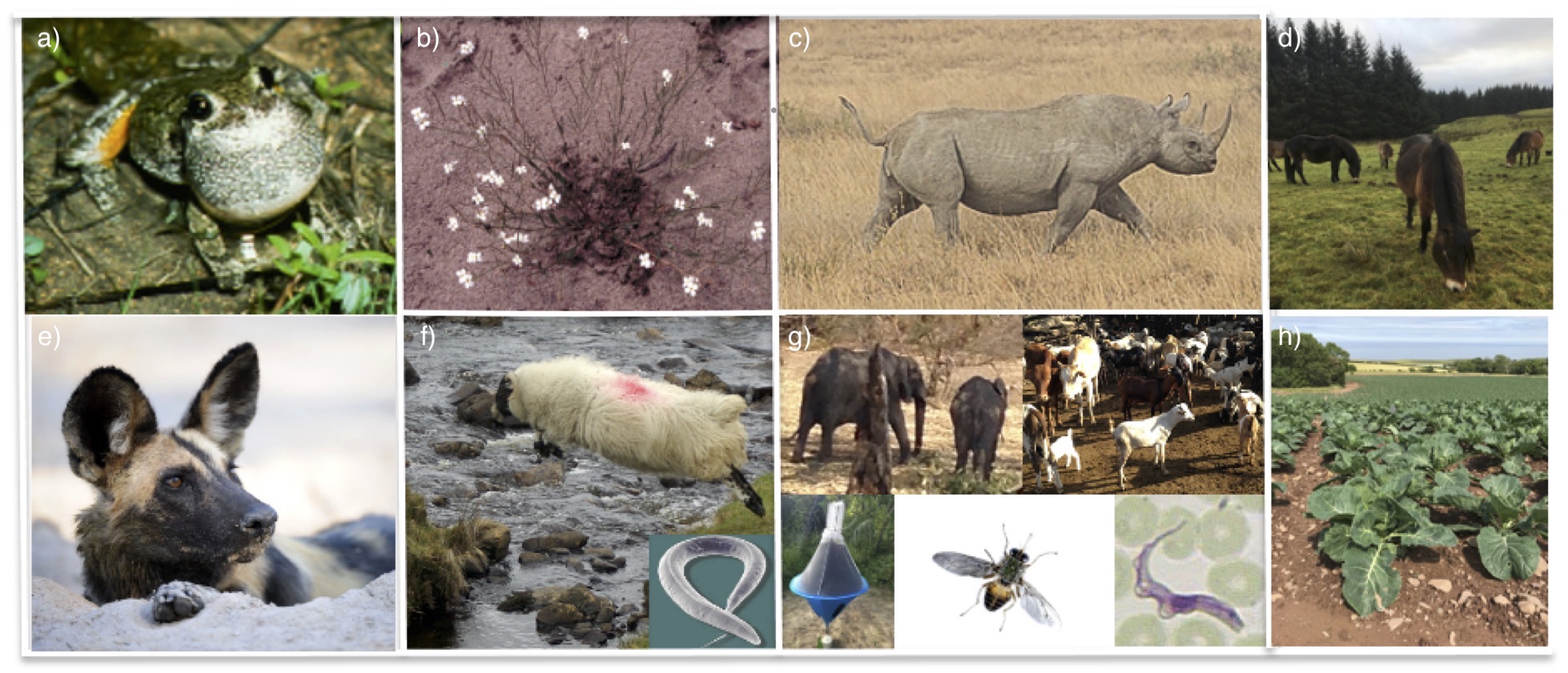
Figure 1. Some research questions and study organisms: evolution of mating systems and polyploidy in a) grey treefrogs (Hyla versicolor) and b) rock cress (Arabidopsis lyrata); conservation genetics of c) black rhinoceros, d) Exmoor ponies and e) African wild dogs; f) evolution of resistance to anthelmintics in nematodes infecting livestock; g) host-pathogen-vector dynamics (e.g. multiple species of tsetse flies feed on a wide range of wild and domestic hosts and can transmit multiple species of trypanosomes); and h) the influence of soil microbial communities on control of bacterial pathogens of crops.
Although we work on a wide range of organisms (bacteria, fungi, oomycetes, plants, nematodes, trematodes, kinetoplastids, molluscs, insects, amphibians, fish, birds and mammals), a central theme is considering the relative importance of genetic variation in general: how critical is it for adaptation and can genetics be used effectively to inform management interventions for conservation and disease mitigation? This has also led to new funding opportunities that have enabled diversification of our evolutionary genetics research team (Figure 2).
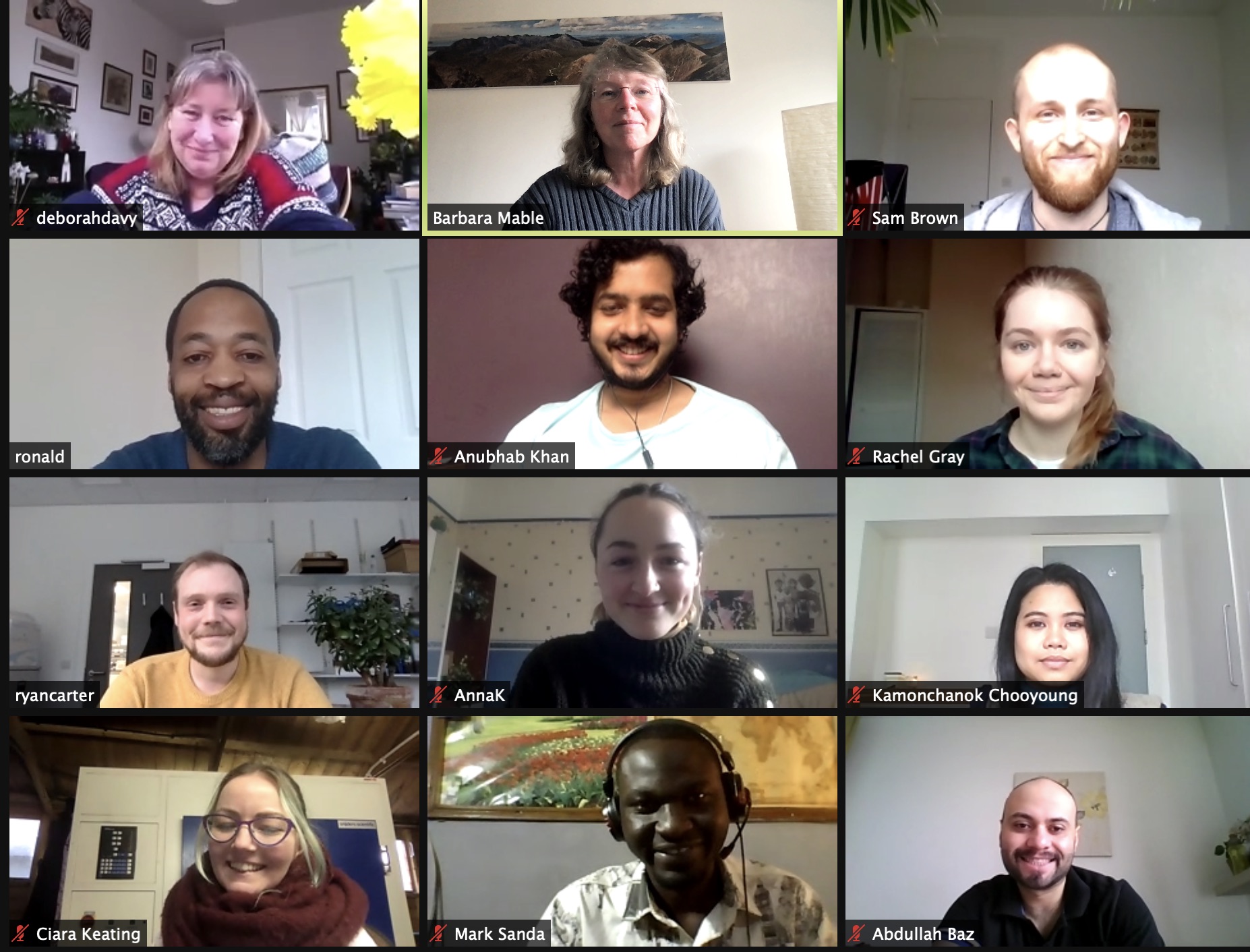
Figure 2. Lockdown teamwork: remote meeting of the evolutionary genetics group.
Ongoing projects led by recent or current PhD students include: 1) assessing diversity of the rhizosphere of plants in the genus Brassica in relation to cultivars and population genetic structure (Elizabeth Mittell, PhD awarded in 2019, funded by a Lord Kelvin and Adam Smith Scholarship); 2) developing molecular markers to inform translocation strategies for fenced populations of Southern White Rhinoceros in Botswana (Tarid Purisotayo, PhD awarded in 2020, funded by the government of Thailand); 3) investigating the genetic and ecological drivers of resistance in parasitic nematodes of sheep (Sam Brown, PhD candidate, funded by NERC); 4) conservation genetics and rewilding of Exmoor ponies (Debbie Davy, PhD candidate, funded by the Exmoor Pony Society); 5) genomic selection for immune function in cattle (Kamonchanok [June] Chooyoung, PhD candidate, funded by the government of Thailand); 6) assessing levels of genetic variation in protected populations of Northern Black Rhinoceros across Tanzania (Ronald Vincent Mellya, PhD candidate, funded by Zurich Zoo); and 7) how climate change is affecting economically important fish in Nigeria (Mark Kauna Sanda, PhD candidate, funded by a Commonwealth scholarship).
In collaboration with Umer Zeeshan Ijaz, Tom Morrison, Grant Hopcraft at Glasgow, and Linus Munishi at the Nelson Mandela African Institute of Science and Technology, a recent project led by two former master’s students, Koggani Koggani (funded by a Karimjee Jivanjee Scholarship and the Rufford Foundation) and Rachel Gray, is to use deep sequencing of chloroplast DNA amplicons to compare the diets of endangered ungulates and encroaching cattle populations.
Two funded collaborative research projects are led by postdoctoral fellows (Anubhab Khan and Ciara Keating) and critically supported by research technicians (Elizabeth Kilbride and Ryan Carter): 1) “What can you learn from a fly? Biting insects as noninvasive samplers” (funded by the Leverhulme Trust), in collaboration with Harriet Auty (IBAHCM) and a former Phd student, Manun Channumsin; and 2) “A Decision Support tool for Potato Blackleg Disease (DeS-BL)” (funded by BBSRC, NERC, DEFRA and the Scottish government), a consortium grant in the Bacterial Plant Diseases Programme, led by the James Hutton Institute (Ian Toth PI), in collaboration with Umer Zeeshan Ijaz (School of Engineering) and Joel Milner (MCSB) at Glasgow; you can hear Ciara talk about the project here.