

Landmark global initiative sets out a new roadmap for equitable precision oncology
Published: 25 September 2026
An international team of scientists has launched a global roadmap for the delivery of advanced cancer treatments, paving the way for more equitable care in the future.
An international team of scientists has launched a global roadmap for the delivery of advanced cancer treatments, paving the way for more equitable care in the future.
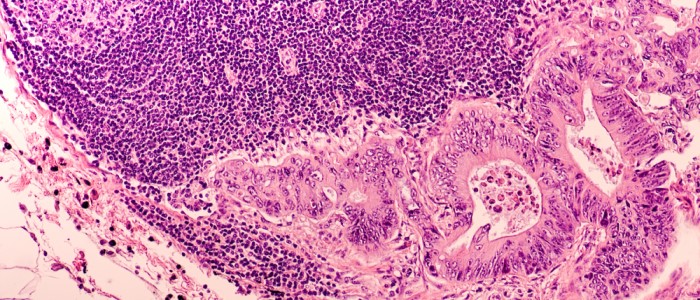
The Lancet Oncology Commission on Cancer Genomics and Precision Oncology, launched at the World Cancer Congress in Hong Kong, details the difficulties faced in delivering high-quality cancer care around the world, alongside a new, detailed plan aimed at tackling them.
Cancer genomics and precision oncology – the use of detailed genomic data to enable doctors to choose more precise and effective treatments to target a patient’s tumour – have driven major advances in cancer care over recent decades. However, the ability of healthcare systems to translate these scientific advances into routine care varies dramatically around the world.
Overall, the Commission found that the majority of health systems are unable to effectively deliver high-quality cancer care, as life-changing molecular testing and precision oncology treatments are only available in the wealthiest countries, and even then, often only in certain well-resourced areas.
The Commission concluded that the research and data ecosystems underpinning precision oncology remain deeply unequal, fragmented and insufficiently representative, with genomic research, biomarker-driven clinical trials and health data disproportionately concentrated in high-income countries and Western populations.
To address this, the Commission produced a framework to help different healthcare settings adopt genomic oncology advances at a pace, and at a level they can sustain.
Dr Raffaella Casolino, co-chair of the Lancet Oncology Commission, honorary senior lecturer at the University of Glasgow and former WHO cancer team technical officer said: “The expansion of precision oncology reflects major scientific achievements, which have helped to save and prolong many lives. However, it has also generated its own issues. New diagnostic systems, combined with rapidly changing evidence, financial burden and complex care needs, has meant that high-quality cancer care is increasingly difficult to deliver, particularly in low-income or under-resourced healthcare settings.
“Our assessment also found that patients around the world are now faced with confusing information, including potentially unrealistic expectations on molecular testing and innovative treatments, often associated with modest clinical benefit.”
The new Lancet Commission defines the current global precision oncology landscape and its inequalities, in unparallelled detail, generating new intelligence to define scientific, structural and health-system challenges that compromise genomics and precision oncology globally. Convening expertise in oncology, genomics, pathology, public health, health policy, economics, data science, ethics and patient advocacy, the Commission is the most comprehensive evaluation of precision oncology ever undertaken.
Mark Lawler, Co-Chair of the Commission, Chair in Translational Cancer Genomics and Professor of Digital Health at Queen’s University Belfast said: “The data do not lie. We estimate that around 7–8 million people with cancer worldwide require established, standard-of-care molecular testing every year to guide their diagnosis or treatment. However, our research indicates that around four in five eligible patients globally do not receive the biomarker testing they require. This is not acceptable. Precision oncology must be for all cancer patients, not just the privileged few.”
Importantly, the Commission was informed by people with lived experience of cancer. Reflecting WHO recommendations and our commitment to meaningful engagement, the Commission opens with a statement from this group, recognising the importance of lived experience in shaping how precision oncology is evaluated, implemented and ultimately judged in terms of value for patients.
Ikram ESEGHIR, Patient advocate expert, Founder and president of NABD-BC2 Best Care for Breast Cancer Association (Morocco), said: “Precision oncology is often described in terms of scientific progress, but for patients the real question is much simpler: will it lead to better care, better outcomes and better lives without causing financial hardship or other burdens for patients and their families? And will all patients who could benefit be able to access it, regardless of where they live or the resources available to them?”
Even in high-income countries, substantial inequalities persist. Patients treated outside major academic cancer centres, those living in rural areas and people experiencing socioeconomic disadvantage, may have significantly less access to genomic testing and precision treatments.
The barriers are more severe in many low- and middle-income countries, due to limited pathology and laboratory capacity, inadequate financing, fragile supply chains and shortages of specialist expertise. The Commission also found that inequalities in care are also mirrored in cancer research.
Sandra Perdomo, scientist in the Genetic Epidemiology Group at the World Health Organization International Agency for Research on Cancer (WHO IARC), said: “Cancer genomics programmes and biomarker-driven clinical trials are currently concentrated in high-income countries, relying on healthcare data predominantly from populations of European ancestry. Greater inclusion should be considered a scientific necessity, as well as an ethical obligation.”
Key levers have been developed by the Commission to empower implementation. (a) A value-based resource-stratified implementation framework; (b) A system-readiness assessment tool; (c) A precision oncology workforce competency-based framework; (d) A precision oncology monitoring and evaluation framework.
At the same time, the Commission stresses the need to build the science as implementation progresses – generating more representative evidence, addressing gaps in knowledge, and using real-world data to continually refine where and how precision oncology delivers meaningful value. This requires the final enabling layer identified by the Commission: a responsible data-sharing and health-system learning ecosystem.
This Commission, through a Global Call-to-Action and implementation roadmap, offers a strong basis for global consensus on a more equitable, evidence-informed, and sustainable path forward. Its recommendations are closely aligned with the landmark 2026 World Health Assembly resolution on precision medicine, which calls for equitable, context-appropriate integration of precision medicine into health systems worldwide.
Enquiries: ali.howard@glasgow.ac.uk or elizabeth.mcmeekin@glasgow.ac.uk
First published: 25 September 2026
<< MVLS News