

Siobhan Adesida

I am a PhD student in the Weir lab. I completed my undergraduate BSc degree in Neuroscience at the University of Dundee (2020-2024). My project research focuses on developing a novel model of neuropathic pain interactions using induced pluripotent stem cell (iPSC) technology, with an emphasis on exploring how non-neuronal cells influence pain processing.
Monika Bielska

I am a PhD student working with Kate Jeffery and Mick Craig on a BBSRC-funded project investigating the origin of place cells in the anterior thalamus. In my project, I am researching how different brain regions interact when we explore external environments – a function known as spatial navigation. I am mostly interested in specialised neurons called place cells which are one of the few fascinating mechanisms by which the brain represents our position in the environment.
I first joined the University of Glasgow in 2021 when I started my MSc in Brain Sciences. After graduating, I worked as a research technician in the Craig lab for over a year and I have been involved in various projects such as pharmacological studies or using animal models of psychiatric disease and inflammation.
Outside of the lab, you can find me practising asanas on a yoga mat or exploring Scottish parks and hiking routes.
Paschalina Chrysostomidou

I am a Research Assistant in the Weir lab, where I have recently finished my PhD work. I received my BSc in Pharmacology (2016-2020) prior to this, also at the University of Glasgow. My project focuses on developing viral strategies to selectively target primary afferents for the treatment of neuropathic pain.
Andy Cooper
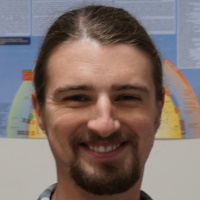
I am a postdoctoral associate in the Weir lab. I completed my PhD at the University of Nottingham supervised by Dr Gareth Hathway and Prof Vicky Chapman (2013-2017) and trained as a postdoctoral researcher with Prof Bradley Taylor at the University of Pittsburgh (2017-2020). My interests lie in identifying the mechanisms involved in the transition from acute to chronic pain, and my project here aims to dissect the relative contributions of discrete populations of primary afferents to the maintenance of ongoing neuropathic pain.
Raphael Cunningham

I am currently pursuing a UKRI-funded PhD at the University of Glasgow's SOCIAL AI CDT. My work involves applying deep learning models to small sample, multimodal MRI datasets with the ultimate aim of predicting motor function outcome in ischemic stroke patients with applications in personalised healthcare. My research interests include neuro prosthetics, computer vision and brain-computer interfaces.
Paula Ledesma Fernandez
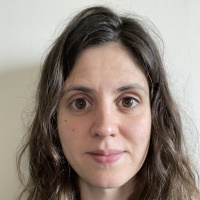
I am a PhD student in the Weir lab. I am a veterinary surgeon, and I graduated from the Autonomous University of Barcelona (2018). I gained clinical experience working as an equine veterinary surgeon before completing an MScR in Integrative Neuroscience; I conducted proteomics and in silico analysis to understand the pathophysiology of equine grass sickness (an equine neurodegenerative disease) under the supervision of Professor Thomas Wishart and Professor Bruce McGorum (2021-2022). I then worked as a Clinician at the Equine Practice of the University of Edinburgh and obtained a Certificate as Advanced Veterinary Practitioner. In September 2023 I moved to Glasgow to start my PhD, in which I am co-supervised by Dr Andrew Bell (primary supervisor) and Dr Greg-Weir (co-supervisor).
My project focuses on transcriptomic analysis of canine sensory neurons in the dorsal root ganglia. I am specifically characterising the molecular properties of nociceptive sensory neurons to aid rational analgesic design. My main interest is to strengthen and hone the translation between human and veterinary diseases.
Luis Zambrano Hernandez
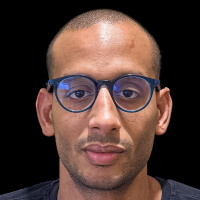
My name is Luis, and I am a JMS PhD student. My academic journey began in 2016 when I resolved to pursue a first-level qualification in Social Sciences at South Lanarkshire College. I graduated with a Higher National Diploma (HND) three years later. Following that, I deepened my understanding of psychology by pursuing a bachelor's degree in Applied Psychology at Glasgow Caledonian University. During this time, I was introduced to the neurobiological mechanisms of human behaviour, which solidified my interest in neuroscience research. From there, I set out to gain a postgraduate qualification in neuroscience, leading me to an MSc in brain sciences at the University of Glasgow. The final year project of my master's degree allowed me to gain experience in wet and dry laboratory techniques, cementing my commitment to scientific research.
After completing my master's, I began corresponding with Dr. Cassandra Sampaio Baptista from the University of Glasgow about undertaking a PhD under her supervision. With her guidance, I was fortunate to be awarded the James McCune Smith Scholarship, which allowed me to begin my PhD journey.
Alongside my academic background, I have gained valuable work experience in healthcare, particularly with vulnerable populations. As a social care worker, I have had the opportunity to work closely with individuals with various neurological and neuropsychiatric diagnoses. This experience has deepened my understanding of the relationship between neuroscience and mental health. It has also inspired me to focus on translational research as the cornerstone of my laboratory work, aiming to drive real-world changes in addressing mental health challenges.
During my PhD, I plan to employ molecular and behavioural techniques to investigate the impact of chronic psychological stress on the cellular mechanisms involved in myelin plasticity. I will explore how this relationship may lead to changes in neural circuits that facilitate the onset and maintenance of addictive behaviour. The overarching goal of this project is to understand the innards of myelin-differentiated cells in rodents during periods of stress exposure and examine how this link may trigger latent drug-seeking behaviour.
Tammy-Ann Husselman

I am a PhD Candidate at the University of Glasgow, researching the perception of visual illusions of neurodivergent populations in a virtual world. I have an extensive research background with cognitive psychology and teaching experience. I completed a BSc (Hons) in Neuropsychology and an MRes in Psychology at the University of Central Lancashire. My research interests are primarily in the philosophy of illusions, virtual reality, visual perception and neurodiversity.
Elizabeth Jacobs

My interest in human behaviour and emotion science was further cultivated by my time at York, when I was enrolled there for my BSc in Psychology. In my final year, I specialised and designed my dissertation project around the Dangerous Decisions theory and first impressions of faces. Furthermore, I also conducted my literature survey on whether the modulation of human emotions is capable via artificial intelligence. Both of these independent research avenues really honed my interest in on the relationship between human behaviour and artificial intelligence, especially in relation to emotions, micro-expressions and body language.
My PhD project aims to modulate cognitive models of emotional intelligence via the use of Magnetic Resonance Imaging and EEG to build cognitive models that explain modulation of brain activity in regions associated with emotions. The aim of this project is to build data-driven cognitive models of real-time brain network interaction during emotional modulation via said neurofeedback techniques. In my opinion, this would open up new avenues for the current field of wearable EEG technology.
Kayleigh Kanakis
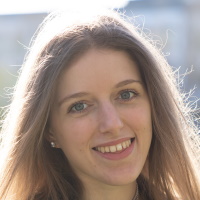
I am a first-year PhD student working with the Riddell (Spinal Cord Group) and Craig labs. My research focuses on nociresponsive Brodmann Area 3a (nBA3a), a small region of the cerebral cortex located deep within a fold (sulcus) of the brain. It lies at the border between regions involved in sensing touch and controlling movement. This study aims to investigate its potential role as a 'gateway' to broader pain networks. Specifically, I’m examining its involvement in nociception and its contribution to pain chronification, with the aim of identifying nBA3a as a potential target for non-invasive neuromodulation therapies for chronic pain. With a background in neuroscience and as a patient with chronic headaches, I hope that my contributions to the field will pave the way for more effective treatments for chronic pain conditions.
Nociception, the neural process of encoding potentially harmful stimuli, serves as the body's early warning system against threats. However, when this protective mechanism becomes dysregulated, it can lead to central sensitisation—a state of heightened responsiveness in the central nervous system. This maladaptive process is thought to ultimately result in the chronification of pain, where acute pain evolves into a persistent condition that significantly impacts quality of life.
Previous research has indicated that nBA3a is involved in processing nociceptive information and may play a crucial role in the integration of sensory and motor responses to painful stimuli. However, its precise function in pain processing and its potential involvement in chronic pain conditions remain largely unexplored.
This work will first aim to define the properties of nBA3a by mapping the connectivity and activation patterns of this region in response to various nociceptive stimuli to determine its role in nociception. Second, depending on the results from part one, we will be investigating the role of this brain region in the transition from acute to chronic pain to uncover potential biomarkers or mechanisms involved in pain chronification.
Marine Keime
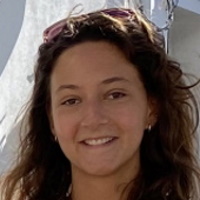
There are currently 12 million people aged 65 or over in the UK, so there is a fundamental need to understand the ageing process and develop interventions supporting healthy ageing. Advanced age is associated with deterioration of cognitive-motor skills. This manifests as a slowing of movements and deficits in the selection of appropriate actions, which negatively impacts the daily life activities. These declines in cognitive-motor control occur in parallel to changes in the brain. For instance, the way different brain areas interact with each other is altered: some areas are newly engaged, while others become more disconnected. Here, I will employ state-of-the-art technology that allows participants to visualise and control their own brain activity, termed fMRI neurofeedback. I will combine it with an action selection task, which involves planning and selection of the appropriate movement and is particularly sensitive to age-related changes as it engages both cognitive and motor processes. While doing this task inside a MRI scanner, participants will attempt to enhance the interaction between different brain areas. I will then assess if there are improvements in a variety of tasks including a daily life activity questionnaire. This will allow me to identify which brain connections are important for cognitive-motor performance and the independent living in older age. I will also test whether participants can use strategies to enhance brain connections even in the absence of neurofeedback. I will use qualitative methods to identify behavioural strategies that can potentially be used at home.
This project will further our understanding of the ageing process and provide proof of concept for a cutting-edge intervention tool to support healthy ageing and the independent living of the older person.
Juliane Kloidt

My research with Social AI CDT focuses on developing an electronic health application for stress management. Through analysing opportunities and challenges in the fast-growing field of AI health applications, I wish to investigate which individual factors, design characteristics, and theoretical underpinnings make mobile health applications most effective.
Prior to my PhD studies, I completed my BSc in Psychology with Neuroscience specialisation at the University of Glasgow. For my undergraduate dissertation, I investigated learning effects in rating individual motives for eating behaviours and COVID-19-related stress, employing novel situated measures. As research intern, I reviewed what types of interventions aid behaviour change. Across multiple clinical positions, I learnt about the needs and possible applications for mobile health interventions. Drawing from all of the above, my PhD project allows me to follow my strong interest in improving individual mental and physical well-being.
Eleonora Marcantoni
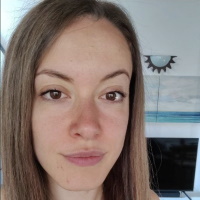
My name is Eleonora Marcantoni and I am a PhD student in the MRC Doctoral Training Programme in Precision Medicine, at the University of Glasgow. My research focuses on brain oscillations and the potential for modulating their activity through neurostimulation to better understand their role in cognition and their potential as therapeutic targets.
I completed my MSc in Neuroscience at the University of Bologna, with a thesis focusing on the causal manipulation of alpha rhythms to understand their role in conscious visual perception, under the supervision of Professor Vincenzo Romei. Following this, I held a position as a research assistant at IRCCS San Giovanni di Dio Fatebenefratelli in Brescia, Italy (2021–2022), under the mentorship of Dr. Marta Bortoletto. During this time, I had the opportunity to expand her expertise in the field of neurostimulation (TMS-EEG) applied to healthy and clinical populations. In September 2022, I moved to the UK to join the lab of Prof. Simon Hanslmayr as a PhD student.
Elena Minucci

My name is Elena Minucci and i am a PhD student on the Social AI CDT, supervised by Simone Strumpf and Martin Lages. My PhD project focuses on building a persuasive AI to help people adopt more sustainable lifestyles. I chose this project because I am passionate about researching ways to bridge the belief-behaviour gap around sustainable habits, and I am fascinated by the potential of AI in producing behaviour change interventions which are both individually tailored and scalable.
Prior to my PhD studies, I undertook a BA in Psychology and an MSc in Marketing at the University of Strathclyde, where I cultivated an interest in persuasion theories and their applications in real-world contexts. This culminated in my recent MSc dissertation exploring how different conspicuous symbols in advertising persuade different demographics to consume less.
In-between my studies, I worked as a Marketing Co-ordinator for a Scottish SME specialising in circular and AI-integrated lighting. Through this experience, I got acquainted with common barriers to adoption of sustainable systems, as well as some of the opportunities and challenges concerning human centred technology in business settings. Through my PhD studies, I look forward to building on this knowledge by exploring how interactive agents can help users make choices based on their individual preferences, circumstances, and motivations.
Alissa Plant
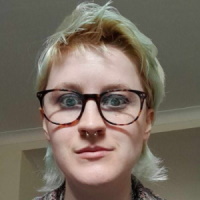
I am a PhD student primarily working with the plasticity lab better known as PLUG which is headed by Dr Cassandra Sampaio-Baptista. I will also be working with the Craig lab here in Glasgow University and with the Hawke lab in Lancaster University. During my project I will be exploring the relationship between myelin and Alzheimer’s pathology in Alzheimer’s mouse models. I joined Glasgow University in 2019 to complete my undergraduate degree in Neuroscience which I finished in 2023 and then went on to carry out an MSc in Brain Science. After finishing my MSc, I started my PhD through the North West Bio PhD program.
Outside of the lab I can usually be found cooking, going to concerts, playing games, hunting for trinkets in charity shops, or doing anything that involves building or making things.
Magdalena Redondo-Canales
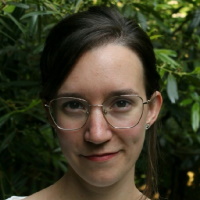
I am a postdoctoral research associate in the Weir lab. Before joining the Weir lab, I completed a PhD in Sensory Neuroscience at the University of Göttingen (Germany) under the supervision of Prof. Carolin Wichmann (2019-2023). I also completed a MScR in Integrative Neuroscience and undergraduate studies in Biology. My research interests lie in understanding the function our sensory neurons from the electrophysiological, confocal and ultrastructural perspectives. In particular, the project I currently work in aims to clarify the contributions of intact and injured primary afferents in a neuropathic pain model.
Yichen Wu

I am a Ph.D. student at the University of Glasgow’s School of Psychology and Neuroscience. My research interest lies in how facial expressions can have a role in multimodal communication and facial expression/perception. During my master's, I investigated how the ‘opening’ and ‘closing’ facial expressions can indicate a bigger or smaller number described by a vague quantifier in a multimodal context. During my Ph.D. now, I am investigating how the facial expressions of apology can differ across different cultures and what emotions or social signals these facial expressions comprise. I am also involved in projects relevant to facial expressions for social communication, such as the facial expressions of confidence.