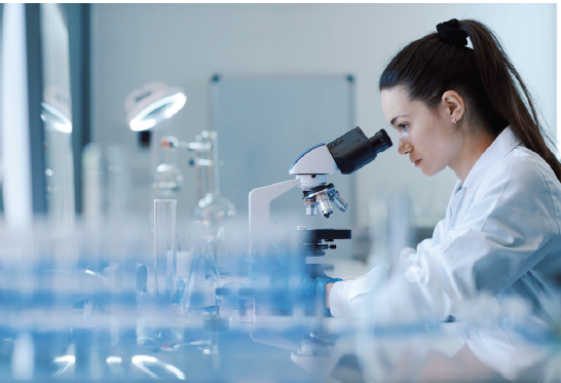
Our Clinical Services
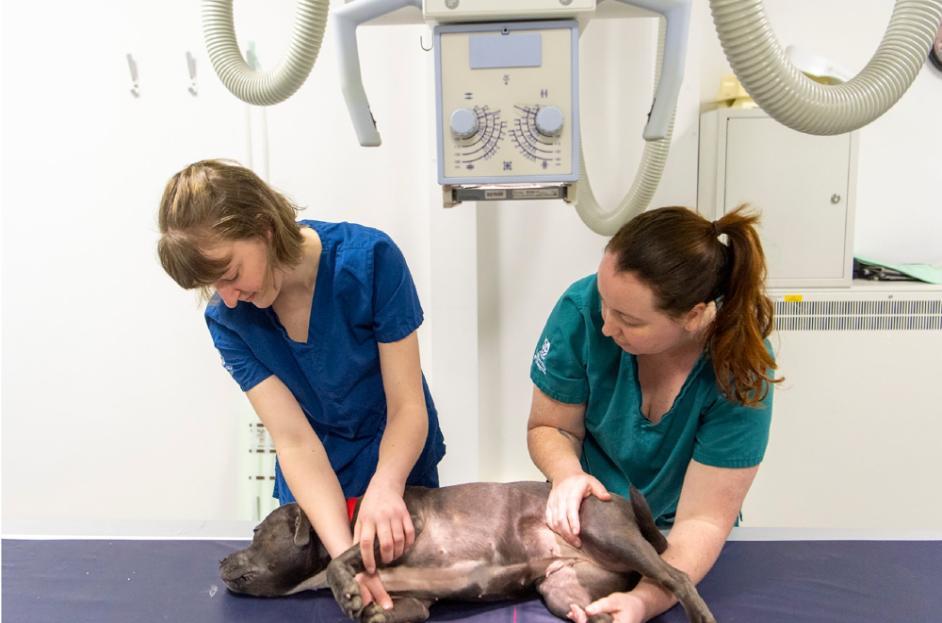
We offer a broad spectrum of clinical services across small animal, equine, production animal and veterinary diagnostics. While these exist to provide the highest standard of education and experience to the next generation of veterinary surgeons, they also have a civic responsibility in serving the surrounding communities with excellent clinical service.
In the last two years, we have overcome enormous external pressures in a rapidly changing commercial clinical environment. This positive trajectory has been achieved thanks to the efforts of dedicated staff across all job families. We successfully implemented an action plan involving new leadership teams, investment in nursing and support staff and the purchase of new state-of-the-art equipment to ensure the educational needs of our students are met, and the treatment of our patients remains worldleading.
Strategic Aims
At the highest level, our vision is to reaffirm the centrality of academic scholarship for our clinical staff. We want our staff and students to benefit from working within a university that encourages intellectual engagement and the opportunity for curiosity-driven research and pedagogy. We endeavour to:
(1) Enhance opportunities for our clinicians to engage with all forms of research. This is critical to our staff’s professional and academic development, and key to staff retention, morale and clinical excellence.
(2) Develop a Hub for Advanced Companion Animal Research, managed by staff with the relevant expertise to drive ambitious projects with clinicians. These projects will focus on revealing new mechanisms of animal disease, diagnostics, and treatments with translational potential.
(3) Continue to run our hospitals, primary care practices and diagnostic services in a financially sustainable way. This approach ensures we can deliver excellence in teaching to our students in one location (versus multi-site), which is important for student recruitment experience.
(4) Utilise internal funds to engage our clinicians with translational, genomic, fundamental research and/or One Health platforms and seek opportunities to enhance the number of clinicians qualified to PhD level.
(5) Promote our assets in clinics, pathology, and diagnostics within the College, across Colleges and the NHS to strengthen the reach and quality of our research and increase the number of scientific collaborations.
(6) Use our Home Office approval to discover new therapeutics and establish new
clinical trials in partnership with other HEIs to progress specialist areas and benefit clients.
(7) Expand our primary care initiatives and staff development within them to create an evidence based medicine platform that feeds into big data to further the profession and provide our staff and students with educational opportunities and research data for projects.
(8) Be future-focused on the value of our clinicians and employees to develop strategies to ensure we grow and retain our home-grown talent.
(9) Empower and support growth for our nurses and veterinary care assistants through career opportunities and more experience in clinical tasks, teaching and research.
(10) Actively support the Scottish fish-farming (primarily Atlantic salmon) industry, helping further the development of Scotland’s most economically important exported product.
(11) Provide a nationally recognised food production animal consultancy service for veterinary practices and farmers throughout Scotland and Northern England.
EXAMPLES OF RECENT PROGRESS AND SUCCESS
The Small Animal Hospital is a world leading multidisciplinary hospital. Ownership of a successful hospital allows control of training programmes for undergraduates and specialist post-graduates. As critical mass has grown, ideas for new clinics have developed and the hospital now hosts many specialist clinics including seizure, diabetic, and dialysis clinics. The installation of a new linear accelerator enables us to remain at the forefront of precision cancer treatment with further advances in a neuro-oncology service. As a centre for comparative and translational health research, a successful clinical trial in refractory epilepsy has been launched which could benefit both dogs and humans. With our close proximity with the Beatson Institute for Cancer Research we are well positioned for comparative research in cancer sciences. Currently we are collaborating with colleagues in the NHS to look at cardiac side effects of chemotherapeutic drugs.
The University of Glasgow Pet Practice has been successfully embedded in the Small Animal Hospital and provides invaluable experience to undergraduate students in primary care. This ensures we meet accreditation standards and provide outstanding service to the surrounding community. As it expands to offer increased teaching requirements, plans are in place to reach a more diverse clientele and establish ways to improve health inequality across the market.
The Equine Hospital is a vital service for teaching of our students and has established a strong reputation within the equine community. The School’s commitment to animal welfare and emergency response was recognised through hosting the British Animal Rescue and Trauma Association international conference with commendation of the practical workshops and collaborative discussions. The intention to lead in equine advanced imaging saw the installation of a standing MRI scanner. The hospital has also seen the launch and unprecedented growth of Scotland’s first specialist-led Equine Reproductive Service. Future plans are to become a DEFRA-recognised centre maintaining health in international breeding programmes. The equine service has extended its civic responsibility through pioneering a new equine collection scheme and providing care through satellite clinics in the Highlands and Islands.
The Production Animal team are committed to enhancing the productivity and sustainability of ruminant farming by integrating cutting-edge research with practical solutions, fostering a collaborative environment that bridges the gap between science and hands-on experience to benefit the wider community. Colleagues are recognised for the impact beyond the School as Chair of the Sheep Veterinary Society (SVS) and the Veterinary co-ordinator for the Highlands and Islands Veterinary Services Scheme (HIVSS). Investment in a robotic milker at Cochno will improve efficiency and ensure students are exposed to modern farming practices. Collaboration with an external corporate practice to fund a residency with two other practices keen to follow this model ensures stability in the residency programmes and establishes strong relationships with industry.
We work closely with colleagues in the University’s Innovation, Entrepreneurship & Engagement Team, in particular with Academic Consultancy Services. Recent collaborations include three consultancies, two within the animal nutrition and health sphere and one within the animal production and management analytics sphere. Services provided include laboratory services (laboratory testing), experimental services (experimental design, analysis and interpretation), expert consultancy (scientific and business), data analysis (scientific and business) and veterinary consultancy.
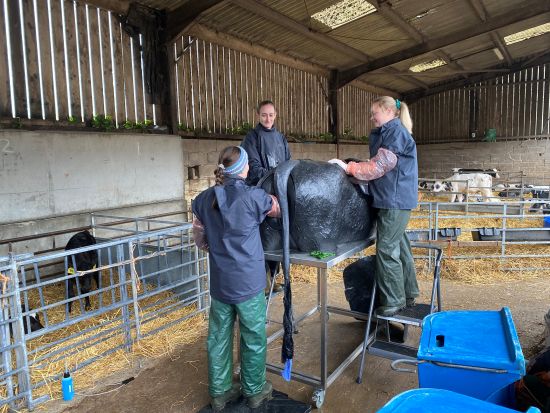
Veterinary Pathology, Public Health and Disease Investigation provide technical and collaborative support and high-quality research outputs to enable the growth of School-wide clinical services, while also providing services to local and wider research communities. Completion of upgrades to the current Post-Mortem Suite has improved biosecurity and Health and Safety, enhanced workflow for all users (students, researchers, teaching staff and technicians) and addressed short-term RCVS, AVMA and EAEVE accreditation requirements. Completing the design and build of a new post-mortem suite by December 2027 will facilitate and modernise teaching multiple veterinary disciplines including pathology, public health, disease investigation, medicine and surgery, support all University research requiring such facilities, and aid the further expansion and development of the Veterinary Diagnostic Services. Investment in new equipment (enhanced autostainer, downdraft tables and high-definition cameras) has increased both the range and capacity of VDS to conduct and support diagnostics, teaching and research, and increase income for further investment.