Our Learning and Teaching
Ranked 1st in the UK for Veterinary Sciences Research - Research Excellence Framework 2021
Ranked 1st in the UK for Veterinary Medicine - Times and The Sunday Times Good University Guide 2026
Ranked 1st in the UK for Zoology - Guardian University Guide 2026
Ranked 1st in the UK for Animal Science - Times and The Sunday Times Good University Guide 2026
Education is a core element of our mission. Our wide range of taught programmes seeks to equip current and future generations with the knowledge and skills to responsibly conserve and improve the natural and lived environment. This capitalises on the unique position of the School at the interface between human, environmental and animal health, and our world-leading researchers, educators, veterinary clinicians and scientists.
Through the shared understanding of teaching, research and clinical practice we aim to be leaders in the development of education and scholarship associated with one health, clinical veterinary medicine, and evolutionary and ecological sciences, providing educational opportunities to a wide range of learners from around the world at all levels.
With our world-leading marine & freshwater biology, veterinary medicine, veterinary biosciences and zoology degree programmes, we take a holistic approach to health, recognising the need to address social, economic, and environmental factors that impact environmental/human/and animal health and well-being. This encompasses local factors such as the cost of veterinary care, human and environmental factors that disrupt animal movement or predispose animals and humans to disease and/or compromise welfare, and the consequences of climate change on health and welfare.
STRATEGIC AIMS
We wish to deliver world-class education at all levels supported by an international multidisciplinary School providing up-to-date research-led teaching.
To advance these areas we will:
(1) Encourage and support staff to participate in upskilling for teaching and assessment with a recognition of teaching expectations for each career track.
(2) Develop our reputation in educational research and scholarship, including engagement using innovative teaching methods such as GenAI, VR, 3D models and simulation-based approaches.
(3) Combine research expertise across ecology, evolution, physiology, animal welfare, host-parasite interactions and infectious disease with veterinary clinical practice and research to continue the provision and development of new interdisciplinary teaching programmes that investigate the mechanisms that underpin life.
(4) Recognise the importance of successful accreditation by the American Veterinary Medical Association (AVMA), Royal College Veterinary Surgeons (RCVS) and European Association of Establishments for Veterinary Education (EAEVE) and the Royal Society of Biology (RSB) aiding us to develop and run internationally attractive and competitive programmes that emphasise our distinctiveness in veterinary medicine and life sciences.
(5) Advertise access routes to all our programmes within the UK and internationally and encourage applications and engagement from students from under-represented backgrounds to enhance equality, diversity and inclusion.
Examples of recent progress and success
Through its reputation in research and veterinary clinical education, SBOHVM continues to bring together and grow an internationally rich community of learners across a range of undergraduate and postgraduate programmes.
The school is continuously enhancing and refining its teaching provision. Notable areas of growth and expansion include the development of the One Health PGT programme (One Health and Infectious Diseases) to increase transdisciplinary relevance across medical specialities; initiating the restructure of the Bachelor of Veterinary Medicine and Surgery professional phase, substantially extending the period of workplace-based learning and increasing opportunities for synthesis and reinforcement programme’s foundation on evidence-based veterinary medicine.
The worldwide reach of our teaching programmes has been extended through the development of national and international field courses and clinical selectives.
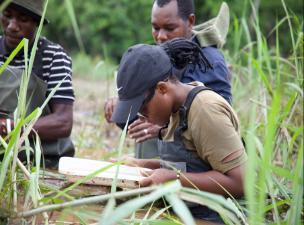
Importantly, our international and national field courses and clinical selectives are aligned with the University’s sustainability strategy. To support our undergraduate students’ international development, we offer overseas field courses, e.g. in Kenya and Egypt. While this teaching offers a valuable addition to the curriculum, we are also conscious that long-distance travel involves a substantial carbon footprint. In addition to course-specific material, students now also learn about the carbon footprint involved, its calculation and opportunities to mitigate it. This curriculumintegration initiative has been very popular with the students. We have formed a collaboration with the Borders Forest Trust, a community-based environmental charity devoted to restoring woodlands in southern Scotland; each student in the international field courses has an opportunity to offset their carbon footprint by participating in the Border Forest Trust activities.
The high quality of our teaching provision is reflected in international rankings e.g. Zoology was ranked 1st in the Guardian university guide for the third time in a row) and the excellence of our staff has been evidenced through teaching awards, for example, an award delivered to Luca Nelli.