


UofG at 575: a memorable milestone
Five-and-three-quarter centuries ago, the world gained its newest university when Pope Nicholas V, at the request of Scotland’s King James II, issued a Papal Bull – a formal public decree – that founded the University of Glasgow on 7 January 1451. Reaching our 575th birthday is a true cause for celebration and we have a series of events and occasions planned throughout 2026 to mark this milestone.
Written in Latin and addressed to Bishop of Glasgow William Turnbull, the Papal Bull authorised the creation of a new centre of learning which would offer classes in canon and civil law, theology and the arts. The text of the Bull is rich with optimism and reflects on the opportunity for ‘mortal man’ to ‘win the pearl of knowledge, which shows him the way to live well and happily’. The city of Glasgow was regarded as ‘particularly well fitted for multiplying the seeds of learning’ and time has shown the choice of location to be more than justified.
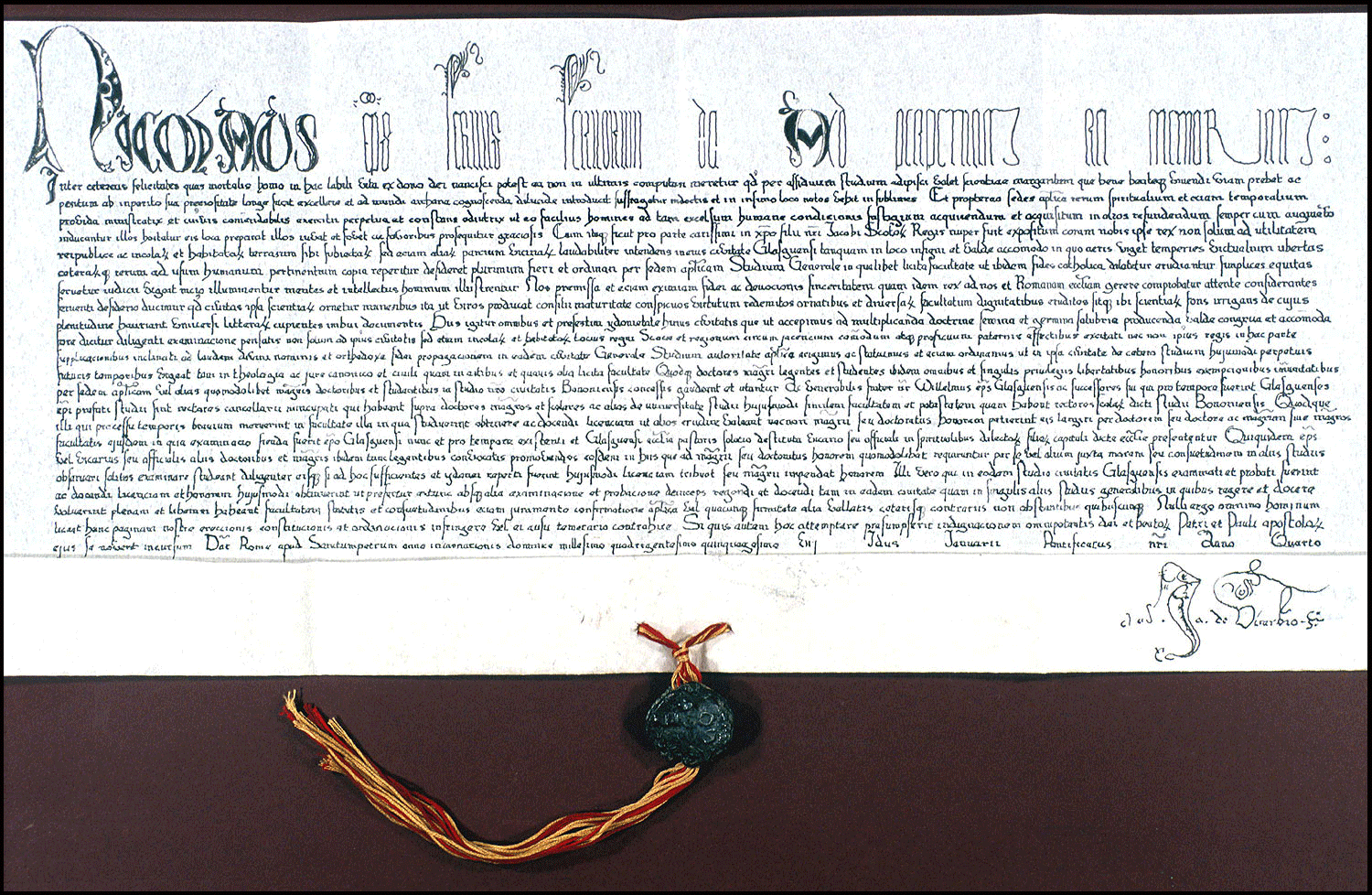
A replica of the Papal Bull – the document granting the authority for the University to be established in 1451. The original was taken to France for safekeeping then lost during the Scottish Reformation.
Teaching began in the modest surroundings of the Chapter House at Glasgow Cathedral before moving to nearby Rottenrow, then to a site on the High Street in the 16th century. In common with other universities of the time, early undergraduate degrees focused on the Arts – in Latin, Greek, Logic, Moral Philosophy, Natural Philosophy (Physics) and Mathematics. The teaching of Medicine, started but abandoned in the 1600s, gathered momentum in the 18th century and the Faculty of Medicine soon came to encompass the life sciences of Botany, Zoology and Chemistry as well.
Space to flourish
In 1870 the University moved up in the world when the Gilbert Scott Building was built, towering over the West End on Gilmorehill. The move was prompted by the industrialisation of the High Street area and the need for more space for its increasing student population. The entire footprint of the Old College would have fitted into one of the new quadrangles of the Gilbert Scott Building, and the first student union was also built as part of this move, in what is now the John McIntyre Building. In 1892, women were finally permitted to study for a degree at Glasgow.
After Oxford and Cambridge, founded in the early 13th century, then St Andrew’s in 1413, Glasgow is the fourth-oldest university in the English-speaking world. Founded with the purpose of serving the needs of its city and region, Glasgow embodied the ideals of the civic university centuries before this term was coined. Since then, our people have been challenging and changing the world, drawing on creativity, innovation and partnerships to rethink what is possible in our commitment to tackling the most urgent global issues that we face.
Glasgow to the world
From our small beginnings – two centuries after our foundation, our student roll was still just 150 – the University’s reach now spans the globe. Today, we have four overseas campuses and partner with over 300 international institutions, allowing the sharing of knowledge and expertise to tackle and solve urgent global issues. Among our networks are the prestigious Russell Group, and we are a founding member of international networks Universitas 21, The Guild of European Research-Intensive Universities and CIVIS, a European University Alliance. And in 2014, a major acquisition of land bordering our main campus has allowed us to construct world-class new buildings for teaching, learning, research and collaboration, equipped with cutting-edge facilities.
At the heart of the University’s story, almost six centuries old, is the belief that education should be open to all, regardless of background or circumstance. We have a long, respected tradition of giving fair access to education, supporting talented students to reach their potential and achieve their ambitions.
Our long legacy of impact
This spirit has helped to shape our position of academic excellence at the forefront of innovation. We have produced eight Nobel laureates, three UK Prime Ministers, three First Ministers of Scotland, ten Fellows of the Royal Society and 11 Fellows of the British Academy, as well as eminent scientists, politicians, writers, inventors, thinkers and activists. The impact of our people and their research has been felt across the globe for 575 years, and, with an eye firmly on the future, we will continue to change the world. We are here for good.
Take a look below at just a few of the historic events and extraordinary people connected with UofG over the centuries.
This feature was first published in January 2026.
575 WORLD-CHANGING YEARS
• 1451 – the University is founded and classes begin in Glasgow Cathedral.
• 1563 – Mary, Queen of Scots bails out the impoverished University with a donation of money, land and food, saving the institution from bankruptcy.
• 1776 – Adam Smith publishes 'The Wealth of Nations'.
• 1837 – James McCune Smith becomes the first African American to be awarded a medical degree anywhere in the world.
• 1848 – Lord Kelvin proposes an absolute scale of temperature.
• 1894 – Marion Gilchrist is the first woman in Scotland to graduate in medicine.
• 1896 – Graduate John McIntyre opens the world's first X-ray department in Glasgow Royal Infirmary.
• 1949 – Graduate John Boyd Orr is awarded the Nobel Peace Prize for his nutrition research and work with the United Nations.
• 1958 – Glasgow Professor Ian Donald shows the world the first ultrasound images of a foetus.
• 2015 – UofG achieves top 100 status in both the QS World University Rankings and the Times Higher Education World University Rankings.
• 2015 – Gravitational waves, predicted by Albert Einstein, are detected after Glasgow scientists play a crucial and longstanding role in their research.
• 2021 – David MacMillan (BSc 1989) is announced as the winner of the Nobel Prize for Chemistry, becoming UofG's eighth Nobel Laureate.
REVISITING OUR PAST


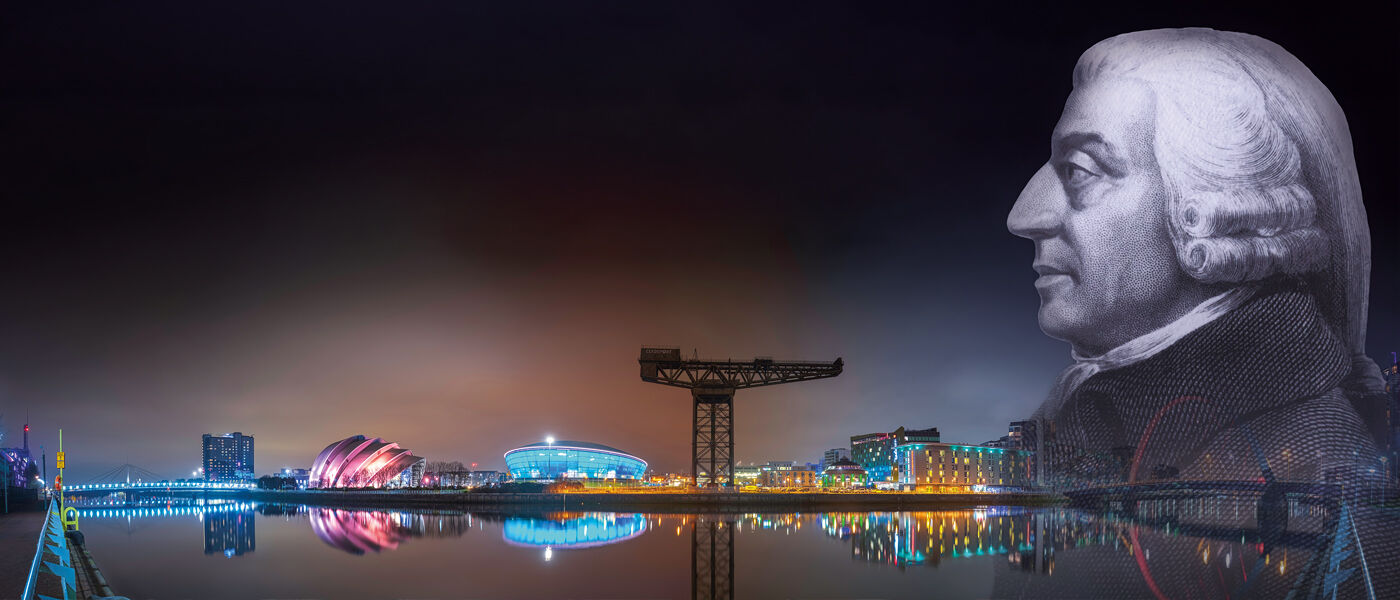
Adam Smith 300
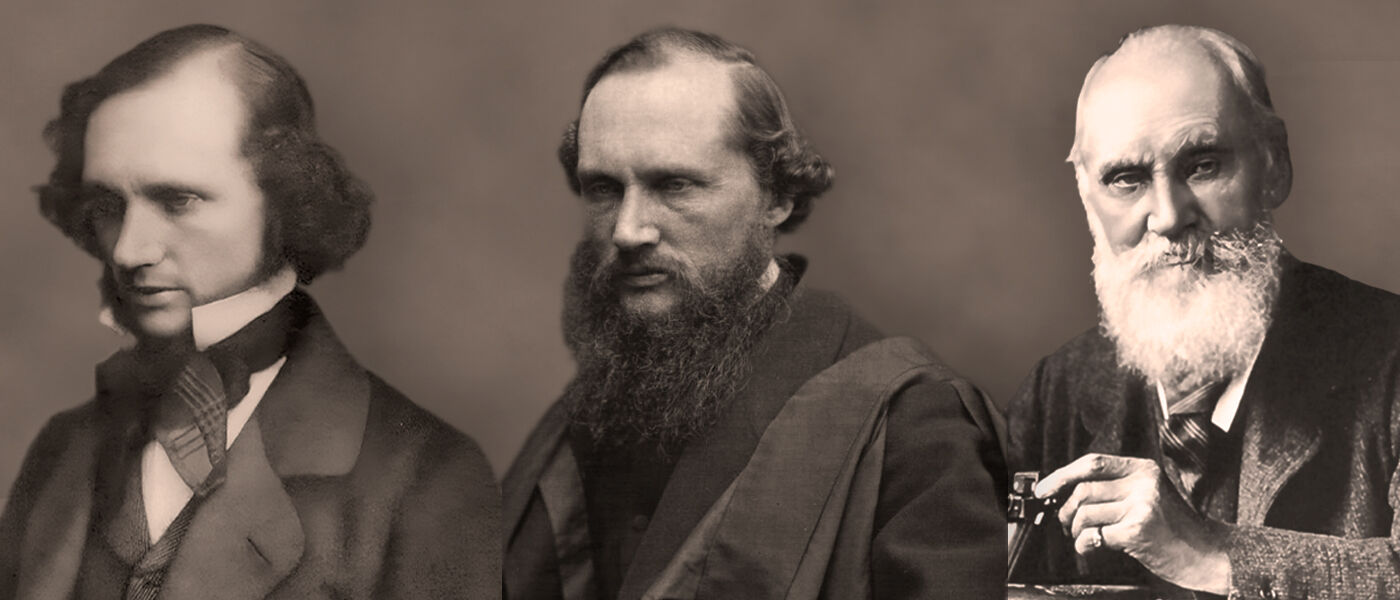
Lord Kelvin 200

Queen Mary to the rescue
How Mary Queen of Scots stepped in to save the University from potential bankruptcy.

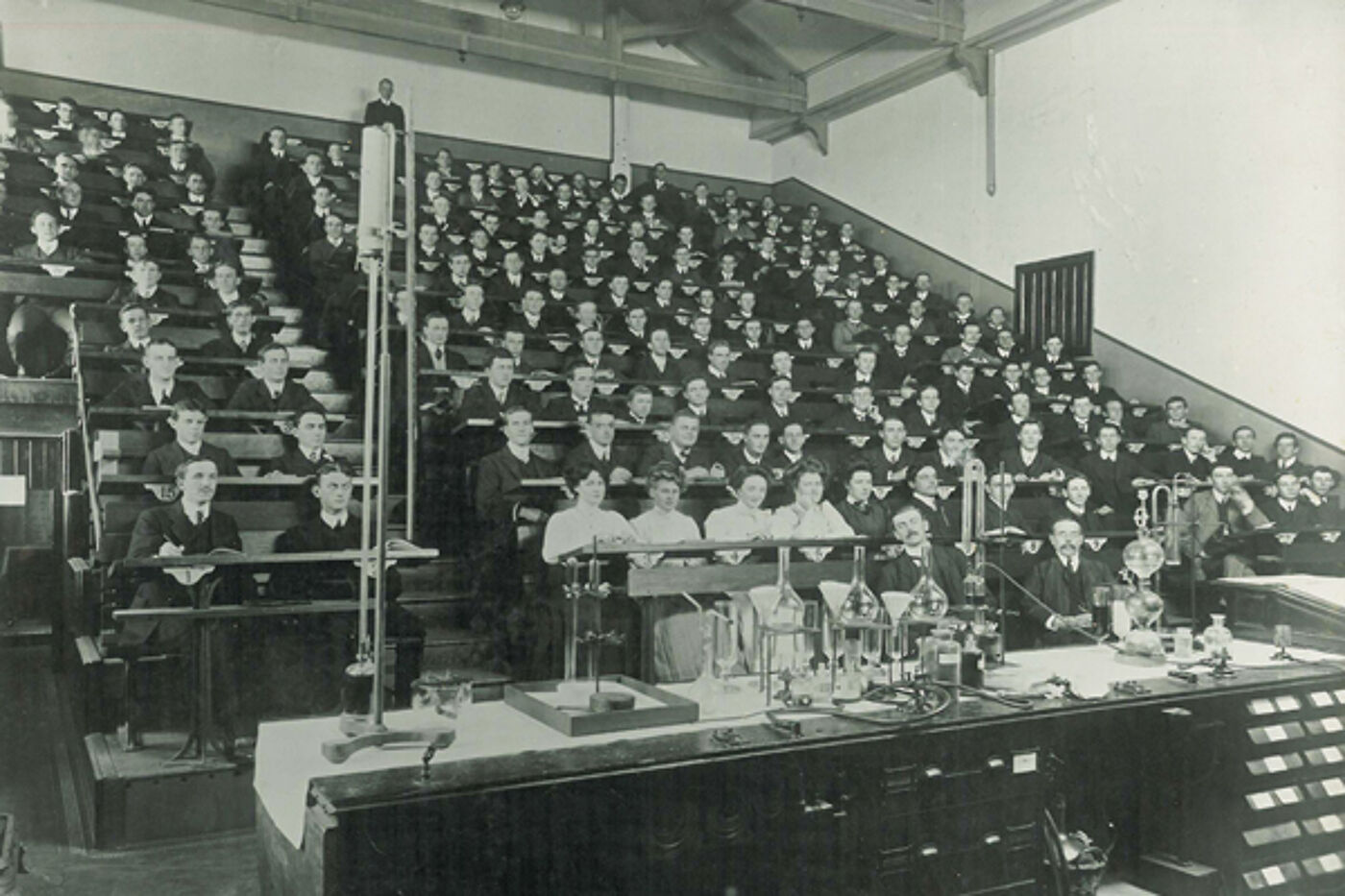
Teaching in the last 150 years
Lecturing and learning have undergone huge changes since UofG moved to Gilmorehill in 1870.
A world-changing discovery

Glasgow 850: Healing the city
How UofG medical advances have impacted the health of Glasgow's people.