


The University at 575: opening our doors wider
From our very beginnings in medieval times, the University has held fast to an idea that was radical at the time – that talent and academic achievement should not be limited by life circumstance.
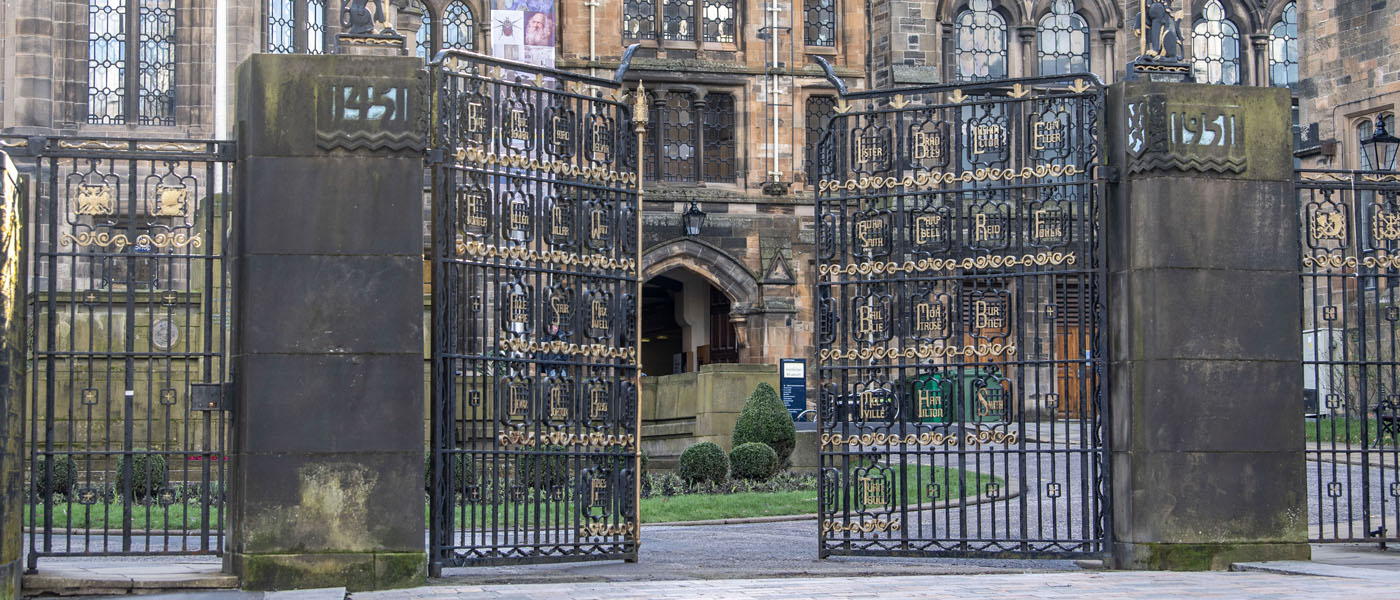
Despite the fact that the Papal Bull, the document which officially founded UofG in 1451, was written in the language of the elite – Latin – its contents are surprisingly egalitarian, with wording declaring that a Glasgow education “helps the ignorant, and raises to distinction those that were born in the lowest place.”
Our ethos of supporting students of modest means, but keen intellects, continued: in 1563, Mary, Queen of Scots founded bursaries for “five pouir children” to be fed and educated as part of a package of donations, including land, which effectively saved the University from bankruptcy.
Throughout the Middle Ages, recipients of bursaries were normally local students who were being supported by the church – sometimes the Bishops of Glasgow – and over the centuries that followed, the culture of widening participation grew stronger, with a range of bursaries and scholarships being introduced to support capable students from modest backgrounds.
Support widens
In the 18th and 19th centuries, these were often endowed by private individuals, merchants and the church, to support local students in aligned fields such as divinity. By the middle of the 19th century, the offering of bursaries was expanded from general support to increasingly include specific academic disciplines. Rich Glasgow industrialists were frequently the source of these, and the Trades House of Glasgow, established to support the craftsmen of the city, awarded bursaries and scholarships which were often used to send students to the University from the 1600s onwards.
Education for all
Access was finally extended to women in the 1890s. The first female medical graduates – Marion Gilchrist and Alice Louisa Cumming – graduated in 1894, and the first female law graduate, Madge Easton Anderson, in 1916. Following in their footsteps have come trailblazers in their fields such as Dame Jocelyn Bell Burnell who, even in the 1960s, was still the only female in her physics class.
Widening participation looks different to modern students in the 21st century, but has no less of a positive impact. We offer programmes introducing school pupils from non-traditional backgrounds to university, specific help with dentistry, law, medicine and veterinary medicine, summer schools and offers of entry that may be adjusted based on context and the individual. And with our status as a University of Sanctuary since 2022, we are continuing to build on our legacy of being open to the brightest minds, by welcoming those whose access to education may have been affected by forced migration or displacement.
"I work here at Glasgow because I genuinely believe that as an institution, we recognise the responsibility we have to serve our local communities in Glasgow and the surrounding areas; that education is for everybody. It may be idealistic, but it's embedded within what we do as an institution.
Widening Participation Adult Learner Team Leader Daniel Keenan
Current medical student Heeba Khalid went to school in an area of Glasgow where traditionally fewer pupils progress to university. "When I was applying for university, I didn't really have a role model to look up to and ask questions to," she says. "First year was really different from high school, I wasn't quite sure how to study and I was worried about the workload of a medical degree.” Heeba became part of our Talent Scholarship programme, which provides financial help for students with excellent academic achievement to take up their place at the University. “The scholarship has helped me build my confidence and allowed me to take part in opportunities which I wouldn’t have been able to do otherwise,” says Heeba. “The value and impact that it's having on my academic journey is really powerful.”
Fellow Talent Scholar, Economic & Social History student Tyler Crawford, came to the University as an ‘estranged student’ who had become homeless at just 16. Her school suggested she apply for the scholarship: “I come from a long line – six generations of family members – with very short lifespans," she says. "The Talent Scholarship was a lifeline for me. It provided the support of being part of a community of people who could understand what it was like to be not just disadvantaged, but to be isolated, and maybe not to relate to a lot of people here. Without it, I wouldn't be where I am, because my work-life balance would never have let me hold a grade average that would allow me to graduate. I love my course, looking at how policy, war and conflict affect society and the real impact it has on so many people. The scholarship has helped provide a pathway beyond university for me, after I graduate this summer, and form my personal development and my next steps.”
THE WORLD'S FIRST BLACK MEDICAL GRADUATE
"I have striven to obtain an education at every sacrifice and every hazard, and to apply such education to the good of our common country." James McCune Smith (BA 1835, MA 1836, MD 1837)
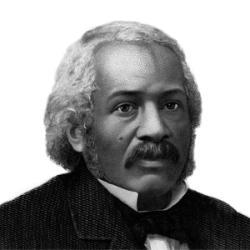
After being rejected from all American institutions to study medicine, Smith looked overseas to Glasgow, where he was welcomed and allowed to complete the first medical degree by a Black person anywhere in the world, followed by two more higher degrees. Now, in the 21st century, we offer PhD scholarships in James McCune Smith’s name to 10–15 scholars each year.
Main image: www.HawkAye.com
This feature was first published in April 2026.