

UofG to co-lead major new project on mosquitoes
Published: 8 January 2026
A major new project on mosquitoes, their viruses, and associated disease risks in Northern Ireland will be co-led by a multi-institutional team which includes the University of Glasgow, Queen’s University, Belfast and the UK Centre for Ecology and Hydrology
A major new project on mosquitoes, their viruses, and associated disease risks in Northern Ireland will be co-led by a multi-institutional team which includes the University of Glasgow, Queen’s University, Belfast and the UK Centre for Ecology and Hydrology.
MosquitoNI will be co-led in Glasgow by Dr Emilie Pondeville, from the MRC-University of Glasgow Centre for Virus Research (CVR) and by Dr Ross Cuthbert at Queen’s, who has been awarded over £1 million through the Biotechnology and Biological Sciences Research Council New Investigator Award scheme.
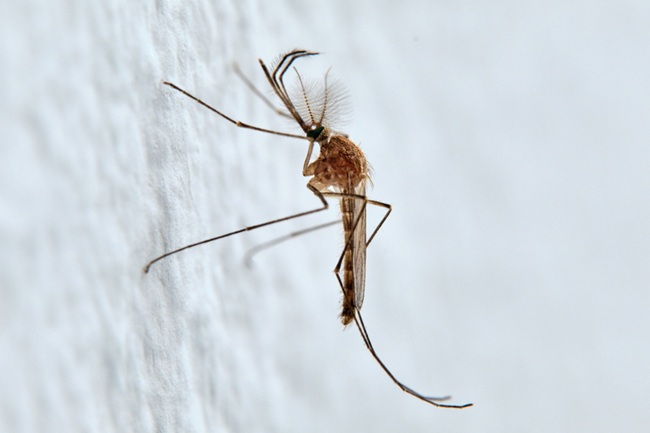
The investment will allow the multi-institutional team to build new research capacity in Northern Ireland to address emerging mosquito-borne disease threats under environmental change and will advance research into mosquito-borne disease risks in the UK.
Vector-borne diseases cause over 700,000 human deaths annually, with mosquitoes posing the greatest burden. The scale of this threat is connected to environmental changes: urbanisation, agricultural intensification, climate change, resulting in mosquito species shifting their distribution, abundance, and activity patterns, as well as their interactions with pathogens.
While mosquitoes are often seen as being confined to more tropical regions, the United Kingdom and Ireland are experiencing increasing mosquito-borne disease risks to the public, livestock, and wildlife. Despite research efforts increasing in recent years, Northern Ireland has remained overlooked around mosquito-borne diseases, with limited surveillance and research capacity. Nevertheless, there are at least 20 species of mosquitoes currently recorded across the island of Ireland — often playing a vital role within our ecosystems. Land use and climate change are rapidly shifting risks of nuisance biting and vector-borne disease, while biological invasions could bring non-native mosquito species alongside new pathogens that thrive under warming conditions.
The project aims to establish new transdisciplinary networks that bring together academics, industry, charities, government, and the public to co-design outcomes and ensure findings are shared widely. By fostering these collaborations and prioritising public engagement, MosquitoNI aims to shape policy, inform decision-making, and raise awareness of mosquito-borne disease risks, ensuring that Northern Ireland is better prepared to respond to current and future challenges.
Dr Emilie Pondeville, Senior Research Fellow and molecular and medical entomologist at the MRC-University of Glasgow Centre for Virus Research (CVR), brings expertise in mosquito biology, disease transmission, and high-throughput mosquito-borne pathogens surveillance techniques, contributing to national efforts such as the Mosquito Scotland project.
Dr Pondeville’s state-of-the-art mosquito research infrastructures at the University of Glasgow provide Queen’s researchers with access to world-leading facilities for studying mosquito–arbovirus interactions using cutting-edge genetic tools.
Dr Emilie Pondeville said: “This collaboration will strengthen links across the UK, Northern Ireland, and Scotland, fostering new partnerships and building long-term capacity in vector-borne disease research. This work is increasingly crucial in the context of climate change and the rising risk of mosquito-borne disease emergence and circulation.”
Dr Ross Cuthbert said: “Mosquitoes are an increasing concern in temperate areas but are generally overlooked. This project will fill major knowledge gaps about mosquitoes and their potential to spread disease in Northern Ireland, helping us better predict future disease risks as the climate shifts.
“I’m grateful to the BBSRC for their support, which will allow us to establish vital regional capacity for mosquito and pathogen surveillance, while raising societal awareness of the issue.”
Mosquito Scotland is a collaborative project between the University of Glasgow, the UK Health Security Agency (UKHSA) and the UK Centre for Ecology & Hydrology (UKCEH). The project incorporates the views of stakeholders from Public Health Scotland, the Scottish Government and environmental agencies, is the first to assess the risk of mosquito-borne pathogen emergence in Scotland under current and future climate change scenarios.
The BBSRC New Investigator Award supports early-career researchers in establishing independent research programmes, providing funding to pursue ambitious projects that address key scientific and societal challenges.
The project co-lead at Queen’s is Dr Connor Bamford, formerly of the University of Glasgow, and Drs Steven White and Dominic Brass from UK Centre for Ecology and Hydrology.
Enquiries: ali.howard@glasgow.ac.uk or elizabeth.mcmeekin@glasgow.ac.uk
First published: 8 January 2026
<< MVLS News