

Modelling mobile animal groups as attention-based graph neural networks
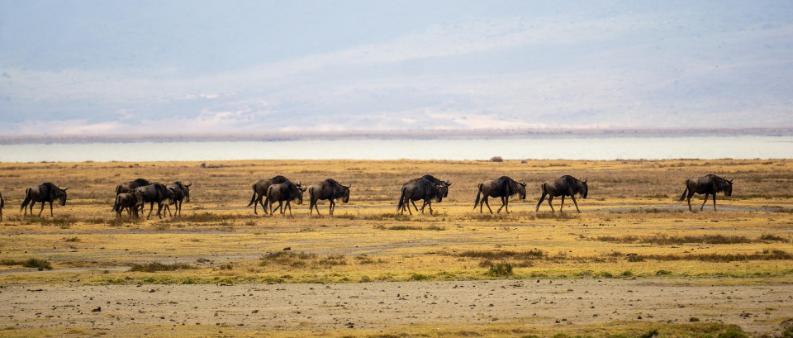
Collective movement is ubiquitous throughout the natural world; from fish schools, marching ants, to herds of wildebeest, living organisms live and move collectively. Understanding how animal groups are able to achieve large scale coordinated motion in the absence of centralised control is an important challenge for movement ecology. Recent developments in artificial intelligence have made it possible to develop and train intelligent algorithms that are able to process large complex datasets and extract meaningful insight from these data. A new class of machine learning models, graph neural networks, present an exciting opportunity for understanding interacting systems including animal groups. These models can be trained on simulated or empirical data and can learn to predict the behaviour of complex interacting systems. This project seeks to develop a framework for using attention-based graph neural networks to model collective movement of animal groups using data from UAV studies of wildebeest, caribou, and bison. A core aim of the project will be to investigate the connections between information processing in animal groups and the emergent intelligence of attention-based neural networks.