

VETERINARY MEDICINE & SURGERY (BVMS)
1st in the UK for Veterinary Medicine in the Times & Sunday Times Good University Guide 2026
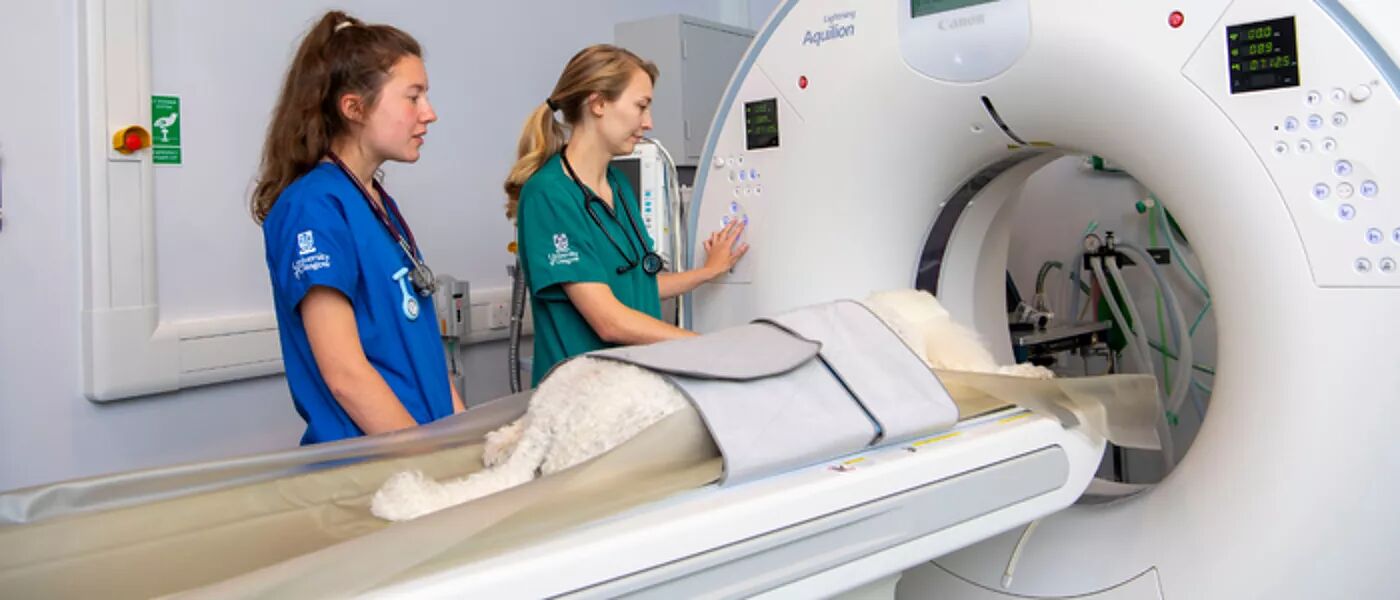
Our Veterinary Medicine & Surgery (BVMS) programme prepares you for a rewarding career as a veterinary surgeon through an integrated curriculum that combines world-class teaching, clinical training and research-informed learning.
From your first year, you'll develop the scientific knowledge, practical skills and professional confidence needed to care for a wide range of animal species while promoting animal health, welfare and public health.
With access to outstanding clinical facilities, expert academic staff and extensive placement opportunities, you'll graduate ready to meet the challenges of modern veterinary practice and make a meaningful contribution to society.
Programme Key Information
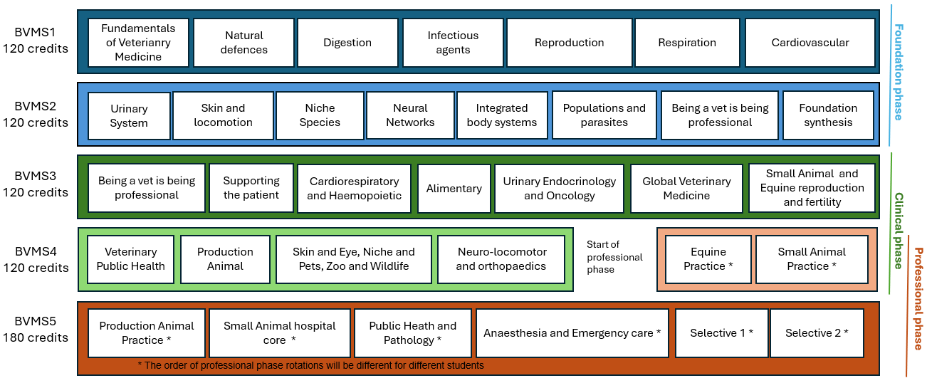
*This is an example of the course structure for an academic year
Our BVMS programme combines world-class teaching with practical, hands-on learning, giving you the knowledge, skills and experience to thrive as a veterinary professional.
- Early clinical exposure – Develop your clinical skills and professional confidence from the early stages of the programme through practical teaching, simulation and clinical placements.
- Cochno Farm – Gain valuable hands-on experience in livestock management and production systems at the University's commercial teaching farm, supporting the development of essential husbandry and clinical skills.
- Single-site learning – Benefit from studying on a dedicated veterinary campus where teaching, clinical facilities, research laboratories, farms and student support are all located in one place, fostering a collaborative learning environment and a strong sense of community.
Accreditations / NAVLE

As a graduate of Veterinary Medicine at Glasgow, you can register as a member of the Royal College of Veterinary Surgeons (MRCVS). Along with the University’s accreditation by the AVMA, this means that our graduates can choose to work anywhere in the world, and the global opportunities are endless. The majority of registered veterinary surgeons in the UK are in general practice, which may be small animal, farm animal, equine or mixed. Our graduates are also employed in government service, dealing with investigation, control and eradication of important diseases. Others are actively engaged in food hygiene or in university teaching and research.

North American Veterinary Licensing Examination
Passing the NAVLE is a requirement for veterinary licensure in the United States and Canada, and the School currently holds full accreditation status, enabling graduates to meet this requirement.
We always have, and will continue to, provide support for students who wish to sit the NAVLE. Following the drop in the NAVLE pass rate we reassessed and strengthened this support. We now have 3 members of staff allocated to provide support to students intending to sit the NAVLE. Active support from this team is initiated in year 3 of the BVMS programme.
All students wishing to sit the NAVLE are provided with:
- Funded access to Vet Prep and/or Zuku review NAVLE preparation packages
- Funded access to ICVA self-assessment exams
- Individual review meetings
- Guidance around optimal preparation for and decision on timing of NAVLE attempts
- Dedicated support resources
- Students attend a NAVLE study block
As of 2025/26 we will also be employing the ICVA Veterinary Education Assessment (VEA) from year 3 to help assess students' state of knowledge relative to their preparation for the NAVLE.
See COE Accreditation policies and procedures classifications for further information on accreditations status, eligibility for the NAVLE examination and licensure in the USA and Canada.
More information about our accreditations click here
Career Prospects
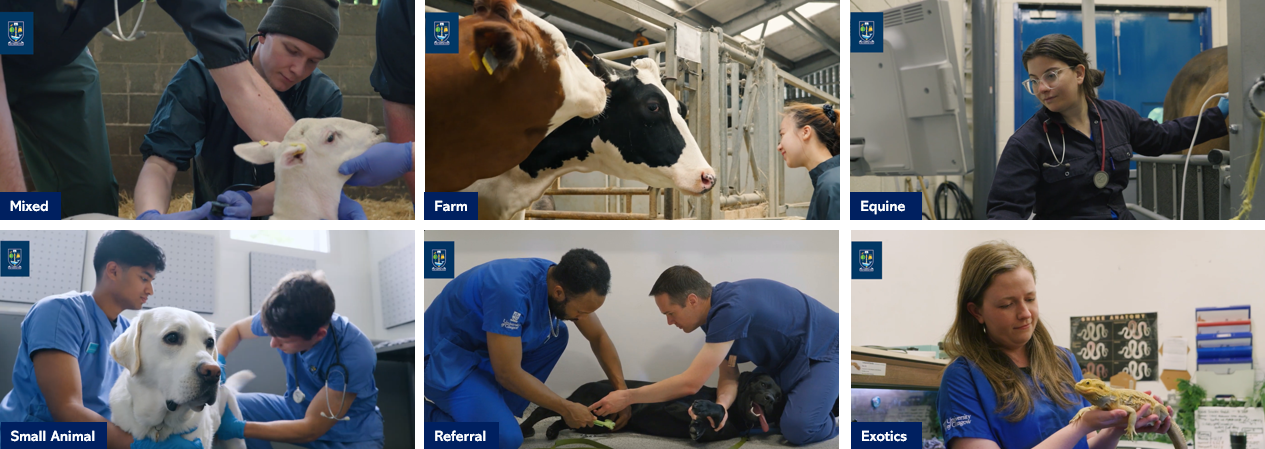
Graduates of the University of Glasgow's Veterinary Medicine programme are highly sought after across the global veterinary profession. Eligible to register with the Royal College of Veterinary Surgeons (RCVS) and supported by the programme's international accreditations, graduates can pursue careers in small animal, equine, exotics, farm animal or mixed practice, as well as specialist referral hospitals.
Opportunities also extend to:
- government veterinary services
- public health
- food safety
- animal welfare
- wildlife conservation
- biomedical research
- academia
- pharmaceutical industry.
With a strong emphasis on One Health, clinical excellence and evidence-based practice, Glasgow graduates are well prepared to make a positive impact on animal, human and environmental health worldwide.
Application Key Information
UCAS
Application Deadline - 15th October 2026 (18:00 UK time)
Work Experience Form Submission Date - 22nd October 2026
Ethical Reasoning Test - will run from October to December 2026. If selected, you will be notified of the required submission date.
Interviews - All candidates will have the option to choose whether to participate either in-person or online. There will be no preferential outcome based on choice of interview.
Scotland and Rest of UK interviews will take place January - February 2027.
International in-person interviews will take place HK & Singapore, January 2027
International online interviews will take place December 2026 - February 2027
EU / Graduate interviews will take place February 2027
VMCAS
Application Deadline - 15th September 2026
Ethical Reasoning Test - will run during the application procress from September to October 2026. If selected, you will be notified of the required submission date.
Online Presentation - Succesfull applicants will be able to select from 3 dates which will be sent once the ERT has been scored.
Interviews - will run from November through to December 2026. Details of the online booking system will be sent to selected applicants.
Work Experience
It is recommended that applicants to the veterinary programme have a minimum of one week’s work experience in a veterinary practice. We are aware that opportunities may differ between individual candidates and applicants will be expected to take every opportunity available to them to gain relevant practical experience of livestock husbandry and handling animals. Applicants are also advised to conduct their own online research into areas where they have been unable to gain practical experience. This can include completion of virtual work experience to boost their knowledge and understanding of the veterinary profession.
We look for knowledge of the veterinary profession, and for experience of and contact with a variety of animals, e.g.
- Attendance with a veterinary surgeon(s) (companion animal and farm animal).
- Experience of working on a dairy farm.
- Assisting on a sheep farm at lambing time.
- Experience working with horses, e.g. at riding stables.
- Experience of working in a boarding kennel or cattery.
- Visit to an abattoir (not essential).
- Any additional relevant experience, e.g. zoo, wildlife park or laboratory etc.
Please note: the above are suggestions and ideas for work experience. This is not a checklist and achieving all these placements is not a requirement.
Please ensure you complete a work experience form once you have made a UCAS application to Veterinary Medicine.
Veterinary Medicine Work Experience form
Full details regarding your Applicant Self Service portal will be emailed to you upon receipt of your UCAS application. Additional details are available at:
Gap Year
If you're considering taking a gap year, we highly recommend that you use this time in ways that will enhance your education. Engaging in work experience or participating in voluntary projects related to animal care or research can be valuable for skill development.
Ethical Reasoning Test
All those applying for admission to enter undergraduate Veterinary Medicine & Surgery who meet our academic and work experience requirements will be expected to sit the Ethical Reasoning Test. This is very similar to a situational judgement test and composed of 3 separate scenarios. We ask that you read each one and note 5 actions you think should be considered if you were faced with these scenarios.
The test is timed, and applicants have 45 minutes to complete. Requests for extra time can be made to the Veterinary Admissions Team: vet-admissions@glasgow.ac.uk
The Ethical Reasoning Test is a mandatory component of our selection process. We will not consider any applicant who has not completed the test. No exceptions will be made.
If you are applying in October 2026, for September 2027 entry, the test will be circulated between October – December 2026 and marked shortly afterwards. Applicants who meet the minimum required score will be invited to interview.
To ensure fairness, all BVMS applicants must complete the Ethical Reasoning Test. No other medical entrance test will be accepted.
Interviews
Interviews will take place in person or by Microsoft Teams. Your application will go through an initial screening based on the information provided on your UCAS form. If we wish to consider your application further, we will send you details to complete an on-line ethical reasoning test. If your test scores meet the criteria, we will invite you to attend an interview. Members of the Admissions Committee conduct these interviews between November and February each year. Most decisions on the outcome of the interview are made by the end of March.
We receive approximately 800 applications each year and we interview around 250 applicants for 72 UK places.
There are additional full-fees places for graduate and overseas students. At present, the total yearly intake is approximately 135. We receive around 800 applications from overseas, and we aim to interview around 400.
All applications are considered on merit. Every year we must disappoint many able candidates, although candidates are welcome to reapply, providing they achieve the necessary A-level, Advanced Highers (or equivalent) qualifications. We aim to make the admissions process as fair as possible, with equality of opportunity irrespective of social or racial background, or gender. Candidates are selected based on all-round ability and personal qualities appropriate to a career in veterinary science. Academic capability is important; the programme is long and demanding, and we aim to select individuals who can sustain a demanding study programme.
The Interview
Regarding arrangements for interview, should you have a visual or hearing impairment, mental health difficulty, physical, mobility or other disability that we need to know about prior to your interview, please email vet-admissions@glasgow.ac.uk as soon as possible so that any necessary modifications/support can be arranged.
There will be two Admissions Panel members present at all interviews which will last approximately 25/30 minutes, with time at the end for any questions you may have.
You will be asked about your work experience, either undertaken in person, or virtual, your hobbies and interests and how you plan and cope with your studies.
You should have a good knowledge of the profession as a whole and what would be expected of you as a veterinary surgeon. We not only assess the breadth of candidates' knowledge of what working with livestock and companion animals and their owners entails, but we also examine personal attributes which demonstrate responsibility, self-motivation, a caring ethos and resilience.
We are interested to hear of candidates’ special interests, or hobbies, outside veterinary science. You should be aware of any current topical veterinary issues, so it is advisable to keep up to date with media information.
Preparation for interview
· Refer to our undergraduate curriculum
· Revisit your personal statement
· Think of examples of your achievements and skills
· Consider your personal characteristics
· Reflect on previous interactions or experiences
· Be aware of current issues/challenges within the profession
Extra-Mural Studies (EMS)
The RCVS require that all students gaining a veterinary degree from a UK Veterinary school to undertake Extramural studies or EMS. A total of 30 weeks of EMS must be completed over the course of the veterinary degree programme before students are able to graduate.
- 10 weeks must be devoted to animal husbandry EMS (AHEMS), to be completed throughout the pre-clinical years of the programme.
- 20 weeks must be undertaken as clinical EMS, to be completed regularly over the final 3 years of the course, with a recommended minimum of 6 weeks to be completed per year.
EMS is a fantastic opportunity to gain real-life work experience, that enhances your university-based studies; whilst all your day one competencies are gained as part of the programme, EMS allows you to explore career options, practice animal-handling and clinical skills, and build up your experience of dealing with farmers, clients and with members of the veterinary team among others and it will help you develop as professionals.
Animal husbandry (pre-clinical) EMS Students can choose placements based on their own learning and experience needs. RCVS set no specific species requirements for AHEMS placements. However, students are encouraged to complete placements which offer a breadth of experience across different species in order to complement your studies. We strongly recommend:1-2 weeks of equine, dairy, dogs/cats, lambing. All AHEMS placements must take place in person with the student attending on-site. This is to ensure that you will be directly involved with handling animals and observing animal behaviours during the placement.
Clinical EMS placements. We recommended minimum of 6 weeks clinical EMS is completed in BVMS3-4, and 8 weeks completed in BVMS5. Students are encouraged to undertake clinical EMS in the areas you feel would interest you and benefit your learning/experience the most. Although there are no restrictions or quota on clinical EMS, e.g., completion of a minimum number of weeks in different species, you are encouraged to complete a broad spectrum of opportunities. Clinical EMS must take place in person, with the student attending on-site getting “hands-on”, direct clinical experience with animals. Long term research placements that do not primarily involve animals can count towards the clinical EMS requirement at the discretion of and following discussion with the EMS Team.
EMS can be undertaken anywhere in the world, you do not have to do it in the UK, you can use it as a means to travel the world, as long as its approved with our EMS team.
Selectives
Selective Rotations provide students with the opportunity to explore areas of veterinary medicine that align with their interests and career aspirations. Students undertake two selective rotations, choosing from a wide range of options across Production Animal, Equine, Small Animal, Wildlife and Exotics, Public Health and Pathology, Research, Veterinary Education, and Shelter Medicine.
Placements are available both within the University of Glasgow and with external partner organisations throughout the UK and internationally, including Morocco, Namibia, Singapore and California (USA). This provides students with exposure to diverse professional environments and veterinary career pathways.
Whether students are considering specialist clinical practice, academia, research, conservation, public health, production animal medicine or charity work, the selective programme offers a valuable opportunity to develop knowledge, practical skills and professional networks in an area of particular interest.
Please note that the range of selective rotations and placement locations is reviewed regularly and may vary from year to year, depending on partner availability, clinical opportunities and programme developments. As a result, the options available to students may be subject to change.
Our current opportunities include:
Production Animal (PA)
-
Aquaculture – This selective provides students with a broad introduction to aquaculture and fish health management. Based at Bakkafrost Scotland, students gain insight into the role of veterinary surgeons in maintaining the health, welfare and productivity of farmed fish populations, including disease prevention, diagnostics, biosecurity and population medicine within the salmon farming industry.
-
Dairy Practice – Available at Torch Farm (Devon) or through partner institutions in the USA (UC Davis or Purdue University - US citizens only), this selective provides hands-on experience in dairy herd health, production medicine, fertility management and preventative healthcare in commercial dairy systems.
-
Herd Health – An internal, veterinary school-based rotation focused on proactive herd management. Students develop an understanding of herd health planning, disease prevention, production analysis and the application of population medicine principles to livestock enterprises.
-
Pig Practice – Based primarily at Purdue University, USA (US citizens only), this selective introduces students to modern pig production systems. Students explore herd health management, disease control, biosecurity, production efficiency and the veterinary role within intensive swine enterprises.
-
Poultry Practice – An external placement with the St David's Poultry Team in the Lothians. Students gain exposure to commercial poultry medicine, flock health management, disease investigation, biosecurity and the challenges associated with large-scale poultry production.
-
Remote and Rural Veterinary Careers (RRVC) – Delivered through a network of veterinary practices across Scotland, this selective provides experience of mixed and farm animal practice in remote and rural communities. Students gain insight into the diverse clinical, professional and logistical challenges faced by veterinarians working in geographically isolated areas.
-
Sheep Practice – Based at Torch Farm in Devon, this selective focuses on sheep health and production. Students develop practical knowledge of flock health planning, disease prevention, fertility management, lambing-related care and the veterinary role within commercial sheep enterprises.
Equine (EQ)
-
Equine Medicine and Surgery (Weipers) – Based at the Weipers Equine Centre, this selective provides students with experience of both first opinion and referral-level equine practice within a hospital environment. Students work alongside clinicians managing a wide range of medical and surgical cases, gaining exposure to diagnostic investigations, advanced imaging, anaesthesia, surgery, inpatient care and emergency medicine. The rotation offers insight into the multidisciplinary approach required to manage complex equine cases and the role of specialist veterinary services in the horse industry.
-
Morocco – Working Equid Medicine and Surgery (MWE) - Based at the American Fondouk in Fez, Morocco, this selective provides hands-on experience working with donkeys, mules and horses that play a vital role in local communities. Students gain practical experience in both medicine and surgery while developing an understanding of the welfare, socioeconomic and cultural factors influencing working equid health. The rotation offers unique exposure to high clinical caseloads, field-based veterinary practice and international animal welfare initiatives.
Public Health, Pathology & Research (PLR)
-
Farm Animal Disease Surveillance (FADS) – This selective provides students with experience of disease investigation and surveillance in livestock populations. Working alongside veterinary pathologists and surveillance specialists, students contribute to diagnostic investigations, post-mortem examinations and disease monitoring activities, gaining an appreciation of the role surveillance plays in protecting animal health, welfare and food production systems. Collaboration with SRUC diagnostic services forms an important component of the rotation.
-
Infectious Disease – This selective offers students an opportunity to explore the diagnosis, investigation and control of infectious diseases affecting animals. Rotating through bacteriology, virology and parasitology services, students develop an understanding of laboratory diagnostic techniques, pathogen biology and the role of veterinary scientists in disease detection, surveillance and outbreak investigation.
-
Lab Animal Medicine – This rotation introduces students to the field of laboratory animal medicine, with a particular focus on animal welfare, ethics, husbandry and regulatory requirements. Students gain insight into the veterinary surgeon’s role in supporting high standards of care for research animals while facilitating scientific research and ensuring compliance with legislation and welfare standards.
-
Pathology – Anatomical – This selective provides an in-depth introduction to diagnostic pathology through participation in post-mortem examinations and tissue-based diagnostic investigations. Students develop their understanding of disease processes, lesion recognition and pathological interpretation while contributing to the diagnosis of a wide range of clinical cases.
-
Pathology – Clinical – Based within a diagnostic laboratory setting, this selective focuses on the interpretation of haematology, biochemistry, cytology and other laboratory tests used to support clinical decision-making. Students gain experience in the diagnostic process and develop an understanding of how laboratory findings contribute to the investigation and management of disease.
-
Research Selective – This selective provides students with the opportunity to undertake an individual research project under academic supervision. Projects can be tailored to suit a student's interests and may involve laboratory-based, clinical, educational, epidemiological or field-based research. Students develop skills in project design, data analysis, critical thinking and scientific communication while gaining experience of the research process.
Wildlife & Exotics (W&E)
-
Exotics – This selective provides students with exposure to exotic companion animal practice through a placement with a veterinary practice specialising in the medicine and surgery of non-traditional pets. Students will gain experience with a diverse range of species, including reptiles, birds, small mammals and other exotic animals, while developing an understanding of their husbandry, diagnosis and clinical management.
-
International Wildlife Conservation – Currently based in Namibia, this selective introduces students to the principles of conservation medicine and wildlife health in a field setting. Working alongside veterinarians, conservationists and wildlife professionals, students gain experience of wildlife management, population health, conservation challenges and the role of veterinary medicine in protecting biodiversity.
-
International Wildlife Conservation Research – Currently based in Namibia, this fully-funded selective offers students the opportunity to participate in wildlife conservation research projects in an international setting. Students contribute to ongoing research activities while developing skills in data collection, scientific investigation, critical evaluation and evidence-based conservation.
-
Scottish Wildlife Conservation – This conservation-focused selective provides students with experience of wildlife health and conservation within Scotland. Through a combination of fieldwork and practical conservation activities, students develop an understanding of native wildlife species, habitat management, conservation challenges and the contribution of veterinary professionals to wildlife conservation initiatives.
-
Zoo – Edinburgh Zoo (Royal Zoological Society of Scotland) – Based at Edinburgh Zoo, this selective provides students with an introduction to zoo and conservation medicine. Students gain experience of the veterinary and husbandry practices involved in caring for a diverse collection of species, while exploring the links between animal health, conservation, welfare and public engagement.
-
Zoo – Mandai Wildlife Group (Singapore) – Based at Singapore Zoo, this selective offers students the opportunity to gain experience within a large international zoological collection. Students can choose from one of three streams—Main Zoo, Avian Hospital or Pathology—allowing them to explore different aspects of zoo veterinary practice, diagnostic investigation, wildlife health and conservation medicine.
Small Animal (SA) - allows students to tailor their learning by undertaking two 2-week placements within specialist referral services at the Small Animal Hospital, allowing students to explore areas of particular clinical interest while gaining insight into specialist veterinary careers.
-
Cardiology – This selective provides students with experience in the diagnosis and management of cardiovascular disease in companion animals. Students are exposed to advanced diagnostic procedures including echocardiography, electrocardiography (ECG) interpretation and the investigation of a wide range of cardiac disorders seen in referral practice.
-
Dermatology – This selective focuses on the investigation, diagnosis and management of skin and ear disease in companion animals. Students gain experience in dermatological consultations, diagnostic testing and the development of long-term treatment plans for patients with complex dermatological conditions.
-
Emergency and Critical Care (ECC) – This selective provides experience in the management of emergency presentations and critically ill patients. Students work alongside clinicians in a fast-paced environment, developing an understanding of triage, stabilisation, emergency procedures and intensive monitoring, including exposure to out-of-hours and overnight clinical activities.
-
Intensive Care Unit (ICU) – This selective focuses on the care of critically ill hospitalised patients requiring intensive monitoring and treatment. Students gain experience in advanced patient management, fluid therapy, nutritional support and the multidisciplinary approach required to optimise patient outcomes.
-
Neurology – This selective introduces students to the diagnosis and management of neurological disorders in companion animals. Students observe neurological examinations, advanced diagnostic investigations and referral case management while developing an understanding of common neurological diseases and treatment approaches.
-
Oncology – This selective provides experience in the diagnosis and management of cancer in companion animals. Students gain insight into clinical decision-making, diagnostic investigations, treatment planning and the principles of medical and surgical oncology within a referral hospital setting.
-
Physiotherapy – This selective focuses on veterinary rehabilitation and physical therapy. Students learn about rehabilitation techniques used to support recovery from injury, orthopaedic surgery and neurological disease, while gaining an understanding of the role of physiotherapy in improving patient mobility, function and quality of life.
-
Surgery – This selective offers exposure to referral-level surgical practice, including soft tissue, orthopaedic and general surgery cases. Students gain insight into surgical decision-making, perioperative patient management, advanced surgical techniques and the role of specialist surgeons within a multidisciplinary referral team.
Education
-
Veterinary Education (VetEd) – This selective provides students with an opportunity to explore the educational aspects of the veterinary profession. Working alongside veterinary educators, students gain experience in teaching and learning theory, curriculum design, assessment methods and educational project development. The rotation offers insight into the role of veterinary surgeons as educators and is particularly suited to students with an interest in academia, teaching, professional development or educational research.
Shelter Medicine
- Shelter Medicine – This selective provides students with experience of veterinary care within animal shelters and rescue organisations based in Glasgow. Students gain an understanding of the unique challenges associated with managing animal populations in shelter environments, including preventative healthcare, infectious disease control, welfare assessment, behavioural considerations and population management. The rotation also highlights the role of veterinarians in supporting animal welfare organisations and promoting the health and wellbeing of vulnerable animal populations.
Quick Links to University Policies
Hear from our students about our outstanding Clinical Skills Facilities
International Students
Meet Drew, one of International Students studying on the BVMS course