

Precise and controlled alignment of nanowires on flexible substrates using interfacial Dielectrophoresis technique
Published: 18 November 2025
Dr. Jungang Zhang, Dr. Venkata Rao Selamneni, Dr. Bhavani Yalagala, and Professor Hadi Heidari from meLAB explore a breakthrough method for arranging nanowires on flexible materials that opens the door to smarter, greener devices.
Dielectrophoresis (DEP) is one of the most popular techniques used for the spatial control of nanoparticles by leveraging the external applied electric field owing to the field induced polarisation as shown in Figure 1. However, this technique has a limitation in terms of the direct contact of electrodes with the nanowires and substrate, further limiting its applicability for various emerging wearable applications.
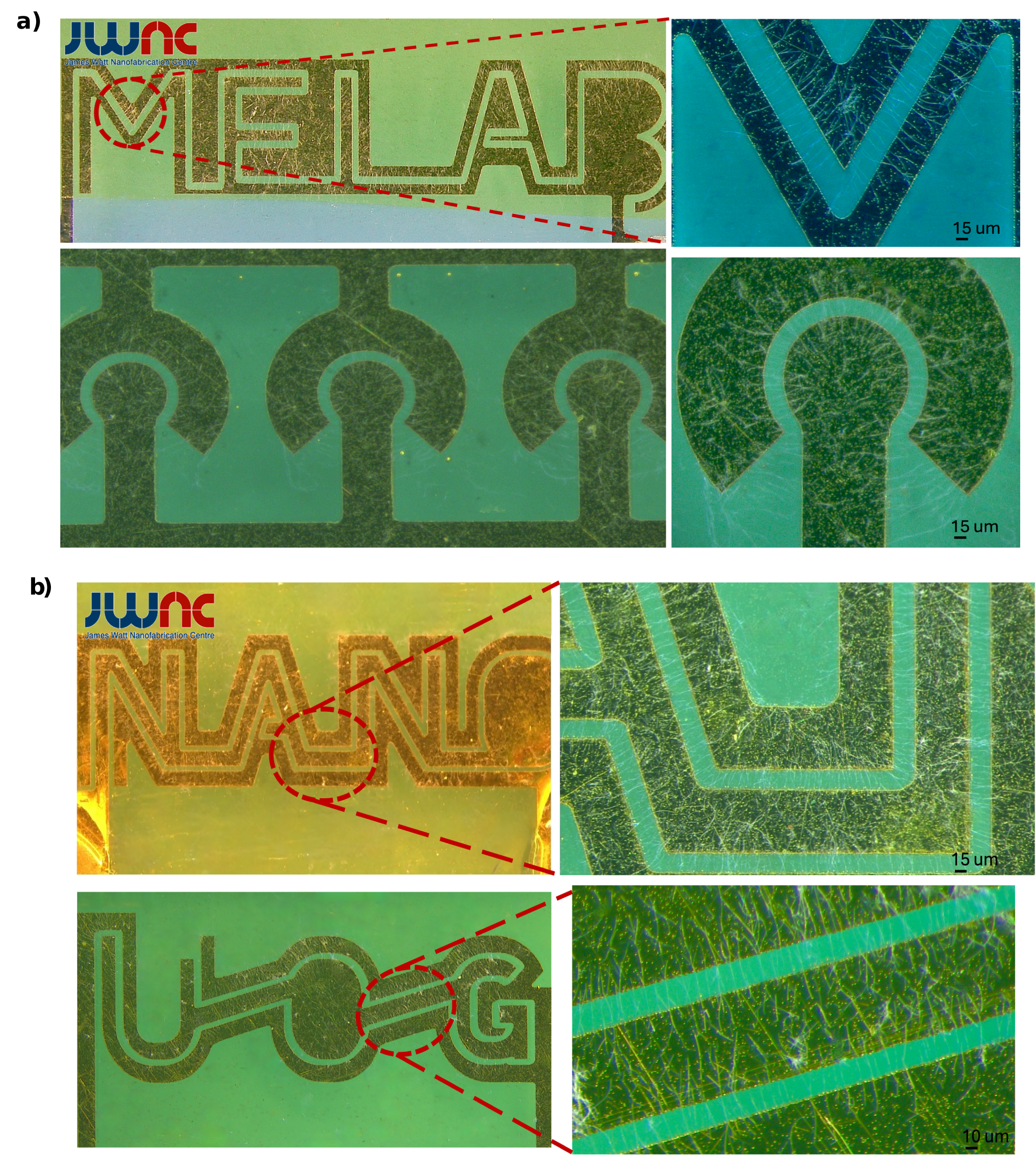
Here, we propose a novel interfacial DEP technique to align the nanostructures on the desired flexible substrate without any physical contact of nanowires with the electrodes. This strategy offers nanowire alignment on any flexible substrate as shown in Figure 2, to explore it for various areas including photonics and quantum, biomedical devices, sensors, wearable devices etc. The DEP electrodes were fabricated using the cleanroom-based techniques such as E-beam evaporation, plasma treatment, substrate cleaning and picosecond-based ablation laser methodology as shown in Figure 1. The ablation-based laser fabrication approach offers advantages in terms of the rapid prototyping, design flexibility, scalability, and large area compatibility.
The primary objective of this project is to propose:
- a novel approach for the alignment of 1D nanostructures (nanowires, nanorods, nanotubes, nanofibers) using maskless approach reducing significant cost.
- Programmability of the diverse range of nanowires including metallic (silver, copper), semiconducting (Si, ZnO, Ga2O3), dielectric (SiO2) on various flexible substrates such as PET, polyimide, Parylene C with superior controllability.
- multi-layers 3D stacking of the nanowires to achieve the next generation 3D IC structures using nanowires-based CMOS devices.
This work can have a significant impact on the development of the next generation nanowire-based devices including complementary metal oxide semiconductor devices (CMOS) and circuits like inverters, oscillators, etc. The aligned nanowires can be used for the low-loss waveguides, or templates for quantum dot integration like Josephson junctions, label free biosensors, memristors, single nanowire based optoelectronic devices, etc. aligning with the UK’s quantum strategy, nanotechnology strategy, and Scotland’s photonics clusters. This technique helps in achieving the environmental sustainability by the reduction in the resource, energy, and material utilisations laying a pathway for a green approach to the electronic device manufacturing.
Figs. (a)-(d)
a) Conceptual illustration of different electrode patterns, demonstrating the rapid prototyping of various designs, b) Schematic showing the experimental setup of i-DEP, c) Simulated electric field distributions of various electrode geometries, d) Optical images of the multiple electrode patterns prepared using laser for NWs alignment.
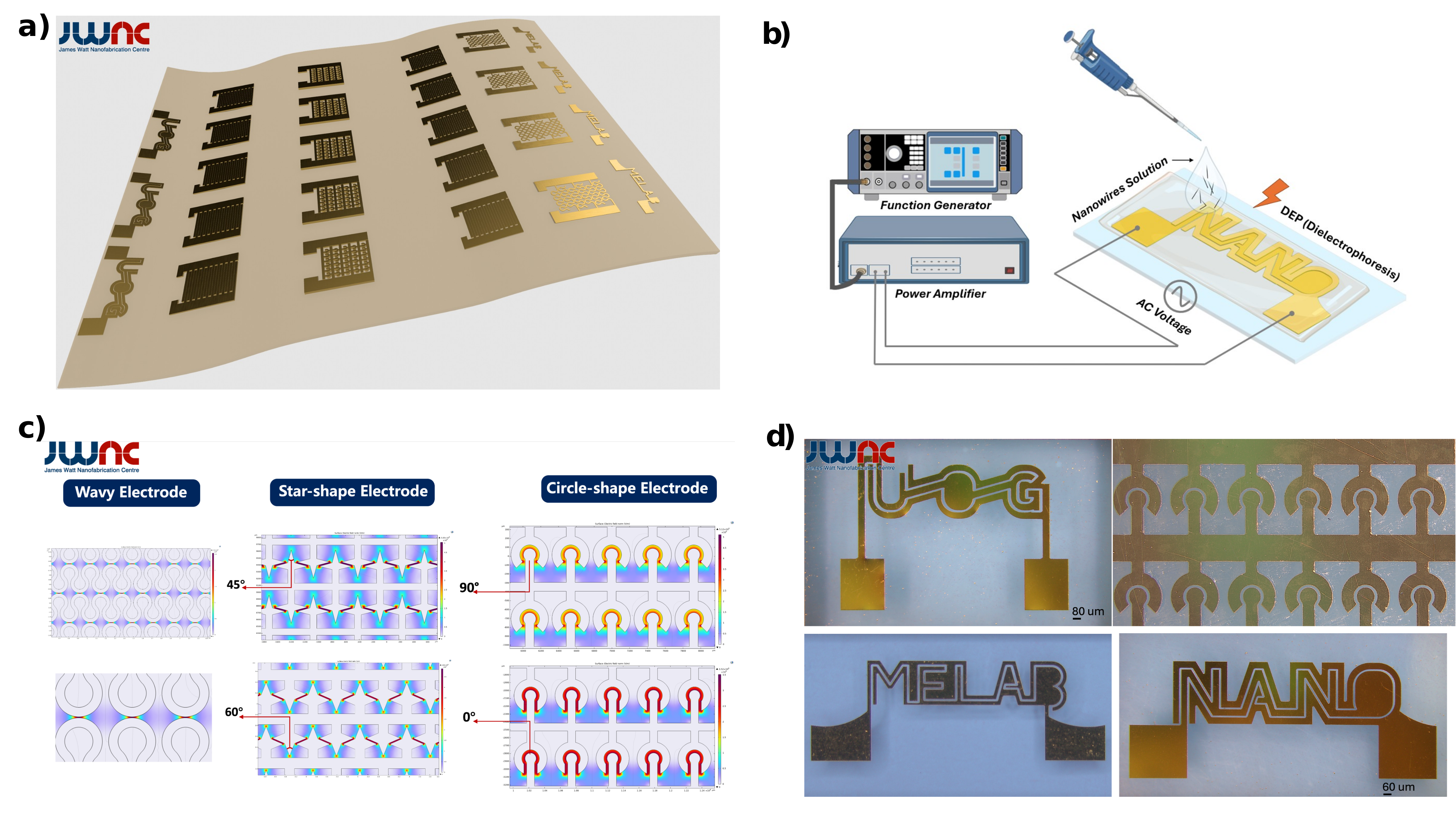 Fig. 2 a-b) Optical images showing the controlled alignment of Ag NWs on flexible polyimide substrate using multidirectional electrode patterns such as MELAB, NANO, and UOG.
First published: 18 November 2025