


Introduction
We enter this strategic period with a strong foundation, shaped by our heritage as a research-intensive University, and our long-standing commitment to education that is grounded in inquiry, creativity and critical thinking.
This strategy has been developed at a time when advances in technology, including artificial intelligence, changing global economic and skills landscapes, lifelong learning and new educational models are just some of the factors rapidly reshaping expectations of higher education. Student expectations are also changing, particularly with respect to the importance of work-related learning opportunities, skills development and opportunities for personal growth.
Our response is a long-term, values-led Learning and Teaching Strategy that places the student experience at its core. It sets out a vision for an educational environment that is inclusive, collaborative and futures focused, enabling all students to flourish during their studies and beyond. We will build on our strengths as a research-led institution to provide a high-quality, research-grounded education that is experiential and globally oriented, and that is designed for sustained societal impact.
Central to this strategy is a renewed commitment to partnership with students. Students and staff will work together to co-create an education that reflects student needs and aspirations, supports wellbeing and belonging and enables learners to actively shape their own experience. Through this, we will foster a community in which curiosity is encouraged, diverse perspectives are valued and all students are supported to fulfil their potential as contributors to society and the economy.
This strategy provides a clear framework for how we will achieve our ambitions. Through our three key priority initiatives – Curriculum for Life, Student Skills and Futures, and Learning Through Assessment, we will improve the quality and consistency of the student experience, embedding inclusive and effective approaches to learning and assessment and ensuring that our programmes remain relevant, flexible and attractive in a competitive global landscape. Our aim is not only to enhance educational quality, but to create a culture in which an excellent student experience is understood as a shared individual and collective responsibility across the University.
Looking ahead to 2036, our vision is clear: for all our students to have a high-quality, research-grounded, educational experience that is Futures Focused, Experiential, and Globally Oriented. We aspire to be recognised by our stakeholders nationally and globally, for the quality of our education and for the positive, life-changing impact of studying at the University of Glasgow: a University for the World.
Moira Fischbacher-Smith
Vice-Principal (Learning & Teaching)
Strategic context
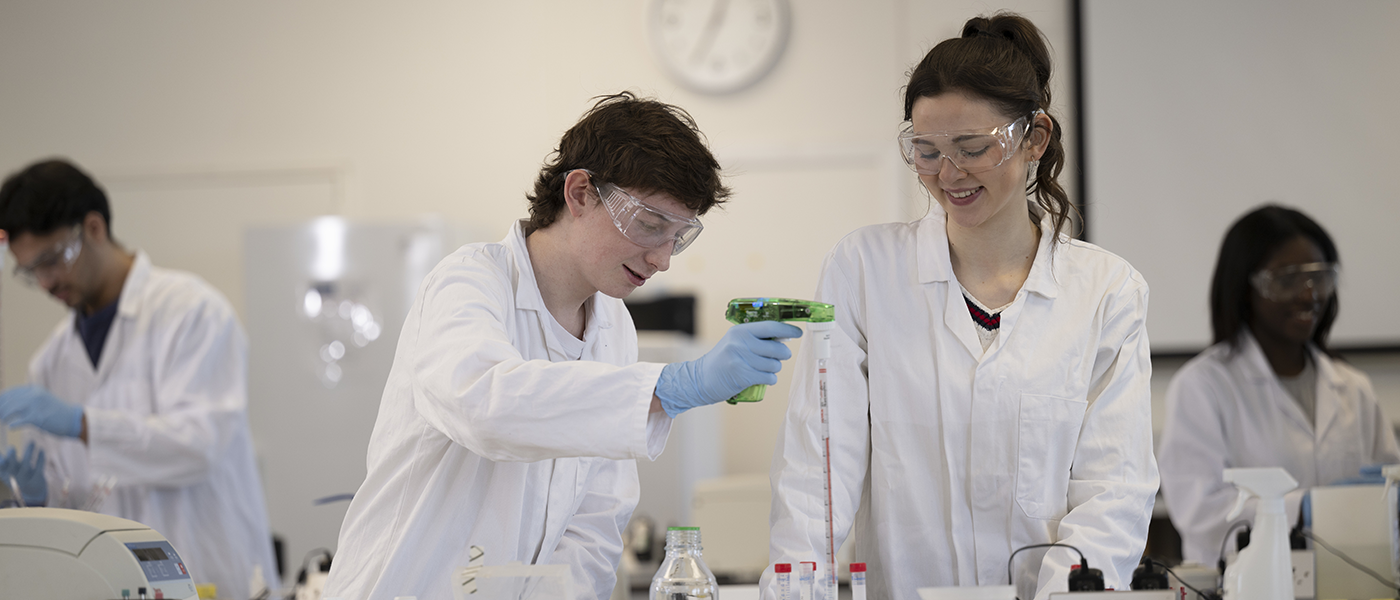
University of Glasgow students and staff bring a rich diversity of motivations, ambitions, experiences and insights to our community.
For our students to fulfil their potential as future world changers, they require educational contexts that promote curiosity and creativity, and that challenge and critique knowledge and ideas. Our long-standing commitment and ethos of enabling openness, and fostering constructive and collaborative approaches to learning as part of a global community is more important than ever.
Building on our reputation for offering programmes and experiences that are grounded in research across disciplines, we will continue to strengthen our commitment to embracing diverse perspectives and to drawing on a range of knowledge and expertise.
As a research-intensive University with a diverse community, civic roots and strong international partnerships, we are well placed to harness the opportunities, and confront the challenges that a dynamic environment creates. Our strength lies in working in partnership with all our stakeholders to respond to and shape our environment in relation to developments such as the rapidly altering capabilities and role of artificial intelligence (AI) and other technologies, global economic trends and dynamics, and the changing industry and skills landscape.
Students are now generally better placed to exercise choice in terms of types of study and study destination, and they increasingly place a premium on programmes that offer flexibility in learning pathways, embedded career preparation, networking opportunities, international experiences, skills development and experiential learning.
For many, the ability to discriminate between the offers made to them is strengthened by the increasingly competitive nature of international higher education, alongside the emergence of new models of learning. At the same time, however, many students lack the means to access all the routes potentially available to them and face considerable barriers to access and participation.
The student experience that we offer must reflect that diversity and be designed in recognition of the variety of circumstances that characterise the student communities on our campuses in the UK, within the international campuses that we share with our transnational education partners and in our online programmes.
Our desire to create opportunities for students to thrive must be met with actions that support students to overcome barriers to access and participation in education. This includes recognising the many roles and responsibilities students have alongside their studies, such as caring responsibilities. Many of our students are care-experienced, disabled and/or have lived with other barriers to educational participation because of race, religion, sexuality, gender or other characteristics. Our asylum seeker, conflict-affected and refugee student community have, of course, experienced these barriers and more. Financial constraints limit choices for most students and employment alongside full-time study is commonplace. It is therefore of paramount importance that students and staff work collaboratively to foster an inclusive community and create a sense of belonging that supports students’ aspirations and promotes their wellbeing, co-creates their education, furthers their personal and skills development, and enables equality of access to opportunity.
As we enter this strategic cycle, our performance in relation to student outcomes and the student experience is not where we want it to be and is not reflective of the ambition that we have. Core to this strategy commitment, therefore, is a culture that reprioritises the student experience as a central tenet of our University purpose, and that reflects this in our expectations of individual and collective performance.
This is key to ensuring that programmes and learning experiences are relevant and attractive to our stakeholders, that our teaching is scholarly and pedagogically informed, that our students are active participants in the decisions that affect them, and that our links with alumni and employers address skills gaps and strengthen employability opportunities for students.
In so doing, we enable the University community of students and staff and all the stakeholders we partner with, to have the maximum impact through, and pride in, our educational mission and values.
Our 2036 strategic vision, aim and priorities
We will work collaboratively across student and staff communities to significantly improve the quality and consistency of the student experience, prioritise operational excellence and create a culture in which an excellent student experience is prioritised and valued as an individual and collective responsibility, and with a sense of pride. We aspire to be recognised by our stakeholders nationally and globally, for the quality of our education and for the positive, life-changing impact of studying at the University of Glasgow.
Our vision is for all our students to have a high-quality, research grounded, educational experience that is futures focused, experiential and globally oriented.
As such, our programmes will ensure a solutions-oriented focus, designed for sustained societal impact. Work-related elements will be built into all programmes, and global challenges, perspectives, opportunities and voices will be purposefully integrated to enrich every learning experience.
Our aim is to encourage students’ curiosity, to enable them to flourish educationally and in terms of their personal development, and to support them to fulfil their potential to contribute meaningfully to culture, society and the economy locally and globally.
We want our students to thrive during and after their studies, and to develop the life skills and intellectual capabilities that enable them to be both history makers and among the best graduates for the world.
During the strategic cycle of 2020–2025, working collaboratively with students and staff, we developed three priority initiatives through which we will now realise our educational vision for 2026-2036. Embedded in all our programmes, these integrated and interdependent initiatives will be co-created and evaluated with students, with their needs and aspirations as key determinants of our choices and approach.
Curriculum for life
This is a futures-oriented suite of courses in which students will engage in solutions-focused education that tackles global challenges in an uncertain world, in particular sustainability, healthy and equitable futures, and technological change.
Our teaching will be inspired and informed by our research expertise, so that we are continually pushing boundaries and addressing uncertainty within our programmes, to prepare students for the future world they will face. Interdisciplinary research projects that involve students in our research, will be a key part of this portfolio along with experiential learning opportunities that support application of their research and their learning. We will revise our programmes so that all students are able to access this portfolio as Curriculum for life becomes integrated into each of our degree programmes.
Student skills & futures
This is an initiative that will enable students to develop, surface and articulate their skills, and to evidence their ability to reflect on their personal and academic development.
Founded on an employability commitment of ‘Every student. Every year. Every degree’, we will support students with life design skills, confidence and resilience, and opportunities for experiential learning that enable them to succeed while at University, and to contribute and adapt throughout their future working lives. All programmes will embed our Employability Framework and accompanying Transferable Skills Language, and self-reflection model.
Learning through assessment
This is a framework that enables students to demonstrate their learning in a range of ways during their studies. We will embed the framework across all of our degree programmes and short courses.
It is an important framework for adapting assessment in ways that reflect evidence of good practice in assessment. It equips us to respond to requirements that arise from advances in technology such as AI. It is also responsive to changes in professional body requirements and, crucially, it requires adoption of inclusive assessment designs that meet our statutory duties in relation to students with hidden and visible disabilities.
These three priority initiatives work in harmony with one another and address key areas that need to be strengthened in terms of our student experience.
Without substantial assessment changes at pace, we cannot ensure that we are providing meaningful feedback to students on their assessment, or that we are fully supporting the needs of our disabled students.
Without redesigning our programmes to embed skills development and experiential opportunities, we cannot create equality of opportunity for our diverse student population.
These initiatives align not only with our educational vision, they also further our ambitions to engage students in interdisciplinary challenge-based learning and improve the wider student experience. Each of them is designed to develop a strong sense of inclusion and belonging, to expand our range of opportunities and to enhance student wellbeing.
Realising this strategy

The vision outlined in our 2036 strategy requires considerable change in our approach to our courses and programmes.
Reflecting our values and recognising expectations of our regulator and external quality bodies, such change will be enacted through continuous and close partnership working with students and staff, will be values led and data informed, and will adopt an ethos that ensures a quality assurance and enhancement lens throughout.
Shaping our approach will entail active engagement with, and contribution to, the growing body of evidence within the University and the sector, concerning effective teaching and assessment designs. Our Scholarship of Teaching & Learning activity and our global network memberships will play an important role in informing our approach to learning design, especially as we develop pathways of flexible and cumulative learning that respond to the skills gaps and upskilling needs of employers and part-time learners transitioning to new career paths.
Our educational offering will be experienced by students through our growing adoption of appropriate pedagogical designs such as student-centred active learning strategies and the incorporation of blended and online courses within on-campus programmes.
We will further develop our portfolio of short online courses, thereby expanding our credit-bearing and continuing professional development opportunities in support of life-long learning and career progression and change. Our online programme portfolio will be targeted in particular areas of clear demand and strong strategic alignment. Expansion of pathways into the University and through our transnational education (TNE) partnerships will also serve as a crucial consideration in the shaping of our response to external forces, market developments and future student decision making. With our civic and global partners, we will work to be recognised for our quality, impact and values-led approach, building on existing activities and creating new pathways and centres.
In order for our approach to be coherent and to produce the kinds of student and staff experiences that we believe are much desired, we will need to approach whole-University change in a co-ordinated and consistent manner. This will require understanding of what students, staff and wider stakeholders value and need, and a clarity of response which can only be shaped and delivered through close partnership working on all aspects of the student experience. We will also set expectations of performance and engagement with core initiatives that are aligned with staff objectives, progression and School- and University Services-level key performance indicators.
To realise our ambitions in delivering the change envisaged for our key initiatives, and to significantly improve the student experience and improve student outcomes, our delivery plan will take account of the need for the following.
- A co-ordinated and carefully managed approach to change that is planned and resourced in light of the whole portfolio of University-wide change programmes.
- A renewed and reinvigorated approach to working in partnership with students on the priorities that meet their needs, and the decisions that affect their experiences at University.
- Clear performance expectations of all staff and teams within the University concerning their role in improving the student experience, especially where there is a gap to target.
- A significant programme of regulatory and policy reform with the objective of simplifying the landscape and prioritising student progression and success. This will reduce the number of programme types, associated regulations and range of progression requirements.
- Prioritisation across the University, of course and programme portfolio review that is shaped and managed in line with centrally approved criteria. This will result in a reduction in the number of programmes offered, more regular review of the feasibility and sustainability of the portfolio, and transparency in relation to cross-subsidisation across the portfolio.
- A University-wide programme of educational transformation that is prioritised by colleges, schools and services and delivered in a co-ordinated way. We will move away from our practice of selective participation in change so that all programmes align with the educational vision, and the three priority areas.
- Removal of those activities and processes that are inefficient for staff and not value-adding for students. We will reduce staff workload associated with processing assessments and course changes, releasing time for student-engagement and learning and teaching enhancement.
- Regular audit of our internal quality arrangements to ensure compliance with our legal duties, external quality bodies and our governance of collaborative ventures. This will at times require changes in local practice, and/or adoption of institution-led initiatives that will need to be prioritised.
- A focus on student outcomes as a key determinant of our decision making and resourcing.
- Careful attention to sustainable, scalable approaches and alignment with the educational vision.
- Career development support for colleagues.
- Collective and regular review of how best to support students and colleagues as our internal and external environment shifts over the course of this strategic cycle.
Student and staff partnership

A core principle of designing and implementing the strategy and improving the student experience is that all of the activity outlined here is undertaken in partnership between students and staff. While the nature of student involvement may vary, the principle of partnership working needs to be specifically designed into our approach to projects and initiatives.
This is not only a University expectation, but is a requirement from our regulatory and external quality bodies who seek demonstrable student participation in decision making across all aspects of the student experience. Student partnership will also need to be appropriately recognised and rewarded where we are seeking students’ time and intellectual contribution to our formal University activity.
Collaboration with our students in the UK and across our TNE partnerships, and the formal representative input of the Students’ Representative Council, remain core to how we will shape all of that we do and how we evaluate its success across academic and all related aspects of the student experience.
The learning and teaching infrastructure
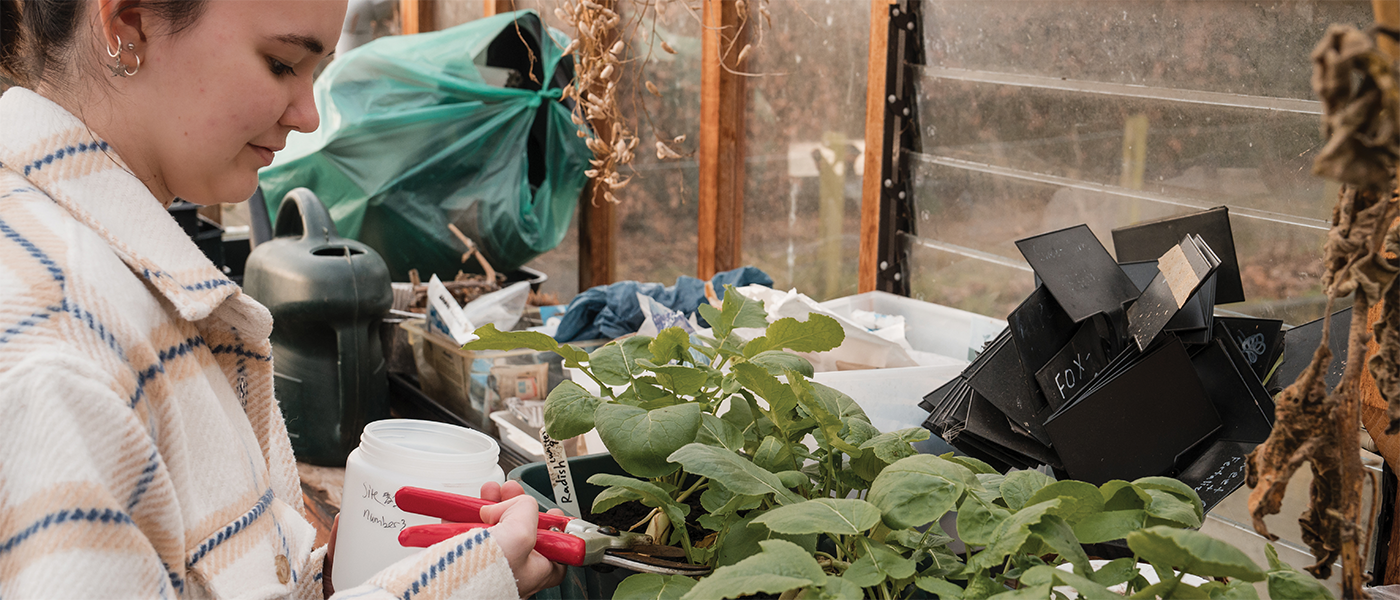
The quality of our physical and digital learning and service environment is fundamental to student and staff satisfaction and pride in working and studying at the University.
During the 2026-36 strategic cycle, we will experience the opening of superlabs in the Keystone Building allowing us to harness opportunities for new ways of teaching and learning in these spaces, and creating capacity for students to develop key skills aligned to industry-related projects and roles.
Our digital environment will evolve in parallel to support teaching in these new large-scale, collaborative spaces. The alignment between campus developments and the Learning & teaching strategy is crucially important for us to realise opportunities to create new types of experiential learning, to introduce changes to how we timetable our courses and programmes, and to make available study spaces and facilities for student-led activities. Consistency in the quality of spaces is a key determinant of student and staff satisfaction while improved accessibility of our teaching spaces is crucial to our support for students and staff with disabilities.
The operational efficiencies anticipated, aspirations for standardised support for students and enhancements in managing curriculum and assessment involve investment in systems and processes that reflect expectations of a world-leading student and staff experience.
Student & Academic Services, People & Organisational Development, Information Services and Estates play a key role in supporting the ambitions outlined here.