


From equal rights to equal voices
Eliminating discrimination and bias in AI
Artificial Intelligence is transforming all aspects of our lives, from healthcare and education to public services and policymaking. But the unregulated speed of AI development risks leaving marginalised communities behind, embedding historical bias and discrimination, and deepening global inequalities.
At the University of Glasgow, we’ve been changing the world for 575 years and now, we’re addressing inequalities to help make the future of AI fairer for all.
Dr Mark Wong, a leading expert in responsible AI and racial justice at the University, sheds light on AI bias and policy failings to address accountability and exclusion. His work recommends long-term, practical solutions to these challenges through wider participation, co-design of AI and the development of participatory AI auditing tools.

Ethical AI
The demand for a more ethical, diverse and inclusive governance of AI is urgent. AI applications are often trained using partial, outdated or unethical sources and practice. This perpetuates discrimination and spreads misinformation that reinforces or legitimises injustice, misogyny and racism.
Ask generative AI for an image of a doctor, lawyer or CEO, for example, it is likely to produce a picture of a white able-bodied man due to bias in data. It lacks nuance and context and over-generalises based on what it assumes is the ‘norm’ or most probably ‘right’, not considering other important factors such as historical exclusion and inequalities in labour. Algorithm bias disadvantages racialised people, reinforcing racism and stereotypes. Surnames, education background or country of birth can be used as proxies for race leading to unfair rejections when applying for a job, bank loan or welfare benefits.
In healthcare too, AI diagnostics, cancer screening and optical imaging devices are more likely to be inaccurate on people with darker skins, generating ‘false negatives’ and missed diagnoses particularly for women of colour. Large language models have been found to repeat harmful language and racial slurs while also being prone to so-called ‘hallucinations’ - producing entirely false information referenced to bogus sources that do not exist.
Unfortunately, when these biased and false outputs go unchecked or are reinforced by rushed adoption at scale, they become even more deeply embedded in how the AI model behaves over time - with real world consequences.
Dr Wong explains: “There is a race to apply AI everywhere to try and improve efficiency and cut costs, but we risk putting our faith in the machine and leaving people behind. When AI is used in the public sector especially, we need accountability, public scrutiny and regulation.”
Systematic change
Dr Wong is also co-investigator and Chair of Engagement in a major UK-wide consortium involving seven universities and 28 partner organisations. Together, they’re building tools and training programmes to support participatory AI auditing, giving regulators, practitioners and everyday users the power to audit AI systems and define their own metrics for impact and harm.
The project is exploring certification models for AI used in public, private and third sector organisations, encouraging audits before, during and after deployment. The goal is to ensure transparency, accountability and ethical standards are upheld at every stage.
Dr Wong’s work offers a blueprint for systemic change. By empowering and collaborating with those most affected by injustice, his research is helping to co-create the tools needed to challenge and reshape how AI is developed.
As AI becomes more embedded in our daily lives, the University of Glasgow is addressing inequalities to build a fairer future for all.
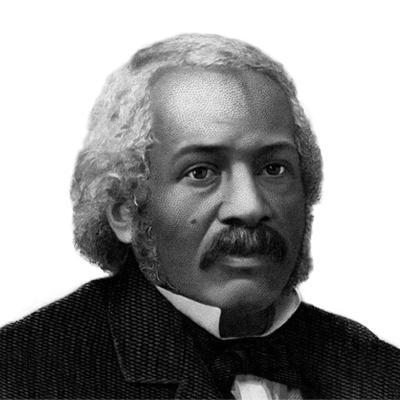
James McCune Smith
Racial pioneer, James McCune Smith (1813–65) graduated from the University of Glasgow in 1837, becoming the first African American to earn a medical degree.
Born enslaved in New York City, he was freed in 1827 and - recognised as intellectually gifted - was educated at the New York African Free-School. Denied entry to US universities due to his race, he was welcomed by Glasgow, where he earned bachelor’s and master’s degrees and a medical doctorate.
Returning to New York, he opened the first African American-owned pharmacy. A brilliant scholar, physician and abolitionist, Smith was one of the foremost intellectuals in 19th-century America.
Find out more
Social & Urban Policy at the University of Glasgow brings together over 30 leading researchers with interests in policy, public services, societal inequalities and sustainability.