

Woodland birds living amongst native trees produce more chicks
Published: 20 January 2026
Native trees, such as oaks, have long held a special place in our culture and countryside. Now, researchers have shown that these trees are also important to woodland birds and their offspring
Native trees, such as oaks, have long held a special place in our culture and countryside. Now, researchers have shown that these trees are also important to woodland birds and their offspring.
A new study, led by the University of Glasgow and published in the journal Ecology, shows that common woodland birds, such as blue tits, produce more chicks when surrounded by a greater abundance of native tree foliage.
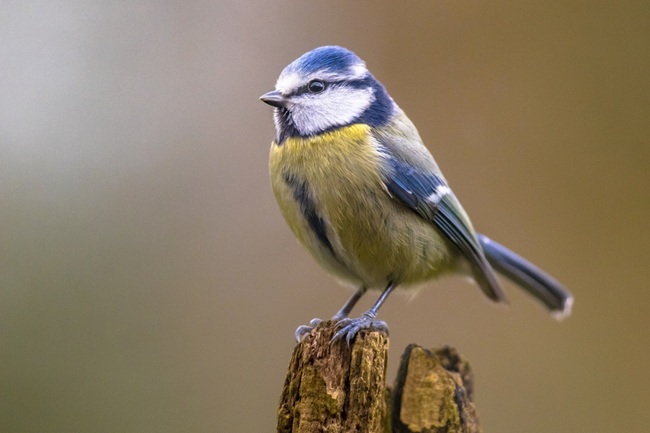
Using nine years of data from blue tits breeding at 20 locations, extending from the city centre of Glasgow to the banks of Loch Lomond, the research team looked at a range of factors that differed across the sites. These factors included the amount of tree foliage, the type of trees, the density of people and the local temperature. The research team then teased apart the impact of these different factors on how well the birds did.
The key finding was that the abundance of native trees, in particular oak trees, really matter to the overall wellbeing of woodland birds and their ability to produce more chicks. In areas where more oak trees were present blue tits laid more eggs, laid them earlier in the year and overall bred more successfully.
The researchers believe this is because our native trees support more insect life. In the case of oak trees, this means more caterpillars of moths and butterflies – the food that blue tits’ prefer. The team confirmed this by recording caterpillar numbers during the birds breeding season and found more food for breeding birds where there were more oak trees.
The findings highlight the importance of carefully considering what trees we should be planting, particularly in our urban areas where there are fewer native trees.
Dr Claire Branston, a postdoctoral researcher in Urban Ecology and lead author of the study, said: “Our research shows that the presence of native oak trees increases the number of chicks that breeding blue tits can successfully rear, as these trees mean they have more of the food they need. The presence of oak trees can help to support entire food chains in urban environments, and this is something we should be considering when designing our urban green spaces.”
Urban areas differ from natural landscapes in several ways that can impact wildlife, including the abundance of native and non-native plants and trees. While many garden birds, such as blue tits, are widespread in cities, it is also well-known that they generally suffer from reduced reproductive success in cities.
The research demonstrates why we should be maximising the planting of native broadleaf trees, such as oaks, rather than planting faster growing non-native conifers or other decorative tree specimens. If we do that, the researchers argue, we would not only have beautiful leaves and trees, but also have more birds, moths and butterflies, and overall, a healthier natural environment in our cities and urban spaces.
Dr Davide Dominoni, Reader in Urban Ecology and co-author of the study, said: “We suggest that urban tree planting regimes should be carefully planned, selecting tree species in particular that will be able to host natural populations of caterpillars and other invertebrates. This will not only help to maximise biodiversity but also support complete food chains and increase the complexity and resilience of urban ecosystems.”
The study, ‘Native trees are related to advanced bird breeding phenology and increased reproductive success along an urban gradient’ is published in the journal Ecology. The work is funded by the UKRI Natural Environment Research Council (NERC).
Enquiries: ali.howard@glasgow.ac.uk or elizabeth.mcmeekin@glasgow.ac.uk
First published: 20 January 2026
<< MVLS News