Arts Lab

Multilingualism across the Disciplines

Multilingualism across the Disciplines lab brings together researchers engaging with multilingualism in different fields (literary studies, linguistics, education, psychology and neuroscience) and community organisations that work with multilingual audiences. Our aim is to foster creativity in research and interdisciplinary collaboration. Through workshops, presentations and other activities, we offer researchers the opportunity to learn about each other’s methodologies, to promote better research practice within the context of multilingualism, and to share connections with potential stakeholders. Our Multilingualism Reading Group offers a platform for members from the University of Glasgow colleges and schools to regularly share, explore and discuss research into multilingualism with colleagues across university and invited multilingualism experts from across the world.

Team


Co-Directors

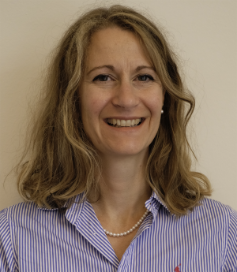
Elisa Segnini (School of Modern Languages and Cultures)


Dr. Elisa Segnini holds an MA in Comparative Literature from the University of Bologna and a PhD from Toronto’s Centre for Comparative Literature. Before joining the University of Glasgow in 2017, she has held appoints in Italian and Comparative Literature at Dalhousie, Western and the University of British Columbia. Her research projects have been funded by SSHRC, AHRC and HORIZON-MSCA. She sits on the executive board of the British Comparative Literature Association and is a co-editor of Comparative Critical Studies, a journal dedicated to the theory and practice of the study of comparative literature.


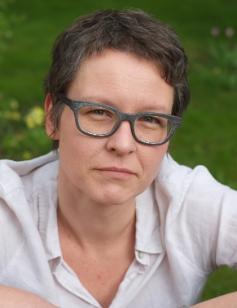
Dobrochna Futro (School of Education)

Dr Dobrochna Futro's research focuses on multilingualism, translanguaging, art-based inquiry, language learning, teaching, and language use in multilingual, often migratory contexts. She also explores the edges where multilingualism and language education meet environmental education / learning for sustainability. She engages with creative methods of enquiry, participatory, collaborative art-based research and pedagogies.

Dr.Futro has led and supported several research and KE projects exploring the relationship between art practice and language learning. She worked with teachers in Scotland, Poland and Vietnam, (co-)developed CPD courses and teaching resources, and researched with artists, teachers and children as her co-researchers.

Dobrochna lead the ELINET (Education, Languages and Internationalisation Network) Language Education and Multilingualism strand, co-direct the University of Glasgow ArtsLab on Multilingualism across Disciplines, ENROPE (European Network for Junior Researchers in the Field of Plurilingualism and Education) Language Teachers Development SIG, and convene a cross-university Multilingualism Reading Group at Glasgow.


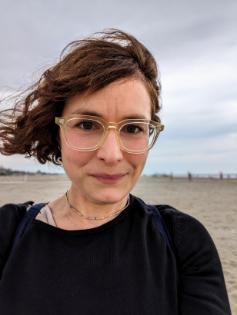
Wilhelmiina Toivo (School of Psychology and Neuroscience)


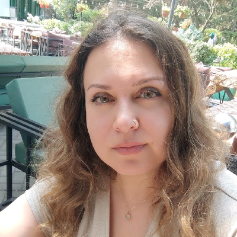
Angela Gayton (School of Critical Studies - English Language and Linguistics)


Dr. Angela M. Gayton is a lecturer in applied linguistics and education at the University of Glasgow, UK, where she works with linguistically and culturally diverse postgraduate student cohorts. Her research interests include language issues within the internationalisation of higher education; multilingual identity in classroom settings; and perceptions of English as a global language. Her work has been published in journals such as TESOL Quarterly; Journal of Multilingual and Multicultural Development; Higher Education Research and Development; and Education Sciences.


Intern

Samira Hasanzade 


Samira Hasanzade is a PhD Candidate in Education at the University of Glasgow with 20+ years of experience in higher education leadership, curriculum design, and educational assessment. Her work bridges research, teaching, and policy, from leading national exam reforms and cultural exchange programs to developing inclusive curricula that improve student success.
Her research focuses on Peace Education and innovative methods of teaching peace, including artistic, intercultural, and experiential approaches that promote dialogue, resilience, and inclusive learning. Samira is passionate about building fair, innovative, and globally connected education systems that not only improve academic outcomes but also empower learners to contribute to more peaceful and inclusive societies.

The Multilingualism Reading Group

The Multilingualism Reading Group was established in 2020 and is hosted by the Culture, Literacies, Inclusion and Pedagogy (CLIP) RTG, School of Education & the Language Teaching Scholarship (LTS) Cluster, School of Modern Languages and Cultures, University of Glasgow. 

In 2025 it has been included in a newly developed ArtsLab for Multilingualism across the Disciplines at the University of Glasgow. 

The group is convened by Dr Dobrochna Futro supported by Samira Hasanzade.


Speakers

Past speakers:

  • Dr Lavinia Hirsu, Senior Lecturer in Applied Linguistics, Composition and English as a Foreign Language (Culture, Literacies, Inclusion & Pedagogy), University of Glasgow
  • Dr Piotr Węgorowski, Lecturer in Applied Linguistics (English Language & Linguistics), University of Glasgow
  • Dr Susan Balinger, Associate Professor, Department of Integrated Studies in Education (DISE), McGill University
  • Dr Sadie Ryan, Lecturer in Languages and Intercultural Studies, School of Education, University of Glasgow
  • Dr Paul J. Meighan-Chiblow, a Critical Sociolinguist with PhD from McGill University, Canada.
  • Dr Victoria Odeniyi, Research Fellow at University of Arts London.
  • Dr Elisa Segnini, Senior Lecturer (Italian) in the School of Modern Languages and Cultures, University of Glasgow.
  • Dr Angela Gayton, Lecturer (English Language & Linguistics) in the School of Critical Studies, University of Glasgow.
  • Dr Max Antony-Newman, Lecturer in Education, School of Education, University of Glasgow.
  • Dr Giovanna Fassetta, Senior Lecturer in Social Inclusion, School of Education, University of Glasgow.
  • Prof. Eva Moreda Rodriguez, Professor of Musicology, School of Culture and Creative, Arts, University of Glasgow.
PhD Supervision

The co-directors are open to receiving PhD research proposals from prospective applicants which align with any of their respective areas of expertise in the field of multilingualism. We are particularly interested to hear from students whose proposed research is interdisciplinary in nature, and intersects with expertise shared among multiple co-directors. Please read each of our research profiles carefully at the link above before contacting us with a proposal.  


Upcoming Events


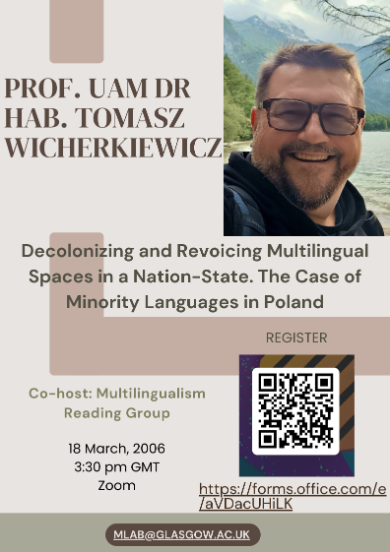
You are warmly invited to the next meeting of the Multilingualism Reading Group, which will take place on Wednesday 18 March 2026 at 3:30pm (UK time) via Zoom.

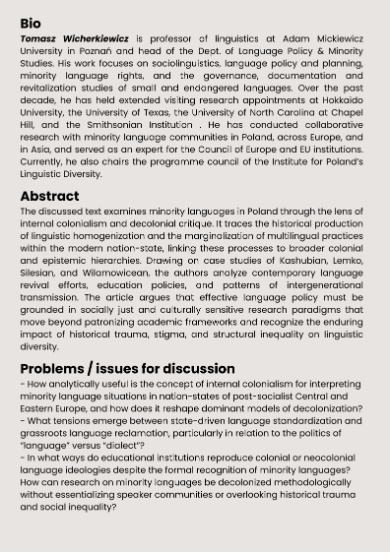
We are delighted to welcome Professor Tomasz Wicherkiewicz (Head of the Department of Language Policy and Minority Studies, Adam Mickiewicz University, Poznań, Poland) as our guest for this session.

Reading for discussion:

Olko, J., Wicherkiewicz, T., Jabłoński, A., & Chromik, B. (eds.), “Decolonizing and Revoicing Multilingual Spaces in a Nation-State: The Case of Minority Languages in Poland”, in The Palgrave Handbook of Decolonising the Educational and Language Sciences.

This session will explore questions related to multilingualism, language policy, and the position of minority languages within nation-states, with particular reference to the Polish context.


Registration:

Please register your interest through the link: https://forms.office.com/e/aVDacUHiLK or email: mlab@galsgow.ac.uk, and receive the Zoom link and reading materials.

The Multilingualism Reading Group is co-hosted by CEE RTG (School of Education) and the LTS Cluster (School of Modern Languages and Cultures), and is part of ArtsLab: Multilingualism Across the Disciplines at the University of Glasgow.

We would be very pleased to see you there and encourage colleagues and PGR students from across disciplines to attend.


With best wishes,


ArtsLab: Multilingualism Across the Disciplines


Past events

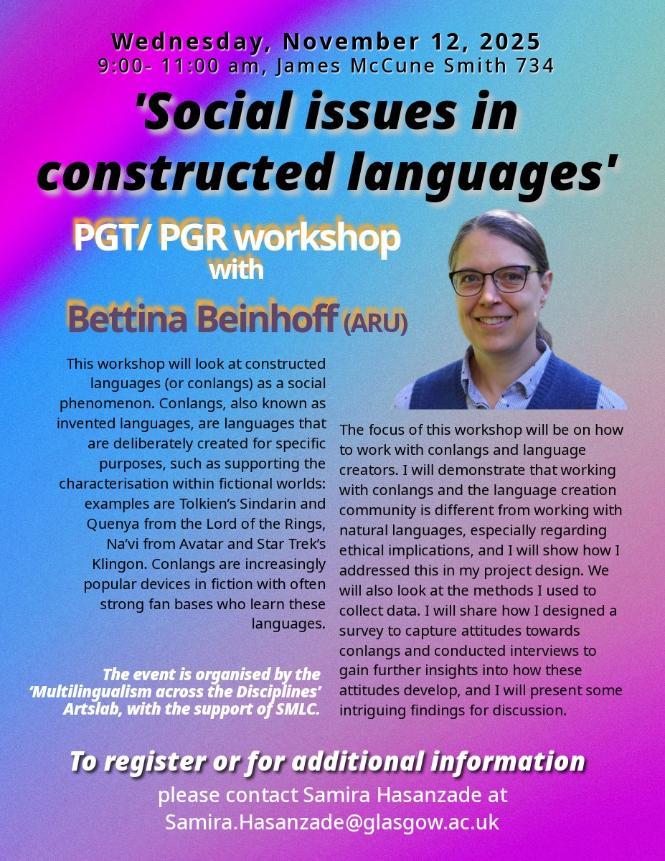
  • Social Issues in Constructed Languages


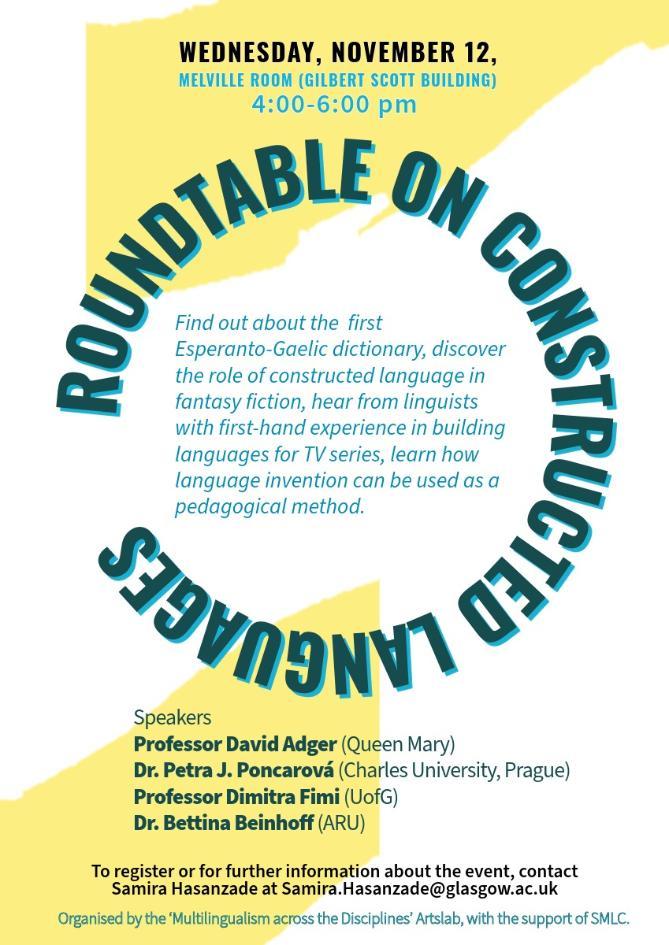
  • Roundtable on Constructed Languages


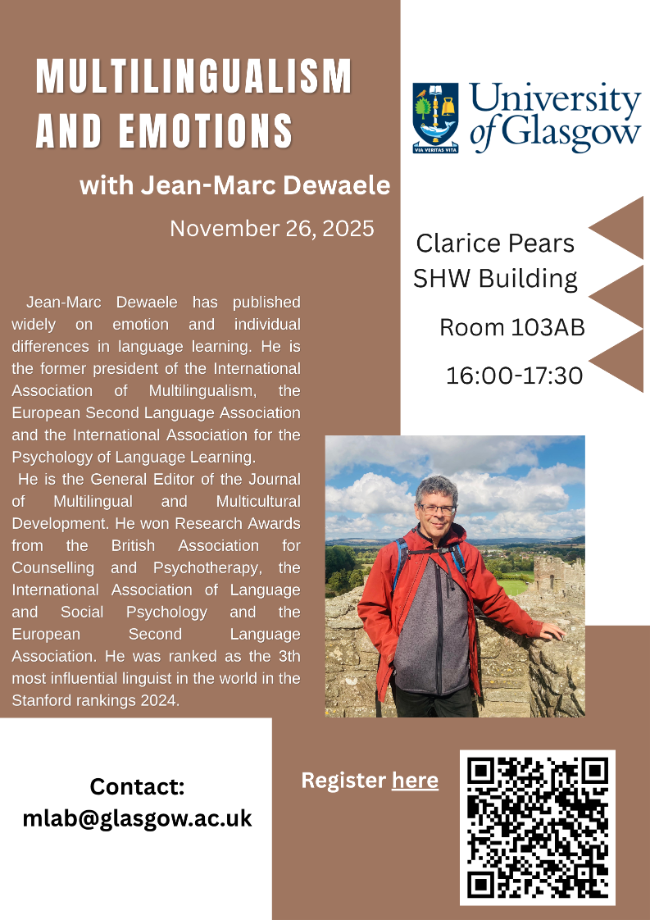
  • Multilingualism and Emotions