

Dr Liam Rooney's Research Selected by the Campaign for Science and Engineering
Published: 5 August 2026
Bacteriology Research Fellow Dr Liam Rooney has seen two separate research projects selected by the Campaign for Science and Engineering (CaSE) as part of its policy engagement work for both The Scottish Parliament and the Welsh Senedd.
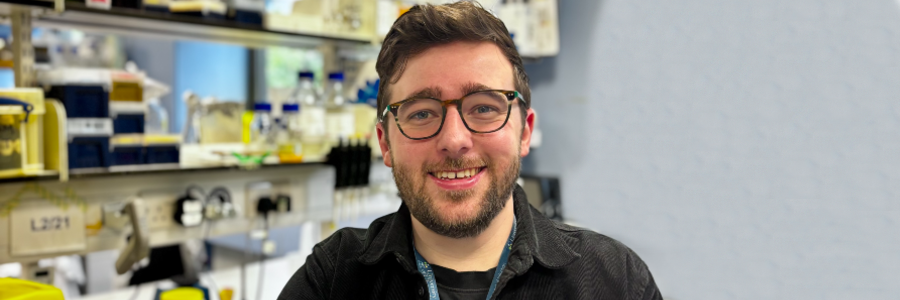
Bacteriology Research Fellow Dr Liam Rooney has seen two separate research projects selected by the Campaign for Science and Engineering (CaSE) as part of its policy engagement work for both The Scottish Parliament and the Welsh Senedd.
The case studies are included within CaSE's portfolio accompanying its welcome packs, which have been distributed to 225 politicians across Scotland and Wales.
Received by 129 MSPs and 96 Members of the Senedd, the documents showcase how research and innovation are delivering benefits for society, healthcare and the economy.
CaSE has recommended that MSPs and MSs urge their nation’s governments to adopt ambitious, aligned, cross-party approaches to R&D; incentivise collaboration between academia, industry and the NHS; and leverage local R&D strengths.
The two featured projects are:
- Targeting biofilms to tackle antimicrobial resistance (AMR) – highlighting our research into how bacteria organise within biofilms and how nutrient transport channels can be harnessed to improve antibiotic delivery and combat chronic infections.
- Low-cost 3D-printed lenses for improved imaging – showcasing our work with colleagues between the University of Glasgow (Dr Caroline Muellenbroich) and the University of Strathclyde (Gail McConnell & Ralf Bauer) to develop low-cost, rapid methods for manufacturing optical-quality lenses using consumer-grade 3D printers, expanding access to advanced imaging for research, education, healthcare and industry.
Dr Rooney said: "It's fantastic to see these projects recognised as examples of how research can contribute to public policy, economic growth and improved health outcomes.
"Many thanks to the CaSE for including our work, and to all the collaborators and colleagues who have contributed to these projects."
First published: 5 August 2026