

Sii researchers help shed light on how deadly parasite evades the immune system
Published: 5 May 2026
Sii researchers Professor Richard McCulloch and Dr Jane Munday have contributed to a study showing how Trypanosoma brucei evades the immune system through DNA-driven antigen changes. Led by Monica Mugnier and Jaclyn Smith at Johns Hopkins University, the work included key input from the Centre for Parasitology pair.
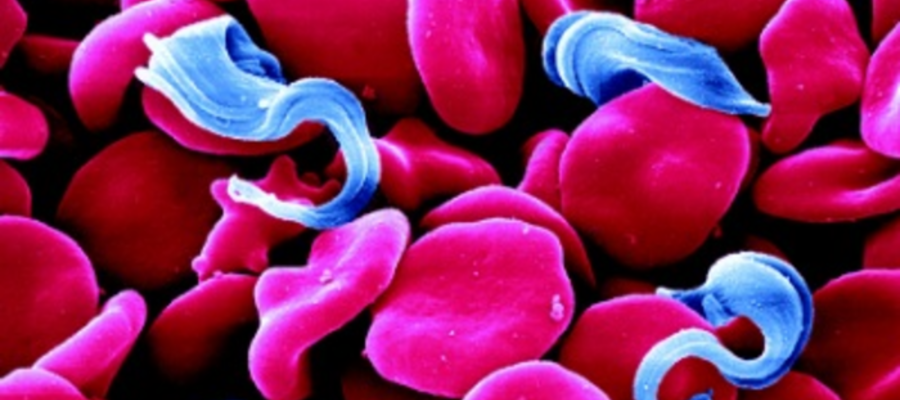
Researchers from the School of Infection & Immunity have contributed to a new study shedding light on how a deadly parasite evades the immune system.
A collaborative international team, led by Monica R. Mugnier and Jaclyn E. Smith at Johns Hopkins University, has uncovered how DNA damage drives antigen diversification in the African trypanosome, Trypanosoma brucei.
The parasite, which causes African sleeping sickness, is known for its ability to evade the host immune system through antigenic variation, continually altering the proteins on its surface to avoid detection.
Sii colleagues Professor Richard McCulloch and Dr Jane Munday, both members of the Centre for Parasitology, played a key role in testing how this process operates at a molecular level.
The team developed a highly sensitive sequencing approach to track changes in variant surface glycoprotein (VSG) genes - the molecules that coat the parasite and are recognised by the immune system.
By introducing targeted DNA breaks using CRISPR-Cas9, the researchers were able to trigger recombination events within VSG genes, generating new, antigenically distinct variants capable of helping the parasite escape immune attack.
Crucially, the study shows that both large-scale and small-scale changes to VSG genes rely on the same DNA repair mechanism - homologous recombination - mediated by proteins such as RAD51 and BRCA2.
Antigenic variation is a survival strategy used by many pathogens, including bacteria and parasites that infect humans, and understanding how these changes occur at a genetic level could open new avenues for tackling infectious diseases.
This study, titled ‘DNA damage drives antigen diversification in Trypanosoma brucei’ and published in Nature, provides the first clear mechanistic insight into how partial changes within antigen genes, known as diversification, take place, alongside full gene replacement.
Commenting on the findings, Professor McCulloch and Dr Munday said: “This innovative study by Smith and colleagues provides the first mechanistic insight into how changes within the expressed VSG gene occur during immune evasion in an African trypanosome.
"It reveals, perhaps surprisingly, that a core cellular DNA repair reaction termed homologous recombination is used irrespective of whether small or large parts of VSG genes are recombined.
"We are now examining the operation of antigenic variation in this trypanosome species over long-term infections, and it will be interesting to see if the parasite can survive and prosper in the absence of homologous recombination.
“Future work will address how much of the expressed VSG must be changed to survive immune attack, and whether VSG diversification patterns alter or stay constant over the course of infections.”
The findings not only deepen understanding of how Trypanosoma brucei sustains chronic infections but also provide a framework for studying antigen diversification in other pathogens, potentially informing future strategies to disrupt immune evasion.
First published: 5 May 2026