Building Collaborative Futures in Language Education and Digital Innovation
Published: 14 January 2026
Jagiellonian University International Visit to the University of Glasgow
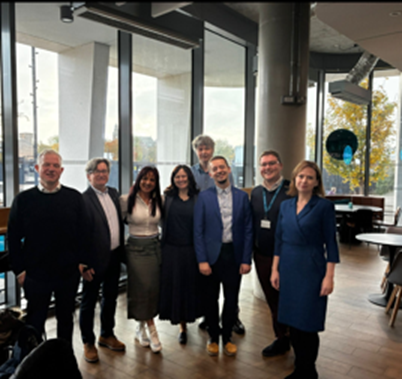
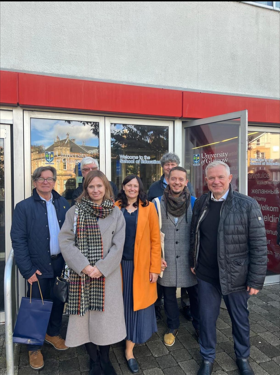
In October, the School of Education School of Modern Languages and Cultures at the University of Glasgow welcomed colleagues from the Faculty of Modern Languages at Jagiellonian University (JU), Kraków, for a week-long programme of academic exchange, collaborative planning, and shared professional learning. This visit formed part of our ongoing commitment to meaningful international collaboration centred on language education, pedagogical innovation, and the responsible use of emerging technologies in teaching and learning.
The visit also coincided with the ESRC Festival of Social Science, where the Glasgow team showcased current work on Virtual Reality (VR) in higher education and teacher development.
A Week of Shared Teaching, Learning, and Dialogue
Throughout the week, JU colleagues engaged in a series of lecture observations, working lunches, collaborative seminars, and VR demonstration sessions across the University of Glasgow’s campus. These experiences offered opportunities not only for professional exchange but also for building relationships grounded in mutual respect and shared academic purpose.
One JU participant reflected that:
“The most memorable experiences of the visit were the Virtual Reality presentation sessions… and the Festival of Science, where various educational applications of VR were presented. These sessions provided valuable insights that will shape our department’s pedagogical practices related to embedding virtual reality in university education.”
Across the week, colleagues were invited into Teaching English to Speakers of Other Language (TESOL) lectures, seminars, and assessment-focused discussions, allowing for detailed insight into how teaching and learning is structured at both institutions. This included two-way knowledge exchange with lecturers after class about pedagogy, assessment design, co-teaching, and student engagement strategies.
Another participant noted:
“We were treated with exceptional professionalism. From the very first day we had the chance to observe classes in the TESOL programme… The lecturers generously took time to discuss their teaching practices and share their experiences with us.”
These exchanges, supported by informal working lunches and opportunities for campus exploration, helped establish a shared language and shared values across institutions.
Immersive Technologies in Action: VR Demonstrations and Festival of Social Science Participation
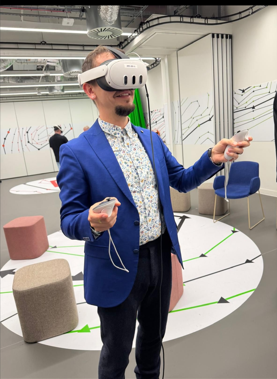
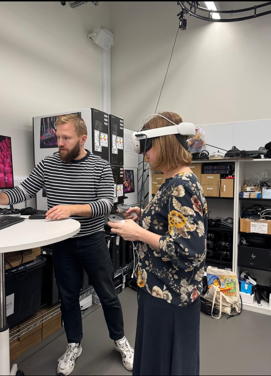
A highlight of the visit was the hands-on engagement with immersive learning technologies at the University’s XR Suite. Here, JU colleagues explored VR applications used across:
- Higher education laboratory training
- Initial Teacher Education (ITE) programmes
- Professional skills development
This experience was further enriched through participation in the Festival of Social Science event on VR and AI in Education, where educators, policy representatives and industry partners gathered to examine how immersive tools can enhance learning when used with clear pedagogical intent.
As one JU colleague shared:
“Observing how VR is embedded in teacher education was truly inspiring. These sessions helped us reflect on how to meaningfully integrate technology in our own programmes, with careful consideration of pedagogy, accessibility, and purpose.”
This aligns closely with both universities’ shared commitment to:
- Responsible technological innovation
- Collaborative professional learning
- Critical reflection on the ethical and pedagogical implications of educational technology
Strengthening Partnerships and Developing Future Projects
The visit has already sparked new areas for collaboration between the two institutions. One participant emphasised:
“This visit was a milestone in building meaningful relationships between the Jagiellonian University and the University of Glasgow… It helped establish mutual trust which will certainly contribute to the success of future collaboration.”
Concrete next steps already underway include:
- Development of a student and staff mobility agreement
- Planning of joint online conferences for postgraduate researchers
- Potential co-development of Horizon Europe proposals related to digital education
- Discussions on COIL / virtual exchange projects between programmes
In addition, staff from Glasgow have been invited to visit Jagiellonian University to deliver guest lectures and further strengthen networks.
As another visitor reflected:
“The visit offered valuable insights into teaching practices and curriculum design… I return with fresh perspectives and a renewed sense of possibility.”
A Foundation for Long-Term, Collaborative Growth
The impact of the visit extended beyond professional development — it fostered the conditions necessary for ongoing institutional partnership, shared research, and co-created innovation.
One participant summarised the experience:
“On the whole, the visit had a great impact on us, and made us reconsider our teaching styles and methodology. We wish to thank our Glasgow colleagues and we hope to host them in Kraków before long.”
Looking Ahead
As technology, multilingual education, and global collaboration continue to reshape the landscape of higher education, partnerships like this play a crucial role in supporting shared learning, pedagogical innovation, and equitable access to professional growth.
We look forward to the next phase of our collaboration, grounded in mutual respect, shared curiosity, and a shared commitment to meaningful education.
First published: 14 January 2026
<< News