

UNESCO RIELA 3 FILM SCREENINGS (2025-2028)
An overview of the film screenings we organised or were involved in during the third iteration of the UNESCO Chair
27-31 October 2025
Short film screening of Decolonial Love?, by Brice Catherin & Afulodidim Nikefolosi, at the online UNESCO RIELA Spring School: The Arts of Integrating (May Peace Prevail).

27 June 2025
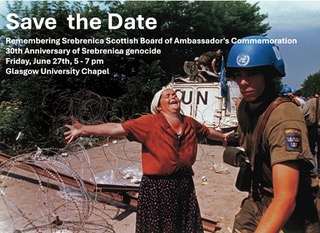
In commemoration of the 30th anniversary of the genocide in Srebrenica, the Remembering Srebrenica Scottish Board of Ambassadors, together with the UNESCO Chair in Refugee Integration through Education, Language, and Arts, organised a remembrance event at the University Chapel.
Together we remembered the victims of the genocide and listened to the following speakers:
Professor Alison Phipps, holder of the UNESCO Chair
Dr Waqar Azmi OBE, Chairman and Founder of Remembering Srebrenica
John Corrigan QPM, former chief of police and counter-terrorism leader
Keynote: Prof. Najla Hrustanovic, PhD, LMCH, Director of Multicultural and Social Justice Curriculum at Antioch University, Seattle
Alison Anderson, MBE, Former NHS Mortuary Services Manager and Emergency Preparedness Lead
Almira Delibegovic-Broom, KC, Chair of Justice Scotland, Honorary Consul for Scotland of Bosnia-Herzegovina
Robert McNeil, chair of Remembering Srebrenica Scotland
We watched a video of Sheena Wellington singing Karine Polwart's song Whar Dae Ye Lie, we screened a genocide denial video, produced by Sue Jimenez and watched a video of forensic experts who worked in Bosnia lighting candles all over the world.
26-28 May 2026
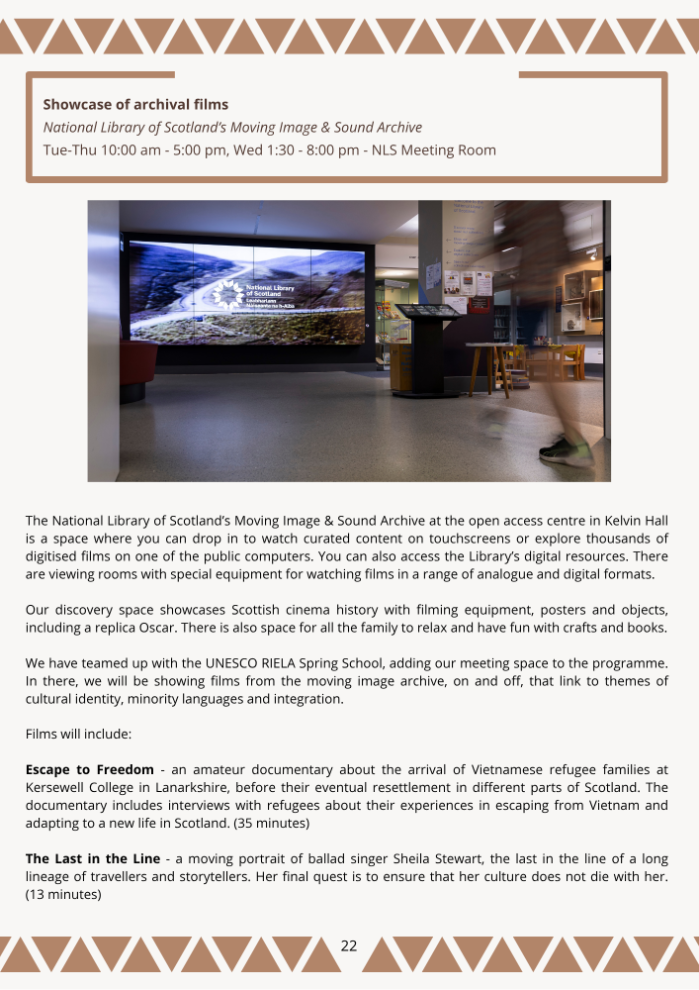
Showcase of archival films around migration, by The National Library of Scotland’s Moving Image & Sound Archive, as part of our UNESCO RIELA Spring School: The Arts of Integrating.
26-28 May 2026
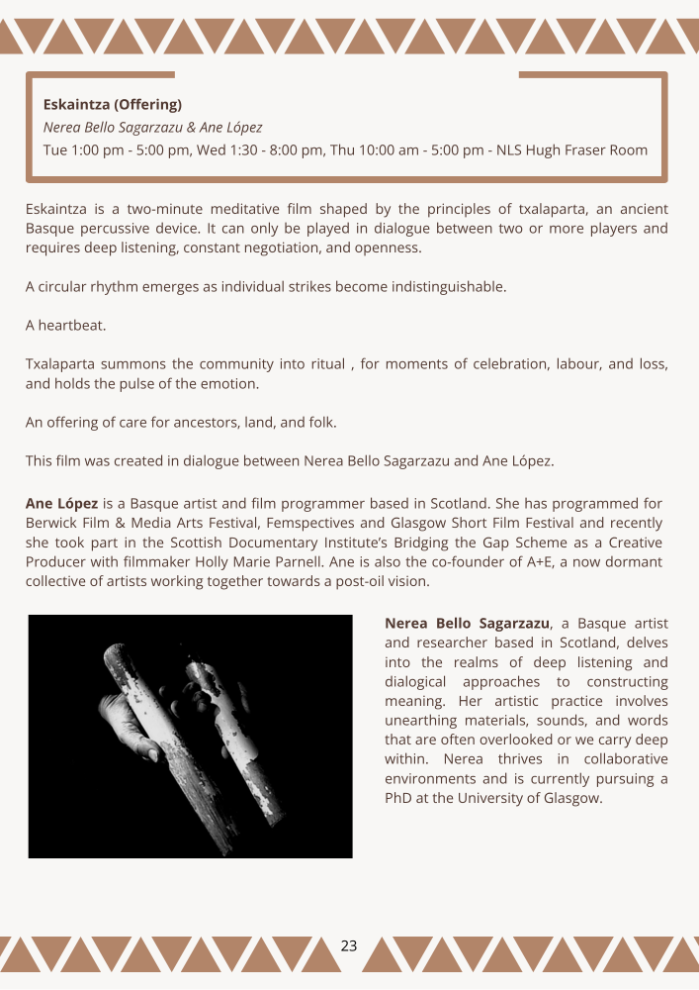
Screening of Eskaintza (Offering), by Nerea Bello Sagarzazu & Ane López (independent artists) at our 9th UNESCO RIELA Spring School: The Arts of Integrating
18 June 2026
Film screening as part of Refugee Festival Scotland 2026 (themes of celebration, collaboration and building a
shared future)
This CinemARC programme of short films has been jointly curated by teams at the ARC, the UNESCO Chair on Refugee Integration through Education, Languages, and Arts (UNESCO RIELA) and the Glasgow Refugee, Asylum and Migration Network (GRAMNet). The film screening was followed by a panel discussion.
Films
The Story of Migration | MIDEQ | 7 mins
Departing | Mary Martins | 8mins
Untitled | Akram Alashqar | 32 mins
A Story Left Behind | Asma Kabadeh | 14 mins
Panellists
Akram Alashqar
Asma Kabadeh
Tawona Sitholé
The next day, on 19 June 2026, there was an additional creative workshop to find out more about archives and how people's memories are mapped within them.
Following the screening of A Story Left Behind, the workshop took participants on a journey through archival research to uncover Somali history in the UK, prior to 1988. This creative workshop brought together historical records and personal memory, mapping the legacy of Somali presence in Sheffield and Glasgow. Asking us to critically examine archival representations for Somali & wider diasporic communities and challenge the dominance of public records as the sole source of history.
This workshop was led by Asma Kabadeh, a Creative Producer and Filmmaker whose work bridges creative storytelling with community spacemaking in service of racial justice, land justice and archival justice. She was touring her directorial debut with ‘Sheeko Laga Tagay / A Story Left Behind’, a film which uncovers the fragmented stories of the first documented Somali woman in Sheffield and invites audiences to critically examine archival representations for Somali & wider diasporic communities and challenge the dominance of public records as the sole source of history in a roaming workshop setting.
UNESCO RILA 1 FILM SCREENINGS (2017-2020)
An overview of the film screenings we organised or were involved in during the first iteration of the UNESCO Chair
11 September 2017
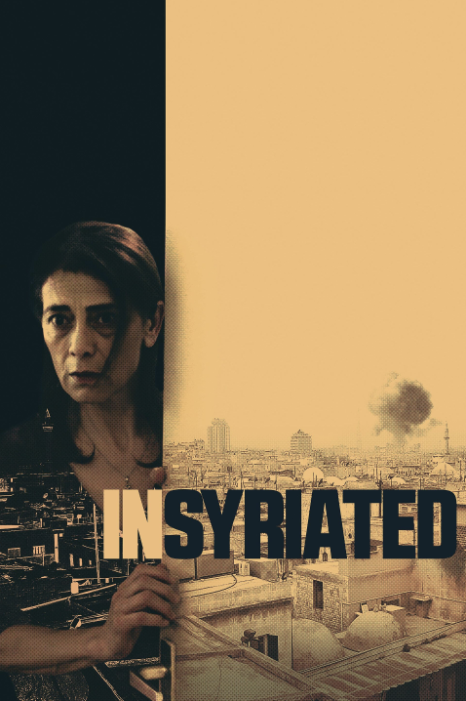
Alison Phipps and Oudai Tozan introduced the film Insyriated in the Glasgow Film Theatre and hosted the Q&A afterwards.
Screening location: Glasgow Film Theatre
Organised by: Glasgow Film Theatre
Director: Philippe Van Leeuw
Writer: Philippe Van Leeuw
Starring: Hiam Abbass, Diamand Abou Abboud, Juliette Navis and more
22 October 2017
Panel discussion Nowhere to Hide: Responsibilities for the Refugee Crisis, which accompanied the Film strand at Document Human Rights Film Festival 2017.
“The whole picture has perhaps become too overwhelming and complex. Perhaps we push it aside because it has become too difficult to witness, but this only generates fear and selfishness.”
Egil Håskjold Larsen (director, 69 Minutes of 86 Days)
With the rise of the right across the western world, and the increasing legitimisation of extreme points of view, filmmakers must challenge mainstream complacency, while audiences must confront their own complicity, responsibility and ability to affect change
Films in this strand:
Nowhere to Hide | Director: Zaradasht Ahmed (2016)
No Man Is An Island | Director: Tim De Keersmaecker (2016)
Stranger In Paradise | Director: Guido Hendrikx (2016)
Chauka, Please Tell Us The Time | Director: Behrouz Boochani, Arash Kamali Sarvestani (2017)
69 Minutes of 86 Days (Closing Gala) | Director: Egil Håskjold Larsen (2017)
With the global refugee crisis increasingly politicised, allowing people in dire need to be dehumanised, abused and to die on points of abstract principle, basic assumptions are being challenged. What are the implications of this aggressive and regressive political landscape?
How can documentary be used to shake audiences from lazy attitudes and platitudes, bubbles, presumptions and stubborn self-righteousness?
Panelists:
•Arash Kamali Sarvestani, director of Chauka, Please Tell Us The Time
•Hassan Abdulrazzak, Iraqi-British playwright
•Dr Melanie Baak, convenor of the Migration and Refugee Research Network at the University of South Australia
•Pinar Aksu, community worker
•Prof. Alison Phipps, UNESCO Chair in Refugee Integration through Languages and the Arts
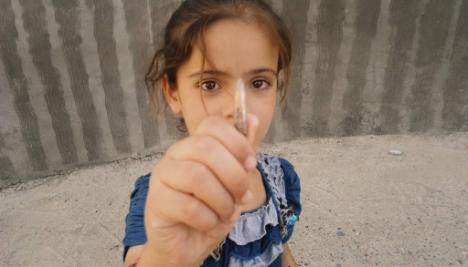
Image: still from Chauka, Please Tell Us The Time
23-25 June 2017
Gameli Tordzo, UNESCO Chair Artist in Residence, created a feature film and a documentary about the research that was done at Noyam African Dance Institute in Dodowa, Ghana. The film was screened at the Solas Festival as part of the UNESCO Chair strand.
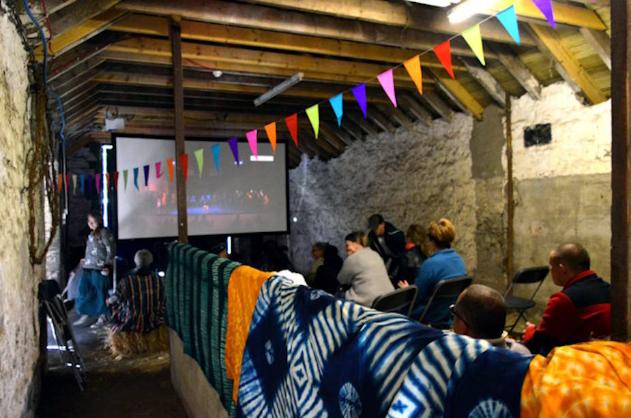
Photo: Sita Pieraccini
22-24 June 2018
Life After Detention
By: Scottish Detainee Visitors’ Life After Detention group
The harm caused by detention does not end once a person is released. For many, the trauma of detention, and the struggles with uncertainty, continue. This is the subject of ‘Life After Detention’, a new film made in collaboration with the Life After Detention group from Scottish Detainee Visitors. The group filmed aspects of their life in Glasgow on their mobile phones and worked with film-maker and SDV volunteer, Alice Myers, to create the film. It was premiered at an Unlocking Detention event on Tuesday 12 December at the Glad Cafe in Glasgow.
The film was followed by a discussion with Shirley Gillan, coordinator of Scottish Detainee Visitors.
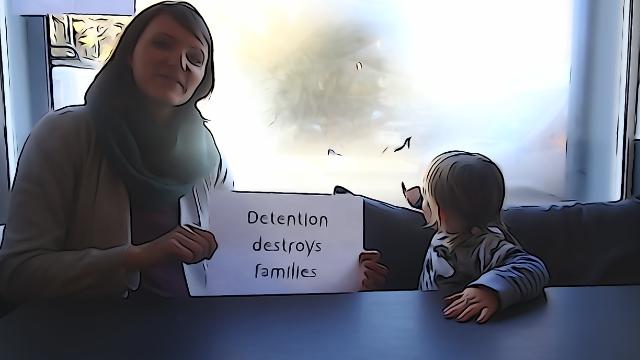
Gedzem Kutrikuku
Director and producer: Gameli Tordzro
Executive Producer: Alison Phipps
This 1-hour documentary film by Gameli Tordzro with Selorm Tay, Eli Tordzro and Sedem Tordzro is about a three-week visit to the Noyam African Dance Institute in Ghana by a team of researchers from the UK, Uganda, Gaza and Ghana, to devise a community theatre piece on the themes of distress, resilience and well-being. Visitors were advised to pay special attention to the multilingual component of the work.
The film was followed by a Q&A session with Gameli Tordzro and Alison Phipps.
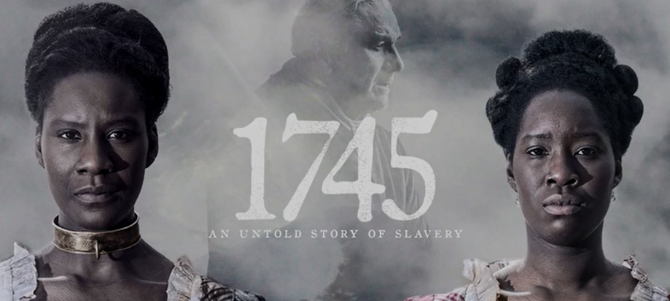
1745 – An Untold Story of Slavery
Producer: John McKay
By: Morayo and Moyo Akandé
When two young black slaves escape into the wilds of 18th century Scotland, they must use all of their courage and strength to survive, unite, and stay free.
1745 highlights a forgotten part of Scotland’s history: while Scotland was fighting for its national freedom in that fateful year, its economy was in large part founded on the booming colonial slave trade. While the majority of slavery happened elsewhere - off-stage, across the Atlantic - there were African slaves here, kept as trophies and pets in the houses of their rich merchant masters. “1745” was inspired by advertisements that writer, Morayo Akandé, discovered for runaway slaves, placed in Scottish newspapers of the time.
The film was followed by a Q&A session with John McKay.
9-11 May 2018
Acta Bristol – film screening/workshop: REACT – (Refugee Engagement And integration through Community Theatre)
Presenters:
Neil Beddow – acta artistic director
Ingrid Jones – acta associate director
Dr Aqeel Abdulla – acta drama worker and associate professor at University of Exeter
REACT is a two year European project exploring the use and effectiveness of community theatre as a tool for refugee integration in host communities in UK, Netherlands and Sicily. The initiative has been conceived, and is coordinated by Acta, with Rotterdams Wijktheater (Netherlands), Centro Per Lo Sviluppo Creativo “Danilo Dolci” (CSC), Palermo, Sicily. REACT is one of only twelve projects funded by EACEA Creative Europe Refugee Integration Projects call (2016), with additional funding from Paul Hamlyn Foundation.
REACT set out to discover and relate stories and life experiences from refugee communities, with refugees as performers/story tellers; trying out and gathering different approaches, case studies and ‘methodologies’ with the possibility of replication in communities across Europe; the overall aim being to promote positive aspects new cultural influences and energy for host countries; creating a climate of welcome and appreciation.
Using specially made documentary film, narrative and practical elements, the Presentation will reflect on the REACT project, including the different models and approaches adopted by partners, the range of performances created by refugees in UK, Netherlands and Sicily, and the four day REACT festival (26-29th March 2018). This Festival will include performances and presentations from UK-based companies working with refugees, including Good Chance, Glasgow Citizens, Phosphorus Theatre, PAN Intercultural Arts, CAN Manchester, and additional input from Swedish, Italian and Dutch practitioners, exploring key issues of ownership, ethics, artistic approaches, and setting the REACT project within the wider context of UK and European practice in refugee theatre.
The Presentation will examine the challenges, strategies and successes of the project, including responses from the three REACT partners from Bristol, Rotterdam and Palermo, their learning throughout the co-owned creative process, plus additional information and evaluations gathered from refugees, UK and European practitioners, companies and audience members from the host community in Bristol.
Film-maker Benjie Croce has followed the project over the last two years, and the documentary film will reflect the various stages and challenges faced by the project, the positive outcomes for refugees and host communities, and explore how the concept of ‘integration’ worked within the reality of the project.
acta is a Bristol-based participatory theatre which is committed to creating locally-based work with the power to resonate at national and international levels. We work with a range of communities who experience work created by each other, thus promoting empathy and understanding between cultures.