


GALLANT Gathering 2026
Please note that spaces for the GALLANT Gathering 2026 are now fully booked.
Monday the 9th to Wednesday the 11th of November 2026
Advanced Research Centre, University of Glasgow
Welcome to the GALLANT Gathering 2026!
Five years ago, the eyes of the world were on Glasgow as global leaders signed the historic COP26 Glasgow Climate Pact. While those international commitments set our collective target, the real groundwork happens locally. It is within our cities that the promise of a low-carbon, climate resilient future will be delivered.
Over the past five years, the GALLANT programme has worked in partnership with Glasgow City Council and a wide range of stakeholders across the city. Through interdisciplinary research, collaboration and real-world testing, we have applied systems thinking (considering how actions in one area can influence outcomes in others) to explore practical approaches to climate resilience, biodiversity recovery and urban sustainability. This Gathering provides an opportunity to share and reflect on that work, discuss lessons learned, and consider how our research can inform future activity in Glasgow and beyond.
With everyday economic pressures and the cost of living crisis dominating current headlines, it is vital that attention remains on the ongoing climate and biodiversity emergencies. Cities are on the frontlines of all of these challenges, making a systems approach to local climate action more urgent than ever. As the global conversation continues at COP31, the solutions emerging from Glasgow demonstrate the important role of cities in driving change. We invite you to collaborate, innovate, and find ways to help bridge the knowledge-to-action gap.
Tickets are entirely free, and you can choose to register for one day, two days or all three days of the GALLANT Gathering 2026.
What to Expect
As we approach the end of GALLANT, our 2026 Gathering is an opportunity to celebrate successes, share impact and build project legacy. The event will bring together GALLANT researchers and existing partners, as well as providing an opportunity to share our evidence and learning with wider local, national and international audiences.
Our packed 3-day programme includes:
- Plenary talks and panel discussions
- Interactive workshops to share knowledge and ideas
- Research presentations and poster displays
- Walking tours to situate our research within the city
Discover Our Programme
To help you explore the schedule, we have provided two ways to view the event documents:
- Print Version: To download the full conference programme - including introductory materials, schedule summaries, session outlines and abstract appendices - please use our print-ready document link: GALLANT Gathering Programme and Abstracts.pdf
- Mobile Version: For those who would like to view this content on a mobile device, please expand the interactive drop-down accordions below.
Day 1 At a Glance
| Time | Session details | |||
|---|---|---|---|---|
| 9:00-9:30 | Registration | |||
| 9:30-10:30 | Opening Plenary (Room 237) | |||
| Welcome and Opening Remarks: Professor Jaime Toney | ||||
| Keynote: Heather Claridge (Glasgow City Region) | ||||
| 10:30-11:00 | Break | |||
| 11:00-12:30 | Parallel Sessions | |||
|
Room 237AB Long term monitoring of urban biodiversity in Glasgow |
Room 237C Dear Green Trees: Making Sense of Community Tree Data |
Studio 2 Telling GALLANT's systems story: collective insights on the highs and lows of systems transformation |
Walking tour What makes a 'Thriving Glasgow?': demonstrating Doughnut Economics in practice |
|
| 12:30-13:30 | Lunch | |||
| 13:30-15:30 | Parallel Sessions | |||
|
Room 237AB Promoting Sustainable Travel in Glasgow |
Room 237C GALLANT Spotlight Session 1 |
Studio 2 GALLANT Spotlight Session 2 |
Walking tour communiMap in action: walking, noticing, and mapping urban nature |
|
| 15:30-16:00 | Break | |||
| 16:00-17:30 | Closing Plenary (Room 237) | |||
| Panel Discussion: Glasgow beyond 2035: What kind of future are we planning for? |
Day 1 Detailed Information
Day 1 - Monday 9th November - Detailed Session Information
Opening Plenary
09:30 - 10:30 | Room 237
Session Leads:
Professor Jaime Toney, GALLANT Principal Investigator
Heather Claridge, Strategic Spatial Planning Group Manager, Glasgow City Region
In Brief: Exploring how cross-boundary partnerships, place-based knowledge and long-term thinking can shape thriving and resilient futures.
About this Session: The conference will open with a welcome from GALLANT Principal Investigator Professor Jaime Toney, followed by a keynote address from Heather Claridge, Strategic Spatial Planning Group Manager for Glasgow City Region. Heather’s address ‘Thinking in Scale, Planning in Time’ will move from vacant sites to river catchments, and from neighbourhood projects to regional futures, to explore how places are helped to transform. Reflecting on the power of partnership, stewardship and long-term thinking, Heather will argue that the best outcomes for people, nature and the economy emerge when we work across boundaries, understand the patterns that shape places, and align today's actions with a shared vision for the future.
Please Note: This session will be livestreamed and recorded.
Parallel Session: Long-Term Monitoring of Urban Biodiversity in Glasgow
11:00 - 12:30 | Room 237AB
Session Leads:
Dr Dominic McCafferty, GALLANT Restoring Biodiversity Co-Lead
In Brief: Exploring how Glasgow can develop a more coordinated approach to biodiversity monitoring, using data, technology and priority species and habitats to better understand the health of urban ecosystems.
About this Session: High-quality biodiversity data is essential for understanding and managing urban ecosystems. In Glasgow, a wide range of organisations, researchers and citizen scientists already contribute to biodiversity monitoring, but how can these efforts be coordinated to provide a clearer picture of ecological health across the city?
This workshop will explore the opportunities and challenges of developing an integrated biodiversity monitoring system, including the role of priority species and habitats, emerging technologies, and data sharing. Featuring a short video capturing the research undertaken by GALLANT's Restoring Biodiversity Team, the session will bring participants together to exchange knowledge, map existing activity, and consider how a roadmap for more coordinated biodiversity monitoring across the city might take shape.
Parallel Session: Dear Green Trees: Making Sense of Community Tree Data
11:00 - 12:30 | Room 237C
Session Leads:
Professor Ria Dunkley, GALLANT Community Collaboration Lead
Dr Sarah Gambell, GALLANT Community Collaboration Research Associate
Dr Meiliu Wu, School of Geographical and Earth Sciences
Dr Davide Dominoni, GALLANT Restoring Biodiversity Co-Lead
Dr Federico Stachurski, GALLANT Data and Data Analytics Research Associate
David Treanor, Arborist, Writer and Public Advocate for Urban Trees
Fiona Waltham, GALLANT Community Tree Mapping Group
Chris Mccartan, GALLANT Community Tree Mapping Group
In Brief: Discovering what happens when a community maps every tree in a local park, and how the resulting data can inform tangible action and change.
About this Session: What can a community learn by mapping every tree in its local park, and how can that knowledge drive change? Through the Tree Co-Lab, community researchers mapped all 352 trees in Glasgow’s Elder Park, producing a detailed dataset and a set of community-led methods rooted in ecopedagogy. This session explores what data was produced and how the approach evolved over time. Community researchers will share their experience of taking part, what they learned and what worked well. Colleagues from GALLANT’s GoTrees team will explain their mapping method and its role in the project, along with colleagues from the Data and Data Analytics team, who will give an update on the Ask the Map platform, which was developed from communiMap app data. You'll leave with practical insight into community data collection, fresh ideas for your own practice, and a clear sense of how local evidence can turn into tangible action.
Parallel Session: Telling GALLANT's systems story: collective insights on the highs and lows of systems transformation
11:00 - 12:30 | Studio 2
Session Leads:
Dr Sarah Lester, GALLANT Systems Science Research Associate
Reese Green, GALLANT Systems Science Research Scientist
In Brief: Telling the story of systems transformation in practice to understand how change happens, what enables it, and what can stand in its way.
About this Session: Everyone agrees the climate crisis demands systemic change. But what does that change actually look like in practice, and how can we make sense of it in a complex, constantly evolving landscape? Drawing on participatory systems maps and interviews with a wide range of people involved in the GALLANT programme - including those from the public sector, community groups and transnational organisations - this interactive session explores how GALLANT’s transdisciplinary work has (and hasn’t) brought about shifts in individuals, relationships, organisations and the wider environment it interacts with. It also delves into some of the messier aspects of the change process within this work: the thorny tensions, resistance to change and unintended consequences. Making sense of systems transformation is a collective endeavour and we invite you to join us to respond to the story (or, more accurately, stories) so far, to test our assumptions as to how change happens, and to help us make sure we embed this learning into GALLANT’s legacy and future transdisciplinary programmes.
Parallel Session: What Makes a 'Thriving Glasgow?': Demonstrating Doughnut Economics in Practice
11:00 - 12:30 | Walking Tour
Session Leads:
Invisible Cities
In Brief: Discovering how communities, organisations and businesses are helping to create a thriving future for Glasgow.
About this Session: Join us for a guided walking tour of Glasgow City Centre, developed by GALLANT's Systems Transformation Team in partnership with Invisible Cities, a social enterprise that trains people with lived experience of homelessness to become walking tour guides of their own cities. Drawing on GALLANT's work on the Thriving City Portrait, the tour will show how businesses, organisations and communities are embracing practices aligned with Doughnut Economics. Through stories of place, participants will explore real-world examples of sustainable and inclusive urban change, seeing how research translates into everyday experience. The tour offers a special opportunity to engage with the city as a living example of transformation, highlighting the people, partnerships and initiatives helping to create a thriving future for Glasgow.
As places on the tour are limited, delegates interested in taking part are encouraged to sign up once the registration link is circulated to attendees one week ahead of the Gathering.
Parallel Session: Promoting Sustainable Travel in Glasgow
13:30 - 15:30 | Room 237AB
Session Leads:
Dr Emma Lawlor, GALLANT Promoting Active Travel Research Fellow
Professor Cindy Gray, GALLANT Promoting Active Travel Co-Lead
Professor Jason Gill, GALLANT Promoting Active Travel Co-Lead
Dr Maria Bissett, GALLANT Promoting Active Travel Research Assistant
In Brief: From cycling infrastructure and gender to behavioural change programmes, this session explores evidence-based approaches to sustainable travel.
About this Session: This session will focus on GALLANT’s work on sustainable and active travel. In the first half of the session, we will present our research into: i) the impact of a new walking and cycling bridge (Govan-Partick) on travel and wellbeing; and ii) gender and cycling. We will also provide an introduction to the Women and Transport Data and Evidence Group. The second half will focus on Cycle Nation, a nine-week programme that helps people who do not cycle regularly to get cycling again. In collaboration with cycling organisations across Glasgow, we are testing Cycle Nation’s effectiveness using a gold standard randomised controlled trial with 300 people. Through interactive discussion and shared reflection, we want to hear your perspectives on how the programme can be delivered more widely. By the end of the session, you will have a better understanding of GALLANT’s contribution to sustainable travel in Glasgow, make new connections with others who are interested in sustainable journeys, and contribute ideas that can help shape the future, real-world delivery of Cycle Nation.
Parallel Session: GALLANT Spotlight Session 1
13:30 - 15:30 | Room 237C
Session Chair: Dr John MacDonald, GALLANT Regenerating Derelict Land Team
Session Presenters:
Professor Siming You, GALLANT Community Energy Team
Dr Laura Bastianini, GALLANT Regenerating Derelict Land Research Associate
Dr Elmira Khaksar Najafi, GALLANT Regenerating Derelict Land Post Doctoral Researcher
Rob Morrison, Agile City Co-Founder
In Brief: Sharing research on how environmental innovation, community led regeneration and low carbon technologies can support more sustainable and resilient places.
About this Session: Our spotlight sessions showcase a diverse range of research from across the GALLANT programme. Delegates will hear a series of presentations and have opportunities to engage with speakers through a short Q&A following each talk. This session explores the role of environmental innovation, sustainable resource management and place-based regeneration in supporting more resilient communities and landscapes. Presentations will examine how life cycle assessment and machine learning can be used to evaluate the environmental impacts of waste management technologies, contributing to cleaner and lower carbon production systems. Delegates will also hear about emerging approaches to carbon sequestration and contaminated land remediation, including research on scaling up microbially induced carbonate precipitation, and the use of CO₂-saturated water as an alternative approach to capturing carbon while restoring degraded land. The session will conclude with a presentation exploring how partnerships can support neighbourhood-scale living labs focused on community energy, retrofit, active travel and the regeneration of vacant and derelict land.
Please see the Spotlight Presentation Abstracts section for detailed information on each presentation.
Parallel Session: GALLANT Spotlight Session 2
13:30 - 15:30 | Studio 2
Session Chair: Dr Michail Georgiou, GALLANT Data and Data Analytics Research Associate
Session Presenters:
Dr Anna Bracken, GALLANT Restoring Biodiversity Research Associate
Dr Erin Phillips, GALLANT Restoring Biodiversity Research Associate
Dr Emma Plant, GALLANT Restoring Biodiversity Postgraduate Researcher
Jonathan Lee, GALLANT Systems Science Postgraduate Researcher
In Brief: Sharing research on how biodiversity, collaboration and place-based decision making can support more sustainable and equitable urban futures.
About this Session: Our spotlight sessions showcase a diverse range of research from across the GALLANT programme. This session explores how cities can better balance environmental, social and governance priorities in the pursuit of sustainable urban futures. Delegates will hear a series of presentations and have opportunities to engage with speakers through a short Q&A following each talk. This session explores the challenges and opportunities of supporting biodiversity within cities. Presentations will examine how collaboration between communities, researchers, policymakers and practitioners can strengthen ecological connectivity and support wildlife movement across urban landscapes. Delegates will also hear how research on Glasgow's water vole populations is informing efforts to balance nature conservation with the needs of local people and urban development. The session will further explore the role of gardens and allotments in supporting pollinator diversity, highlighting the importance of urban green spaces for maintaining healthy ecosystems. Finally, delegates will hear how systems science approaches can help navigate the complex relationships between local decision making, urban devolution and the delivery of a just transition. Together, these presentations offer new perspectives on how people, policy and ecology can work together to support thriving urban environments.
Please see the Spotlight Presentation Abstracts section for detailed information on each presentation.
Parallel Session: communiMap in Action: Walking, Noticing and Mapping Urban Nature
13:30 - 15:30 | Walking Tour
Session Leads:
Sally Johnson, Friends of the River Kelvin
Dr Sarah Gambell, GALLANT Community Collaboration Research Associate
In Brief: Connecting with nature on a guided walk, introducing the communimap app through close observation of Glasgow's urban green spaces.
About this Session: GALLANT’s community collaboration research team will share the format of our nature connectedness walks and tree identification workshops with GALLANT researchers, project partners, and the Friends of the River Kelvin. This gentle, guided walk offers a chance to slow down, connect with nature, and notice the subtle seasonal changes along the riverside. Participants will be invited to share their own experiences of local green spaces on the communiMap app, reflecting on what makes these places meaningful to them. The walk will follow a route along the River Kelvin, where we will look out for bird species that call the river corridor home. Along the way, we will introduce simple approaches to tree identification and encourage close observation of plant life, supporting participants to build confidence in noticing and interpreting the natural environment. Suitable for beginners and nature enthusiasts alike, this workshop offers an accessible, reflective way to engage with urban green spaces while sharing a format that can be adapted for community-based nature activities.
As places on the tour are limited, delegates interested in taking part are encouraged to sign up once the registration link is circulated to attendees one week ahead of the Gathering.
Closing Plenary: Glasgow Beyond 2035: What Kind of Future Are We Planning For?
16:00 - 17:30 | Room 237
Session Leads:
Session Chair: Professor Andy Inch, Urban Studies and Social Policy
Panel members:
Professor James White, Urban Studies and Social Policy
Jo Winterbottom, GALLANT Systems Science Senior Research Fellow
Jude Barber, Collective Architecture
In Brief: Considering the future envisioned through Glasgow's emerging City Development Plan, and its implications for places and communities across Glasgow in the coming decade.
About this Session: As Glasgow prepares its new City Development Plan, what kind of future is being imagined for the city? The Plan, which will guide the use and development of land across Glasgow over the coming decade, will play an important role in delivering the city's ambitions for housing, climate action, nature recovery and community wellbeing. Bringing together commentators from governance, research, practice, community organisations and civil society, the day’s closing panel will reflect on the future envisioned through the draft Plan and explore its role in shaping Glasgow's development in the years ahead.
Please Note: This session will be livestreamed and recorded.
Day 2 At a Glance
| Time | Session details | |||
|---|---|---|---|---|
| 9:00-9:30 | Registration | |||
| 9:30-10:30 | Opening Plenary (Room 237) | |||
| Welcome and Opening Remarks: Professor Petra Meier | ||||
| Keynote: Councillor Angus Millar, Glasgow City Council | ||||
| 10:30-11:00 | Break | |||
| 11:00-12:30 | Parallel Sessions | |||
|
Room 237AB Using Systems Thinking in Practice: What Works? |
Room 237C Is Glasgow Thriving? Evidence from the Glasgow Doughnut |
Studio 2 It Takes a Village: Collaborative Storytelling for a Changing Climate |
Walking tour What makes a 'Thriving Glasgow?': demonstrating Doughnut Economics in practice |
|
| 12:30-13:30 | Lunch | |||
| 13:30-15:00 | Parallel Sessions | |||
|
Room 237AB Systems Transformation: Identifying Barriers, Enablers and Accelerators of Systems Change |
Room 237C From Rooftop Solar to Vacant and Derelict Land and Low-Carbon Heat: Can Glasgow's Communities Benefit? |
Studio 2 Early / Mid-Career Researcher Led Session: Professional Identity and Future Planning |
||
| 15:00-15:30 | Break | |||
| 15:30-17:00 | Parallel Sessions | |||
|
Room 237AB The 'Organising Power of Communities' featuring a low carbon energy Interactive Mapping Exercise |
Room 237C Climate and Community Courtyards: Transformative change across Glasgow |
Studio 2 Playing with the Glasgow Digital Doughnut |
Day 2 Detailed Information
Day 2 - Tuesday 10th November - Detailed Session Information
Opening Plenary
09:30 - 10:30 | Room 237
Session Leads:
Professor Petra Meier, GALLANT Co Principal Investigator
Councillor Angus Millar, Glasgow City Council Convener for Climate, Glasgow Green Deal, Transport and City Centre Recovery
In Brief: Opening the day with reflections on Glasgow's ambitions for climate action, sustainable transport and city regeneration.
About this Session: Day Two will begin with a welcome from GALLANT Co Principal Investigator Professor Petra Meier, followed by a keynote address from Councillor Angus Millar, Glasgow's Convener for Climate, Glasgow Green Deal, Transport and City Centre Recovery. In ‘From Evidence to Action: Collaboration for a Thriving, Climate-Resilient Glasgow’, Councillor Millar will describe how climate action is a shared civic endeavour. He will outline the need for collaboration that is sustained rather than occasional; evidence that is useful rather than merely interesting; and delivery that is rooted in the places and communities whose lives we want to improve. Bringing together research, public policy and practical experience into the same conversation, GALLANT is a key example of this approach, treating Glasgow not as a passive setting for research, but as an active partner: a city in which questions are developed together, evidence is tested against real conditions and learning is translated into decisions. Councillor Millar will go on to explore five themes - first, why partnership matters and how the ‘town and gown’ relationship has grown from the legacy of COP26. Second, why good data and research are essential to public practice. Third, how these ideas come alive through projects on community energy, urban nature and the circular economy. Fourth, why place-based approaches are essential for heat, flooding and wider resilience. And finally, what we need to do together to sustain momentum beyond individual funding cycles and institutional programmes.
Please Note: This session will be livestreamed and recorded.
Parallel Session: Using Systems Thinking in Practice: What Works?
11:00 - 12:30 | Room 237AB
Session Leads:
Professor Jaime Toney, GALLANT Principal Investigator
Dr Elaine Heslop, Honorary Fellow
In Brief: Equipping participants with practical tools and perspectives to support systems change in their own work.
About this Session: What helps systems transformation happen in practice? This interactive masterclass will introduce participants to systems thinking approaches and explore how they can be applied in practice. Drawing on findings from GALLANT's Systems Transformation workstream, the session will focus on the enablers and barriers to change, with an emphasis on practical application. Participants will be introduced to a range of systems methods and perspectives, from conceptual and participatory approaches through to quantitative modelling, and will have the opportunity to explore how these can support collaboration, planning and decision making. Whether you are new to systems thinking or looking to build on existing experience, this session will provide practical ideas, tools and perspectives to help you apply systems approaches in your own work.
Parallel Session: Is Glasgow Thriving? Evidence from the Glasgow Doughnut
11:00 - 12:30 | Room 237C
Session Leads:
Professor Nick Bailey, GALLANT Data and Data Analytics Associate
Jo Winterbottom, GALLANT Systems Science Senior Research Fellow
In Brief: Presenting Glasgow's first Doughnut Economics Data Portrait and exploring what it reveals about the city's journey towards becoming a thriving city.
About this Session: This session provides the first Data Portrait for Glasgow using the Doughnut Economics framework. Data Portraits are intended to facilitate discussion about long-term ambitions or goals, and hence to act as guides for local actors when setting strategic priorities. The session will be of interest to political leaders, policymakers and researchers working in sustainability and the Doughnut Economics framework, both in Scotland and internationally. The Glasgow Data Portrait reflects extensive engagement with Glasgow City Council (GCC) over several years. This started with a set of discussions to identify what it would mean for Glasgow to be a Thriving City – a place which meets the social needs of all people while remaining within the ecological limits of the living planet. This led to definitions for Glasgow for each of the 44 dimensions in the Doughnut Economics framework. The GALLANT team then worked to turn those definitions into a set of measurable indicators, again working in collaboration with stakeholders at GCC and elsewhere, and to collate data on each. Where possible, we captured data for the last ten years to provide a picture of the direction of change as well as the current situation. In this presentation, we summarise the process through which the indicators were co-developed with GCC and other stakeholders. We then provide the first look at the resulting Data Portrait for Glasgow.
Parallel Session: It Takes a Village: Collaborative Storytelling for a Changing Climate
11:00 - 12:30 | Studio 2
Session Leads:
Professor Ria Dunkley, GALLANT Community Collaboration Lead
Dr Sarah Gambell, GALLANT Community Collaboration Research Associate
In Brief: Playing and evaluating a new community resilience game while exploring its potential for future use in education and engagement.
About this Session: This session brings together GALLANT project partners and invited community groups to play and reflect on a newly developed serious card game called It takes a village. The game explores climate change, community resilience, and public participation, and participants will take part in a 60-minute playthrough followed by 30 minutes of structured discussion and feedback on the game's accessibility, engagement, and research value. Beyond the playthrough, this session is an opportunity to think collectively about what comes next. We'll discuss how the game can be disseminated, integrated into events and education, and adopted by partner agencies and community organisations for the long term.
Parallel Session: What Makes a 'Thriving Glasgow?’: Demonstrating Doughnut Economics in Practice
11:00 - 12:30 | Walking Tour
Session Leads:
Invisible Cities
In Brief: Discovering how communities, organisations and businesses are helping to create a thriving future for Glasgow.
About this Session: Another chance to join us for a guided walking tour of Glasgow City Centre, developed by GALLANT's Systems Transformation Team in partnership with Invisible Cities, a social enterprise that trains people with lived experience of homelessness to become walking tour guides of their own cities. Drawing on GALLANT's work on the Thriving City Portrait, the tour will show how businesses, organisations and communities are embracing practices aligned with Doughnut Economics. Through stories of place, participants will explore real-world examples of sustainable and inclusive urban change, seeing how research translates into everyday experience. The tour offers a special opportunity to engage with the city as a living example of transformation, highlighting the people, partnerships and initiatives helping to create a thriving future for Glasgow.
As places on the tour are limited, delegates interested in taking part are encouraged to sign up once the registration link is circulated to attendees one week ahead of the Gathering.
Parallel Session: Systems Transformation: Identifying Barriers, Enablers and Accelerators of Systems Change
13:30 - 15:00 | Room 237AB
Session Leads:
Jo Winterbottom, GALLANT Systems Science Senior Research Fellow
In Brief: Bringing together lessons from across GALLANT to identify the drivers, barriers and opportunities for systems transformation.
About this Session: This interactive workshop will draw together insights from systems mapping activities undertaken across GALLANT's research on climate adaptation, restoring biodiversity, regenerating vacant and derelict land, promoting active travel, and supporting community energy. Participants will be introduced to common themes emerging from the work, including the factors that enable or hinder change, before taking part in facilitated discussions to identify and assess potential drivers of transformation and consider the factors that influence whether change can be successfully implemented and sustained. Bringing together researchers, policymakers and practitioners from within and beyond GALLANT, the session will create space for reflection, knowledge exchange and collective problem solving. Participants will have the opportunity to explore how the findings resonate with their own experiences and contribute ideas for supporting systems transformation within Glasgow and beyond.
Parallel Session: From Rooftop Solar to Vacant and Derelict Land and Low Carbon Heat: Can Glasgow's Communities Benefit?
13:30 - 15:00 | Room 237C
Session Leads:
Professor Gioia Falcone, GALLANT Community Energy Lead
Nicola Tait, GALLANT Community Energy Postgraduate Researcher
In Brief: Examining how community energy organisations are shaping local energy futures through renewable energy, heat decarbonisation and community-led decision-making.
About this Session: This session will explore how community energy organisations can use practical experience, energy-system modelling and community priorities to shape local energy projects. We will hear about Glasgow Community Energy’s rooftop solar projects and wider activities, alongside the development of community energy opportunities through the Glasgow Community Renewable Energy Framework (CREF).
The session will also introduce the updated Centralisation Analysis Tool for Heat Pump Systems (CATHeaPS)-FatCat model, demonstrating how it can be used to explore different heat decarbonisation options for a community and share findings from a CREF case study in Easterhouse.
A key part of the session will be an interactive discussion about what we should measure when assessing community energy projects. Moving beyond technical and financial indicators, what matters to communities? What benefits, impacts and practical considerations should energy models capture?
Participants will have an opportunity to share their experiences, discuss priorities and consider how modelling can better support community decision-making. The session will also look ahead to emerging opportunities for Glasgow Community Energy and the next phase of CATHeaPS-FatCat.
Parallel Session: Early / Mid Career Researcher Led Session: Professional Identity and Future Planning
13:30 - 15:00 | Studio 2
Session Leads:
Dr Maria Bissett, GALLANT Promoting Active Travel Research Assistant
Kassandra Moosbrugger, GALLANT Promoting Active Travel Postgraduate Researcher
In Brief: Creating space for early and mid-career researchers to explore their future beyond GALLANT and identify pathways for professional growth.
About this Session: This 90-minute session is designed to give Early / Mid Career Researchers (EMCRs) a space to reflect on their professional development and their future beyond GALLANT. With support from mentors from academia, policy and practice, EMCR attendees are invited to consider what they have learned through their involvement in GALLANT, identify their unique contributions to research and practice and determine what they still need to do to reach their career goals. Attendees will be invited to pitch their ideas and receive feedback from peers and mentors. At the end of the session, participants should have developed a clear professional profile and identified actionable next steps to develop their careers.
Parallel Session: The 'Organising Power of Communities' featuring a Low Carbon Community Energy Interactive Mapping Exercise
15:30 - 17:00 | Room 237AB
Session Leads:
Dr Graeme Hunt, GALLANT Community Energy Research Fellow
Anton Soderqvist, GALLANT Community Energy Postgraduate Researcher
In Brief: Exploring the opportunities, challenges and leverage points for scaling up community energy in Glasgow and beyond.
About this Session: The session will feature a talk on the various means of energy generation which lend themselves best to the community scale. Furthermore, we are delighted to welcome architect Sukriti Sharma who will be presenting on ‘Accelerating Net Zero Housing in Glasgow’. Attendees will also have the opportunity to get involved in a Low-carbon community energy interactive mapping exercise!
Low carbon community energy projects offer multiple social and ecological benefits which go far beyond reducing emissions. Given there isn't one single factor which is preventing more widescale adoption, mapping out the wider system helps illuminate the various social, technological, financial and political factors at play and how they interact with each other. For the interactive element of this session, we will guide you through the process of building a shared map of how the system currently works. Afterwards, we will get a chance to compare maps and reflect on where the most powerful leverage points lie.
No technical or prior experience of decarbonising energy systems is necessary! Participatory systems maps thrive on diverse perspectives, and the session should be of interest to anyone who’s interested in community organising, grassroots empowerment, and supporting community-owned energy infrastructure in Glasgow and beyond.
Parallel Session: Climate and Community Courtyards: Transformative change across Glasgow
15:30 - 17:00 | Room 237C
Session Leads:
Dr Stephen Woroniecki, GALLANT Systems Science Research Fellow
In Brief: Examining how Glasgow's tenement landscapes can be transformed to support climate resilience, biodiversity and community wellbeing.
About this Session: Glasgow's distinctive tenements, with their shared backcourts and communal outdoor spaces, are home to a large proportion of the city's residents. These spaces have the potential to support climate adaptation, biodiversity and community wellbeing, but many remain underused. This session explores how design-led and community-informed approaches can improve the quality, function and sustainability of Glasgow's tenement backcourts. Developed through a collaboration between GALLANT, Govanhill Housing Association, Glasgow based architects O'DonnellBrown, and Danish landscape architecture practice BOGL, the Climate and Community Courtyards project combines climate adaptation, biodiversity enhancement and social wellbeing to reimagine shared outdoor spaces for local communities. Participants will hear about progress to date, including community engagement findings, emerging design concepts and plans for a demonstration site in Govanhill. The session will also explore opportunities to expand the approach beyond a single courtyard through the redevelopment of gap sites, improved courtyard access, housing development opportunities and wider neighbourhood regeneration, highlighting the potential for transformative change across Glasgow.
Parallel Session: Playing with the Glasgow Digital Doughnut
15:30 - 17:00 | Studio 2
Session Leads:
Dr Michail Georgiou, GALLANT Data and Data Analytics Research Associate
Dr Luning Li, GALLANT Data and Data Analytics Research Associate
Stephen Brown, GALLANT Data and Data Analytics Research Software Engineer
Dr Cris Hasan, GALLANT Systems Science Research Associate
In Brief: A hands-on exploration of Glasgow's Doughnut indicators and the Digital Doughnut platform.
About this Session: This workshop will introduce participants to the data behind the Glasgow Doughnut local indicators and demonstrate how these are presented through our digital tools, especially through the Digital Doughnut platform. The session will be interactive and combine a short presentation with live demonstrations and facilitated discussions. It will include an introduction to the indicators and datasets used and a walkthrough of how users can explore and interpret this data using the Digital Doughnut tool. Participants will also get to engage directly with the Digital Doughnut during the session.
The target audience for this workshop is Local Authority staff, policymakers, practitioners and researchers involved in data, sustainability and planning, but will also be relevant to other stakeholders interested in Doughnut Economics. The workshop aims to gather feedback on the usability, relevance and potential applications of the Digital Doughnut and the local indicators. Anticipated outcomes include improved understanding of Local Authority needs, insights to inform further development of the tool, and further engagement with local partners around the operationalisation of the Doughnut Economics framework at a local level in Glasgow.
Participants are encouraged, where possible, to bring their own laptop to support participation in this session, although this is not essential.
Day 3 At a Glance
| Time | Session details | |||
|---|---|---|---|---|
| 9:00-9:30 | Registration | |||
| 9:30-10:30 | Opening Plenary (Room 237) | |||
| Welcome and Opening Remarks: Professor Marian Scott | ||||
| Keynote: Professor Julie Fitzpatrick, Chief Scientific Advisor for Scotland 2021-2025 | ||||
| 10:30-11:00 | Break | |||
| 11:00-12:30 | Parallel Sessions | |||
|
Room 237AB Changing the Environment: Unlocking Environmental Impact Through the Power of Collective Knowledge |
Room 237C Data Storytelling for Nature |
Studio 2 GALLANT Spotlight Session 3 |
Walking tour What makes a 'Thriving Glasgow?': demonstrating Doughnut Economics in practice |
|
| 12:30-13:15 | Lunch | |||
| 13:15-14:45 | Plenary Session (Room 237) | |||
| Cèilidh Workshop: Imagining GALLANT's Legacy | ||||
| 14:45-15:00 | Closing Remarks | |||
| Closing remarks: Professor Jaime Toney |
Day 3 Detailed Information
Day 3 - Wednesday 11th November - Detailed Session Information
Opening Plenary
09:30 - 10:30 | Room 237
Session Leads:
Professor Marian Scott, GALLANT Co-Principal Investigator
Professor Julie Fitzpatrick, Chief Scientific Advisor for Scotland 2021-2025
In Brief: Opening the final day drawing on national and programme-level experience to explore the value of collaboration in addressing major challenges.
About this Session: Our final day begins with a welcome from GALLANT Co-Principal Investigator Professor Marian Scott. Professor Julie Fitzpatrick will then take the floor, presenting a keynote address on The Power of Partnerships. Julie will describe her background from a rather narrowly focussed veterinary scientist to becoming an advocate for powerful partnerships in her various roles throughout her career. As one of the members of the Programme Executive Group for Changing the Environment (CtE), she was privileged to see the evolution of four very different projects - GALLANT, AGILE, RENEW and the Centre for Landscape Development - delivering novel partnerships to meet the exciting and challenging objectives of CtE and NERC. She will discuss the approaches undertaken by the CtE including place-based projects, “Sprints”, community led initiatives and engagement with Local Authorities and City Councils. These projects embraced systems science, inter-disciplinarity, co-creation, theory of change, broad community and civic involvement, and multiple, innovative routes to communications and impact. Finally, she will highlight some great partnership projects she has come across in her roles over the years and will attempt to summarise what makes a really good partnership. She hopes not to hold a Q &A at the end of the presentation but rather to engage with the audience on their experiences and tips for future integrated programmes of research with impact.
Please Note: This session will be livestreamed and recorded.
Parallel Session: Changing the Environment: Unlocking Environmental Impact Through the Power of Collective Knowledge
11:00 - 12:30 | Room 237AB
Session Leads:
Sarah Froom, Natural Environment Research Council Programme Manager (UKRI)
Sarah Currier, GALLANT Programme Manager (University of Glasgow)
Dr Rachel Hayman, Agile initiative Senior Programme Manager (University of Oxford)
Ruth Gripper, RENEW Impact Officer (University of Exeter)
Helen Driver, CLR Research Programme Manager (University of Cambridge)
In Brief: Exploring how the Changing the Environment programme is improving outcomes for the natural environment, the research environment, and communities.
About this Session: Come join GALLANT and our sister CtE projects to discuss barriers, challenges and exciting solutions we've found in the environmental research space, where co-creation with local communities, strategic partners, and across many academic disciplines can really have an impact on the future of people and the planet. This session will tell some rich stories from our experience and give space for participants to focus on what's important to them and share their own experiences. GALLANT is part of the Changing the Environment programme, funded by UKRI-NERC. It brings together leading universities, environmental experts, policymakers, and communities to develop a collaborative research approach for greater environmental impact. “Changing the Environment “ has two meanings: positive impact on the natural environment and improving the research environment to better support this impact. This session will explore research culture changes the programme has enabled, and dive into the environmental achievements of: (1) The Agile Initiative (Oxford University), which is investigating how to produce high-quality research, faster; (2) RENEW (University of Exeter and the National Trust), which is exploring how connections with nature motivate communities to renew biodiversity at scale; (3) The Centre for Landscape Regeneration (University of Cambridge), which is regenerating the British countryside through analysing how to manage land differently for people, nature and the climate; and (4) GALLANT (University of Glasgow and Glasgow City Council) – Glasgow as a Living Lab Accelerating Novel Transformation – Delivering a Climate Resilient City through City-University Partnership.
Parallel Session: Data Storytelling for Nature
11:00 - 12:30 | Room 237C
Session Leads:
Dr Federico Stachurski, GALLANT Data and Data Analytics Research Associate
Professor Claire Miller, GALLANT Data and Data Analytics Lead
Professor Marian Scott, GALLANT Co-Principal Investigator
In Brief: Bringing together people, nature and data to better understand and communicate urban sustainability challenges.
About this Session: The GALLANT programme has provided an exceptional platform to bring together nature, people and data for urban environments. Projects such as GALLANT illustrate the diverse landscape of sustainability related data and the opportunities this creates for informed decision making and wider community engagement through storytelling. Within GALLANT, teams have worked with a wide range of quantitative and qualitative data sources, including citizen science contributions, social media content, official statistics, sensor and image data, energy timeseries and indicator datasets. This collective sustainability evidence for Glasgow is being brought together through the GALLANT Data Hub, highlighting both the challenges and potential of integrating heterogeneous data to support climate and sustainability policy. This session will showcase how these different forms of data can be translated into engaging stories, visualisations and tools. Central to GALLANT’s approach is transdisciplinary collaboration, bringing together domain experts, data scientists, policy stakeholders and communities to develop analytics, tools, methods and shared ways of working. The session will explore the importance of interoperable data systems and, through examples and discussion, consider what makes data storytelling useful, trustworthy and engaging. Participants will leave with practical insights into collaborative data use and communicating sustainability evidence effectively across policy, research, practice and community contexts.
Parallel Session: GALLANT Spotlight Session
11:00 - 12:30 | Studio 2
Session Chair: Dr Michail Georgiou, GALLANT Data and Data Analytics Research Associate
Session Presenters:
Laavanya Varadarajan, GALLANT Systems Science Undergraduate Intern
Dr Jenna Kirk, GALLANT Developing Semi-permanence Innovation Fund
In Brief: Sharing research on community wealth building and Scottish examples of semi-permanent development.
About this Session: Our spotlight sessions showcase a diverse range of research from across the GALLANT programme. Delegates will hear a series of short presentations and have opportunities to engage with speakers through a short Q&A following each talk. From community wealth building and urban transformation to the nature of development, the presentations in this session explore how places adapt, evolve and respond to environmental and societal change. Delegates will hear how Community Wealth Building can support a thriving Glasgow, including through an interactive policy map that explores the connections between existing city policies and demonstrates how this approach could help drive progress towards the socioecological ambitions of the Doughnut Economics framework. Participants will also gain new insights into what Scotland's rich precedent of temporary and time-bound development can tell us about shaping places for the future.
Please see the Spotlight Presentation Abstracts section for detailed information on each presentation.
Parallel Session: What Makes a 'Thriving Glasgow?’: Demonstrating Doughnut Economics in Practice
11:00 - 12:30 | Walking Tour
Session Leads:
Invisible Cities
In Brief: Discovering how communities, organisations and businesses are helping to create a thriving future for Glasgow.
About this Session: A final chance to join us for a guided walking tour of Glasgow City Centre, developed by GALLANT's Systems Transformation Team in partnership with Invisible Cities, a social enterprise that trains people with lived experience of homelessness to become walking tour guides of their own cities. Drawing on GALLANT's work on the Thriving City Portrait, the tour will show how businesses, organisations and communities are embracing practices aligned with Doughnut Economics. Through stories of place, participants will explore real-world examples of sustainable and inclusive urban change, seeing how research translates into everyday experience. The tour offers a special opportunity to engage with the city as a living example of transformation, highlighting the people, partnerships and initiatives helping to create a thriving future for Glasgow.
As places on the tour are limited, delegates interested in taking part are encouraged to sign up once the registration link is circulated to attendees one week ahead of the Gathering.
Closing Plenary: Cèilidh Workshop: Imagining GALLANT's Legacy
13:15 - 14:45 | Room 237
Session Leads:
Lynne Campbell, Cultural Practitioner and Storyteller
In Brief: Gathering to share stories, celebrate relationships and imagine the legacy that GALLANT might pass forwards.
About this Session: A cèilidh is often associated with music and dancing, but traditionally it also refers to a gathering, where people come together to share stories, ideas and experiences. This creative workshop draws on that tradition, inviting participants to reflect on GALLANT's journey and imagine the legacy it might pass forwards. Blending storytelling, design-thinking approaches and collective reflection, the session will create space to celebrate achievements, explore the learning that has emerged through the programme, and consider how its influence might continue beyond the lifetime of the project. Participants will be invited to reflect on the relationships developed through GALLANT, from connections with people, communities and organisations to relationships with place, nature and the wider world. Contributions from the session will help shape a collective poetic response, capturing the hopes, challenges, connections and possibilities that have emerged through GALLANT.
Closing Remarks
14:45 - 15:00 | Room 237
Drawing together the themes explored over the course of the Gathering, GALLANT Principal Investigator Professor Jaime Toney will offer closing reflections on the learning shared and relationships developed throughout the event.
Spotlight Presentation Abstracts
Spotlight Presentation Abstracts
Presenter:
Professor Siming You, GALLANT Community Energy Team
Title: Evaluating the environmental impacts of waste management using LCA and machine learning methods
Session date, time and location: Monday 9th November | 13:30 - 15:30 | Room 237C
Abstract: Sustainable waste management is one of the key challenges faced by major cities and is key to achieving Climate Action and Sustainable Cities and Communities as part of the United Nations Sustainable Development Goals. To facilitate the optimal design and implementation of waste management methods towards environmental sustainability and high social acceptance, it is important to understand their environmental footprints, for which environmental impact assessment, e.g., based on the approach of life cycle assessment (LCA) is widely applied. High-quality data input is crucial to ensure reliable and credible LCA results, and machine learning methods can be used to improve quality data generation and has received increasing attention in recent years. This talk will cover some of our recent LCA studies about waste management in the UK. The environmental impacts of popular waste management technologies including gasification, anaerobic digestion (or co-digestion), and pyrolysis in handling municipal solid waste, food waste, cow slurry, and non-recycled plastic waste will be demonstrated. The aim of the research is to initiate mapping the range of possibilities of waste management in facilitating UK’s action in achieving clean and low-carbon production. Additionally, this talk will cover some of our recent effort in developing machine learning-based models for more accurate, flexible environmental impact assessment. Our models for predicting gasification, pyrolysis and anaerobic digestion production will be introduced. The application of machine learning modelling for LCA will be presented.
Presenter:
Dr Laura Bastianini, GALLANT Regenerating Derelict Land Research Associate
Title: From Bench to Mesocosm: Scaling Up Microbially Induced Carbonate Precipitation for Carbon Sequestration and Remediation of Contaminated Soil
Session date, time and location: Monday 9th November | 13:30 - 15:30 | Room 237C
Abstract: Microbially induced carbonate precipitation (MICP) offers a potential approach for combining carbon sequestration with remediation of hydrocarbon-contaminated soils. This work investigates the scale-up of MICP from bench-scale experiments to mesocosm systems under controlled and open-air conditions. Previous experiments showed that CO2 concentration, calcium availability, pH and treatment sequence strongly influence ureolysis and carbonate precipitation. To improve process control, the mesocosm design separates urea hydrolysis from controlled calcium addition, helping to minimise rapid abiotic precipitation and surface calcite raft formation. The experimental setup includes contaminated soil, urea, gradual CaCl2 dosing, calcite seeds, pH monitoring and total alkalinity measurements to follow carbonate precipitation kinetics. Controlled-CO2 and open-air reactor configurations are compared to assess process reproducibility and scalability. These experiments aim to identify operating conditions that favour biologically driven carbonate formation while supporting simultaneous carbon management and soil remediation at larger scales.
Presenter:
Dr Elmira Khaksar Najafi, GALLANT Regenerating Derelict Land Post Doctoral Researcher
Title: CO2-Saturated Water as an Alternative to Direct CO2 Gas Injection for Wet Carbonation and Land Remediation
Session date, time and location: Monday 9th November | 13:30 - 15:30 | Room 237C
Abstract: Although wet mineral carbonation has been effective in land remediation and capturing CO2, gas flow provision/injection challenges field applications of carbonation for land reclamation. To address this issue, the application of CO2-saturated water as an alternative to direct CO2 gas injection was assessed for metal immobilisation, i.e., Ba2+, Mn2+, Ni2+, Zn2+, Pb2+, Sc3+, and Al3+, in contaminated soil obtained from a vacant and derelict site in Glenconner Park, Glasgow, Scotland, UK. The results illustrated that calcite was the only crystalline form of calcium carbonate precipitated in both groups. Direct CO2 gas injection increased calcite content and crystallinity compared to CO2-saturated water. CO2-saturated water improved Zn2+, Ni2+, and Al3+ partitioning in the carbonate fraction. CO2-saturated water can eliminate the direct CO2 gas injection process in CO2 capture for carbonation and land remediation, in which a lower crystallinity of calcite does not raise concerns about its long-term stability.
Presenter:
Rob Morrison, Agile City Co-Founder
Title: Agile City CIC
Session date, time and location: Monday 9th November | 13:30 - 15:30 | Room 237C
Abstract: Agile City has spent the past decade transforming post-industrial buildings in North Glasgow into a campus for cultural, social and circular enterprise. The presentation will explore our approach to place-based regeneration, learning through doing, and creating a living lab that connects communities, research and practical action to support Glasgow’s green transition.
Presenter:
Dr Anna Bracken, GALLANT Restoring Biodiversity Research Associate
Title: Implementing urban ecological connectivity is more effective with multi-stakeholder engagement
Session date, time and location: Monday 9th November | 13:30 - 15:30 | Studio 2
Abstract: Wildlife movement through urban areas is often restricted by land fragmentation, reducing organisms’ survival and reproduction, and contributing to biodiversity loss. Ecological connectivity – the network of linkages that enables wildlife to disperse among habitat patches – is a key conservation strategy in urban areas. Enhancing urban ecological connectivity requires the integration of both public and private land to establish corridors and stepping stones that facilitate wildlife movement. However, responsibility for urban wildlife is typically framed as the remit of local governments, councils and planners, despite the meaningful role that multiple stakeholders can play, including residents, businesses, community groups, conservation organisations and researchers. This talk discusses how responsibility for enhancing ecological connectivity should be shared among many stakeholders. It outlines ways to support multi-stakeholder engagement, around three themes: enhancing stakeholder collaboration, developing clear communication strategies, and integrating research and researchers into urban connectivity frameworks, while also identifying common implementation barriers.
Presenter:
Dr Erin Phillips, GALLANT Restoring Biodiversity Research Associate
Title: Balancing urban nature conservation with the needs of local people: a case study from NE Glasgow
Session date, time and location: Monday 9th November | 13:30 - 15:30 | Studio 2
Abstract: Urban green spaces can provide important habitats for wildlife, but these spaces are also essential for recreation, housing, and facilities for local people. Balancing these priorities can be challenging, but failure to do so adequately can lead to human-wildlife conflict in areas where the needs of people and wildlife are not aligned. Glasgow presents an interesting case study of these challenges, as the city is home to a nationally important population of threatened water voles (Arvicola amphibius). Usually associated with freshwater, Glasgow’s water voles also reside in dry grasslands in parks, gardens, and vacant or derelict land, bringing them into close proximity with people. This presents unique management challenges for local councils that must balance their statutory requirement for legal protection of water vole habitat with the needs and preferences of local residents. Working in partnership with Glasgow City Council, our work provides insight into the ecology of water voles in Glasgow, generating essential data to inform their management. While this case study focuses on the protection of only one species, it highlights the broader, more complex, and increasingly pressing issue of how to manage habitats for both people and nature in our cities.
Presenter:
Dr Emma Plant, GALLANT Restoring Biodiversity Postgraduate Researcher
Title: Supporting pollinator diversity in private urban green spaces
Session date, time and location: Monday 9th November | 13:30 - 15:30 | Studio 2
Abstract: Urbanisation has been shown to reduce pollinator diversity compared to natural areas. However, the mosaic of urban green spaces, and their habitat characteristics, can help maintain pollinator diversity across cities. In this study, we investigated the environmental variables influencing pollinator diversity in two contrasting green space types: gardens and allotments. We sampled flower visits by bees, hoverflies and butterflies across 9 gardens and 8 allotments in Glasgow, Scotland over 6 months in 2024. Alongside this we measured both local and landscape level environmental variables including; floral abundance and richness, plant origin, green space size and surrounding green space area. We found similar pollinator diversity between gardens and allotments. Floral richness was an important driver of pollinator richness, with greater floral richness at sites associated with greater pollinator richness. Importantly, this positive association was maintained in sites with less surrounding green space. Overall, we show that gardens and allotments host similar pollinator diversity, while greater floral richness can support higher pollinator diversity regardless of the urban context. These findings highlight the importance of providing diverse floral resources within urban green spaces for pollinators.
Presenter:
Jonathan Lee, GALLANT Systems Science Postgraduate Researcher
Title: Just Transition and Urban Devolution – Conflicts and Opportunities
Session date, time and location: Wednesday 11th November | 11:00 - 12:30 | Studio 2
Abstract: Glasgow is committed to making a Just Transition to an environmentally sustainable and socially equitable future. Efforts by nation-states to achieve the Sustainable Development Goals suggest this will be difficult; many of the goals lack repeatable, general solutions, and goals are often inexorably interlinked. Additionally, whilst the goals are all value positive, how the goals are valued and prioritised is subjective. Devolving decision-making to smaller regions of the city could allow for a more holistic approach, enable place-sensitive and tailored solutions, and allow communities to prioritise the goals they deemed most important. However, since city regions are extensively and unintuitively connected (e.g. through transit links), devolution at too fine a scale risks hampering progress towards a Just Transition, since different regions might unintentionally frustrate each-others progress, and solutions spanning wider areas might be impossible to implement. We use an abstract mathematical model, parameterised using real-world data, to explore how this interplay between devolution and operationalising a Just Transition manifests at different scales of devolution. Results suggest that devolution must be implemented in a fluid and adjustable manner, since many of the factors which affect the optimal level of devolution will change as the city progresses towards a Just Transition.
Presenter:
Laavanya Varadarajan, GALLANT Systems Science Undergraduate Intern
Title: Building a Thriving Glasgow: Community Wealth Building Meets Doughnut Economics
Session date, time and location: Wednesday 11th November | 11:00 - 12:30 | Studio 2
Abstract: From the Basque valley of Mondragon to the quaint, coastal landscapes of North Ayrshire, community wealth building (CWB) has transformed local socioeconomic prospects in crises impervious to the influence of rigorous traditional policy tools. With the Scottish Parliament’s passing of the Community Wealth Building (Scotland) Bill in March 2026, local and regional authorities across the nation are expected to adopt this place-based model that promises to reform the fundamental systems of wealth circulation in these economies. This radical movement also presents an unprecedented opportunity to advance Glasgow’s social and ecological priorities, i.e., Thriving Definitions, through community-rooted, collective action. To explore how communities and policymakers can effectively use the CWB-model towards a Thriving Glasgow, an interactive kumu policy map built on the city’s existing policy programmes is presented. The presentation also demonstrates how the model can drive systemic change towards the socioecological priorities of the Doughnut Economics framework on a local and global scale.
Presenter:
Dr Jenna Kirk, GALLANT Developing Semi-permanence Innovation Fund
Title: Semi-permanent Scotland: Land Uses for Uncertain Times
Session date, time and location: Wednesday 11th November | 11:00 - 12:30 | Studio 2
Abstract: If permanence cannot be guaranteed, how do we plan for the future? This presentation explores the precedents and future direction of semi-permanent development, through examples drawn from across Scotland. Beginning with ancient turf houses and ending with plans for a national circular construction hub, it traces how people have long designed, adapted, reused, and relinquished places in ways that challenge conventional ideas of longevity. Drawing on a range of sometimes surprising examples, including major energy infrastructure projects, the presentation highlights the many forms that temporary and time-bound developments can take. It also pauses on examples from Glasgow that demonstrate how these approaches shape contemporary responses to environmental, social, and economic change. By bringing these diverse cases together, semi-permanence emerges as a recurring means to accommodate uncertainty, support transition, and enable continuity in a changing world.
Posters and Exhibitions
Posters and Exhibitions
The following posters present research from across the GALLANT programme. The lead author or Gathering presenter's GALLANT role is included for reference, while additional contributors are listed by name. Many posters have been developed with GALLANT teams, project partners and collaborators.
Poster: Impacts of Urbanisation and Land Management on Peregrine Falcons (Falco peregrinus) in Scotland
Keir Hardy, Postgraduate Student, School of Biodiversity, One Health and Veterinary Medicine, and Dr Davide Dominoni
Abstract: Peregrine falcons are typically associated with upland regions. However, the species has become notable for its tendency to successfully colonise urban environments even as traditionally upland populations have declined, potentially due to the negative impacts of grouse moorlands. Despite this, limited work has been done to investigate the factors driving these observed population shifts. Therefore, our study used a 20-year survey of peregrines across Scotland to determine how habitat and land management impacted occupancy, breeding success and productivity. We found that while peregrine falcons are more productive in urban habitats, these were the habitats with the highest chance of failure. Meanwhile sites on grouse moorland were both less likely to be occupied or successful than unmanaged sites. These results demonstrate the value of long-term monitoring schemes in species conservation and the need for further research into the urban and upland ecology of the peregrines in Scotland.
Poster: Hydrodynamic forcing influences the distribution of the pioneer species Phragmites and Bolboschoenus within the Clyde marshes
Dr Alejandra Vovides, GALLANT Restoring Biodiversity Research Affiliate, and Nina Merz, Dr Dominic McCafferty and Prof Thorsten Balke
Abstract: Intertidal habitats are subject to floods and currents that contributes to spatial variation in hydrodynamic forcing, partially determining habitat types and their community composition. Along the Clyde River, between Ardmore and the confluence of the White Cart tributary with the Clyde River, saltmarshes occur at the river margins and in relatively sheltered embayment. These relatively small marshes are critical in maintaining sediment stability and potentially in mitigating floods. Understanding the hydrodynamic forcing characteristics and tolerance thresholds is critical to adequately inform management strategies and policy for climate change adaptation. Here, we present for the first time, a fine scale study of hydrodynamic forcing influencing the dominant pioneer saltmarsh species of the Clyde River Saltmarshes. The study shows current and wave forcing attenuation along the river, from the mouth of the river towards Glasgow city, seasonality in current forcing across the year, and suggests Bolboschoenus maritimus has increased tolerance to higher currents, while the pioneer Phragmites australis develops in areas with lower hydrodynamic forcing and salinity.
Poster: The influence of an urban landscape on the dispersal and ecological connectivity of blue tits (Cyanistes caeruleus) in a major UK city
Jessica Young, GALLANT Restoring Biodiversity Postgraduate Researcher, and Dr Paul Baker, Prof Kathryn Elmer, Dr Arne Jacobs, Dr Davide Dominoni and Dr Dominic McCafferty
Abstract: Highly fragmented urban landscapes influence dispersal and reduce ecological connectivity, posing a serious and widespread threat to biodiversity. Landscape genetic approaches are well suited to uncovering connectivity in urban landscapes. This project applied landscape genetic approaches at a fine spatial scale to determine the population structure of blue tits (Cyanistes caeruleus) breeding in urban woodlands in Glasgow. DNA was extracted from blood samples collected in 2024 and 2025 from 698 individuals across 63 sites. Preliminary analyses of whole genome sequencing data suggest blue tits breeding in Glasgow exhibit low population structure and high genetic diversity. The results provide valuable insights into how urban landscape features affect the movement and connectivity of a highly mobile species and inform government policies on green infrastructure and wildlife corridors.
Poster: LiDAR-based Tree Species Classification
Zhimeng He, GALLANT GoTrees Innovation Fund Research Assistant, and Dr Meiliu Wu, Yuwei Cai, Dr Davide Dominoni, Dr Luigi Cao Pinna and Dr Federico Stachurski | LiDAR-based Tree Species Classification
Abstract: We curated a target-domain dataset of individual urban trees from airborne LiDAR in Glasgow and developed a workflow for tree species classification. The point clouds were first processed using individual-tree segmentation, followed by spatial alignment with field-surveyed tree locations and species labels. Segmentation errors, including trees split across processing tiles, were further checked and corrected to improve the quality of the Glasgow dataset. Because the number of labelled trees available in Glasgow is relatively limited, we use the larger FOR-species20K dataset as a source domain for pretraining. A point-cloud classification model is first trained to learn transferable representations of tree structure and species characteristics from FOR-species20K, and is then fine-tuned and evaluated on the curated Glasgow data. This provides a practical framework for testing whether knowledge learned from larger forest datasets can improve species classification of urban trees.
Poster: Devolution and the Just Transition – Explorations Using NK Fitness Models
Jonathan Lee, GALLANT Systems Science Postgraduate Researcher
Abstract: Glasgow’s Thriving Definitions represent an ambitious set of goals, due to both the wide variety of goals and the rich network of interconnections which connect them. Devolution – where decision-making is scaled to sub-regions within the city – could make more reactive and holistic governing tractable, but risks introducing additional problems, since city regions are themselves tightly and unpredictably connected. One would expect both the benefits and detriments of devolved decision-making to become more extreme as the city is devolved into a larger number of smaller areas, but this is unlikely to occur at the same rate for each. This implies that there may be some optimal level of devolution with the most favourable ratio of benefit to drawback. We attempt to find this optimal level using an abstract model – the NK Fitness model – which has been modified to represent both devolution in general and Glasgow specifically, most notably by the incorporation of real-world data. We find that the optimal level is sensitive to many factors – some of which will inherently change as the city moves towards achieving its thriving definitions – implying governing must be flexibly devolved, rather than organised around a specific level of devolution.
Poster: Identifying the features of a feminist city: a Delphi survey of international experts in feminist urbanism
Amy Stevenson, GALLANT Systems Science Postgraduate Researcher, and Prof Nick Bailey, Prof Jaime Toney and Prof Petra Meier
Abstract: Feminist urbanism provides a framework for critiquing urban planning approaches and how they perpetuate gendered inequalities in urban life. As several cities have committed to becoming “feminist cities” in recent years, a shared understanding of their defining features is needed. We conducted a two-round modified Delphi survey to build expert consensus on the features of feminist cities. Experts had experience in feminist city research, policy, or practice, and were recruited via direct email to web-identified experts, authors of seminal papers, LinkedIn, and snowball sampling. Both rounds (Round 1: 35 responses; Round 2: 25 responses) included closed and open-text questions. Consensus was defined as ratings with a standard deviation ≤1. Quantitative data were analysed using stakeholder and outlier analysis; qualitative data through content and syntax analysis. In Round 1, panel members agreed on the relative importance of 17/25 proposed features. In Round 2, only 3/25 features continued to lack consensus. As qualitative responses provided sufficient explanation, further rounds were not required. Overall, panel members identified 15 features as essential to feminist cities and four as important. These spanned five domains: built environment, transport, representation, social transformation, and safety. Four key outcomes were identified as expected results of implementing these features. This Delphi survey establishes consensus on essential features of feminist cities and provides additional insights through open-text responses. The findings contribute to feminist urbanist research by defining a shared vision of feminist cities and support practice by enabling assessment of progress towards achieving them.
Poster: Is an image still worth 1000 word in the era of AI?
Dr Luigi Cao Pinna, GALLANT Data and Data Analytics Research Affiliate, and Prof Claire Millar, Prof Marian Scott and Dr Cris Hasan
Abstract: Advances in artificial intelligence have created new possibilities for analysing large collections of images and text. This poster explores whether AI-generated image descriptions capture the same meaning and sentiment as those provided by humans. Using images related to urban environmental sustainability, the study compares captions generated by multiple AI models with descriptions collected from participants at sustainability focused events. The findings showed that AI-generated and human-generated image descriptions were frequently indistinguishable, suggesting that AI can successfully replicate many aspects of human interpretation. At the same time, both AI systems and participants produced similar levels of misinterpretation, underlining the importance of critical evaluation when using AI to analyse visual information. The research highlights both the promise and limitations of AI-supported approaches for understanding public perceptions and environmental narratives, contributing to ongoing discussions about the role of AI in environmental research, community engagement and evidence informed decision making.
Poster: Latent Dirichlet allocation and hidden Markov models to identify public perception of sustainability in social media data
Dr Luigi Cao Pinna, GALLANT Data and Data Analytics Research Affiliate, Prof Claire Miller and Prof Marian Scott
Abstract: Social media platforms generate vast quantities of user created content, offering new opportunities to understand how people discuss and respond to social and environmental priorities. A novel analytical framework is discussed, that combines topic modelling and hidden Markov models to identify shifts in public interests and perceptions over time. Applying the approach to social media data from Glasgow, the research examines how social media analytics can be used to identify shifts in public attention, and explores the potential of social media as a source of evidence for sustainability research and decision making. The findings show that the approach can identify significant change points in online discussions, revealing when public attention moves and highlighting the events and topics driving these changes. By tracking evolving patterns of engagement and discussion, the research demonstrates how social media analytics can provide valuable insights into public sentiment and perceptions of various areas of interest.
Poster: GALLANT: Connecting Communities and Climate Solutions
Dr Sarah Gambell, GALLANT Community Collaboration Research Associate, and Prof Ria Dunkley
Abstract: Community engagement is central to understanding and addressing complex environmental challenges. This poster presents the work of GALLANT's Community Collaboration Workstream, which brings together residents, researchers and partner organisations to co-produce knowledge, data and action for more sustainable urban futures. Through initiatives including community led tree mapping in Elder Park, Govan, nature connectedness activities with the Friends of the River Kelvin, the development of the communiMap citizen science platform, participatory community co-analysis, and collaborations with partners such as the Hunterian Museum, the work explores how local knowledge, lived experience and community-generated data can contribute to environmental understanding and climate action. Central to the work is the idea that data should not simply be extracted, analysed and returned to communities, but instead that communities can play an active role in interpreting findings, shaping understanding and determining how evidence is used to support local action.
Poster: Doughnut Portrait Global Indicators
Dr Mary Menton, GALLANT Systems Science Research Affiliate, and Joel Petterson, Doughnut Economics Action Lab
Abstract: Understanding how places affect people and environments beyond their own local boundaries is a key challenge in building a more sustainable and just future. This poster highlights the role of global indicators within the Doughnut Economics framework and examines the methods used to measure social and environmental impacts of places on a global level. Building on the Doughnut Data Portrait: Indicator Library, the research explores a range of approaches used internationally to assess global impacts, from footprinting methods and standalone Multi-Regional Input Output models to qualitative narratives and case studies. We want to spotlight both the opportunities and challenges of developing global indicators - including issues of scale, data availability and methodology - whilst inviting viewers to suggest additional approaches, methods or datasets for consideration in their research. This work will ultimately culminate in a 'State of the Art' review piece.
Poster: Closing the Gender Gap in Cycling
Kassandra Moosbrugger, GALLANT Active Travel Postgraduate Researcher
Abstract: Women and non-binary people remain underrepresented in cycling, despite growing recognition of the health, environmental and social benefits that active travel can provide. This poster presents findings from a doctoral research project involving both expert professionals and people with lived experience of cycling in Glasgow. Through systems mapping, the research identified a range of interconnected factors that influence cycling uptake, and key leverage points where targeted interventions could have a significant impact, including cycling infrastructure, access to bikes and training, women-only spaces, driver behaviour, peer support, political leadership and behaviour change initiatives. Building on these findings, the project is developing a policy lab that will explore how evidence, including suggestions made by research participants, can be translated into action to help close the gender gap in cycling.
Poster: Segmentation-Assisted Tree Species Prediction from RGB Aerial Imagery Using Deep Feature Learning
Yuwei Cai, GALLANT GoTrees Innovation Fund Research Assistant, and Zhimeng He, Dr Meiliu Wu, Dr Davide Dominoni, Dr Luigi Cao Pinna, Dr Paul Baker, Dr Federico Stachurski and Dr Alejandra Vovides
Abstract: Urban trees provide important environmental and social benefits, but effective management requires accurate information on the distribution of different tree species. This poster presents an approach to urban tree species mapping which uses high-resolution RGB aerial imagery and machine learning techniques. Combining tree canopy segmentation with species classification models, the research investigates the potential of available aerial imagery to identify common tree species across Glasgow. The findings demonstrate that high-resolution RGB imagery can support prediction of several urban tree species, while tree segmentation improves the spatial consistency of the resulting maps. The work highlights the potential of deep feature learning and remote sensing to support urban forest management and evidence based planning in cities.
Exhibition: Sustainable Transport in the Glasgow City Region
Description: This photo exhibition presents images captured by participants who took part in GALLANT’s Informing Clyde Metro Innovation Fund project, offering insights into everyday experiences of active travel and public transport across the Glasgow City Region. Through photographs and accompanying reflections, participants share the realities of navigating transport systems, highlighting both the barriers that can limit sustainable travel and the opportunities for creating more accessible, connected, and inclusive journeys.
Exhibition: The Digital Doughnut
Description: This interactive exhibit offers attendees an opportunity to explore and test the Digital Doughnut, a tool developed by GALLANT’s Data and Data Analytics Team to support engagement with place-based sustainability challenges. Participants will be invited to interact with the visualisation, explore its functionality, and consider how different social, environmental, and economic factors can be understood through the Doughnut framework.
Exhibition: Community Collaboration Showcase
Description: Explore the outputs and activities emerging from GALLANT’s Community Collaboration Team. Materials relating to communiMap, a participatory mapping tool designed to help communities share local knowledge, experiences, and perspectives on place will be available to browse, alongside updates on a forthcoming series of exhibitions across Glasgow. Copies of the card game It Takes a Village, which has been designed to encourage discussion and reflection on place, community, and sustainable futures, will also be available.
Exhibition: Water, Stone and the City
Description: This exhibit brings together two creative research projects led by Professor Emerita Minty Donald with collaborators Nick Millar and, for Skin of the City, Malú Cayetano. The projects explored ways in which people might connect with Glasgow through its materiality and urged people to consider the city as more-than-human. Through documentation of the two projects - Water Walks and Skin of the City - attendees are invited to encounter the city through both its watery and stony materiality. Water Walks took the form of a series of public, participatory walks that encouraged new ways of noticing and responding to water in the urban environment, revealing often-overlooked relationships between people, water, and the urban infrastructure. Skin of the City turned attention to Glasgow's hard surfaces, exploring the city's ‘skin' of stone, brick, concrete, and asphalt. Through artistic investigation, the project reflected on the changing character of these lithic surfaces. It reflected on the impacts of the city’s stony ’skin’ on biodiversity, heat retention, flooding, and toxicity, and on issues concerning the extraction and manufacture of lithic materials.
Exhibition: Glasgow Science Centre Showcase
Description: Glasgow Science Centre share their multi-year partnership with GALLANT, where GSC developed an engaging programme of family learning activities exploring how Glasgow could adapt to climate change while supporting the health and wellbeing of its communities. Through hands-on activities such as making wormeries, building wind turbines and taking part in family adventure walks, families explored the research and ideas helping to create a healthier, fairer and more climate-resilient city.
Event Livestreaming
The following sessions will be livestreamed via the GALLANT YouTube Channel. If you are unable to attend the Gathering in person, you can watch live by visiting the channel at the relevant session start time, where the stream will be available shortly before the session begins.
Visit the GALLANT YouTube Channel
Monday 9th November
Opening Plenary – 9:30am-10:30am
Featuring a Welcome and Opening Remarks by Professor Jaime Toney, GALLANT Principal Investigator and ‘Thinking in Scale, Planning in Time’ – a keynote address by Heather Claridge, Strategic Spatial Planning Group Manager for Glasgow City Region.
Closing Plenary – 16:00pm-17:30pm - Glasgow Beyond 2035: What Kind of Future Are We Planning For?
A panel session considering the future envisioned through Glasgow's emerging City Development Plan, chaired by Professor Andy Inch (Urban Studies and Social Policy), and with panellists Professor James White (Urban Studies and Social Policy), Jo Winterbottom (GALLANT Systems Science Senior Research Fellow) and
Jude Barber (Collective Architecture).
Tuesday 10th November
Opening Plenary – 9:30am-10:30am
Featuring a Welcome and Opening Remarks by Professor Petra Meier, GALLANT Co Principal Investigator, and ‘From Evidence to Action: Collaboration for a Thriving, Climate-Resilient Glasgow’ – a keynote address by Councillor Angus Millar, Glasgow's Convener for Climate, Glasgow Green Deal, Transport and City Centre Recovery.
Wednesday 11th November
Opening Plenary – 9:30am-10:30am
Featuring a Welcome and Opening Remarks by Professor Marian Scott, GALLANT Co Principal Investigator, and ‘The Power of Partnerships’ – a keynote address by Professor Julie Fitzpatrick, Chief Scientific Advisor for Scotland 2021-2025.
Keynote Speakers
Heather Claridge - Strategic Spatial Planning Group Manager for Glasgow City Region
Heather Claridge is the Strategic Spatial Planning Group Manager for Glasgow City Region, overseeing the long‑term vision for one of the UK’s largest metropolitan areas, and helping guide how the region grows, adapts and responds to the climate and nature crises. During her extensive career as a chartered planner and urban designer working in the public sector, Heather has led major green and blue infrastructure programmes in Glasgow’s east end, supported regional regeneration initiatives in the Forth and Clyde canal corridor, and championed creative, community‑led approaches such as the award‑winning Stalled Spaces programme and urban lighting projects. Widely recognised for her contribution to the sector, Heather is a Fellow of the RSA, an Academician of the Academy of Urbanism, a former RTPI UK Young Planner of the Year, and an Affiliate of UN‑Habitat’s Planners for Climate Action network. She also serves as Co-Chair for the Green Action Trust and Chair of the Kelvin Catchment Partnership, reflecting her long‑standing commitment to tackling environmental and social inequalities through practical, place‑based action.
Councillor Angus Millar - Glasgow's Convener for Climate, Glasgow Green Deal, Transport and City Centre Recovery
First elected in May 2016, Angus represents Glasgow City Centre and the nearby Anderston, Finnieston and Yorkhill areas as one of four councillors for the Anderston/City/Yorkhill ward. Angus is currently Glasgow's Convener for Climate, Glasgow Green Deal, Transport and City Centre Recovery. In this role, he leads on the city's journey to Net Zero, promoting sustainability and a just transition to a greener economy, and developing the city's transport strategies. Angus also leads on Glasgow's city centre recovery efforts, supporting regeneration and championing a vibrant, mixed-use city centre economy.
Professor Julie Fitzpatrick - Chief Scientific Advisor for Scotland 2021-2025
Professor Julie Fitzpatrick CBE FRSE served as the Chief Scientific Adviser (CSA) for Scotland from 2021 to 2025. She was the Scientific Director of the Moredun Research Institute and Chief Executive Officer of The Moredun Foundation, and holds a Chair in Food Security at the University of Glasgow's College of Medicine, Veterinary Medicine and Life Sciences. Her research focuses on livestock and aquaculture health, infectious disease prevention, and global food security. A Fellow of the Royal Society of Edinburgh, Professor Fitzpatrick has championed evidence-based policymaking, sustainable agriculture, and the integration of scientific innovation across government and academic institutions.
Satellite Events
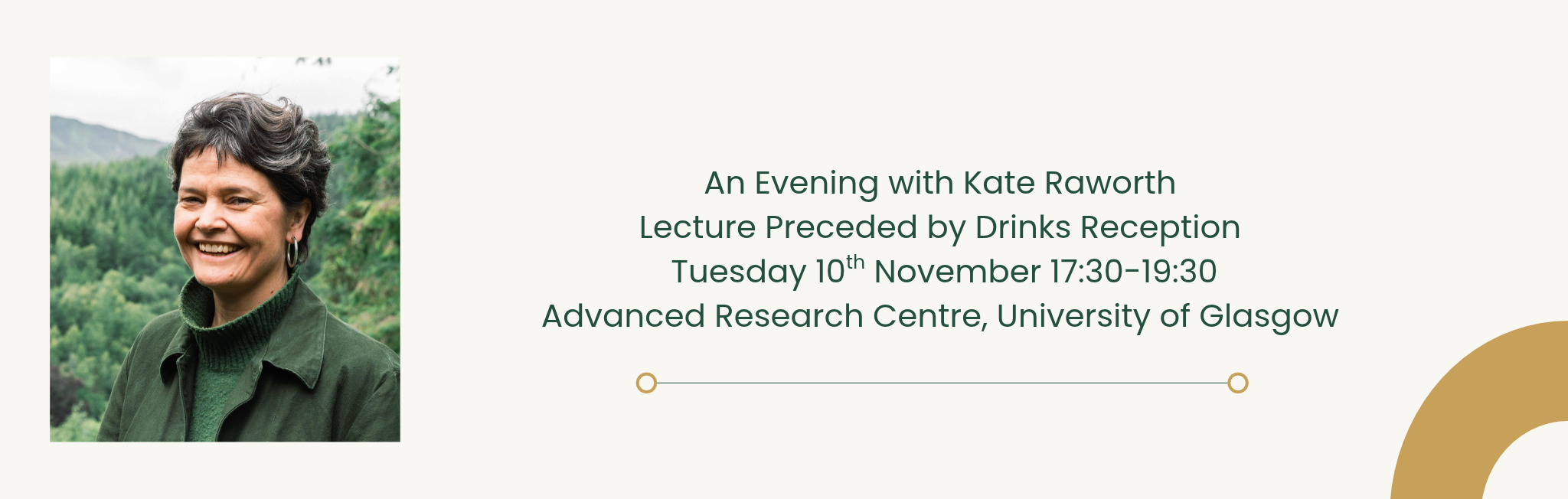
An Evening with Kate Raworth
Tuesday 10th November, 17.30–19.30pm
Please note that spaces for An Evening with Kate Raworth are now fully booked.
We are delighted that the Advanced Research Centre will be hosting a lecture and drinks reception with Professor Kate Raworth from the University of Oxford. Kate is co-founder and Chair of the Doughnut Economics Action Lab (DEAL), providing a steering guide on the organisation's mission and broad strategic direction. She is the author of the international best-seller Doughnut Economics: Seven Ways to Think Like a 21st Century Economist which has been translated into over 20 languages. She is also a senior teaching fellow at Oxford University's Environmental Change Institute. Since 2024 she has loved being the Ringmaster of Doughnut Economics Circus.
Her talk, titled The Non-technical Ingredients for a Successful Transition: Hope, Humour and Collective Imagination, explores why collective imagination is a practical tool for system change rather than an add-on luxury, as well as the role of play and positive vision in sustaining action. Kate will also reflect upon how cities can cultivate collective imagination, agency and participation.
Venue and Travel
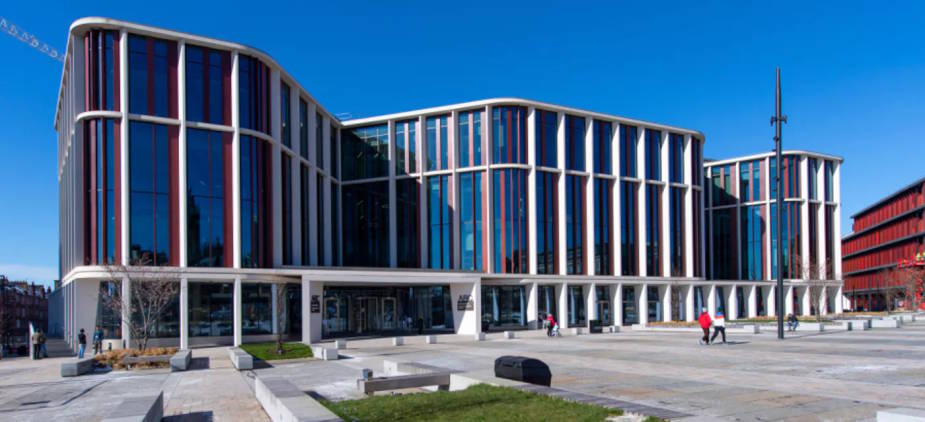
The Mazumdar-Shaw Advanced Research Centre
11 Chapel Lane
University of Glasgow
G11 6EW
Accessibility at the Advanced Research Centre
A dedicated decompression space will be available throughout the Gathering, providing a quiet area for attendees who may wish to take a break from the event environment at any point during the day.
Nearest subway stations: Hillhead Subway, Kelvinhall Subway
Nearest rail station: Partick
Bus routes from City Centre: First Bus 2/3, First Bus 4/4A, West Coast Motors 15,
Nearest car park: Bunhouse road carpark, G3 8DP (pay and display)
For attendees travelling to the venue by bicycle, details of bicycle parking facilities on the university's Gilmorehill campus can be found here.
Contact us
If you have any questions at all, please do not hesitate to get in touch with the Gathering Team at: gallant-conference@glasgow.ac.uk
We look foward to hearing from you, and will be happy to assist with any enquiries.