

Transferable Skills Case Study

Presentation
Presentation skills involve planning, structuring and communicating ideas clearly so that others can understand and engage with them. This includes explaining complex information, adapting your message for different audiences, using evidence to support your points and responding to questions or feedback.
Presentation skills are not only about formal presentations - they are also used when contributing in seminars, explaining ideas in group work, leading meetings, or sharing information in professional settings.
Where can I find this in the skills language?
Communication > Communicating through content
Communication > Communicating with others
Why does this skill matter?
Being able to communicate ideas clearly helps you make your thinking visible to others. Presentation skills support success in assessments, group work and discussions during your degree, and are essential in interviews, workplace meetings and professional communication after university.
Strong presentation skills help you build confidence, influence others and communicate your value in academic, professional and everyday contexts.
Where will you use this skill at university and beyond?
… as part of your degree
You develop presentation skills through assessed presentations as part of your course, where you practise structuring ideas clearly and speaking to an audience.
… as part of the wider student experience
You strengthen this skill through volunteering, for example by explaining activities, sharing information with others, or presenting ideas within a team or community setting.
… as a professional in the future
You use presentation skills when presenting to clients, such as explaining proposals, sharing updates, or communicating outcomes clearly in a professional context.
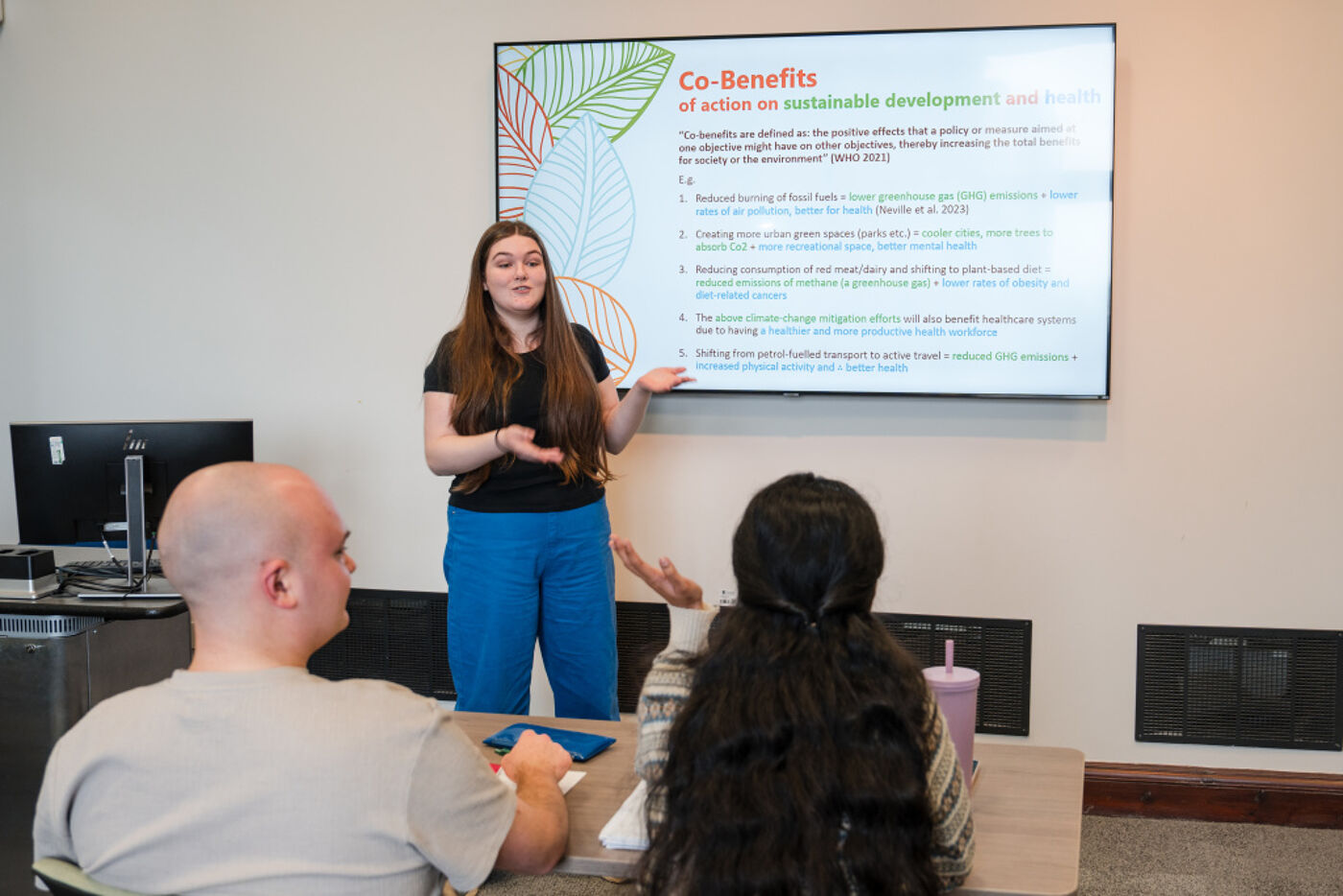
Student insight
“I used to think presentation skills were just about standing up and talking. Through group projects and my part-time job, I realised it’s really about explaining your ideas clearly and responding to other people. That’s helped me feel much more confident in interviews.”
~ Student from School of Critical Studies
How can you evidence this skill?
You might be able to evidence this skill through:
- assessed presentations or group projects
- seminar contributions or leading discussions
- feedback from tutors, peers or supervisors
- presenting ideas in a society, volunteering role or part-time job
- slides, scripts or reflective logs linked to presentations
How else might employers describe this skill?
You might also hear this skill described as…
- communication skills
- verbal communication
- presenting information clearly
- influencing and persuading others
- professional communication
What are some example interview questions that feature this skill?
- Tell us about a presentation you found challenging and how you handled it.
- How do you adapt your communication style for different audiences?
- Can you give an example of when you had to present information as part of a team?
- Describe a situation where you received feedback on your presentation skills and how you used it.
What does a good response look like?
Question
Can you describe a time when you had to explain a complex idea to others?
Response
Situation: During my second year, I worked on a group research project where we presented our findings to our seminar group. I was responsible for explaining the research methodology, which involved technical concepts unfamiliar to much of the audience.
Task: My aim was to explain the methodology clearly so the audience understood both how we conducted the research and why our approach was appropriate.
Action: I broke the methodology into clear stages and focused on the key ideas rather than technical detail. I avoided specialist terminology and used simple visuals to illustrate each step. I structured the explanation logically, starting with the research question and linking each stage of the method back to how it helped answer it. During the presentation, I paused at key points to check understanding and invited questions to clarify any uncertainties.
Result: The presentation received positive feedback from both peers and the tutor, who highlighted the clarity and structure of the explanation. Several students said the methodology section helped them better understand the research process, and our group achieved a high mark. This demonstrated my ability to communicate complex information clearly and adapt my approach to different audiences.