

Our research
We are Scotland’s longest-established Theatre Studies department, committed to producing world-leading research and scholarship that examines the aesthetic, socio-political, historical and ethical dimensions of theatre as a cultural practice. Interdisciplinary in orientation, we understand theatre and performance as unique objects of study, and as powerful lenses for thinking more broadly about questions of knowledge, meaning and value. Our work embraces a wide range of methods in developing innovative outcomes that encompass books, essays, performances, installations, films, websites and other hybrid forms.
Visit our individual Research Profiles for full details of our work across the team.
Research themes
The Theatre Studies team’s research is currently organised around three connected themes: Performance and Ecology, Dramaturgy as Critical Practice, and Theatre, Performance and Social Justice.
Our interest in Performance and Ecology takes multiple forms in investigating the potential and limitations of theatre and performance as ecological practices. That is, it seeks to ask how theatre and performance can inform a progressive and diverse investigation of humanity in a world that we see as much more than human. Projects include the exploration of architecture, geology and cities in Minty Donald’s Erratic Drift co-created with Nick Millar, Dee Heddon’s Walking Library co-created with Misha Myers, and Carl Lavery’s An idea for a theatre ecology: Methods, theories, histories and practices.
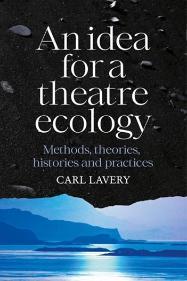
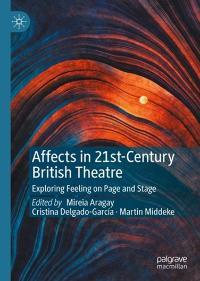
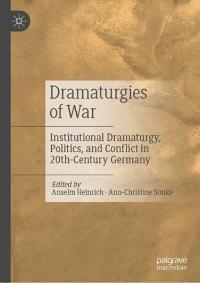
(Recent publications by the Theatre Studies team)
The team’s engagement with Dramaturgy as Critical Practice takes an expanded view of dramaturgy as a starting point for exploring parallel questions about performance and its place in our culture: as a political, culturally and historically-located mode of knowledge production, and as a framework for interrogating the complex interrelationships of people, places and things. Projects in this area have included Anselm Heinrich’s studies of European theatre under occupation, Michael Bachmann’s work on dramaturgies of interiority, Graham Eatough’s collaboration with National Theatre of Scotland on The Reason I Jump and Cristina Delgado-Garcia’s work on affect in contemporary British and European theatre.
Explorations of the complex relationships between Theatre, Performance and Social Justice include Liz Tomlin’s research into class conflicts and hierarchies in theatre and performance practice and policy in the UK, Farah Saleh’s archival performance lecture investigating ways of confronting the United Kingdom’s colonial legacy in Palestine, and Sharifa Abdulla’s contributions to the Lancet Global Series on the Health Benefits of the Arts.
The interdisciplinary nature of our research is reflected in topics which cross between these themes and other disciplines: these include digital culture, gender and sexuality, disability studies, justice and equity, class, post-colonialism and decoloniality, cultural policy, archival studies and historiography, and the medical humanities. Projects responding to these and other related issues include Eirini Nedelkopoulou’s research on digital culture, performance and phenomenology and Stephen Greer’s work on queer performance and the histories of live art in Scotland.
Recent and ongoing AHRC/UKRI-supported projects include:
- Deirdre Heddon’s Walk Create and Three Words for Forest (the latter a creative research output of the interdisciplinary project, newLEAF - UK Treescapes)
- Stephen Greer’s Live Art in Scotland
- Liz Tomlin’s Figurations of working-class subjects in UK theatre practice and policy
Events, conferences and symposia
Theatre Studies at Glasgow is proud to host a long-running series of public research talks – the Glasgow Theatre Seminars – that include speakers from diverse interdisciplinary backgrounds.
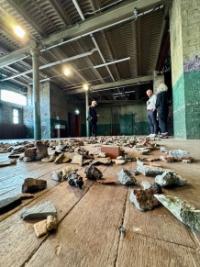
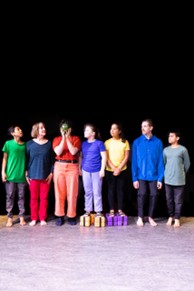 Our strong reputation for innovative practice-research is reflected in live performances, installations and workshops led by the team and in partnership with other researchers and artists. Recent events include Farah Saleh’s The World We Share (supported by Creative Scotland, Dance Base and Imaginate), Minty Donald and Nick Millar’s Skin of the City (staged as part of the Architecture Fringe, 2025), and Graham Eatough’s The Seaweed Gatherings on the Ross of Mull.
We have also been active in curating high profile interdisciplinary research events, often working in collaboration with non-academic partners. Most recently, we’ve hosted and co-curated Live Art: Histories of the Present, a two-day event examining the material, historical conditions for experimental and interdisciplinary performance, Class Concerns: Theatre, Performance and Cultural Policy in the UK which brought sociological perspectives into dialogue with theatre scholars and creative professionals, the Re-playing It Again symposium exploring how contemporary artists engage with the idea of re-playing, and the Immersive Experiences ArtsLab event Engaging with Disengagement: Opting out, Slowing Down in Digital Immersive Experiences.
Past events include On Drifting examining the legacy of the Situationist International; The Art of Careful Practices, an exploration of how to take care of others and self in participatory performances; and Dramaturgies of War, a colloquium reflecting on how theatre has pre-empted, reflected upon and critiqued war and conflict.
Partnerships, Impact and Knowledge Exchange
 We work closely with organisations across the arts and culture sector on projects that seek to extend our research community to include diverse publics and institutions in Scotland, the UK and internationally. Collaborators include National Theatre Scotland, The Citizens Theatre, Playwrights Studio Scotland, The Common Guild, Take Me Somewhere Festival, Goethe Institute, Glasgow City Council, The Work Room, Living Streets and Paths for All, Arts Council England, INLAND-CAR (Madrid), University of Kyushu (Japan) and the Museum of Loss and Renewal (Italy).
Staff who work as artists and practice-based researchers are leading practitioners in their field and have been commissioned to make work in prestigious festivals, such as Edinburgh and Manchester International Festivals, Glasgow International Festival of Visual Arts, Triennale Milano Teatro and ANTI Contemporary Art and the Made In Scotland showcase.
We develop and present our research in a broad range of scholarly and public contexts including international conferences (IFTR, Psi, ATHE), national media (BBC Radio, Channel 4, The Scotsman, The Herald) and keynote presentations.
Postgraduate study
We have extensive experience in developing successful funding proposals for doctoral projects, including interdisciplinary and practice-research enquiries. Visit our PGR directory for more details about the ongoing projects of our energetic and international doctoral community across the School of Culture and Creative Arts.
To discuss the possibility of undertaking PhD research, please contact the member of the team whose interests and expertise most closely match your project.
Theatre Studies has strong links with Film and Television Studies, Cultural Industries and the Centre for Cultural Policy Research. We share areas of collaborative interest in the curation of culture, digital arts, gaming, cultural policy, television in its industrial, social and aesthetic dimensions, performance on stage and screen, aesthetics and ecology. These shared interests inform a range of activities, from reading groups to PhD projects to performance works.