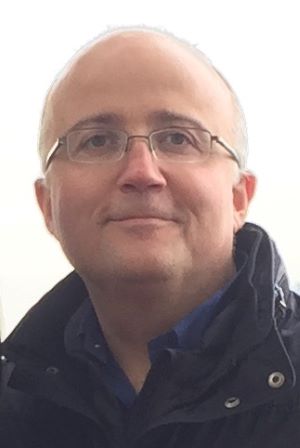
Professor Konstantinos Kontis
- Mechan Chair of Engineering / Professor of Aerospace Engineering (Autonomous Systems & Connectivity)
- Dean for Global Engagement (China / East Asia) (External Relations)
telephone:
01413304337
email:
kostas.kontis@glasgow.ac.uk
School of Engineering, James Watt South Building, Glasgow, G12 8qq
 https://orcid.org/0000-0002-4984-9166
Biography
Professor Kostas Kontis is a Fellow of the Royal Academy of Engineering (FREng). He is also an Honorary Fellow of the Royal Aeronautical Society (HonFRAeS), an honour described by the Society as the world’s highest distinction for aerospace achievement, awarded only for the most outstanding contributions to the aerospace profession.
He is distinguished for his pioneering contributions to high-speed flows, plasma flow control, and the development of advanced diagnostic techniques for characterising complex flow and thermal fields, leading to notable improvements in efficiency and cost-effectiveness across industrial applications. His ground-breaking work has influenced the design of vehicle-landing protocols and mission-critical subsystems for industry.
A Fellow and former Director of the American Institute of Aeronautics and Astronautics (AIAA), he received the NATO Science & Technology Team Excellence Award in 2021. He has fostered international collaborations to accelerate the path towards net-zero industrial solutions, revitalised the engineering academic environment, and led initiatives that have reshaped aerospace research and development strategies.
Research interests
Career Overview
Professor Kontis is a world-leading authority in aerospace engineering with a focus on the multi-disciplinary applications of aerodynamics, shock physics, plasma flow control and diagnostics in air transport systems and space access. He has published more than 330 articles, including 150 in journals, nine book chapters, and three books, including an edited two-volume compendium on Shock Waves published by Springer (https://scholar.google.com/citations?user=Cs3PNg4AAAAJ&hl=en). His publications embrace both fundamental scientific research and practical engineering applications. His conference papers are regularly invited to appear in the special issues of prestigious journals.
In his research, he engages and collaborates with a diverse range of students, researchers, and academic and industry experts and takes advantage of their different perspectives and approaches to gain a richer understanding of the research questions that he proposes to address. The research fully promotes accessibility, reproducibility, and transparency of the entire scientific process by supporting open science practices since publicly funded research should implement an efficient workflow in the spirit of collaboration.
Since 2001, the external funding (approx. 75% of grants as PI) includes collaborative projects with industrial partners, a testament to the industrial applicability of his work. The new methodologies developed are now being adopted by industries and universities worldwide.
Dean for Global Engagement – East Asia & China (External Relations, 50% FTE, University of Glasgow): Prof. Kontis carries the regional strategy responsibility to shape the University’s international activity, deliver on the internationalisation objectives, and facilitate more effective relationships with the Colleges. The focus is on global engagement, partnership development, attracting outstanding students, and building research, business, and industrial links and capacity.
Head of the Autonomous Systems and Connectivity Division (School of Engineering, University of Glasgow): Prof. Kontis was responsible for the leadership and operational management of the Division (42 academics). This involved developing strategic leadership in research, higher learning, and social responsibility whilst ensuring that operational processes are efficient and effective. His overall leadership in aerospace has resulted in a significant step-change in the quality of aerospace engineering and science at the university. He has supported especially early-career-stage colleagues to become members of professional societies or elevate their membership status. He has provided references to support their nominations as external examiners to courses in other UK universities and to become CEng Assessors for the Royal Aeronautical Society.
Member of the Senior Executive Group (School of Engineering, University of Glasgow): Prof. Kontis contributed to the overall strategic direction and operation of the school, covering research, learning and social responsibility.
As Deputy Director of the U. of Manchester Aerospace Research Institute, he was responsible for the operational management of the Institute, including budgeting, development of multi-disciplinary research initiatives, and collaborations with industry and academia. He secured the participation of the University of Manchester in the ASTREA programme with BAE Systems and other North-West Universities to develop cognitive robotics & autonomous systems, and in the GAMMA consortium with other North-West Universities, BAE Systems, NNL and NWAA seeking to stimulate the growth of the Unmanned Aerial Vehicles industry in the UK through the development of innovative mission system architectures and software.
As the Director of External Affairs of the School of MACE (University of Manchester), he integrated an external business perspective into the school’s strategy as part of its core business alongside teaching and research. He developed and implemented an efficient and effective plan for enhancing the school’s industry engagement activities, both in terms of income and the impact contribution to the University’s reputation and global status. He developed several strategic and sustainable relationships with companies and other appropriate external organisations.
At the University of Manchester, he was the inaugural Director of the MSc Aerospace Engineering Programme and oversaw its overall operation, management, development, and accreditation by professional bodies. He designed and developed the programme from scratch. He successfully led its accreditation by RAeS and IMechE in October 2009.
He leads and coordinates the Glasgow 'National Wind Tunnel and Testing Facilities / ESA-ESTEC Facility' with an infrastructure investment alone already >£6.5M. He has been instrumental in securing the participation of Glasgow University in a number of national consortia. In addition, he is working with a number of Prestwick Airport-based companies and Scottish universities to realise the vision of an integrated UK satellite design, manufacture, launch and operations solution with funding from the ESA-ESTEC and UK-Space Agency.
He has been a visiting professor in a number of organisations, including Aoyama Gakuin University, Japan; NASA, USA; Nagoya University, Japan; Kumamoto University, Japan; and Tohoku University, Japan. He was the Chair of the 28th International Symposium on Shock Waves, Manchester, UK, 2011; International Chair of AIAA AVIATION, Dallas, USA, 2015; Chair of 22nd International Symposium on Shock Interactions, Glasgow, UK, 2016; Technical Co-Chair of the 36th and 37th AIAA Applied Aerodynamics Conferences, USA, 2018 and 2019. He is a member of the organising committees of a number of conferences worldwide.
Research Interests
His current research covers the following four broad themes:
i) Integrated wing technologies that involve: high Aspect Ratio wings; joined or non-planar wing concepts; load control via e.g. spanwise flow control adjustments; flow and flight control using active multi-functional materials; and integrated system sensors and actuators with distributed control and health monitoring.
ii) Air-transport systems and space access: transition and SBLI; spacecraft plume characterisation, contamination and fragmentation studies; plume-regolith interactions; plasma-based flow and flight control systems; and integrated propulsion systems including intakes and ducts; advanced space launchers.
iii) Multi-disciplinary applications: combined PIV and PTSP imaging; laser-based discharges and their interactions with surfaces; directed energy systems; shock wave research; and wind turbine/rotating wing technologies.
iv) Aerospace vehicle design: design optimisation, uncertainty quantification, engineering analysis.
Supervision
Professor Kontis leads, inspires, and educates an international research team of pre- and post-doctoral researchers, engineers, and academics. Since 2001, he has supervised as first or second supervisor 25 Visiting Fellows, 58 PhD students (46 completed, 12 current in various stages towards completion), and 22 postdoctoral researchers (21 completed, one current), now pursuing careers in academia and/or industry (more than 15 previous group members are independent academics in the US, China, Japan, Malaysia, HKSAR, UK, EU, India). Twelve PhD students were awarded the Centennial Scholarship by the Royal Aero. Society, for their significant contributions to the 2nd century of powered flight. Since the beginning of his academic career, all his PhD students have completed their programme of studies and graduated.
He is interested in supervising new PhD projects in the following areas:
- Integrated wing technologies that involve high Aspect Ratio wings and joined or non-planar wing concepts;
- Load control via e.g. spanwise flow control adjustments;
- Flow and flight control using active multi-functional materials;
- Integrated system sensors and actuators with distributed control and health monitoring;
- Air-transports systems and space access;
- Transition and SBLI;
- Spacecraft plume characterization and contamination studies;
- Plasma-based flow and flight control systems;
- Design Optimisation, Uncertainty Quantification;
- Integrated propulsion systems including intakes and ducts;
- Combined PIV and PTSP imaging, using encapsulated sensitive particles;
- Laser-based discharges and their interactions with surfaces;
- Shock wave research;
- Wind turbine technologies and helicopters.
- Craig, Bradley
Rocket Plume-Surface Interactions in Low-Pressure Environments - Hernandez Gelado, Pedro
Low-order modelling of unsteady, nonlinear fluid dynamics using “Scientifically-Based” machine learning - Sadeghi, Alireza
Fault Tolerant Current Limiting Superconducting Cable for Cryo-Electrified Systems - Wilson, Andrew
Optimisation of a variable geometry propulsion-airframe integrated scramjet intake for morphing waveriders. - Yan, Dedao
Protection Solutions of Electrified Aircraft System by Superconducting Fault Current Limiter
Research datasets
Additional information
Research Achievements
(i) Professor Kontis has designed and supervised the manufacture and commissioning of the subsonic, transonic, supersonic and hypersonic wind tunnels, and shock tube facilities at the University of Manchester and University of Glasgow. This has involved the application of fundamental principles using complex techniques to overcome unpredictable engineering challenges leading a team-effort of PDRAs, PhD students, Estate & Buildings, Finance, external consultants and contractors.
(ii) He has developed advanced diagnostics for flows involving complex geometries, to provide tools for industry to tackle aerospace design challenges: (a) Pioneering applications of surface thermal imaging using rise-time analysis, enabling the application of phosphor thermometry to rotating components of gas-turbines; (b) Pioneering applications of high-speed stereo-PIV systems to measure instantaneous velocity vectors, and planar acceleration fields for unsteady flows at Mach numbers over 5. This has made it possible to identify lower-order dynamical systems that can be used to design simple and effective feedback control strategies, and to compute conditionally averaged velocity fields; (c) Leading contributions of pressure-sensitive paints to map surface pressures in U-bends and internal flows at low subsonic speeds. He has also demonstrated and assessed the performance of polymer-based and aluminum anodised PTSPs in the industrial scale European Transonic Windtunnel (ETW GmbH, Germany) at Reynolds numbers typical of a full-scale aircraft configuration.
(iii) Pioneering application of the fundamentals of creation, propagation and stability of compressible vortex loops; an extremely important development in the design of non-lethal-weapons; he addressed the effects of local environment on stability and propagation characteristics.
(iv) (a) Pioneering demonstration of the effectiveness of perforated walls in the attenuation of shock waves and vortices emanating from nozzles during the descending or ascending phases of aerospace vehicles; (b) Leading contributions to understanding the fundamentals of the interaction of secondary flow injection with cavity flows at subsonic and supersonic speeds.
(v) (a) Novel multi-encapsulated Dielectric Barrier Discharge plasma actuators using optimization techniques that can produce high subsonic forcing velocities. This has enabled their application to the design of more efficient internal and external geometries, and manifolds improving the performance of jet-engines and commercial vehicles; (b) Fundamental research on transitional Shock Boundary Layer Interactions has provided for the first time complete time-averaged experimental data; (c) Pioneering laser-based energy deposition systems to suppress flow unsteadiness at Mach numbers over 1.5, due to shock-wave boundary layer interactions, and hence improve the structural integrity of aerospace vehicles.
(vi) The Glasgow 'National Wind Tunnel and Testing Facilities / ESA-ESTEC Facility' has generated new opportunities, and a step-change in our capability enabling new problems to be tackled (e.g. innovative helicopter concepts, integration of modelling and flight simulation with wind-tunnel testing, novel flow and load control solutions for vehicle design and offshore applications). It drives innovation across a broad range of sectors including aerospace, process industries and wind energy. It is engaging with numerous organizations from the UK and abroad resulting in the generation of grants, and providing benefit from ready-access to scientific advances emanating. Affiliation with industry has enhanced pull-through to higher TRL. The Facility has already built an intellectual capability by the fostering of young talented researchers, and by attracting established academic groups from other universities. It is dedicated to support industry in developing their businesses, and generating high-value jobs, income and impact for the local and national economy (e.g. employment opportunities, development and training of the workforce, interaction with SMEs, and support for the supply chain).
(vii) With funding from ESA/ESTEC, he led the design, manufacture and commissioning of the Plume-Regolith Testing Facility at the University of Glasgow. This is one the seven official ESA designated strategic facilities (Aero-Thermodynamics Directorate) distributed across Europe and is the only one that enables the realistic simulation of planetary conditions and testing of plume-regolith problems and interactions. The facility is aligned with ESA’s robotic Exploration Programmes requirements for missions including Mars Sample Return. It is contributing to the design of pulsed modulation descent thrusters that enables the reduction of erosion events. It provides experimental validation data to develop improved models and capability in engineering design software and simulation tools to predict the effects of rocket plumes on surfaces during lander approach and touchdown, specifically excavation, lofting and settling of dust clouds.
(viii) He co-authored and contributed to the formulation of the ‘Aerospace Defence, Marine and Security strategy for Scotland 2016’ and the ‘Europe’s vision for aviation: Strategic Research and Innovation Agenda (SRIA), Volume 1’.