Professor Rucha Karnik
- Professor of Membrane and Cell Physiology (Molecular Biosciences)
telephone:
01413301945
email:
Rucha.Karnik@glasgow.ac.uk
pronouns:
She/her/hers
Bower Building, Room 205, Glasgow, Glasgow City, Scotland, United Kingdom, G12 8SU
 https://orcid.org/0000-0001-6876-4099
Biography
Dr Rucha Karnik is a Professor of Membrane and Cell Physiology in the School of Molecular Biosciences at the University of Glasgow. She comes from an Agri-biotech industry background and has Undergraduate and Master's degrees in Biotechnology and Molecular Biology. Rucha obtained her PhD degree (2011) in Membrane Biology at the University of Leeds with a Overseas Research Students Awards Scheme (ORSAS) studentship award. During her PhD she focused on identifying mechanisms for K+ channel traffic impacting human health and disease.
Rucha moved to the University of Glasgow in 2011, taking up a post doctoral position in the Blatt laboratory of membrane biophysics. Working with plant systems, here she focused on elucidating novel mechanisms co-ordinating ion transport and membrane trafficking in plants. Rucha was awarded a prestigious Royal Society University Research Fellowship (2016-2025) to establish her own research group at the University of Glasgow.
Research in Karnik lab addresses the overarching question 'How do plants grow?'. Rucha is interested in understanding how plants that we rely on can cope with climate change. She investigates how the plant molecular machinery integrates elevated CO2 and stress signals into plant growth, development and pathogen immunity. Rucha is particularly interested in understanding how environment sensing mechanisms control stomata, the microscopic pores of plants, as targets for bioengineering increased plant productivity and reduce agricultural water use.
Going beyond research in the laboratory, Rucha leads Sci-Seedlets, a cross-disciplinary impact and innovation project to inspire the next generation of plant scientists by supporting classroom teaching of plant biology through resources that support learners with different abilities. She has focused the development of Sci-Seedlets resources to support primary school teachers and provide tasters for molecular research to encourage an interest for the subject and to encourage concepts of equality, diversity and inclusion in STEM in a sustainable and accessible manner.
Key words: plant growth, pathogen immunity, membrane transport, stomatal development, plant physiology, membrane traffic, climate-change, CO2-sensing, plant blindness
Research interests
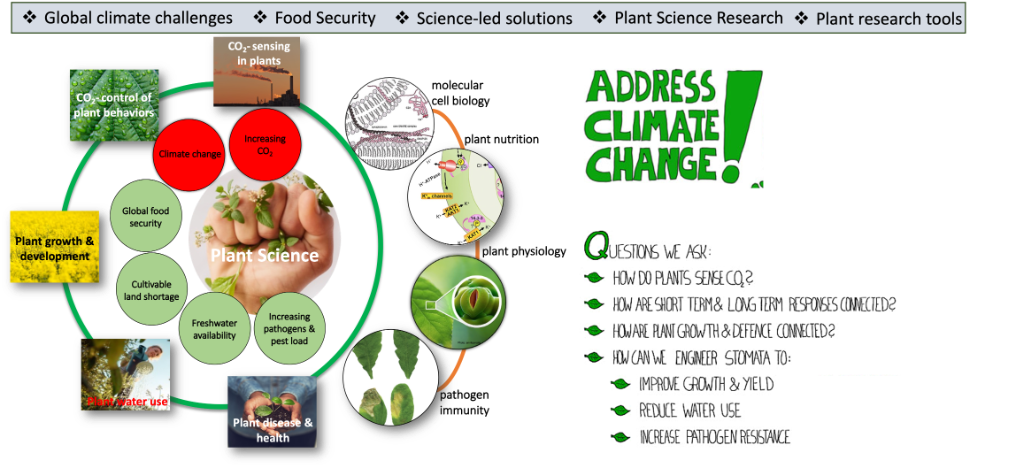
Increasing atmospheric carbon dioxide levels and climate change have a negative impact on crop health and productivity, thus increasing pressure on crop production and limiting the availability of agricultural land and water resources world-wide. Research in Karnik laboratory addresses how do plants grow with a view to understanding how to moderate these pressures. We study molecular mechanisms underpinning immediate responses to multifactorial environmental cues that affect plant growth, immunity and developmental processes. The focus is on stomata, the microscopic pores on plants that facilitate gas exchange for photosynthesis and control plant water loss. We investigate carbon dioxide-sensing mechanisms in plants and their impact on stomatal behaviour. This research crucial for developing fundamental understanding of plant-environment interactions under climate pressure and is an essential first step to ensuring food and water security into the future.
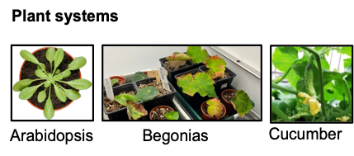
We use multi-disciplinary research platforms including cell biology, protein biochemistry, mass spectrometry, crystallography, live cell imaging, plant physiology and stomatal physiology in our research. Karnik lab research uses model plant Arabidopsis thaliana. Developmental studies are carried out using Begonia species. Research findings are extended to study the horticultural crop cucumber through international collaborations.
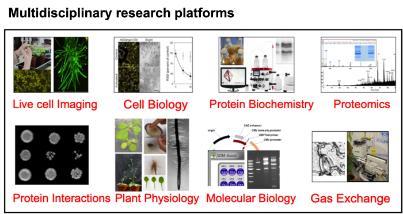
We develop new research tools in molecular biology, protein-protein interaction studies, plant membrane trafficking and plant protein biochemistry to aid research in plant systems.
Current Research Projects
1. Hormone-regulated membrane traffic in plants
Hormonal control of plasma membrane H+-ATPases is mediated in part through trafficking and its co-ordination in response to multifactorial stress. Current interests centre on novel secretory SNARE actions in regulating endocytosis of H+-ATPases.
2. Novel SNARE Partners Facilitating Bacterial Pathogen Defence
Plant microbial pathogens affect plant health inflicting major agricultural and socio-economic losses worldwide. Although plants have evolved defence systems, immunity comes at a cost to plant growth. Microbial pathogens also hijack cellular vesicle traffic to suppress the secretion of defence-related molecules essential for plant immunity. We are interested in the molecular mechanisms regulating of ion and water transport in stomatal guard cells and the integration of pathogen immunity with plant water use.

3. Molecular Mechanisms Underpinning Stomatal Development
Environmental responses of stomata frequently transcend physiological and developmental timescales. We use Begonia species as model to study stomatal development with a view to gain strategic knowledge for development of crops with enhanced stomatal efficiency.
4. Plant Memories and Forgetfulness: Connexions with CO2-sensing and Stomatal responses
Global atmospheric CO2 is predicted to approach levels of 900 μmol mol-1 by the end of the 21st century and is certain to have long-term impacts on stomatal density and patterning on the leaf surface, and consequently on plant biomass. The CO2-sensing mechanisms that integrate stomatal regulation across timescales remain unknown. The laboratory is exploring possible CO2-sensing mechanism that could affect these processes.
Karnik Group and Plant Science at Glasgow
Public Engagement & Innovation
Sci-Seedlets is a cross-disciplinary project to inspire the next generation of plant scientists. We have built a scheme that uses cutting-edge educational formats providing tasters for plant research. Through work in the classroom, Sci-Seedlets supports primary schools, teachers and members of the public with plant science education by exploring topics including 'how do plants grow?', 'how do plants defend against pathogens?' and ‘how to plants respond to their environment?’. Sci-Seedlets resources are now being expanded for use in secondary, undergraduate and postgraduate teaching of plant science.
Find out more!
Sci-Seedlets TRI
Glasgow Science Festival 2022
Royal Society Summer Science Exhibition 2022!
Past Activities
Research groups
Publications
2026
Ly, Thu Phan, Williams, Bryan M., Karnik, Abhijit, Kidner, Catherine A. and Karnik, Rucha  ORCID: https://orcid.org/0000-0001-6876-4099
(2026)
Genetic markers of stomatal cluster development in Begoniaceae revealed through trait analysis assisted by interactive deep-learning.
Plant Physiology, 201(3),
kiag496.
(doi: 10.1093/plphys/kiag496)
(PMID:42441961)
ORCID: https://orcid.org/0000-0001-6876-4099
(2026)
Genetic markers of stomatal cluster development in Begoniaceae revealed through trait analysis assisted by interactive deep-learning.
Plant Physiology, 201(3),
kiag496.
(doi: 10.1093/plphys/kiag496)
(PMID:42441961)
Xia, L. et al. (2026) A guard cell carbonic anhydrase binds and regulates SLAC1 separate from its catalytic activity. Nature Communications, 17(1), 3911. (doi: 10.1038/s41467-026-70596-9) (PMID:41826311) (PMCID:PMC13128974)
Yu, Zhiyi ORCID: https://orcid.org/0009-0001-0900-3043, Waghmare, Sakharam ORCID: https://orcid.org/0000-0003-1918-0673, Farami, Sahar, Blatt, Michael R. ORCID: https://orcid.org/0000-0003-1361-4645 and Karnik, Rucha ORCID: https://orcid.org/0000-0001-6876-4099
(2026)
CO2 - sensitive K+ channel traffic affects stomata and whole plant water-use.
Journal of Integrative Plant Biology,
(doi: 10.1111/jipb.70269)
(Early Online Publication)
2025
Waghmare, Sakharam ORCID: https://orcid.org/0000-0003-1918-0673, Xia, Lingfeng ORCID: https://orcid.org/0000-0002-8628-8062, McGill, Suzanne, Burchmore, Richard ORCID: https://orcid.org/0000-0003-1663-9004 and Karnik, Rucha ORCID: https://orcid.org/0000-0001-6876-4099
(2025)
Quantitative analysis of the arabidopsis leaf secretory proteome using via TMT- based mass spectrometry.
Bio-protocol, 15(22),
e5508.
(doi: 10.21769/BioProtoc.5508)
(PMID:41306586)
(PMCID:PMC12645290)
Zhang, X. et al. (2025) GORK K+ channel structure and gating vital to informing stomatal engineering. Nature Communications, 16, 1961. (doi: 10.1038/s41467-025-57287-7) (PMID:40000640) (PMCID:PMC11861651)
Waghmare, Sakharam ORCID: https://orcid.org/0000-0003-1918-0673, Xia, Lingfeng ORCID: https://orcid.org/0000-0002-8628-8062, Phan Ly, Thu, Xu, Jing, Farami, Sahar, Burchmore, Richard ORCID: https://orcid.org/0000-0003-1663-9004, Blatt, Michael R. ORCID: https://orcid.org/0000-0003-1361-4645 and Karnik, Rucha ORCID: https://orcid.org/0000-0001-6876-4099
(2025)
SYNTAXIN OF PLANTS 132 underpins secretion of cargoes associated with salicylic acid signaling and pathogen defense.
Plant Physiology, 197(1),
kiae541.
(doi: 10.1093/plphys/kiae541)
(PMID:39387490)
(PMCID:PMC11663556)
2024
Su, J. et al. (2024) Overexpression of tonoplast Ca2+‐ATPase in guard cells synergistically enhances stomatal opening and drought tolerance. Journal of Integrative Plant Biology, 66(8), pp. 1587-1602. (doi: 10.1111/jipb.13721) (PMID:38923303)
Baena, Guillermo ORCID: https://orcid.org/0000-0003-3559-2862, Xia, Lingfeng ORCID: https://orcid.org/0000-0002-8628-8062, Waghmare, Sakharam ORCID: https://orcid.org/0000-0003-1918-0673, Yu, ZhiYi ORCID: https://orcid.org/0009-0001-0900-3043, Guo, Yue, Blatt, Michael R. ORCID: https://orcid.org/0000-0003-1361-4645, Zhang, Ben ORCID: https://orcid.org/0000-0003-4473-9184 and Karnik, Rucha ORCID: https://orcid.org/0000-0001-6876-4099
(2024)
Arabidopsis SNARE SYP132 impacts on PIP2;1 trafficking and function in salinity stress.
Plant Journal, 118(4),
pp. 1036-1053.
(doi: 10.1111/tpj.16649)
(PMID:38289468)
2023
Karnik, Rucha ORCID: https://orcid.org/0000-0001-6876-4099 and Blatt, Michael R. ORCID: https://orcid.org/0000-0003-1361-4645
(2023)
Analyzing protein–protein interactions using the split-ubiquitin system.
In: Mukhtar, Shahid (ed.)
Protein-Protein Interactions: Methods and Protocols.
Series: Methods in molecular biology (2690).
Humana Press: New York, NY, pp. 23-36.
ISBN 9781071633267
(doi: 10.1007/978-1-0716-3327-4_3)
2022
Baena, Guillermo ORCID: https://orcid.org/0000-0003-3559-2862, Xia, Lingfeng ORCID: https://orcid.org/0000-0002-8628-8062, Waghmare, Sakharam ORCID: https://orcid.org/0000-0003-1918-0673 and Karnik, Rucha ORCID: https://orcid.org/0000-0001-6876-4099
(2022)
SNARE SYP132 mediates divergent trafficking of H+-ATPase AHA1 and antimicrobial PR1 during bacterial pathogenesis.
Plant Physiology, 189(3),
pp. 1639-1661.
(doi: 10.1093/plphys/kiac149)
(PMID:35348763)
(PMCID:PMC9237740)
Wang, Yizhou, Karnik, Rucha ORCID: https://orcid.org/0000-0001-6876-4099, Garcia-Mata, Carlos and Hu, Honghong
(2022)
Editorial: transport and membrane traffic in stomatal biology.
Frontiers in Plant Science, 13,
898128.
(doi: 10.3389/fpls.2022.898128)
(PMID:35712596)
(PMCID:PMC9197599)
2021
Zhang, Ben ORCID: https://orcid.org/0000-0003-4473-9184, Xia, Lingfeng ORCID: https://orcid.org/0000-0002-8628-8062, Zhang, Yaxian, Wang, Hui and Karnik, Rucha ORCID: https://orcid.org/0000-0001-6876-4099
(2021)
Tri-SUS: a yeast split-ubiquitin assay to examine protein interactions governed by a third binding partner.
Plant Physiology, 185(2),
pp. 285-289.
(doi: 10.1093/plphys/kiaa039)
(PMID:33721898)
2020
Xia, Lingfeng ORCID: https://orcid.org/0000-0002-8628-8062, Marquès-Bueno, Maria Mar and Karnik, Rucha ORCID: https://orcid.org/0000-0001-6876-4099
(2020)
Trafficking SNARE SYP132 partakes in auxin-associated root growth.
Plant Physiology, 182,
pp. 1836-1840.
(doi: 10.1104/pp.19.01301)
(PMID:31974128)
2019
Xia, Lingfeng ORCID: https://orcid.org/0000-0002-8628-8062, Marques-Bueno, Maria Mar, Bruce, Craig Graham and Karnik, Rucha ORCID: https://orcid.org/0000-0001-6876-4099
(2019)
Unusual roles of secretory SNARE SYP132 in plasma membrane H+-ATPase traffic and vegetative plant growth.
Plant Physiology, 180(2),
pp. 837-858.
(doi: 10.1104/pp.19.00266)
(PMID:30926657)
Zhang, Ben ORCID: https://orcid.org/0000-0003-4473-9184, Karnik, Rucha ORCID: https://orcid.org/0000-0001-6876-4099, Alvim, Jonas ORCID: https://orcid.org/0000-0003-1282-9353, Donald, Naomi and Blatt, Michael R. ORCID: https://orcid.org/0000-0003-1361-4645
(2019)
Dual sites for SEC11 on the SNARE SYP121 implicate a binding exchange during secretory traffic.
Plant Physiology, 180,
pp. 228-239.
(doi: 10.1104/pp.18.01315)
(PMID:30850468)
(PMCID:PMC6501095)
2018
Waghmare, Sakharam ORCID: https://orcid.org/0000-0003-1918-0673, Lileikyte, Edita, Karnik, Rucha ORCID: https://orcid.org/0000-0001-6876-4099, Goodman, Jennifer K., Blatt, Michael R. ORCID: https://orcid.org/0000-0003-1361-4645 and Jones, Alexandra M.E.
(2018)
SNAREs SYP121 and SYP122 mediate the secretion of distinct cargo subsets.
Plant Physiology, 178(4),
pp. 1679-1688.
(doi: 10.1104/pp.18.00832)
(PMID:30348815)
Lefoulon, Cecile ORCID: https://orcid.org/0000-0002-1131-3710, Waghmare, Sakharam ORCID: https://orcid.org/0000-0003-1918-0673, Karnik, Rucha ORCID: https://orcid.org/0000-0001-6876-4099 and Blatt, Michael R. ORCID: https://orcid.org/0000-0003-1361-4645
(2018)
Gating control and K+ uptake by the KAT1 K+ channel leaveraged through membrane anchoring of the trafficking protein SYP121.
Plant, Cell and Environment, 41(11),
pp. 2668-2677.
(doi: 10.1111/pce.13392)
(PMID:29940699)
(PMCID:PMC6220998)
Zhang, Ben ORCID: https://orcid.org/0000-0003-4473-9184, Karnik, Rucha ORCID: https://orcid.org/0000-0001-6876-4099, Donald, Naomi and Blatt, Michael R. ORCID: https://orcid.org/0000-0003-1361-4645
(2018)
A GPI signal peptide-anchored split-ubiquitin (GPS) system for detecting soluble bait protein interactions at the membrane.
Plant Physiology, 178(1),
pp. 13-17.
(doi: 10.1104/pp.18.00577)
(PMID:30037807)
2017
Karnik, Rucha ORCID: https://orcid.org/0000-0001-6876-4099, Waghmare, Sakharam ORCID: https://orcid.org/0000-0003-1918-0673, Zhang, Ben ORCID: https://orcid.org/0000-0003-4473-9184, Larson, Emily, Lefoulon, Cécile ORCID: https://orcid.org/0000-0002-1131-3710, Gonzalez, Wendy and Blatt, Michael R. ORCID: https://orcid.org/0000-0003-1361-4645
(2017)
Commandeering channel voltage sensors for secretion, cell turgor, and volume control.
Trends in Plant Science, 22(1),
pp. 81-95.
(doi: 10.1016/j.tplants.2016.10.006)
(PMID:27818003)
(PMCID:PMC5224186)
Zhang, Ben ORCID: https://orcid.org/0000-0003-4473-9184, Karnik, Rucha ORCID: https://orcid.org/0000-0001-6876-4099, Waghmare, Sakharam ORCID: https://orcid.org/0000-0003-1918-0673, Donald, Naomi Alice and Blatt, Mike R. ORCID: https://orcid.org/0000-0003-1361-4645
(2017)
VAMP721 conformations unmask an extended motif for K+ channel binding and gating control.
Plant Physiology, 173(1),
pp. 536-551.
(doi: 10.1104/pp.16.01549)
(PMID:27821719)
2015
Grefen, Christopher, Karnik, Rucha ORCID: https://orcid.org/0000-0001-6876-4099, Larson, Emily, Lefoulon, Cecile ORCID: https://orcid.org/0000-0002-1131-3710, Wang, Yizhou, Waghmare, Sakharam ORCID: https://orcid.org/0000-0003-1918-0673, Zhang, Ben ORCID: https://orcid.org/0000-0003-4473-9184, Hills, Adrian and Blatt, Michael R. ORCID: https://orcid.org/0000-0003-1361-4645
(2015)
A vesicle-trafficking protein commandeers Kv channel voltage sensors for voltage-dependent secretion.
Nature Plants, 1,
15108.
(doi: 10.1038/nplants.2015.108)
Zhang, Ben ORCID: https://orcid.org/0000-0003-4473-9184, Karnik, Rucha ORCID: https://orcid.org/0000-0001-6876-4099, Wang, Yizhou, Wallmeroth, Niklas, Blatt, Michael R. ORCID: https://orcid.org/0000-0003-1361-4645 and Grefen, Christopher
(2015)
The arabidopsis R-SNARE VAMP721 interacts with KAT1 and KC1 K+ channels to moderate K+ current at the plasma membrane.
Plant Cell, 27(6),
pp. 1697-1717.
(doi: 10.1105/tpc.15.00305)
(PMID:26002867)
(PMCID:PMC4498211)
Karnik, Rucha ORCID: https://orcid.org/0000-0001-6876-4099, Zhang, Ben ORCID: https://orcid.org/0000-0003-4473-9184, Waghmare, Sakharam ORCID: https://orcid.org/0000-0003-1918-0673, Aderhold, Christin, Grefen, Christopher and Blatt, Michael R. ORCID: https://orcid.org/0000-0003-1361-4645
(2015)
Binding of SEC11 indicates its role in SNARE recycling after vesicle fusion and identifies two pathways for vesicular traffic to the plasma membrane.
Plant Cell, 27(3),
pp. 675-694.
(doi: 10.1105/tpc.114.134429)
(PMID:25747882)
2014
Lefoulon, Cecile ORCID: https://orcid.org/0000-0002-1131-3710, Karnik, Rucha ORCID: https://orcid.org/0000-0001-6876-4099, Honsbein, Annegret, Gutla, Paul Vijay, Grefen, Christopher, Riedelsberger, Janin, Poblete, Tomás, Dreyer, Ingo, Gonzalez, Wendy and Blatt, Michael R. ORCID: https://orcid.org/0000-0003-1361-4645
(2014)
Voltage-sensor transitions of the inward-rectifying K+ channel KAT1 indicate a latching mechanism biased by hydration within the voltage sensor.
Plant Physiology, 166(2),
pp. 960-975.
(doi: 10.1104/pp.114.244319)
(PMID:25185120)
2013
Karnik, Rucha ORCID: https://orcid.org/0000-0001-6876-4099, Ludlow, Melanie J., Abuarab, Nada, Smith, Andrew J., Hardy, Matthew E.L., Elliott, David J.S. and Sivaprasadarao, Asipu
(2013)
Endocytosis of hERG is clathrin-independent and involves Arf6.
PLoS ONE, 8(12),
e85630.
(doi: 10.1371/journal.pone.0085630)
(PMID:24392021)
(PMCID:PMC3877390)
Karnik, R. ORCID: https://orcid.org/0000-0001-6876-4099, Grefen, C., Bayne, R., Honsbein, A., Kohler, T, Kioumourtzoglou, D., Williams, M., Bryant, N.J. and Blatt, M.R. ORCID: https://orcid.org/0000-0003-1361-4645
(2013)
Arabidopsis Sec1/Munc18 protein SEC11 is a competitive and dynamic modulator of SNARE binding and SYP121-dependent vesicle traffic.
Plant Cell, 25(4),
pp. 1368-1382.
(doi: 10.1105/tpc.112.108506)
(PMID:23572542)
Karnik, Abhijit, Karnik, Rucha ORCID: https://orcid.org/0000-0001-6876-4099 and Grefen, Christopher
(2013)
SDM-Assist software to design site-directed mutagenesis primers introducing “silent” restriction sites.
BMC Bioinformatics, 14,
105.
(doi: 10.1186/1471-2105-14-105)
(PMID:23522286)
(PMCID:PMC3644487)
2012
Wang, Y., Papanatsiou, M., Eisenach, C., Karnik, R. ORCID: https://orcid.org/0000-0001-6876-4099, Williams, M., Hills, A., Lew, V.L. and Blatt, M.R. ORCID: https://orcid.org/0000-0003-1361-4645
(2012)
Systems dynamic modeling of a guard cell Cl- channel mutant uncovers an emergent homeostatic network regulating stomatal transpiration.
Plant Physiology, 160(4),
pp. 1956-1967.
(doi: 10.1104/pp.112.207704)
2010
Karnik, Rucha ORCID: https://orcid.org/0000-0001-6876-4099, Smith, Andrew J., Elliott, David J., Taneja, Tarvinder K., Aviss, Kathyrin and Sivaprasadarao, Asipu
(2010)
Lipid raft and Arf6-GTPase dependent endocytosis of the hERG potassium channel.
Biophysical Journal, 98(3 S1),
376a.
(doi: 10.1016/j.bpj.2009.12.2028)
2009
Taneja, Tarvinder K., Mankouri, Jamel, Karnik, Rucha ORCID: https://orcid.org/0000-0001-6876-4099, Kannan, Soundarapandian, Smith, Andrew J., Munsey, Tim, Christesen, Henrik B.T., Beech, David J. and Sivaprasadarao, Asipu
(2009)
Sar1-GTPase-dependent ER exit of KATP channels revealed by a mutation causing congenital hyperinsulinism.
Human Molecular Genetics, 18(13),
pp. 2400-2413.
(doi: 10.1093/hmg/ddp179)
(PMID:19357197)
2007
Ghosh, Prasanta K., Bhardwaj, Devesh and Karnik, Rucha ORCID: https://orcid.org/0000-0001-6876-4099
(2007)
Human granulocyte-macrophage colony-stimulating factor: the protein and its current & emerging applications.
Indian Journal of Biotechnology, 6(4),
pp. 435-448.
2004
Agrawal, Y.K. and Karnik, R. ORCID: https://orcid.org/0000-0001-6876-4099
(2004)
Erythromycin fermentation using Sacchropolyspora erythraea with cotton seed meal as nitrogen source.
Indian Drugs, 41(3),
pp. 138-142.
2003
Bisen, P. S. et al. (2003) Analysis of the shotgun expression library of the Mycobacterium tuberculosis genome for immunodominant polypeptides: potential use in serodiagnosis. Clinical and Diagnostic Laboratory Immunology, 10(6), pp. 1051-1058. (doi: 10.1128/CDLI.10.6.1051-1058.2003) (PMID:14607866) (PMCID:PMC262431)
Articles
Ly, Thu Phan, Williams, Bryan M., Karnik, Abhijit, Kidner, Catherine A. and Karnik, Rucha ORCID: https://orcid.org/0000-0001-6876-4099
(2026)
Genetic markers of stomatal cluster development in Begoniaceae revealed through trait analysis assisted by interactive deep-learning.
Plant Physiology, 201(3),
kiag496.
(doi: 10.1093/plphys/kiag496)
(PMID:42441961)
Xia, L. et al. (2026) A guard cell carbonic anhydrase binds and regulates SLAC1 separate from its catalytic activity. Nature Communications, 17(1), 3911. (doi: 10.1038/s41467-026-70596-9) (PMID:41826311) (PMCID:PMC13128974)
Yu, Zhiyi ORCID: https://orcid.org/0009-0001-0900-3043, Waghmare, Sakharam ORCID: https://orcid.org/0000-0003-1918-0673, Farami, Sahar, Blatt, Michael R. ORCID: https://orcid.org/0000-0003-1361-4645 and Karnik, Rucha ORCID: https://orcid.org/0000-0001-6876-4099
(2026)
CO2 - sensitive K+ channel traffic affects stomata and whole plant water-use.
Journal of Integrative Plant Biology,
(doi: 10.1111/jipb.70269)
(Early Online Publication)
Waghmare, Sakharam ORCID: https://orcid.org/0000-0003-1918-0673, Xia, Lingfeng ORCID: https://orcid.org/0000-0002-8628-8062, McGill, Suzanne, Burchmore, Richard ORCID: https://orcid.org/0000-0003-1663-9004 and Karnik, Rucha ORCID: https://orcid.org/0000-0001-6876-4099
(2025)
Quantitative analysis of the arabidopsis leaf secretory proteome using via TMT- based mass spectrometry.
Bio-protocol, 15(22),
e5508.
(doi: 10.21769/BioProtoc.5508)
(PMID:41306586)
(PMCID:PMC12645290)
Zhang, X. et al. (2025) GORK K+ channel structure and gating vital to informing stomatal engineering. Nature Communications, 16, 1961. (doi: 10.1038/s41467-025-57287-7) (PMID:40000640) (PMCID:PMC11861651)
Waghmare, Sakharam ORCID: https://orcid.org/0000-0003-1918-0673, Xia, Lingfeng ORCID: https://orcid.org/0000-0002-8628-8062, Phan Ly, Thu, Xu, Jing, Farami, Sahar, Burchmore, Richard ORCID: https://orcid.org/0000-0003-1663-9004, Blatt, Michael R. ORCID: https://orcid.org/0000-0003-1361-4645 and Karnik, Rucha ORCID: https://orcid.org/0000-0001-6876-4099
(2025)
SYNTAXIN OF PLANTS 132 underpins secretion of cargoes associated with salicylic acid signaling and pathogen defense.
Plant Physiology, 197(1),
kiae541.
(doi: 10.1093/plphys/kiae541)
(PMID:39387490)
(PMCID:PMC11663556)
Su, J. et al. (2024) Overexpression of tonoplast Ca2+‐ATPase in guard cells synergistically enhances stomatal opening and drought tolerance. Journal of Integrative Plant Biology, 66(8), pp. 1587-1602. (doi: 10.1111/jipb.13721) (PMID:38923303)
Baena, Guillermo ORCID: https://orcid.org/0000-0003-3559-2862, Xia, Lingfeng ORCID: https://orcid.org/0000-0002-8628-8062, Waghmare, Sakharam ORCID: https://orcid.org/0000-0003-1918-0673, Yu, ZhiYi ORCID: https://orcid.org/0009-0001-0900-3043, Guo, Yue, Blatt, Michael R. ORCID: https://orcid.org/0000-0003-1361-4645, Zhang, Ben ORCID: https://orcid.org/0000-0003-4473-9184 and Karnik, Rucha ORCID: https://orcid.org/0000-0001-6876-4099
(2024)
Arabidopsis SNARE SYP132 impacts on PIP2;1 trafficking and function in salinity stress.
Plant Journal, 118(4),
pp. 1036-1053.
(doi: 10.1111/tpj.16649)
(PMID:38289468)
Baena, Guillermo ORCID: https://orcid.org/0000-0003-3559-2862, Xia, Lingfeng ORCID: https://orcid.org/0000-0002-8628-8062, Waghmare, Sakharam ORCID: https://orcid.org/0000-0003-1918-0673 and Karnik, Rucha ORCID: https://orcid.org/0000-0001-6876-4099
(2022)
SNARE SYP132 mediates divergent trafficking of H+-ATPase AHA1 and antimicrobial PR1 during bacterial pathogenesis.
Plant Physiology, 189(3),
pp. 1639-1661.
(doi: 10.1093/plphys/kiac149)
(PMID:35348763)
(PMCID:PMC9237740)
Wang, Yizhou, Karnik, Rucha ORCID: https://orcid.org/0000-0001-6876-4099, Garcia-Mata, Carlos and Hu, Honghong
(2022)
Editorial: transport and membrane traffic in stomatal biology.
Frontiers in Plant Science, 13,
898128.
(doi: 10.3389/fpls.2022.898128)
(PMID:35712596)
(PMCID:PMC9197599)
Zhang, Ben ORCID: https://orcid.org/0000-0003-4473-9184, Xia, Lingfeng ORCID: https://orcid.org/0000-0002-8628-8062, Zhang, Yaxian, Wang, Hui and Karnik, Rucha ORCID: https://orcid.org/0000-0001-6876-4099
(2021)
Tri-SUS: a yeast split-ubiquitin assay to examine protein interactions governed by a third binding partner.
Plant Physiology, 185(2),
pp. 285-289.
(doi: 10.1093/plphys/kiaa039)
(PMID:33721898)
Xia, Lingfeng ORCID: https://orcid.org/0000-0002-8628-8062, Marquès-Bueno, Maria Mar and Karnik, Rucha ORCID: https://orcid.org/0000-0001-6876-4099
(2020)
Trafficking SNARE SYP132 partakes in auxin-associated root growth.
Plant Physiology, 182,
pp. 1836-1840.
(doi: 10.1104/pp.19.01301)
(PMID:31974128)
Xia, Lingfeng ORCID: https://orcid.org/0000-0002-8628-8062, Marques-Bueno, Maria Mar, Bruce, Craig Graham and Karnik, Rucha ORCID: https://orcid.org/0000-0001-6876-4099
(2019)
Unusual roles of secretory SNARE SYP132 in plasma membrane H+-ATPase traffic and vegetative plant growth.
Plant Physiology, 180(2),
pp. 837-858.
(doi: 10.1104/pp.19.00266)
(PMID:30926657)
Zhang, Ben ORCID: https://orcid.org/0000-0003-4473-9184, Karnik, Rucha ORCID: https://orcid.org/0000-0001-6876-4099, Alvim, Jonas ORCID: https://orcid.org/0000-0003-1282-9353, Donald, Naomi and Blatt, Michael R. ORCID: https://orcid.org/0000-0003-1361-4645
(2019)
Dual sites for SEC11 on the SNARE SYP121 implicate a binding exchange during secretory traffic.
Plant Physiology, 180,
pp. 228-239.
(doi: 10.1104/pp.18.01315)
(PMID:30850468)
(PMCID:PMC6501095)
Waghmare, Sakharam ORCID: https://orcid.org/0000-0003-1918-0673, Lileikyte, Edita, Karnik, Rucha ORCID: https://orcid.org/0000-0001-6876-4099, Goodman, Jennifer K., Blatt, Michael R. ORCID: https://orcid.org/0000-0003-1361-4645 and Jones, Alexandra M.E.
(2018)
SNAREs SYP121 and SYP122 mediate the secretion of distinct cargo subsets.
Plant Physiology, 178(4),
pp. 1679-1688.
(doi: 10.1104/pp.18.00832)
(PMID:30348815)
Lefoulon, Cecile ORCID: https://orcid.org/0000-0002-1131-3710, Waghmare, Sakharam ORCID: https://orcid.org/0000-0003-1918-0673, Karnik, Rucha ORCID: https://orcid.org/0000-0001-6876-4099 and Blatt, Michael R. ORCID: https://orcid.org/0000-0003-1361-4645
(2018)
Gating control and K+ uptake by the KAT1 K+ channel leaveraged through membrane anchoring of the trafficking protein SYP121.
Plant, Cell and Environment, 41(11),
pp. 2668-2677.
(doi: 10.1111/pce.13392)
(PMID:29940699)
(PMCID:PMC6220998)
Zhang, Ben ORCID: https://orcid.org/0000-0003-4473-9184, Karnik, Rucha ORCID: https://orcid.org/0000-0001-6876-4099, Donald, Naomi and Blatt, Michael R. ORCID: https://orcid.org/0000-0003-1361-4645
(2018)
A GPI signal peptide-anchored split-ubiquitin (GPS) system for detecting soluble bait protein interactions at the membrane.
Plant Physiology, 178(1),
pp. 13-17.
(doi: 10.1104/pp.18.00577)
(PMID:30037807)
Karnik, Rucha ORCID: https://orcid.org/0000-0001-6876-4099, Waghmare, Sakharam ORCID: https://orcid.org/0000-0003-1918-0673, Zhang, Ben ORCID: https://orcid.org/0000-0003-4473-9184, Larson, Emily, Lefoulon, Cécile ORCID: https://orcid.org/0000-0002-1131-3710, Gonzalez, Wendy and Blatt, Michael R. ORCID: https://orcid.org/0000-0003-1361-4645
(2017)
Commandeering channel voltage sensors for secretion, cell turgor, and volume control.
Trends in Plant Science, 22(1),
pp. 81-95.
(doi: 10.1016/j.tplants.2016.10.006)
(PMID:27818003)
(PMCID:PMC5224186)
Zhang, Ben ORCID: https://orcid.org/0000-0003-4473-9184, Karnik, Rucha ORCID: https://orcid.org/0000-0001-6876-4099, Waghmare, Sakharam ORCID: https://orcid.org/0000-0003-1918-0673, Donald, Naomi Alice and Blatt, Mike R. ORCID: https://orcid.org/0000-0003-1361-4645
(2017)
VAMP721 conformations unmask an extended motif for K+ channel binding and gating control.
Plant Physiology, 173(1),
pp. 536-551.
(doi: 10.1104/pp.16.01549)
(PMID:27821719)
Grefen, Christopher, Karnik, Rucha ORCID: https://orcid.org/0000-0001-6876-4099, Larson, Emily, Lefoulon, Cecile ORCID: https://orcid.org/0000-0002-1131-3710, Wang, Yizhou, Waghmare, Sakharam ORCID: https://orcid.org/0000-0003-1918-0673, Zhang, Ben ORCID: https://orcid.org/0000-0003-4473-9184, Hills, Adrian and Blatt, Michael R. ORCID: https://orcid.org/0000-0003-1361-4645
(2015)
A vesicle-trafficking protein commandeers Kv channel voltage sensors for voltage-dependent secretion.
Nature Plants, 1,
15108.
(doi: 10.1038/nplants.2015.108)
Zhang, Ben ORCID: https://orcid.org/0000-0003-4473-9184, Karnik, Rucha ORCID: https://orcid.org/0000-0001-6876-4099, Wang, Yizhou, Wallmeroth, Niklas, Blatt, Michael R. ORCID: https://orcid.org/0000-0003-1361-4645 and Grefen, Christopher
(2015)
The arabidopsis R-SNARE VAMP721 interacts with KAT1 and KC1 K+ channels to moderate K+ current at the plasma membrane.
Plant Cell, 27(6),
pp. 1697-1717.
(doi: 10.1105/tpc.15.00305)
(PMID:26002867)
(PMCID:PMC4498211)
Karnik, Rucha ORCID: https://orcid.org/0000-0001-6876-4099, Zhang, Ben ORCID: https://orcid.org/0000-0003-4473-9184, Waghmare, Sakharam ORCID: https://orcid.org/0000-0003-1918-0673, Aderhold, Christin, Grefen, Christopher and Blatt, Michael R. ORCID: https://orcid.org/0000-0003-1361-4645
(2015)
Binding of SEC11 indicates its role in SNARE recycling after vesicle fusion and identifies two pathways for vesicular traffic to the plasma membrane.
Plant Cell, 27(3),
pp. 675-694.
(doi: 10.1105/tpc.114.134429)
(PMID:25747882)
Lefoulon, Cecile ORCID: https://orcid.org/0000-0002-1131-3710, Karnik, Rucha ORCID: https://orcid.org/0000-0001-6876-4099, Honsbein, Annegret, Gutla, Paul Vijay, Grefen, Christopher, Riedelsberger, Janin, Poblete, Tomás, Dreyer, Ingo, Gonzalez, Wendy and Blatt, Michael R. ORCID: https://orcid.org/0000-0003-1361-4645
(2014)
Voltage-sensor transitions of the inward-rectifying K+ channel KAT1 indicate a latching mechanism biased by hydration within the voltage sensor.
Plant Physiology, 166(2),
pp. 960-975.
(doi: 10.1104/pp.114.244319)
(PMID:25185120)
Karnik, Rucha ORCID: https://orcid.org/0000-0001-6876-4099, Ludlow, Melanie J., Abuarab, Nada, Smith, Andrew J., Hardy, Matthew E.L., Elliott, David J.S. and Sivaprasadarao, Asipu
(2013)
Endocytosis of hERG is clathrin-independent and involves Arf6.
PLoS ONE, 8(12),
e85630.
(doi: 10.1371/journal.pone.0085630)
(PMID:24392021)
(PMCID:PMC3877390)
Karnik, R. ORCID: https://orcid.org/0000-0001-6876-4099, Grefen, C., Bayne, R., Honsbein, A., Kohler, T, Kioumourtzoglou, D., Williams, M., Bryant, N.J. and Blatt, M.R. ORCID: https://orcid.org/0000-0003-1361-4645
(2013)
Arabidopsis Sec1/Munc18 protein SEC11 is a competitive and dynamic modulator of SNARE binding and SYP121-dependent vesicle traffic.
Plant Cell, 25(4),
pp. 1368-1382.
(doi: 10.1105/tpc.112.108506)
(PMID:23572542)
Karnik, Abhijit, Karnik, Rucha ORCID: https://orcid.org/0000-0001-6876-4099 and Grefen, Christopher
(2013)
SDM-Assist software to design site-directed mutagenesis primers introducing “silent” restriction sites.
BMC Bioinformatics, 14,
105.
(doi: 10.1186/1471-2105-14-105)
(PMID:23522286)
(PMCID:PMC3644487)
Wang, Y., Papanatsiou, M., Eisenach, C., Karnik, R. ORCID: https://orcid.org/0000-0001-6876-4099, Williams, M., Hills, A., Lew, V.L. and Blatt, M.R. ORCID: https://orcid.org/0000-0003-1361-4645
(2012)
Systems dynamic modeling of a guard cell Cl- channel mutant uncovers an emergent homeostatic network regulating stomatal transpiration.
Plant Physiology, 160(4),
pp. 1956-1967.
(doi: 10.1104/pp.112.207704)
Karnik, Rucha ORCID: https://orcid.org/0000-0001-6876-4099, Smith, Andrew J., Elliott, David J., Taneja, Tarvinder K., Aviss, Kathyrin and Sivaprasadarao, Asipu
(2010)
Lipid raft and Arf6-GTPase dependent endocytosis of the hERG potassium channel.
Biophysical Journal, 98(3 S1),
376a.
(doi: 10.1016/j.bpj.2009.12.2028)
Taneja, Tarvinder K., Mankouri, Jamel, Karnik, Rucha ORCID: https://orcid.org/0000-0001-6876-4099, Kannan, Soundarapandian, Smith, Andrew J., Munsey, Tim, Christesen, Henrik B.T., Beech, David J. and Sivaprasadarao, Asipu
(2009)
Sar1-GTPase-dependent ER exit of KATP channels revealed by a mutation causing congenital hyperinsulinism.
Human Molecular Genetics, 18(13),
pp. 2400-2413.
(doi: 10.1093/hmg/ddp179)
(PMID:19357197)
Ghosh, Prasanta K., Bhardwaj, Devesh and Karnik, Rucha ORCID: https://orcid.org/0000-0001-6876-4099
(2007)
Human granulocyte-macrophage colony-stimulating factor: the protein and its current & emerging applications.
Indian Journal of Biotechnology, 6(4),
pp. 435-448.
Agrawal, Y.K. and Karnik, R. ORCID: https://orcid.org/0000-0001-6876-4099
(2004)
Erythromycin fermentation using Sacchropolyspora erythraea with cotton seed meal as nitrogen source.
Indian Drugs, 41(3),
pp. 138-142.
Bisen, P. S. et al. (2003) Analysis of the shotgun expression library of the Mycobacterium tuberculosis genome for immunodominant polypeptides: potential use in serodiagnosis. Clinical and Diagnostic Laboratory Immunology, 10(6), pp. 1051-1058. (doi: 10.1128/CDLI.10.6.1051-1058.2003) (PMID:14607866) (PMCID:PMC262431)
Book Sections
Karnik, Rucha ORCID: https://orcid.org/0000-0001-6876-4099 and Blatt, Michael R. ORCID: https://orcid.org/0000-0003-1361-4645
(2023)
Analyzing protein–protein interactions using the split-ubiquitin system.
In: Mukhtar, Shahid (ed.)
Protein-Protein Interactions: Methods and Protocols.
Series: Methods in molecular biology (2690).
Humana Press: New York, NY, pp. 23-36.
ISBN 9781071633267
(doi: 10.1007/978-1-0716-3327-4_3)
Grants
Grants and Awards listed are those received whilst working with the University of Glasgow.
- Structural analysis of a unique K-dependent channel gate
Biotechnology and Biological Sciences Research Council
2025 - 2028
- Cy-BORC - The Vesicle Recycling Complex of Plants
Leverhulme Trust
2025 - 2028
- Sci-Seedlets: Classroom Lesson Kits - building a business model for wider impact
Biotechnology and Biological Sciences Research Council
2025 - 2025
- Plasma Membrane Proton ATPase Cycling in Stress Response
Biotechnology and Biological Sciences Research Council
2024 - 2027
- Dissecting Adaptive Memories in Stomatal Response
Biotechnology and Biological Sciences Research Council
2024 - 2027
- A SNARE-Aquaporin complex in stomatal hydraulics
Biotechnology and Biological Sciences Research Council
2024 - 2026
- Sci-Seedlets - Developing Product Pipeline for Plant Science Education
Biotechnology and Biological Sciences Research Council
2023 - 2025
- IRGA-Live Clamp: An integrated infrared gas-analysis platform to investigate systemic signalling within the plant canopy
Biotechnology and Biological Sciences Research Council
2022 - 2023
- Diversity in STEM
The Royal Society
2022 - 2025
- Plant Memories and Forgetfulness: Connexions with CO2 Perception and Responses
The Royal Society
2022 - 2025
- Sci-Seedlets - BBSRC IAA
Biotechnology and Biological Sciences Research Council
2021 - 2022
- Elucidating Novel Mechanisms For CO2 - Sensing in Plants
Wellcome Trust
2021 - 2022
- Sci-seedlets
The Royal Society
2021 - 2023
- CO2 influence on SNARE regulation
The Royal Society
2021 - 2023
- Sci-Seedlets- Nurturing Plant Science Educational Outcomes in School Children
BBSRC
2021 - 2022
- SYP-SLAC
BBSRC
2021 - 2024
- SNARE endocytosis and secretory vesicle reuse in plant growth-defense trade offs
Biotechnology and Biological Sciences Research Council
2019 - 2022
- How Do Plants Fight Microbes?- The Defence Song
The Royal Society
2019 - 2019
- Proton Transport Modulators - Spatial Regulation and Effects on Plant Physiology
The Royal Society
2017 - 2021
- Hormone-Regulated Membrane Traffic and Plant Morphogenesis
The Royal Society
2016 - 2025
Supervision
PhD Projects
Karnik lab currently hosts PhD students funded by China Scholarship Council, University of Glasgow, The Leverhulme Trust and the M L Macintyre Begonia Trust.
Ongoing PhD Projects in the lab:-
1. Engineering Stomtal Efficiency in Plants
2. Plant climate sensing mechanisms
3. Novel protein complexes that dictate plant memory to stress
PG & UG Projects
Each year Karnik lab wellcomes undergraduate and post graduate student interns to promote interest in plant science. We provide opportunities to engage with our research and contribute to outreach.
Internship opportunities in Karnik Lab
UG Summer internship opportunity 2026 - Applications open from Jan 2026 (email CV and cover letter to Rucha Karnik) - 2 positions
UG Summer internship position 2025 - Applications open Feb 2025. 1 position (*now filled*)
Applied Research Skills Internship 2023 for UofGlasgow students (Supported by Royal Society STEM diversity funding) - 1 position (*now filled)
Summer internships 2023 for UofGlasgow UG students (Supported by Royal Society STEM diversity funding) - 1 position (*now closed*)
Term time internships 2023 for UofGlasgow UG students (Supported by Royal Society STEM diversity funding) - 2 positions (*now closed*)
Summer internship 2023 for UofGlasgow UG Yr1 students - 1 position - *now closed*
Summer School placement 2023 - 1 position - *now closed*
Teaching
-
Level 4: Honours Project Supervisor
-
MSc. Biotechnology assessor & project supervisor
-
MSc. Food Security assessor & project supervisor
-
MSc. Food Security & Management assessor & project supervisor
- MSc Biotechnology BIOL5197 omics course assessor
-
Level 3 Biomolecular Sciences Lectures - Membranes & Filaments Module - Vesicle Trafficking Mechanisms, Regulation, Pathophysiology and Plant Growth
- PGR convenor and examiner
Previous.
- MSc. Food Security, MSc Biotechnology & Level 4 BIOL5312, BIOL5213, BIOL4110 - Plant Research & Biotechnology Platforms
Professional activities & recognition
Research fellowships
- 2022 - 2025: Senior Royal Society University Research Fellowship
- 2016 - 2022: Royal Society University Research Fellowship
Grant committees & research advisory boards
- 2020 - 2024: Royal Society, Royal Society Hooke Committee
- 2023 - 2025: Royal Society, Royal Society Grants Committee
- 2024 - 2025: Royal Society, The Future of Scientific Publishing - Advisory Group
- 2024: BBSRC, Pool of Experts
Editorial boards
- 2019 - 2023: Guest Associate Editor for Plant Membrane Traffic and Transport, Frontiers in Plant Science
Professional & learned societies
- 2025: Elected Fellow of the Royal Society of Biology (FRSB), Royal Society of Biology
Selected international presentations
- 2013: European Network for Plant Endomembrane Research (Ghent)
- 2014: Gordon Research Conference: Salt & Water Stress in Plants (Maine NE)
- 2017: European Network for Plant Endomembrane Research (France)
- 2019: European Network for Plant Endomembrane Research (Glasgow)
- 2021: Plant Biology 2021 Worldwide Summit, Cell Biology symposium (virtual)
- 2023: SEB Centenary Conference Edinburgh 2023 (Edinburgh)
- 2024: Royal Society Theo Murphy meeting Carbon dioxide detection in biological systems. (Manchester)