Valuing and Supporting Autistic Teachers
Published by Rebecca Wood
Autistic and otherwise neurodivergent educators were once a ‘hidden’ population, but now their aptitudes and strengths are increasingly recognised. While there is still work to be done to remove barriers faced by neurodivergent teachers, the Autistic School Staff Project has made a significant contribution to better awareness and understanding of their contribution to the education sector, and how to build on this.
We talk a lot about inclusive education and in so doing, our attention is almost uniquely on children and young people in schools. This was the focus of my own PhD at the University of Birmingham, where I explored the inclusion of autistic children in mainstream schools, employing a multi-perspective approach with teachers, parents, autistic young people and adults. It was while developing this research as part of an ESRC-funded postdoctoral fellowship 2018 – 2019 at King’s College London that followed, and no doubt drawing on my previous experience as a secondary school teacher, that I started to think about autistic educators, who did not seem to be part of the conversation. When I looked into it in more detail, I found that despite a very small amount of research into schoolteachers with disabilities, there seemed to be a real gap in the literature in relation to autistic teachers.
So the first step, with the support of my then mentor Professor Francesca Happé CBE, was to develop an online survey for autistic teachers in the UK, asking about their experiences and attitudes, and any barriers they might face. A key aspect of this study was a small committee of autistic teachers recruited via the Autism Rights Group Highland charity who commented on drafts and made invaluable suggestions for improvements to the survey. The result was that 149 autistic teachers (and others in an education role in schools) completed the survey, some of whom had left the teaching profession, providing the first in-depth and research-informed insights into their experiences in schools. Amongst these findings was the fact that like autistic children, autistic teachers can find the noise levels in schools very difficult to deal with, along with other sensory impacts such as odours from the dining hall and crowding in the corridors. Our participants also reported that they sometimes found the social and communication norms of their neurotypical colleagues hard to cope with, and that they could experience high levels of stress, sometimes leading to mental health issues and burnout. More positively, our research participants wrote that they often really loved their work and considered they could be an important role model for autistic children and young people. This was largely facilitated when autistic teachers felt they could be open about their autistic identity, which many feared they could not be due to stigmatising attitudes towards autism they often encountered at work.
After the initial survey, we expanded the study to include partners from different universities and conducted in-depth interviews with autistic teachers in the UK, Poland and the US. These interviews enabled us to draw out rich findings and fascinating insights in relation to issues such as dealing with change, agency, teacher education, autistic skills and attitudes towards hierarchy, to name but a few. We also surveyed parents across the three countries (a number of whom were autistic themselves) to learn about their understandings of autistic school staff, and found that they had broadly very positive attitudes and a keen awareness of the issues faced by autistic teachers.
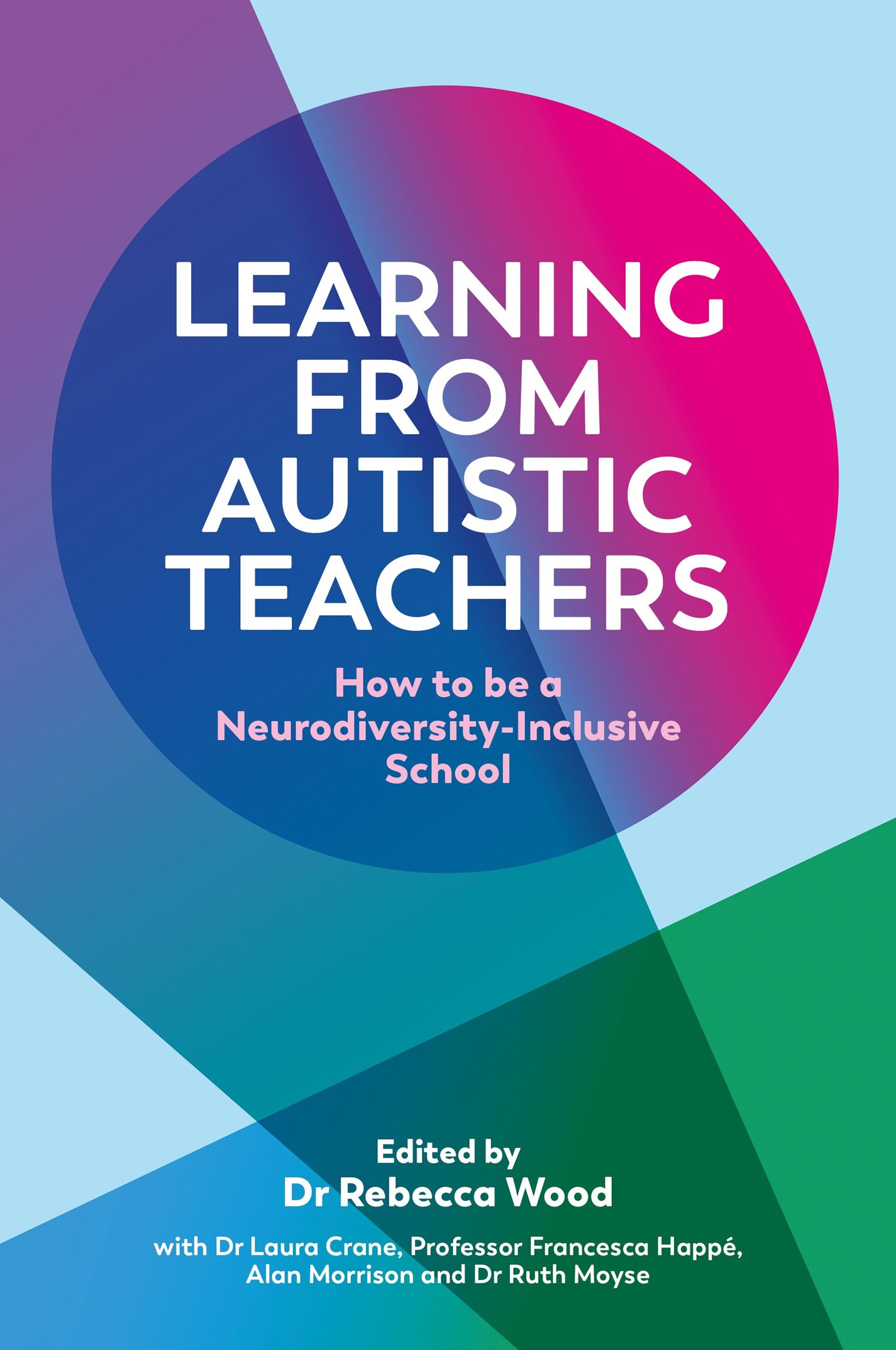
During this time, we have produced a number of peer-reviewed, open-access articles, listed below, as well as a co-edited book. We have given numerous conference presentations to academic and non-academic audiences in the UK, Poland, the US, Ireland and Australia, have run workshops and webinars, and have also presented our work to autistic-led groups such as Autangel and Autscape. We have written articles in accessible publications such as Leadership Focus and interviews about our work have been published in Share magazine (Scottish Autism) and the Teaching Scotland magazine. Our research was incorporated into the evidence used by the government for the review of the Autism Act (2009) in 2025 – 2026 and I developed some materials for the teacher education organisation Teach First aimed at mentors for autistic student teachers on school placements. I was also part of a team conducting research into neurodivergent teachers in Australia and our initial UK survey was used as a first step by a team of autistic doctors to develop their own research. Much of our work can be found on our website (see below) where we have a number of free-access resources, including our ‘Amazing Autistic Teachers’ e-booklet, which was led by a group of autistic teachers. Indeed, we have continued the co-produced aspect of the project, as members of the original committee who helped in the development of the survey, and other autistic teachers who have joined us along the way, have written book chapters and contributed to other outputs of the ASSP.
Over the years, the feedback we have had on the project has been very positive, but most gratifying of all have been the emails I receive from autistic teachers and students from across the world (e.g. Brazil, France, Ireland) stating how much they value the research of the ASSP. They write that the project has encouraged them in their work, provided initial ideas for research, or given them the confidence to take a step forward in their career.
Back in 2019, autistic school staff were rarely included in discussions about autism and employment, and certainly not considered in relation to educational inclusion, but now the dial has shifted. There is still much to do, of course, but I am hopeful that, because of the ASSP, there is greater understanding and visibility of this important group of educators.
The Autistic School Staff Project was funded initially by the ESRC and subsequently by the John and Lorna Foundation. Funding has also been provided by the College of Social Sciences at the University of Glasgow and Scottish Autism.
Most resources can be found on our website: https://autisticschoolstaffproject.com/. Other publications are available on my university profile: https://www.gla.ac.uk/schools/education/staff/rebeccawood/
Open access journal articles:
Wood, R., Gagat-Matula, A., Domagała-Zyśk, E. and Mazur vel Butynski, M. (2025). “We are here and we deserve it”: being an autistic teacher in Poland. International Journal of Inclusive Education, 1–16. https://doi.org/10.1080/13603116.2025.2518393
Wood, R. (2024). Happier on the outside? Discourses of exclusion, disempowerment and belonging from former autistic school staff. Journal of Research in Special Educational Needs, 24(1): 39-52. https://doi.org/10.1111/1471-3802.12612
Wood, R., Crane, L., Happé, F. and Moyse, R. (2024). Learning from autistic teachers: Lessons about change in an era of Covid-19. Educational Review 76(5), 1209–1231 https://doi.org/10.1080/00131911.2022.2103521
Wood, R. and Happé, F. (2021). What are the views and experiences of autistic teachers? Findings from an online survey in the UK. Disability & Society, 38(1): 47-72.
Our co-edited book:
Wood, R., Crane, L., Happé, F., Morrison, A. and Moyse, R. (eds) (2022). Learning from Autistic Teachers: How to be a Neurodiversity-Inclusive School, Jessica Kingsley Publishers.
Australian study:
White, M., Harrison, M., Cohn, E., Wood, R., & StEvens, C. (2024). An Evidence Informed Guide to Becoming and Flourishing as a Neurodivergent Teacher: A Guide for Educators and School Leaders. Australian Catholic University, https://eprints.gla.ac.uk/346476/