

CenTCS Colloquium Facilitates Conversations About Transformative Educational Change
Published: 10 November 2026
On 30 October 2026, the Centre for Transformative Change in Schools (CenTCS) brought together over 30 colleagues and students from across the University of Glasgow's School of Education for a day of critical dialogue about the meanings and possibilities of transformative educational change.
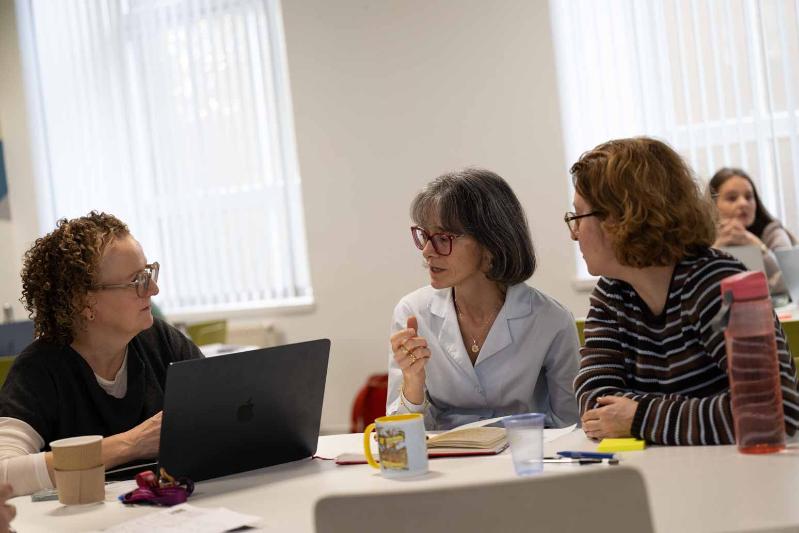
On 30 October 2026, the Centre for Transformative Change in Schools (CenTCS) brought together over 30 colleagues and students from across the University of Glasgow's School of Education for a day of critical dialogue about the meanings and possibilities of transformative educational change. Centred on the recently published Transformative Educational Change: A CenTCS Lexicon, the colloquium provided an opportunity to critically examine the assumptions, purposes, and practices underpinning transformative educational change and consider implications for future research. With participants from all five Research and Teaching Groups, alongside postgraduate researchers and Master's students, the event fostered intellectual exchange across disciplinary interests and career stages, creating space to challenge established thinking, share emerging research, and explore possibilities for future collaboration.
International perspectives on transformative educational change
The day opened with recorded responses to the Lexicon from four internationally recognised scholars: Nancy Dana, Kevin Kumashiro, Andrew Peterson, and Gert Biesta. Their contributions affirmed, challenged, and extended the Centre's conceptualisations of transformative professional learning, transformative teaching and learning, and transformative change in schools and society. Together, they raised provocative questions about the purposes of education, the assumptions and values underpinning educational practices, and possibilities for challenging established ways of thinking and working.
International Respondent Remarks
Developing ideas through dialogue
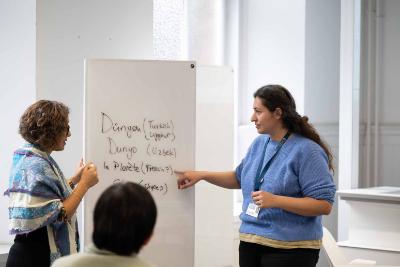
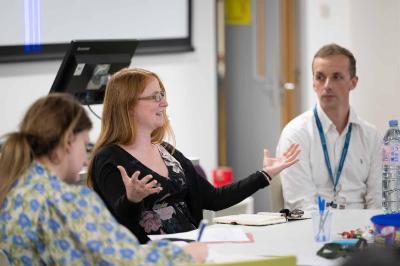
Throughout the day, CenTCS Fellows and Associates shared their research and engaged colleagues in interactive workshops, presentations, and collaborative feedback sessions. Rhona Brown explored visual stories of teacher agency; Mark Peart facilitated discussions on digital technologies and AI-supported teacher inquiry; Clare Smith examined computing science education; and Deniz Ortactepe Hart challenged identity-based approaches to inclusion. Utkun Aydin presented research on inclusive schools and hidden computational strengths among Scottish learners; Kathryn Spicksley introduced teacher character cards for mentoring; and Lavinia Hirsu and Pinar Aksu explored multilingual approaches to building sustainable learning spaces. Collaborative sessions also generated ideas for future CenTCS conceptual work, research activities, and writing collaborations.
The colloquium concluded with a School of Education panel featuring Gaston Bacquet, Kasia Borkowska, Yvonne Skipper, and Matthew Sutherland, chaired by Simon McGrath. The panel offered further perspectives on the possibilities and challenges of transformative educational change.
Taking the conversation forward
The colloquium raised important questions that will inform the next phase of CenTCS's conceptual and empirical work. What makes educational change genuinely transformative, and when might resisting change be equally important? How do established assumptions, relationships, and institutional arrangements enable or constrain more equitable educational futures? And how might educators, learners, families, and communities contribute to questioning and reimagining these arrangements? Building on its work in transformative professional learning and teaching, CenTCS seeks to examine not only how education might be improved within existing structures, but also when and why those structures—and the assumptions underpinning them—should be challenged, preserved, or transformed. These questions will inform the Centre's continuing research and collaborations within the School of Education, across the University of Glasgow, throughout Scotland, and internationally.
First published: 10 November 2026
<< News