

University of the West Indies visit: an article from Professor Rosalind Searle
Published: 2 June 2026
Thanks to Glasgow's Global Partnership Fund, Professor Rosalind Searle and Paul Quigley recently visited the University of the West Indies (UWI) in Trinidad and Tobago. This visit highlights how our international partnerships enrich both research and teaching. Read Rosalind’s full reflection below to see how the trip is driving new student collaborations and educational innovation.
Funding and collaboration beginnings
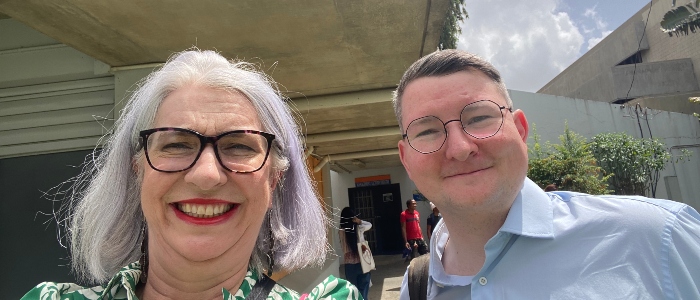
Paul Quigley and I recently visited the University of the West Indies (UWI), St. Augustine Campus, in Trinidad and Tobago, funded by Glasgow's Global Partnership Fund. The visit followed an earlier meeting at the Academy of Management (AoM) with Dr. Paul Balwant, Senior Lecturer and Deputy Dean (Planning and Programming) in the Department of Management Studies/Business Development Unit where he presented on developing emotional intelligence in leaders. We applied for funding as we wondered whether emotional intelligence could be integrated as an additional dimension within our serious educational game, Superbmarket.
Engagement opportunities
We arrived shortly after the country’s two-day Carnival celebrations and were very aware that the island was recovering from what appeared to have been a massive national party. Our visit offered a wonderful opportunity to meet staff, students and leaders on the island and reflect on the wider synergies we could promote between our institutions.
Public lecture on organisational trust
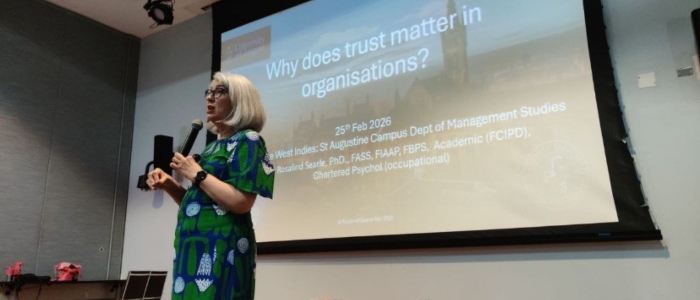
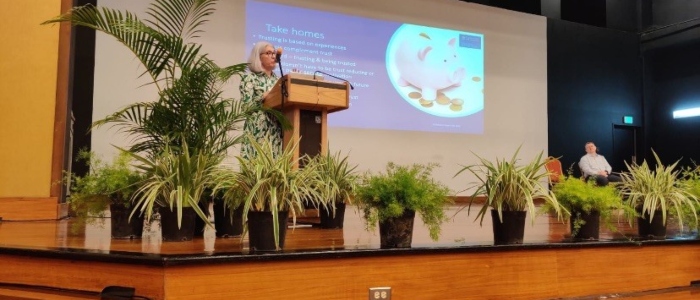
A central highlight of the visit was delivering a public lecture titled “Warning! Pay Attention to Trust: Exploring Trust Building and Its Preservation in Organisations.” The lecture addressed the growing challenge of declining trust in both public and private institutions. Drawing on extensive research across multiple contexts, the talk examined fundamental questions: what forms the basis of trust in organisations, and how can it be nurtured among diverse stakeholders? A key theme was the distinction between rebuilding trust after it has been broken and preserving trust before damage occurs. Using evidence from studies of organisational harms and trust violations to reveal prevention is not only more effective, but also less costly—financially and reputationally. The lecture outlined how trust is often fragile, easily eroded by perceived unfairness, poor leadership behaviour, or lack of transparency. In contrast, organisations that proactively safeguard trust cultivate resilience and long-term stakeholder confidence. I outlined the core leadership skills necessary to preserve trust, including consistency, integrity, accountability, and the ability to recognise and respond to early warning signs of distrust.
Faculty connections and student collaboration
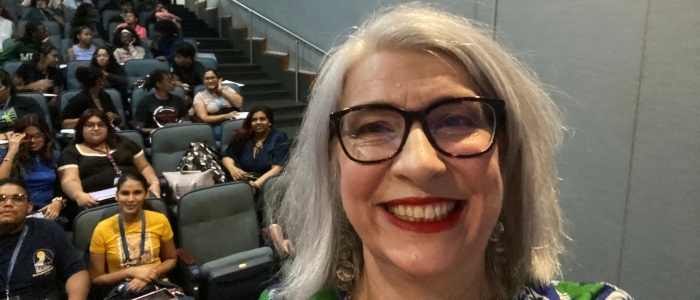
Paul Balwant organised meetings with faculty members and their Dean, which proved invaluable in identifying different ways to connect with our programmes. Paul Quigley is actively building links for the Masters in Management’s students to work collaboratively with UWI students. As part of these initial steps, I also delivered a lecture for the undergraduate management students on trust in organisations. In this lecture we explored the broader societal backdrop of declining institutional trust, encouraging students to reflect on its implications for workplaces and leadership. I introduced our “felt trust” research showing that trust is not only something leaders extend but also something employees perceive and respond to. We considered how felt trust can enhance motivation, responsibility, and performance, but also how it must be carefully managed. Beyond these formal sessions, what stood out most was the enthusiasm of faculty to work together. Through our face-to-face conversations and subsequent discussions, we have begun developing our collaborative project to study applications of our serious education games to building the core leadership skill of emotional intelligence.
Future outlook and strategic value
Exchanging perspectives through the mobility has enriched the original study idea and demonstrated UWI’s role as a hub for critical thinking and engaged scholarship. Our time at the University of the West Indies has left a lasting impression as a place where important conversations unfold—about leadership, trust, and the future of organisations—and where students are encouraged to think deeply about their roles and develop their skills to shape exciting futures.
For further details, please contact Professor Rosalind Searle
First published: 2 June 2026
<< News