

Visiting our research partners in Tanzania
Published: 11 February 2026
In early January, UofG's Professor Chris Pearce, Vice-Principal (Research and Knowledge Exchange) and Mary Ryan, International Research Development Manager, visited Tanzania to see first-hand how long-term collaborations between SBOHVM and Tanzanian partners translate excellent science into real-world impact, while also supporting the development of people, infrastructure, and leadership.
 In early January, Professor Chris Pearce, Vice-Principal (Research and Knowledge Exchange) and Mary Ryan, International Research Development Manager, visited Tanzania to see first-hand how long-term collaborations between SBOHVM and Tanzanian partners translate excellent science into real-world impact, while also supporting the development of people, infrastructure, and leadership.
Reflecting on the trip, Chris said: “There are few better ways to understand the impact of international research partnerships than to spend time with the people and institutions that sustain them. Over a rewarding week, we visited key research partners across the country, from major health research institutes to field sites embedded in some of the world’s most extraordinary ecosystems.
"What struck me throughout was not only the quality of the science, but the maturity of these partnerships and the shared commitment to tackle the most pressing global health and environmental challenges. Seeing and hearing about the impact these collaborations are having was genuinely humbling.”
As International Research Development Manager, Mary Ryan is acutely aware of the impact funding cuts are having on our international collaborations, “Many of our most impactful areas of collaboration are long-term endeavours that sit outside the timelines of normal grant funding cycles. For example, the work by the Serengeti Biodiversity Programme to understand and safeguard the iconic ecosystem builds on decades of data. The efforts to continue this work are critical to ensure park managers are receiving the best information to take care of the region, both for wildlife and for tourism.
"We cannot underestimate the importance of small pots of funding in the current climate. A bridging grant can be the difference between keeping experienced and dedicated staff in place and ready to go and having to start from scratch when the next ‘big’ grant comes along. Working together to find ways to navigate the changing funding landscape is key to resilient and equitable partnerships.”
Our partner institutions
Ifakara Health Institute (IHI)
The University of Glasgow’s partnership with IHI spans more than 20 years, thanks to Professor Heather Ferguson. The partnership is so long-standing that research scientists at the Institute have become UofG alumni and are now valued collaborators. Much of the work we have collaborated on with the Institute focuses on malaria, from prevention to control, and a distinctive ‘One Health’ approach to rabies.
Nelson Mandela African Institute of Science and Technology (NM-AIST)
NM-AIST is one of the institutions envisioned by Nelson Mandela to develop Africa’s next generation of scientists and engineers and translate science and innovation into real impact for the continent.
The University‘s partnership with NM-AIST goes back to the institute’s beginnings, some 15 years ago, driven by Professor Sarah Cleaveland, and has grown into an impressive alliance with over 160 jointly authored publications. Both institutions have a shared focus on infectious and zoonotic diseases, bringing together livestock health, genomics, vaccination, and public health to tackle challenges at the human–animal–environment interface.
Serengeti National Park
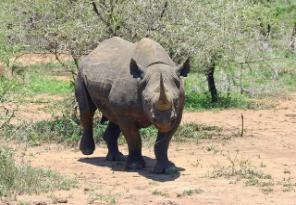
The University’s Serengeti Biodiversity Research Programme, led by Professor Grant Hopcraft, is an exemplar of long-term research that is deeply embedded in its environment. The ‘Serengeti Wildlife Tracker’ provides invaluable data to support wildlife monitoring and decision-making across the park. Some key projects included conservation of cheetahs and black rhinos.
Grant also chairs the scientific committee of the Greater Serengeti Conservation Society, which brings together researchers, decision-makers, and practitioners to share findings, discuss challenges, and identify where further research and collaboration can make a difference. This is impact in action, where policies and decisions about the future of the Serengeti are directly informed by science.
Kilimanjaro Clinical Research Institute (KCRI)
KCRI is part of the wider Good Samaritan Foundation ecosystem in Moshi and is closely integrated with both the Kilimanjaro Christian Medical Centre, a major tertiary hospital, and KCMC University. The close integration of research, clinical care, and training creates a powerful environment for tackling major health challenges.
The long-standing partnership between Glasgow and KCRI was spearheaded by Professor Sarah Cleaveland, with a particular focus on zoonoses. It continues to grow thanks to colleagues including Jo Halliday, Emma McIntosh and Tiziana Lembo, broadening the range of collaborative research. The University and KCRI are now publishing more than 20 jointly authored papers a year.
First published: 11 February 2026
<< News