

Measuring What Matters Globally: Advancing Global Impact Indicators for Cities
The Doughnut Economics framework asks a simple but profound question:
How can we meet the needs of all people within the means of the living planet?
While local indicators help us understand how well people and places are doing within a city, answering this question requires us to look beyond local boundaries and consider how cities affect ecosystems, workers, communities, and economies around the world. This global perspective is captured in the Doughnut’s Global Social and Global Ecological dimensions.

However, measuring these global impacts is far from straightforward. Existing approaches often struggle with:
- Lack of sufficiently detailed city-level data
- Difficulties capturing inequalities and distributional impacts
- Static datasets that cannot easily track change over time
- Limited indicators for global social impacts
- Challenges in linking complex global supply chains to local decision-making
To address these challenges, the GALLANT System Transformation team has been working with international experts, led by Assistant Professor Mary Menton at the Institute for Place Environment and Society at Herriot Watt University, and Joel Petterson, Doughnut Data Portrait Specialist at the Doughnut Economics Action Lab, to review the state of the art in global impact measurement and identify new opportunities for innovation. This work aims to strengthen the evidence base for cities seeking to contribute to a safe and just future for people and planet.
A Global Collaboration
In March 2026, GALLANT hosted a two-day Global Impact Indicators Workshop, bringing together 13 researchers and practitioners with expertise in environmental and social impact measurement to explore how global impacts can be better understood, measured and communicated at local scales.
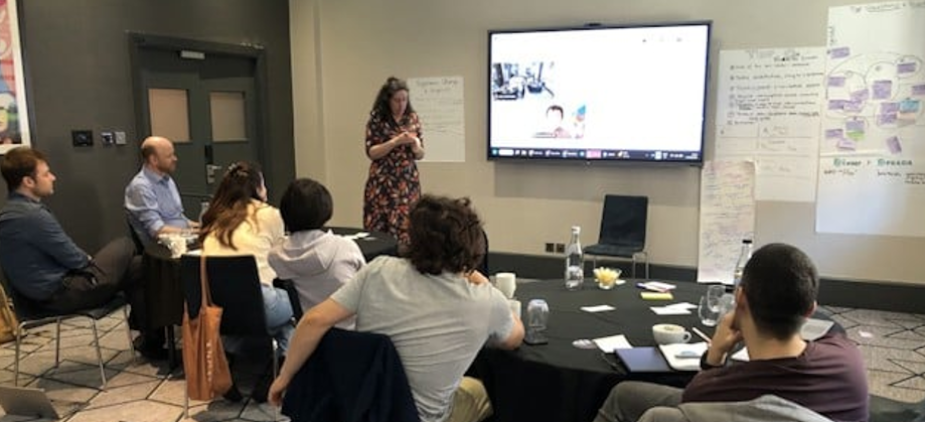
Participants examined the strengths, limitations and emerging developments in existing approaches to measuring global ecological and social impacts. Discussions highlighted the challenges of translating complex global datasets into meaningful indicators for cities such as Glasgow, while also raising important questions about how indicators are used, by whom, and for what purpose.
The workshop reinforced that there is no single method for measuring global impacts. Participants discussed a range of approaches, including production-based, consumption-based, extraction-based and profit-based accounting, alongside the growing use of supply-chain analysis to assess issues such as biodiversity loss, forced labour, inequality and resource use. Looking ahead, participants highlighted opportunities to expand impact assessment into areas such as health, education and social connectivity, while developing practical tools, participatory processes and knowledge-sharing approaches that can support wider systems change.
Key outcomes from the workshop and review of the literature are highlighted below.
Approaches to Measuring Global Impacts
One of the major outcomes of this work has been the development of a framework identifying six complementary approaches for measuring the global impacts of cities and sub-national regions.
The six approaches, identified through a literature review and refined through workshop discussions provide a toolkit that can be combined depending on the policy question being addressed, the available data, and the stakeholders involved.
Table: Approaches to sub-national Global Impacts Indicators
|
Approach |
Summary |
|
1 |
Take national level data as place data |
|
2 |
Downscale national footprints to place via local factors (e.g. population, income, expenditure) |
|
3 |
Total impacts or indexes weighted by national trade footprints |
|
4 |
Weighting impacts of indexes by national trade footprints, and then downscaling to place |
|
5 |
Utilise the original MRIO (Multi-Regional Input Output) databases |
|
6 |
Qualitative |
Doughnut Economics Global Indicator Library
A second outcome of this work will be the expansion of the .
The library brings together:
- Existing indicators
- Data sources
- Analytical approaches
- Calculation methods
The resource is being organised around the six approaches identified through the workshop and literature review, providing a foundation for future research, policy development and practical implementation.
What's Next?
This work has laid the foundations for an international research agenda on global impact indicators.
Four collaborative working groups have been established to advance this research:
- Data Architecture, Plug-ins and Extensions
- Politics, Power and Normative Dimensions
- Beyond Consumption-Based Accounting
- Bottom-Up and Qualitative Approaches
Get in touch
If you are interested in finding out more about this work or would like to join one of these groups please contact:
Mary Menton: M.Menton@hw.ac.uk
Joel Petterson: joel@doughnuteconomics.org