

Case Study 4 - Bike for Good

Bike for Good is an award-winning charity devoted to enabling cycling in Glasgow. Since its beginnings, it has grown into a cornerstone of the city's cycling community, making bikes more accessible while helping people build the confidence and skills to ride and maintain them. Through a combination of practical services, education and community partnerships, the organisation works to create lasting social and environmental impact. Its story shows how a simple idea has evolved into a movement for healthier, more sustainable communities.
The Story
Bike for Good began around 20 years ago as a small stand at Glasgow's famous Barras market, where founder Gregory Kinsman-Chauvet and a group of friends helped people with a wide range of bike-related problems. Gregory only learned to ride a bicycle in his thirties, but the freedom and joy he discovered inspired him to make cycling accessible to others. From the outset, the organisation focused on repairing bikes and teaching people how to ride and maintain them, which largely stayed so until these days. Now operating from two large hubs in the South and the West of the city, Bike for Good is the heart and the hands of cycling in Glasgow.
Find out more about Bike for Good
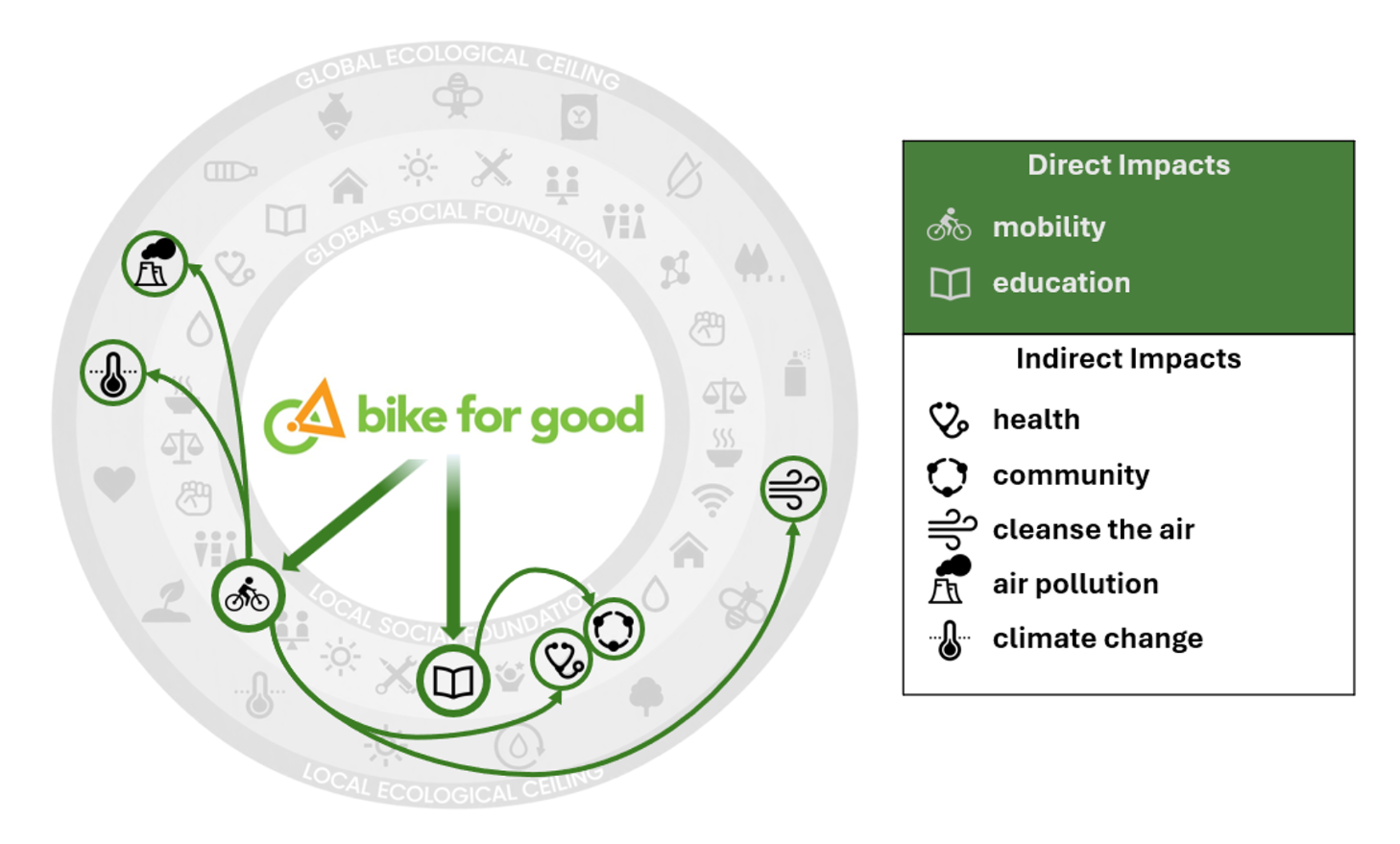
Bike for Good and the Doughnut: Diagram showing the impact the work of Bike for Good has on themes within the Doughnut Economics model.
Bike For Good supports mobility through repair and refurbishment of bikes and teaching people how to ride them, and education through mechanics training programmes. These primary aims provide indirect benefits to health, community, air pollution and climate change.
Mission in Action
The functioning of Bike for Good still rotates around the goals established at the beginning. Each year, the charity puts more than 2700 back into the cycle (of which around 1200 end up being refurbished for sale) making affordable, high-quality cycles available to Glaswegians through low-cost sales or by providing them free of charge to those who need them most. It also empowers people to keep their bikes on the road by offering repairs, access to tools and workshop space, and practical maintenance training. Alongside cycle training, Bike for Good delivers an innovative mechanics programme for 14–25-year-olds and offers industry-standard Cytech training for those seeking industry-recognised accreditation. Through its work, the organisation creates benefits that extend far beyond cycling, improving mobility, supporting education, reducing waste and air pollution, and contributing to a more sustainable future for both Glasgow and the wider environment.
Bike for Good offers a wide cargo bikes loan service. As light good vehicles consume 25% of the total diesel and 3% of the total petrol used by all motorised road transport vehicles in Britain, a big part of them can be easily substituted by cargo bikes, which are a cleaner, easier and more engaging way to transport goods across the city. As a member of Aye Cycle Glasgow network, which connects various organisations to make cycling popular and accessible throughout the city, Bike for Good has helped develop a cross-organisational register of cargo bikes, to make sure that everybody can find the exact bike they are looking for.
Bike for Good are convinced that sustainable transformation may only happen with everybody on board. Deeming high politicisation and lack of understanding of biking practice as one of the biggest challenges in the industry, the charity also offers Road User Awareness Trainings for drivers of large vehicles.
Accredited as part of the Certificate of Professional Competence (CPC), the programme helps fleet drivers better understand the perspectives and safety needs of pedestrians, cyclists and motorcyclists, contributing to safer and more inclusive streets for all.
Alignment Between Design and Goals
Bike for Good's charitable structure and pro bono ethos enable the organisation to attract significant support from both government and the wider community, creating opportunities for people to contribute to its mission. This partly frees them from profit pressures that private companies often face. The oversight is provided by the board of trustees, composed of diverse specialists, that serves as an expert body helping the charity deliver maximum positive impact for Glasgow.
Rather than measuring success solely through financial returns, Bike for Good evaluates its impact by the number of bikes refurbished and donated, training sessions delivered, and people engaged. At the same time, the charity aims to maintain a resilient financial model by generating a substantial proportion of its income through commercial activities. Chief among these is the sale of refurbished donated bikes, which are offered at prices well below those of new bicycles, making cycling more affordable while encouraging people to choose refurbished products over newly manufactured alternatives.
Looking Ahead
Looking into future, Bike for Good would like to see a greater motorised traffic reduction across the city, along with continued development of well-designed biking infrastructure, built in consultation with local communities and organisations. Their vision of thriving Glasgow requires access to clean, free and healthy mode of transportation for the people across Glasgow and its outskirts, with cycling playing a key role in this transformation. To help realise this goal, Bike for Good aims to expand its presence across all four corners of Glasgow, particularly in areas that have so far benefited less from the city's cycling transformation. By working closely with local communities and partners, the organisation hopes to ensure that the opportunities and benefits of cycling are accessible to everyone.