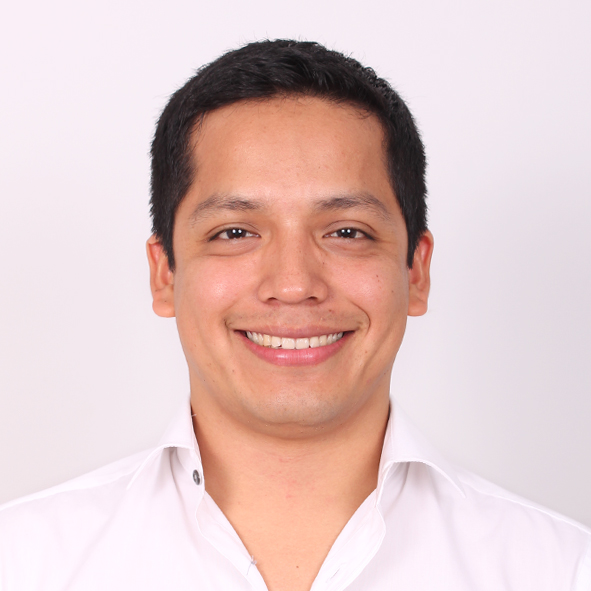
Oscar Ponce Ponte
My career has taken me from medical training in Peru, to clinical research at the Mayo Clinic in the United States, and now to an academic medicine pathway in the United Kingdom. Throughout this journey, I have been driven by a desire to improve care for older adults with complex health needs, recognising that many aspects of their experiences, priorities, and recovery pathways remain difficult to capture using routine healthcare data. This has led me to combine my clinical background with artificial intelligence skills to develop technologies that support more personalised, patient-centred care. My long-term goal is to become a clinician-scientist in Geriatric Medicine, leading interdisciplinary research that uses AI to improve the care of older adults living with multimorbidity.
My interest in research began during medical school in Peru, where I became involved in evidence-based medicine, epidemiology, and clinical research, publishing several peer-reviewed papers. These early experiences opened the opportunity to join the Mayo Clinic, where I spent almost three years developing expertise in research methodology and clinical epidemiology, contributing to more than 50 peer-reviewed publications across clinical and methodological disciplines.
During my time at the Mayo Clinic, I became increasingly interested in how artificial intelligence could uncover aspects of patients’ experiences and healthcare that are often hidden within clinical narratives and unavailable in structured healthcare data. I therefore moved to the University of Edinburgh to undertake an MSc in Speech and Language Processing, specialising in natural language processing, speech technologies, and machine learning. Under the supervision of Professor Saturnino Luz and in collaboration with the Mayo Clinic, I developed an AI model to automatically detect shared decision-making from patient-clinician conversations. This work received a Distinction and led to a US provisional patent, reinforcing my belief that AI should address meaningful clinical problems and ultimately improve patient care.
I currently hold an NIHR Academic Clinical Fellowship (ACF) in Internal Medicine, Artificial Intelligence, and Geriatric Medicine at University Hospitals Plymouth NHS Trust. Alongside my clinical training, I co-founded and now co-direct the “Care and AI Laboratory” at the Mayo Clinic, where we develop multimodal AI systems that learn from healthcare conversations and electronic health records to improve patient-centred care. During my first year as an ACF, I secured an NIHR Invention for Innovation (i4i) award as lead investigator to develop AI-generated patient-centred clinical summaries from healthcare conversations. Working at the intersection of geriatrics, clinical practice, and AI has strengthened my expertise in natural language processing, multimodal machine learning, and interdisciplinary collaboration while reinforcing my commitment to developing technologies that support the care of older adults.
I will soon begin a PhD at the University of Edinburgh on Multimorbidity, Care Processes, and Recovery Trajectories in Hospitalised Patients: A Natural Language Processing Approach. This PhD represents the natural progression of my academic journey, bringing together my clinical training in geriatric medicine, expertise patient-centred research, and experience in natural language processing and multimodal AI. By developing methods to extract clinically meaningful information from unstructured electronic health records and integrating these with structured clinical data, I hope to better understand multimorbidity, inpatient care processes, and recovery trajectories, and ultimately develop AI methods that support more personalised, patient-centred care.
Project: Multimorbidity, Care Processes, and Recovery Trajectories in Hospitalised Patients: A Natural Language Processing Approach
Primary Supervisor: Prof Alasdair MacLullich (University of Edinburgh)
Secondary Supervisors: Dr. Arlene Casey (University of Edinburgh)