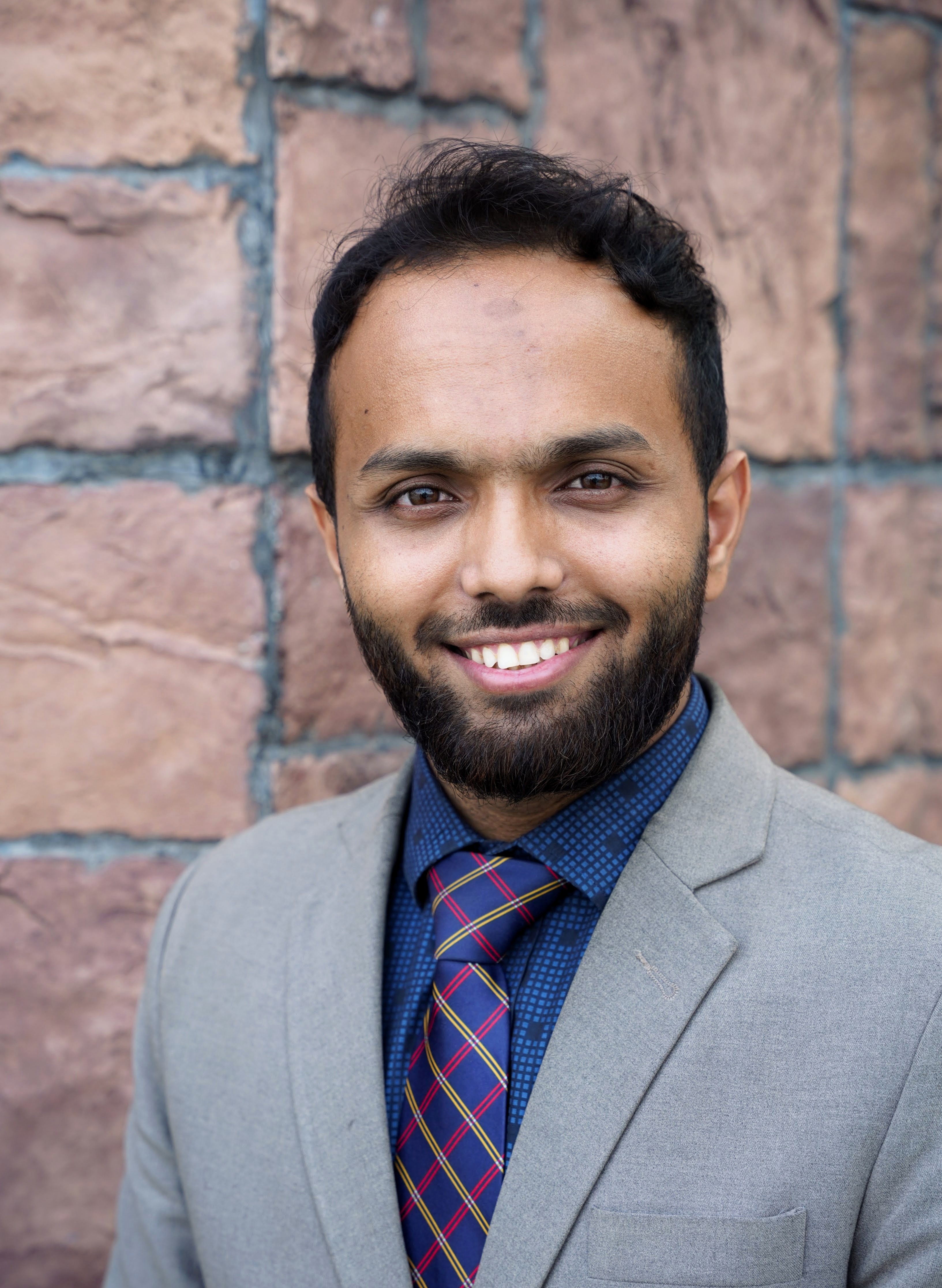
Abdullah Al Mahmud
Email: 3170348A@student.gla.ac.uk
 https://orcid.org/0000-0003-1029-6944
Research title: Financing global peace: How international financial institutions seek to stabilise conflict-affected states
Research summary
My research will examine the role and impact of International Financial Institutions (IFIs), mostly the World Bank and the International Monetary Fund (IMF), in assisting conflict-affected states or as defined by the WB-IMF - the Fragile and Conflict-affected States (FCS) by providing concessional financing arrangements to their neighbouring states. Using advanced quantitative data analysis (like large-N analysis, Spatial-X model, and shift-share instruments) combining several country-level datasets of the World Bank and the IMF for the past 47 years starting from 1980, I will explore "Intervention by Proxy" in the regional stability and IFIs programme contexts.
Dealing with conflict-affected environments is becoming increasingly important for the World Bank Group because it is expected that by 2030, about 60% of the world's extreme poor will reside in Fragile and Conflict Affected Situations (FCS). Nevertheless, the World Bank’s Articles of Agreement (Separately for IBRD and IDA, IFC) do not allow any form of intervention in the internal political affairs of the member state and only considers economic factors when making its decisions. This implies that the Bank does not conduct any direct intervention to mitigate the regional spillovers. For them, it might be a second-best choice to intervene with financial grants in different forms to these shocked countries.
The International Monetary Fund (IMF) too faces legal and political constraints preventing it from engaging in direct intervention in fragile and conflict-affected states. Because countries are often believed to have negotiated with the IMF over their own Balance of Payments (BoP) terms, the program allocation pattern has been historically driven by simply a client country’s own macroeconomic demands, rather than a regional stability demand.
I am working on introducing and empirically validating a novel concept of “Intervention by Proxy” (IbP) – the systematic provision of the World Bank and the IMF programs to countries facing adverse spillover effects from their neighbourhood—due to major conflict, financial crises, and economic shocks—where direct engagement would violate these two’s core mandate of political neutrality and addressing balance of payments crisis of the program country.
Grants
- In May 2025, I received the prestigious PhD scholarship (at the UK Research and Innovation Grants-UKRI rated) from the College of Social Sciences (CoSS), University of Glasgow, UK - which I will continue to receive throughout my whole PhD tenure starting from September 2025.
- I have also received a Research grant from the CoSS for covering my expenses of attending any research confererences, and seminars as well as my other research related expenses.
- In January 2024, I received a research fellowship from The University of Dhaka for conducting my research on sustainable development goals and HDI index.
- In June 2024, I received another Economy of Tomorrow (EoT) Research Fellowship from Friedrich-Ebert-Stiftung Bangladesh for conducting my research on handicraft sector market diversification.
Conferences
I recently attended Global Policy North and Centre for Global Law and Governance Conference at the University of St Andrews | 24-25 June 2026 where I presented my PhD paper on IMF and the Intervention by Proxy.
Teaching
I am also working as a Research Assistant for the University of Glasgow's BA-CNRS funded project "The Politics of Urban Innovation: Electoral Consequences of Innovative Urban Policy" to gather empirical evidence on how innovative urban policies (e.g. sustainability initiatives, smart city projects, participatory governance reforms) generate local political feedback and electoral consequences.
Additional information
These are some of my previous published research articles:
- As a corresponding author, I tried to explore the alternative indices for the HDI for 146+ countries’ cross-sectional data.
- Since HDI does not account for the environmental costs, income inequality and gender inequality, I tried to propose an alternative method of measuring human development across the countries, and published a new index ranking based on my proposed metric.
2. Sultana, F. & Al Mahmud, A. (2017). Economic Stability and Export Growth: An Empirical Analysis of Bangladesh’s Net Balance. Stamford Journal of Economics. Vol. IV, Issue 1
- This paper tried to see how the macroeconomic factors are being impacted by export basket fluctuations in Bangladesh, since Bangladesh is heavily reliant on its exports basket and the paper explored whether this basket is impacting the overall macroeconomic stability of the country.
- In this paper (as the corresponding author), I investigated a potential measure of reducing the bribery. I tried to see whether an asymmetric measure against bribery could help reduce the bribery in a country like Bangladesh since the punishment is now symmetric for both the bribed and the briber.
- As the corresponding author; I investigated the socio-economic profiling of the militants who were killed during the law enforcement authority’s operations across the countries. I investigated the alleged militants’ socio economic profiling from their dataset and as well as by taking some FGDs and KIIs.