

Public invited to share views on Edinburgh Fringe's economic, social and wellbeing impact
Published: 27 October 2026
This is the first economic impact assessment that focuses solely on the Fringe and the first that explore whether attending the Edinburgh Fringe affects people's wellbeing.
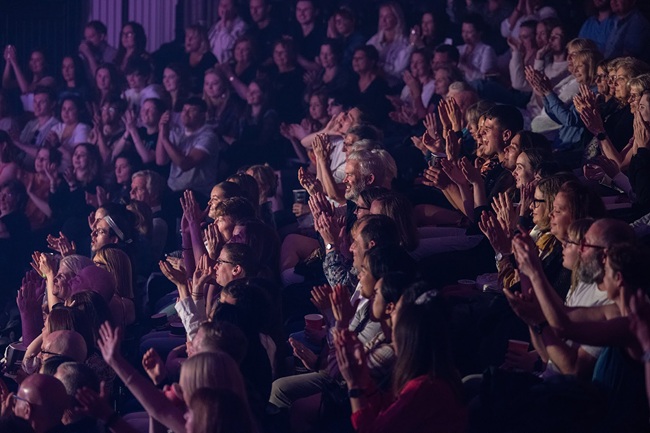
An audience survey has been launched by the University of Glasgow as part of an assessment of the economic and social impact of the Edinburgh Festival Fringe, including questions on its impact on the wellbeing of those attending.
The questionnaire examines core economic measures, including attendance, ticket spending, overnight stays and the impact of visitor spending on food, drink and other local attractions.
This is the first economic impact assessment that focuses solely on the Fringe and the first that explore whether attending the Edinburgh Fringe affects people's wellbeing, including their sense of happiness, belonging, social connectedness and overall quality of life, with regard to the UK WELLBY (Wellbeing-Adjusted Life Year) scale.
The wellbeing section also explores whether attending the Fringe feels worthwhile and how it contributes to experiences such as creative inspiration, social connection, exposure to new ideas and trying new things.
Professor Murray Pittock, Pro-Vice Principal at the University of Glasgow, is leading the research which is supported by UK Research and Innovation (UKRI) World Class Laboratories.
Professor Pittock said: “When we think about the value of the Fringe, it is about much more than ticket sales and visitor spending. The festival brings people together, exposes audiences to new experiences and ideas, and can have a lasting impact on wellbeing.
“This survey will help us understand not only the Fringe’s economic contribution, but also the social and cultural benefits it delivers to those who attend.”
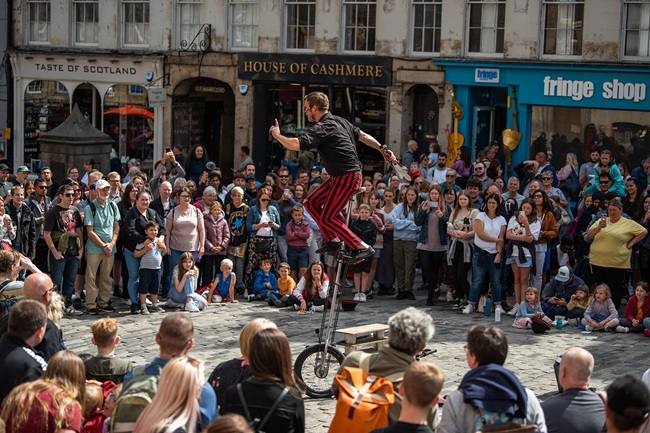
An additional section of the questionnaire explores the role Edinburgh plays in the Fringe experience, examining how the city's character, cultural reputation, hospitality offer and atmosphere contribute to the festival’s appeal as a globally significant cultural event.
Alongside the Fringe’s benefits for artists, audiences, local businesses and Edinburgh’s cultural life, respondents will be able to identify pressures relating to accommodation, local infrastructure, public services and the environment. This will help ensure the assessment reflects both the festival’s economic contribution and its wider social and cultural significance.
Tony Lankester, Chief Executive of the Edinburgh Festival Fringe Society said: “Audiences from Scotland and around the world are central to the success of the Edinburgh Fringe, and their experiences can help the Fringe Society to better understand the impact the Fringe has as a global expression of culture in Scotland. I encourage anyone with a stake in the Fringe to complete the University of Glasgow questionnaire. It is a vital opportunity to ensure the Fringe audience's views are represented and to help shape the findings.
“Professor Pittock’s research is vital to demonstrating the value of the Edinburgh Fringe as the most significant platform for emerging talent to express their stories. These findings will help the Fringe Society to further understand the Edinburgh Fringe’s economic, social and cultural benefits to Scotland's cultural economy.”
Professor Pittock was commissioned by UK Research and Innovation (UKRI) World Class Laboratories in summer 2026 to undertake a year-long analysis investigation into how the Edinburgh Festival Fringe supports jobs and businesses and contributes to Scotland's wider cultural economy.
Professor Christopher Smith, Executive Chair of the UKRI’s Arts and Humanities Research Council (AHRC), said: “We at UKRI have been increasingly investing in establishing the value of culture, not least through the Culture and Heritage Capital programme.
“This survey uses as its laboratory one of the greatest single cultural festivals in a city full of heritage and with a global reach. I look forward to seeing how the results will deepen our understanding and enrich our policy making in Scotland and beyond.”
The Fringe is the world’s most important performing arts festival. It issued more than 2.8 million tickets in 2026, attracted around 750,000 attendees and supported an estimated 3,000 jobs. More than 4,200 shows took part, with artists travelling from Scotland, the rest of the UK, and overseas.
The Edinburgh Fringe is also widely seen as a starting point for many performers. Over the years the Fringe has provided a launch pad for a huge range of performing artists, including Pheobe Waller-Bridge, Richard Gadd, John Byrne, Susan Calman, Sir Billy Connolly, Alan Cumming, Karen Dunbar, Franz Ferdinand, Idlewild and Snowpatrol. It has also been a performance platform for many stars including Suzy Eddie Izzard, Graham Norton, Rowan Atkinson, Dame Judi Dench, Stephen Fry, Alan Rickman, Emma Thompson and Victoria Wood.
Professor Pittock previously led a major study on the economic impact of Robert Burns. That work continues to inform policy around the promotion of the poet, particularly in Dumfries and the south of Scotland.
The Edinburgh Festival Fringe will run from 06-30 August 2027; it’s 80th anniversary year.
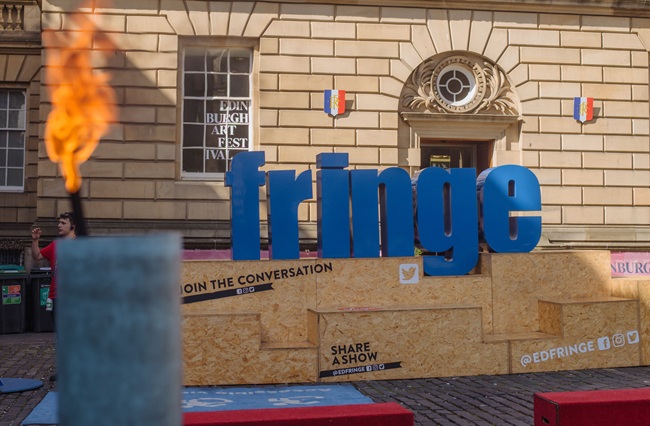
Edinburgh Festival Fringe: Economic Impact Assessment
The research team for the Edinburgh Festival Fringe: Economic Impact Assessment is based at the University of Glasgow’s College of Arts & Humanities. The project is led by Professor Murray Pittock with research associates Dr Ajaz Ahmed and Dr Lynn Verschuren.
To take part in the survey, which closes on 7 December 2026, please follow this link - Edinburgh Festival Fringe: Economic Impact Assessment - Questionnaire
About the Edinburgh Festival Fringe Society
The Edinburgh Festival Fringe Society is the charity that underpins the world-renowned Edinburgh Fringe. A group of artists established it in 1958 to provide central services for the festival and ensure it stays true to its founding purpose of inclusion and welcome to all. They exist to support and encourage everyone who wants to participate in the Fringe, provide information and assistance to audiences, and celebrate the Fringe and what it stands for worldwide.
Based at Fringe Central, 6 Infirmary Street, Edinburgh; the Society has a small team of staff who work year-round to assist all the artists and audiences who make the festival one of the best-loved performing arts events on the planet. In 2022, as part of the Fringe’s 75th anniversary, the Fringe Society launched a new collaborative vision and set of values. It made a series of commitments to become more inclusive, fair, and sustainable. The vision is ‘to give anyone a stage and everyone a seat’.
Their three values will guide the behaviours and decisions of everyone involved with the Fringe: celebrate performing arts, be open to all and look out for each other. The Society will live by them, champion them and uphold them where necessary.
Learn more: The Edinburgh Festival Fringe
First published: 27 October 2026
Related Links
- Professor Murray Pittock - Research Profile
- Dr Ajaz Ahmed - Research Profile
- Dr Lynn Verschuren - Research Profile
- College of Arts & Humanities
- Edinburgh Festival Fringe: Economic Impact Assessment - Questionnaire
- The Edinburgh Festival Fringe -website
- Arts & Humanities Research Council - website
- Culture and Heritage Capital programme