Vedanta Wallace
From Parliamentary Debate to Diplomatic Ambition: Lessons from the Scottish Parliament
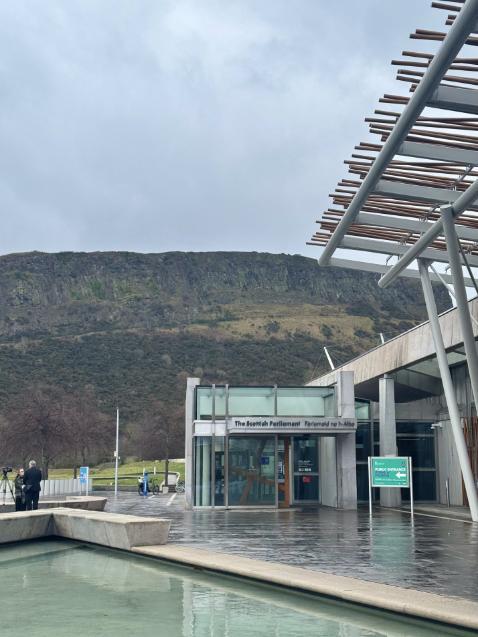
Observing political dynamics in action can transform your understanding of them. For me, a day trip to Edinburgh with the MSc Political Communication programme to visit the Scottish Parliament and meet with 56 Degrees North was an extraordinary experience. It was not only insightful but deeply inspiring, especially for someone hoping to build a career in diplomacy.
Observing Communication Strategy at the Scottish Parliament
One of the most memorable moments of the day trip was attending the First Minister Questions session in the Scottish Parliament. Watching the session live was far more engaging than watching parliamentary debates on TV or news clips. I could feel the highly interactive, energetic, and fast-paced atmosphere in the chamber.
What I noticed in the session wasn't the policy issues discussed, but how they were communicated. Scottish Parliament members posed direct questions to the First Minister, providing clear arguments, data, and public implications. The debate felt sharp yet structured with a strong emphasis.
As a political communication student, I found this fascinating to observe. I found myself focusing more on how political actors construct their arguments, choose their language, and respond under pressure.
A Different Parliamentary Dynamic from Indonesia
This experience contrasted with what I was more familiar with in Indonesia. In the Indonesian parliament, debates often emphasised party dynamics or lengthy questioning sessions rather than concise questions. Debate sessions sometimes felt less interactive, with fewer opportunities for legislators and executive leaders to exchange ideas.
I realise that this is very difficult to compare due to the different political systems and contexts, as well as vastly different population sizes. However, observing these differences highlights how communication strategies shape democratic practices. The emphasis on evidence-based arguments and questions convinced me that effective political communication focuses on strategic clarity, not just on mere talk. These differences led me to reflect on how political institutions can foster or constrain effective dialogue through their communication strategies.
Learning Beyond Parliament: 56 Degrees North
Later in the day, we met with 56 Degrees North, a public affairs, communication, and advocacy consultancy. Although this visit was a smaller part of the trip, it offered an important bridge between political institutions and professional practice. Hearing about their company and how communication strategies are developed to influence policy, engage stakeholders, and advocate. It reinforced the idea that political communication does not stop at institutions, it extends into consultancy, advocacy, and strategic messaging across sectors.
Connecting the Experience to My Career Goals
As someone who aspires to be a diplomat, I have found this experience incredibly insightful. Diplomacy is closely tied to effective communication, particularly in crafting accurate statements, constructing persuasive arguments, and negotiating across political and cultural boundaries. Watching the First Minister Questions session made me realise that clear, effective, evidence-based, and clear communication is crucial for a diplomat in conveying the interests of the country they represent. This experience reaffirmed my interest in political communication not only as an academic journey, but also as a practical skill that underpins diplomacy.
Overall, this trip demonstrated firsthand how political communication operates within an institutional environment. For me, this trip was more than just a study visit; it served as a reminder of how experiences like this can help transform academic learning into professional career aspirations.