

Glowing Science
Join members of the Centre for Translational Pharmacology as we share how glowing proteins help us discover new medicines!
Light-emitting proteins can be found naturally in species such as jellyfish and fireflies. In the lab, these fluorescent and bioluminescent proteins can help us see structures and track different protein interactions inside living cells.
We use these glowing proteins to design specific biological tools or biosensors in order to measure biological activity in real time. These biosensors are particularly useful for spotting the difference between healthy and diseased cell activity. Once we identify these differences, we are able to develop new medicines to target and treat diseased cells.
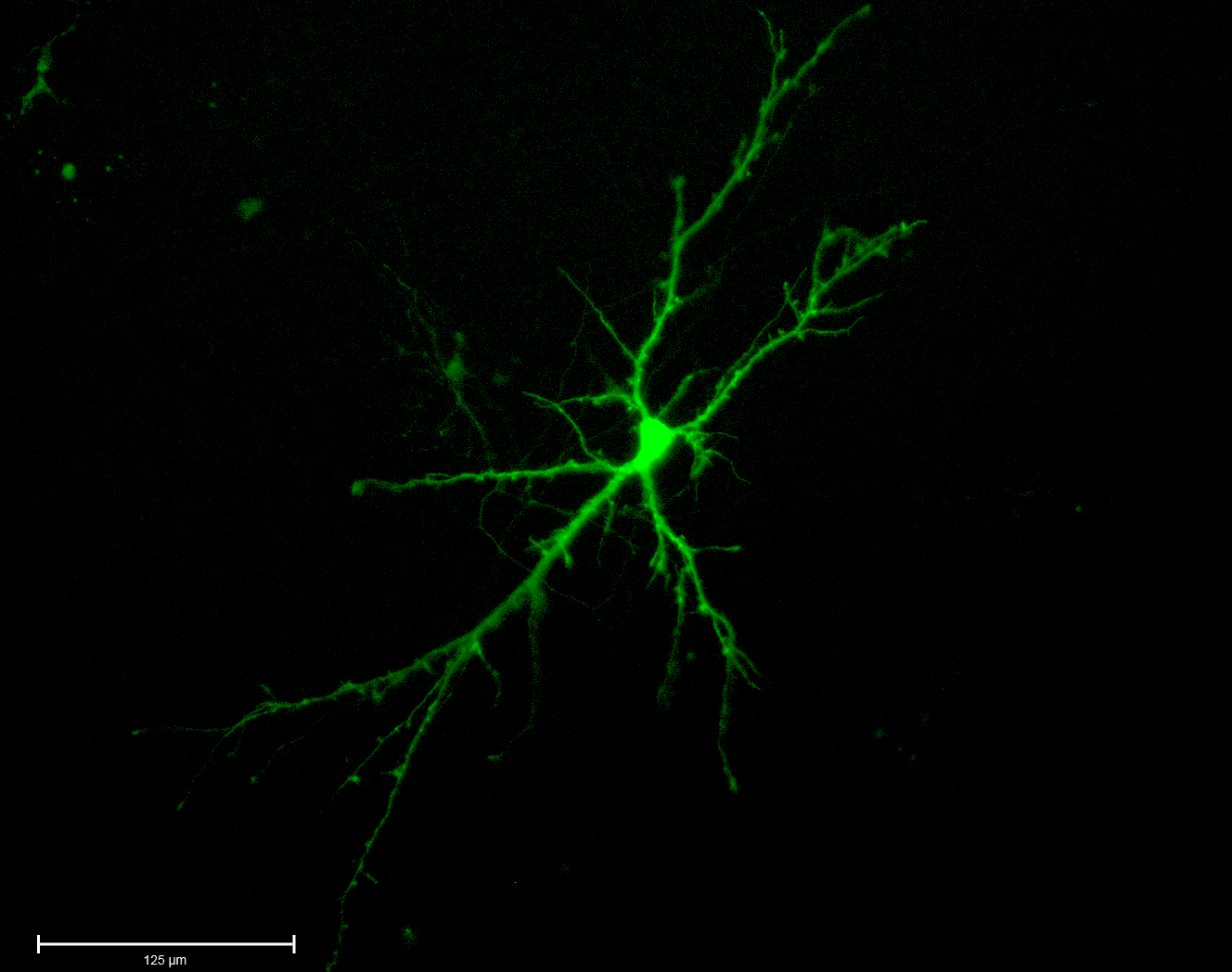
A neuron, or brain cell, expressing a green fluorescent protein. Image credit - Beth Strellis.
Our Activities
Graffiti Wall
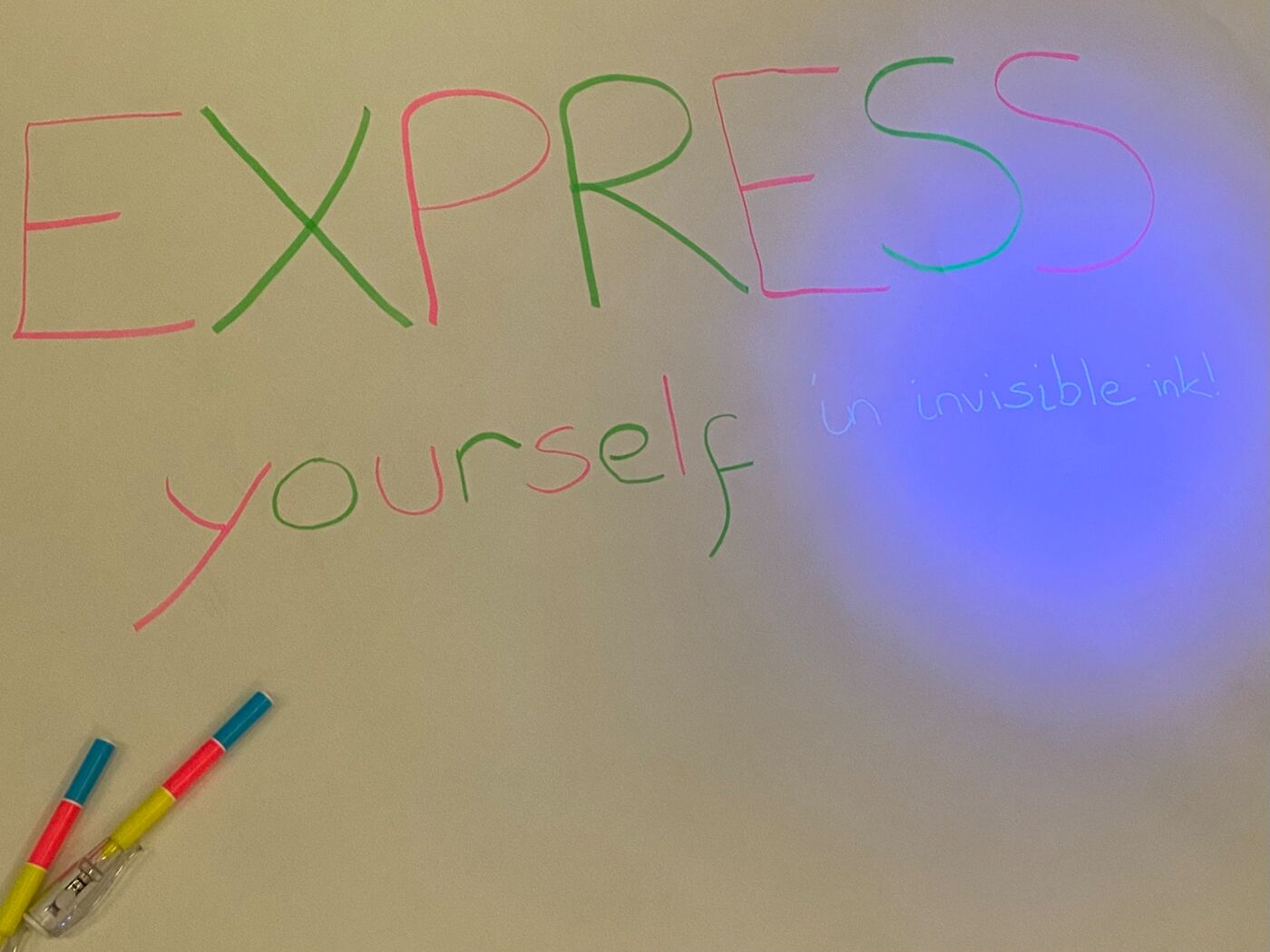
Learn about fluorescence through the science of invisible ink and express yourself (invisibly) on our graffiti wall!
Frequently Asked Questions
What is Fluorescence?
The electromagnetic spectrum is made up of visible light (red, orange, yellow, green, blue, indigo & violet) and invisible light (e.g. ultraviolet, x-rays, infrared). Both visible and invisible light travel in waves that have different lengths and energy levels. For example, red light has a longer wavelength but less energy than violet light.
Fluorescence is the emission of light by a substance, object (gemstones), plant or animal (jellyfish, corals) that has absorbed light of a particular wavelength, and then releases light of a different wavelength. In most cases, fluorescent objects absorb light of a shorter wavelength and emit light at a longer wavelength. This is because the emitted light has less energy than the one that was absorbed. There are, however, exceptions to this rule.
Fluorescence is a useful concept for scientific research and has become widely used in a variety of research areas such as cell biology, physiology and chemistry. Most commonly, fluorescent dyes and labels can be used to let scientists ‘see’ different molecules, structures or cell types.
How does invisible ink work?
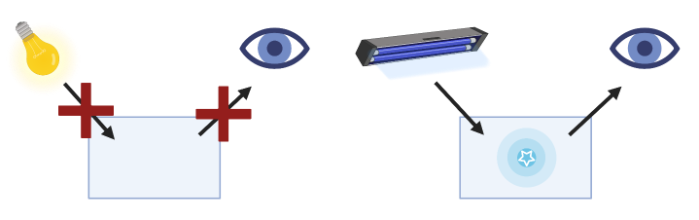
Invisible ink is a great example of fluorescence!
Remember, fluorescence means a substance can absorb light of one particular wavelength (or colour) and release light of a different wavelength.
When invisible ink is exposed to normal visible light we can’t see anything, but the ink can absorb invisible ultraviolet light from a UV torch and emit a different wavelength of light that we can see.
What is Bioluminescence?
Bioluminescence occurs when light is released by a chemical reaction inside a living organism. Bioluminescent proteins have been found in many creatures such as fireflies, sea shrimp and bacteria.
The energy for bioluminescence is provided by a substrate called luciferin which is "consumed" by an enzyme and produces light as a byproduct of a chemical reaction. This is different from fluorescence where the energy is provided by different wavelengths of light.
Bioluminescent proteins are also used extensively in scientific research in techniques such as BRET.
What is BRET?
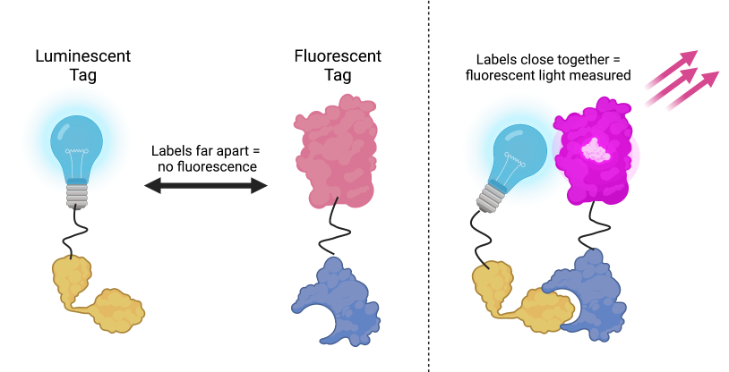
BRET (Bioluminescent Resonance Energy Transfer) is a technique we use to measure interactions between molecules inside living cells. This is important as it can help us understand how cells behave during disease, and how to find new, better medicines.
We label one of the interacting molecules with a bioluminescent protein which emits high energy light. The energy from this light is then harnessed to “switch on” a fluorescent protein attached to a second molecule. The clever thing about this technique is that the energy transfer only occurs if the two molecules are interacting close together. We can determine just how close the molecules get by measuring the fluorescent light released from the second molecule.
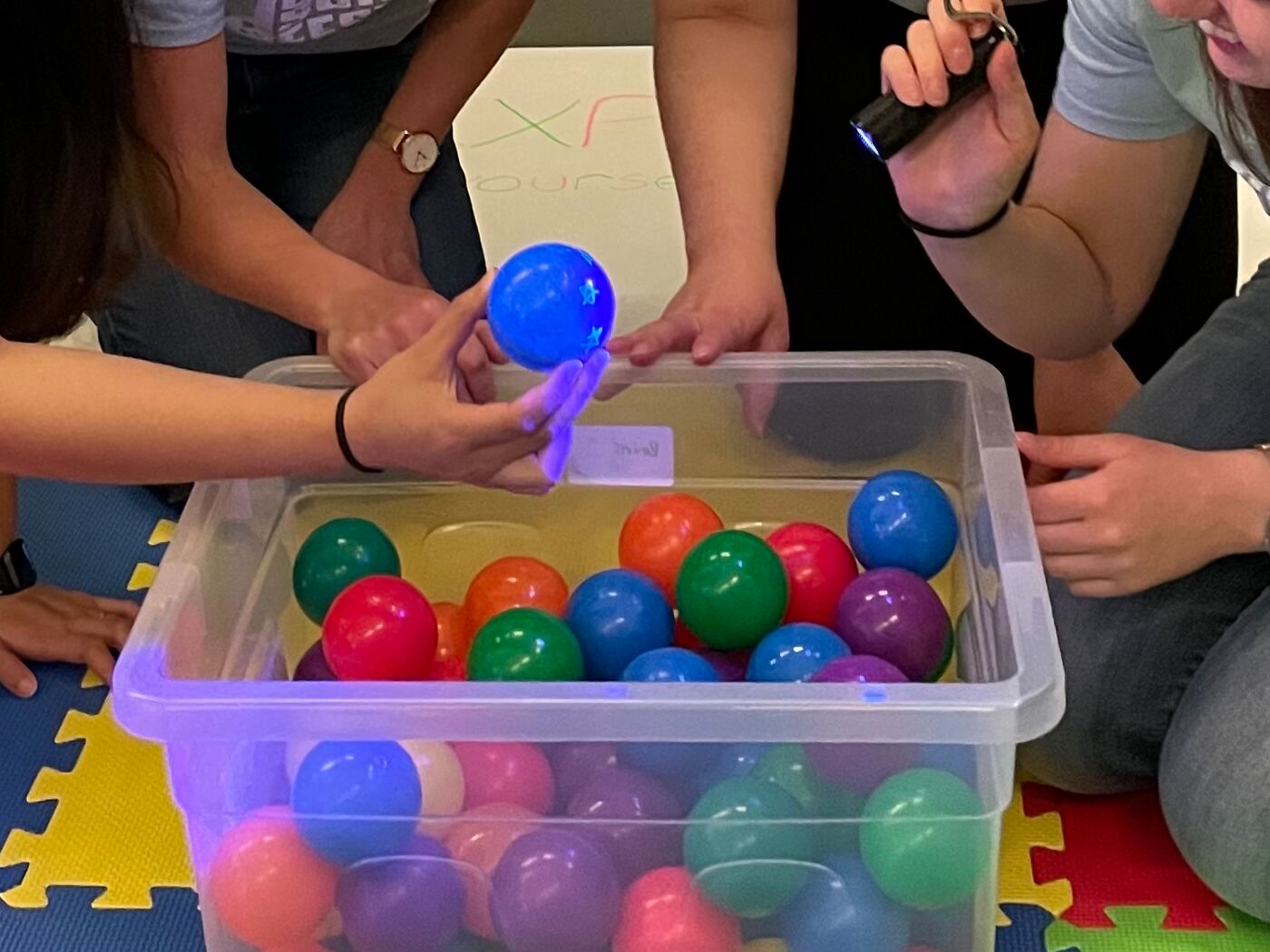
In our activities, you can see principles of BRET in action. High energy light from your UV torch will “switch on” the fluorescence of invisible ink as you identify your target, find your medicinal “hit”, and improve your medicine!
How can we get involved?
If you are interested in having Glowing Science at your school or event, please get in touch with us at glowingscience@glasgow.ac.uk
Our activities are best suited to a table-top science festival-type event, where we can engage several small groups of students or families for 10-15 minute intervals.
Acknowledgements
This activity was created for Glasgow Science Festival 2022 as part of the GSF in Action training course in collaboration with Dr. Deborah McNeill. Our thanks to Rebecca, Danielle, Elaine, Tian and Elena who developed the original activity.
Funding was later obtained from the MVLS Engagement Fund and the Amplify public engagement training programme from Glasgow Science Centre to allow the Hudson Group in the Centre for Translational Pharmacology to expand on the Glowing Science activity series which can be reused at future science events. Thanks to Beth, Elaine, Beth, Luca, Becca, Andreia, Olivia, and Brian for their contributions.