


Our Mission
Inflammatory bowel disease - Crohn's disease and ulcerative colitis - affects over 300,000 people in the UK and remains without a cure. We want to change that.
Our group, based in the School of Infection & Immunity at the University of Glasgow, bridges fundamental discovery science and the clinic.
Everything we do - from mitochondrial biochemistry and spatial transcriptomics to clinical trials and machine learning - is designed to answer a single question:
Why do some patients heal and others don't, and what can we do about it?
2,000+
35,000+
2012→26
20+
Research Programme
Our work is organised around three interconnected pillars. Each addresses a distinct dimension of the same problem, and together they form a coherent pipeline from biological mechanism to clinical impact.
| Pillar I | Pillar II | Pillar III |
|---|---|---|
Mechanisms of Gut Repair |
Measuring Healing & Wellbeing in People Living with IBD |
Patients & Populations |
|
We study the fundamental biology of how the gut mucosa heals - and why it fails to do so in IBD. Our central mechanistic spine runs from mitochondrial dysfunction → GI-DAMP (mtDNA) release → TLR9 / cGAS-STING activation → necroptosis → loss of epithelial ketogenic capacity (HMGCS2 downregulation) - a coherent causal loop from faulty cellular batteries to failed mucosal repair. Restoring this biology is our therapeutic hypothesis. |
Complete mucosal healing is the most meaningful endpoint in IBD, but we lack precise, non-invasive ways to track it. Equally, the lived experience of IBD - fatigue, wellbeing, quality of life - is poorly captured by conventional endpoints. We are building new biomarker, imaging, and patient-centred approaches to bring rigour to both disease monitoring and the things that matter most to patients. |
Translational research only succeeds if it reaches patients. We run clinical trials, embed patients directly as research partners, and use real-world clinical data at scale to understand how IBD manifests across populations - moving from mechanistic insight to measurable impact. We are particularly proud of our All-ages IBD approach, undertaking scientific studies with both adults and children with IBD. We are strong partners to Professor David Wilson, Professor of Paediatric Gastroenterology, Royal Hospital for Children and Young People, Edinburgh. |
Mitochondrial DAMPs & innate immunity |
One-IBD - Fatigue & Wellbeing |
MUSIC Scotland-wide cohort |
|
mtDAMP signalling via TLR9 and cGAS-STING as early inducers of mucosal inflammation in IBD. Our foundational work identified the mitochondrial GI-DAMP loop as a causative mechanism - from faulty cellular batteries to epithelial barrier breakdown and immune activation. |
Our ambitious programme to recruit 1,000 patients and understand what drives fatigue in IBD - one of the most burdensome and least-understood symptoms. One-IBD captures longitudinal patient-reported outcomes alongside clinical and biological data to build the right patient profile for the right scientific question, with the goal of matching patients to targeted mechanistic studies and future therapeutic trials. |
Prospective longitudinal cohort (1,500+ patients (together with GI-DAMPs)) with multi-omic, clinical and patient-reported data. Includes the miniMUSIC all-ages arm (paediatric IBD, led by Prof David Wilson). |
Necroptosis & HMGCS2 - downstream of STING |
Granzyme diagnostics - IDXsense (ERC-funded, Edinburgh) |
MARVEL Phase 2b RCT - first mitochondrial therapy in IBD |
|
Investigating necroptosis as a key mode of epithelial cell death downstream of cGAS-STING activation, and the loss of epithelial ketogenic capacity (HMGCS2 downregulation) as a metabolic marker of failed mucosal repair - an active and rapidly evolving frontier. |
Non-invasive luminescence assay detecting granzyme A activity in stool - a specific readout of T cell-mediated gut inflammation. Published in Nature Biomedical Engineering 2026. Led by Professor Marc Vendrell; Gwo-Tzer is clinical co-investigator. |
From a 2012 laboratory observation to a 25-centre UK-wide Phase 2b RCT of oral MitoQ in active UC. The first mitochondrial antioxidant therapy trial in IBD. Recruitment complete; primary results anticipated Q3 2026. |
Organoids & immune-metabolism |
MUSIC multi-omic biomarkers |
IBD fatigue - machine learning |
|
Patient-derived organoids combined with immune and stromal components to model gut repair and test new therapeutic targets in human IBD tissue. Collaboration with Professor Nigel Jamieson (spatial transcriptomics). |
Proteomics, transcriptomics, and spatial biology within the MUSIC cohort to identify blood and stool markers that predict complete mucosal healing - including a novel 21-protein PEA-Olink panel. |
ML framework applied to 2,970 patient responses from 2,290 participants to dissect the heterogeneity of IBD fatigue and identify tractable clinical predictors. With Dr Shaun Chuah. |
M-cell biology & bacterial sampling in Crohn's disease |
FATE-CD - fibrosis imaging |
G-Trac / Helix AI - agentic data platform |
|
Characterising M-cells and mechanisms of luminal bacterial sampling in Crohn's disease pathogenesis. |
Scotland-wide PET-MRI FAPI scanning to monitor intestinal fibrosis in Crohn's disease. MRC CARP-funded, led by Dr Rahul Kalla; Glasgow is a key partner. |
Invented by Dr Shaun Chuah. An Azure-based governed environment unifying 1,500+ participants, 30,000+ biosamples, and five active studies - AI-ready and built for NHS and industry interfaces. One of the most deeply phenotyped IBD data platforms in the world. |
Macrophage biology - in collaboration |
Oral-gut microbiome monitoring |
NHS real-world data science |
|
Working closely with Dr Calum Bain and Dr Gareth-Rhys Jones - two internationally recognised rising leaders in macrophage immunology - whose independently led programmes on myeloid cell biology in gut inflammation and fibrosis are a key scientific partnership. |
Systematic meta-analysis and prospective study of oral microbiome composition in IBD, exploring its utility for disease monitoring and therapeutic intervention in Crohn's disease. |
Building next-generation predictive approaches using NHS clinical data to identify IBD-specific mechanisms and stratify patient management at scale. Governed through the Gut Liver Glasgow network across NHS Greater Glasgow & Clyde and NHS Lanarkshire. |
Industry collaboration - Eli Lilly Discovery Immunology |
||
|
We are a major scientific package in a Glasgow-led programme with Eli Lilly's Discovery Immunology Team, contributing patient-derived organoids, longitudinal IBD datasets, and mechanistic expertise to inform new therapeutic target discovery. |
Research done with patients, not merely on them |
|---|
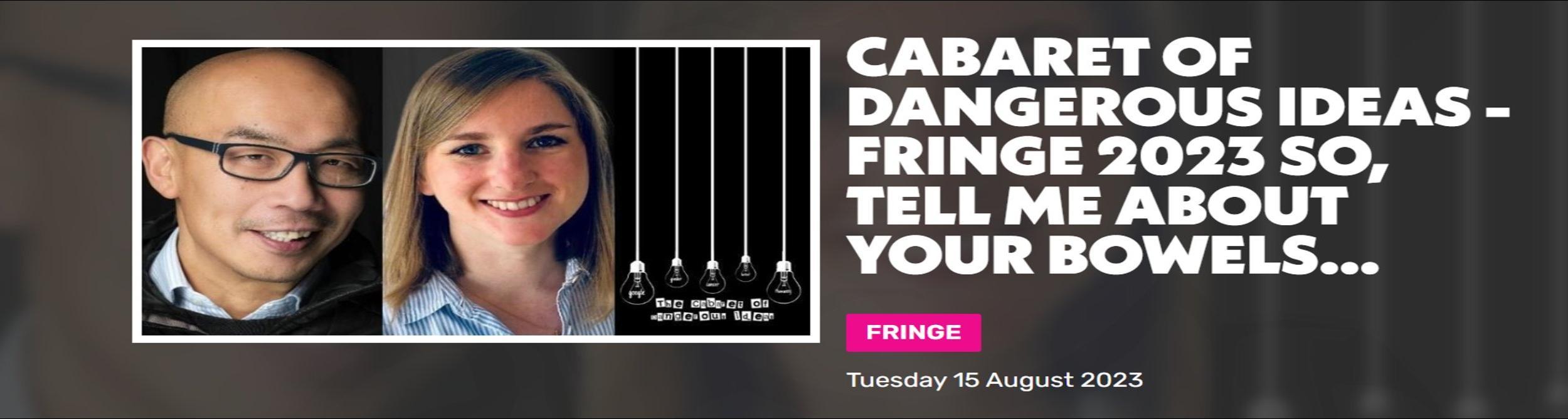
| Patient and public involvement is embedded throughout our programme, not an afterthought. Our PPI/E group, led by Molly Halligan, contributes to study design, patient information, and analysis. In 2026 our group published the first wholly patient-led paper from our cohort study - an independent thematic analysis of 415 patient-reported outcomes, with no clinician input into the write-up. We also produced the documentary, Our Lives with IBD, together with our patient group, and have even taken our work to the Edinburgh Fringe - 'So, Tell Me About Your Bowels', a comedy show that brought IBD science to a live audience, featured in STV News. We are proud of this work and believe it makes our science better. |
 |
INDUSTRY COLLABORATIONEli Lilly & Co. Discovery Immunology - IBD & IMID Programme |
|---|
| We are excited to be a major scientific package within a programme led by Professor Carl Goodyear (University of Glasgow) in collaboration with the Discovery Immunology Team at Eli Lilly and Company (Indianapolis, USA). Our contribution brings the group's patient-derived organoids, longitudinal IBD datasets, and mechanistic expertise in mucosal biology to help discover and validate. new therapeutic targets for IBD and other immune-mediated inflammatory diseases. |
EMBEDDED NHS COLLABORATIONNHS Greater Glasgow & Clyde - Clinical Research |
|---|
| Our research is inseparable from NHS clinical practice. Professor Ho holds an Honorary Consultant Gastroenterologist post at Glasgow Royal Infirmary and Queen Elizabeth University Hospital, and the group operates within the Gut Liver Glasgow network - a partnership between NHS Greater Glasgow & Clyde, NHS Lanarkshire, and the University of Glasgow that harmonises clinical care and research across the West of Scotland. MUSIC, FATE-CD, and several NHS-portfolio industry trials run through this infrastructure, ensuring that our science is conducted in direct proximity to the patients it serves. The network actively supports 15 current translational studies across IBD, hepatology, and related conditions. |
Our active studies represent the forward edge of our translational mission. From nationwide cohorts to first‑in‑class clinical trials and next‑generation diagnostics, these projects capture the breadth and momentum of our work as it progresses from biological insight to patient benefit.
Principal Investigator: Professor Gwo-tzer Ho
Focus: Inflammatory Bowel Disease
Approach: Bench · Trial · Bedside
Mitochondrial Danger Signals & Mucosal Healing in IBD
Scotland-wide prospective longitudinal cohort. Multi-omic approach to understanding gut healing in IBD. 1,500+ patients enrolled (together with GI-DAMPs). Includes miniMUSIC (paediatric arm, led by Professor David Wilson).

The First Mitochondrial Therapeutic Trial in Ulcerative Colitis
From a laboratory observation in 2012 - that mitochondrial oxidative stress drives gut inflammation - to a fully-fledged Phase 2b UK-wide RCT of oral MitoQ in active UC (25 centres, 206 patients).

Granzyme-Based IBD Diagnostics
Non-invasive luminescence-based stool assay detecting granzyme A activity. Proof-of-concept published in Nature Biomedical Engineering in January 2026. Led by Professor Marc Vendrell (University of Edinburgh); Professor Ho is clinical co-investigator.
FATE-CD
PET-MRI FAPI Imaging of Intestinal Fibrosis in Crohn's Disease
A Scotland-wide study using novel FAPI PET-MRI scanning to monitor fibrosis development. MRC CARP-funded, led by Dr Rahul Kalla; the University of Glasgow is a key partner.
Eli Lilly
IMID Programme
A UofG programme led by Professor Carl Goodyear, in collaboration with Eli Lilly's Discovery Immunology Team. Our contribution: patient-derived organoids, longitudinal IBD multi-omics, and mucosal mechanistic expertise.
IBD Fatigue
Machine Learning Dissection of IBD-Associated Fatigue
ML framework applied to 2,970 patient-reported outcome responses from 2,290 participants across UK and internationally. Defining fatigue thresholds and clinical predictors. With Dr Shaun Chuah.
Oral-Gut
Oral Microbiome Interaction & Immune Response in Crohn's Disease
Systematic meta-analysis and prospective characterisation of oral microbiome composition in IBD, with focus on oral-to-gut bacterial translocation and its potential as a therapeutic target. With Dr Robert Whelan.
The Team
|
|
Professor Gwo-tzer HoPrincipal Investigator
|
|
|
Gastroenterologist and group leader. Recently appointed Professor of Gastroenterology at the University of Glasgow. Trained in Glasgow (MBChB 1997) and Edinburgh (PhD 2008). MRC Clinician Scientist Fellow 2009-2015; trained at UNC Chapel Hill. Leads the translational programme from mitochondrial biology to clinical trials. Continues active IBD clinical practice. |
||

|
|
Dr Shaun ChuahClinical Senior Research Fellow
|
|
|
Academic gastroenterologist and data scientist. Inventor of G-Trac/Helix AI - an agentic AI platform that unifies 1,500+ patients, 30,000+ biosamples, and five active studies in a single Azure-governed, industry-ready environment. Leads the group's real-world data science, clinical prediction, and IBD fatigue programmes. |
||
|
|
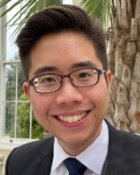
Molly HalliganLead Patient Representative - PPI/E
|
|
|
Leads the IBD Patient-Public Involvement and Engagement group. First author of the first wholly patient-led paper from our group - an independent thematic analysis of 415 IBD patient-reported outcomes, published in Crohn's & Colitis 360 (2026). Champions meaningful patient participation across all research pillars. |
||
|
|
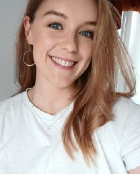
Ellie SlaterPostdoctoral Research Associate
|
|
|
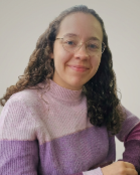
Ellie is working on the epithelial-immune response in how the gut heals in IBD. |
||
|
|
Dr Callum MilneClinical Senior Research Fellow
|
|
|
Callum is focusing on bio-imaging of IBD mechanisms including the pathobiology of fatigue |
||
Postdoctoral Research Fellows
Dr Emma Armstrong | Dr Robert Whelan | Dr Joram Spoor | ||
|---|---|---|---|---|
| Using patient-derived intestinal organoids as a model system to investigate cellular senescence and its role in gut epithelial repair - exploring how the accumulation of senescent cells may impair mucosal healing in IBD. | Investigating the mechanisms by which the gut microbiome - including the oral-to-gut microbial axis - influences intestinal biology and immune responses in IBD. Co-author of the IBD fatigue ML study (2025). | Applying spatial transcriptomics to IBD gut tissue to investigate the cellular and molecular landscape of mucosal healing - mapping immune-epithelial interactions at single-cell spatial resolution. In collaboration with Prof Nigel Jamieson. |
PhD Students
Miss Verity Cowell | Dr Alexandra Cavanagh |
Miss Charlotte Lim | ||
|---|---|---|---|---|
| PhD Student | ||||
| Investigating the role of the cGAS-STING pathway in gut repair - how innate sensing of mitochondrial DNA shapes the epithelial response to inflammation and injury in IBD. | Characterising M-cells and the mechanisms of luminal bacterial sampling in Crohn's disease - investigating how aberrant M-cell function may contribute to pathological bacterial translocation and disease perpetuation. | NorthWest Biosciences (NWB) PhD with Professor Jim Brewer - the role of ferroptosis in immune responses in IBD and infection |
Close Collaborators
Dr Calum Bain | Dr Gareth-Rhys Jones | Professor Nigel Jamieson | ||
|---|---|---|---|---|
|
Macrophage immunologist studying monocyte and macrophage biology in chronic inflammatory and fibrotic disease. A key scientific partner for the group's work on myeloid cell biology in Crohn's disease. |
IBD physician and rising leader in human gut immunology, studying how myeloid cells influence gut inflammation and healing. Strong focus on direct human patient data. | Professor of Surgery and CRUK Clinician Scientist. Pioneer in spatial transcriptomics, leading the Jamieson Spatial Laboratory - a core facility for high-plex spatial biology at Glasgow. Key collaborator for the group's spatial IBD tissue studies. | ||
Professor Carl Goodyear |
Professor Chris Lucas |
Dr Srustidhar Das |
||
| Professor of Translational Immunology and Director of the GLAZgo Discovery Centre (a Glasgow-AstraZeneca collaboration). Expertise in immune-mediated disease and precision medicine; a key partner for the group's translational immunology approaches. | Professor of Pulmonary Immunity & Regeneration and Honorary Respiratory Consultant. Expert in immune-epithelial crosstalk and tissue regeneration after injury. Provides key insights into how immune cell biology shapes epithelial repair - relevant across gut and lung disease contexts. | Futures Leader Fellow and molecular stem cell biologist. The Das Lab investigates epithelial plasticity, epigenetic memory, and regenerative responses in IBD and colorectal cancer. Ongoing scientific collaboration. | ||
Professor David Wilson |
Dr Rahul Kalla |
Professor Marc Vendrell |
||
| Professor of Paediatric Gastroenterology. Leads miniMUSIC - the UK-wide study of mitochondrial and microbiome factors in early-onset IBD. Developed the 'all-ages' IBD research approach with Gwo-Tzer. | Consultant Gastroenterologist and MRC CARP Fellow. Leads FATE-CD: PET-MRI FAPI imaging of intestinal fibrosis in Crohn's disease. Strong track record in IBD biomarker studies and the EU-FP7 IBD CHARACTER consortium. | Co-inventor of the IDXsense granzyme-based diagnostic platform. ERC-funded lead of the non-invasive T cell biomarker programme for IBD monitoring. Gwo-Tzer is clinical co-investigator. |
NHS Clinical Collaborators
Professor Dan Gaya | Professor Kostas Gerasimidis | Dr Jonathan MacDonald |
Dr John Paul Seenan |
Dr Craig Mowat | ||||
|---|---|---|---|---|---|---|---|---|
| Queen Elizabeth University Hospital | Ninewells Hospital, Dundee |
| 2026 | A chemiluminescence assay targeting granzyme A activity for monitoring inflammatory bowel disease Ho GT & Vendrell M et al. · Nature Biomedical Engineering · 2026 · 124 Altmetric |
| 2026 | Patient-led thematic analysis on the impact of living with inflammatory bowel disease: a contemporary appraisal of 415 patient-reported outcomes to improve care and research Halligan MJ, Thompson AE, Docherty D, Kelly P, Pryde E, Chuah CS, Hall R, Ho GT. · Crohn's Colitis 360 · 2026 Feb 16;8(1):otag011 · PMID: 41767543 · Free PMC article |
| 2025 | Machine learning approach to dissect the clinical heterogeneity of IBD-associated fatigue Chuah CS, Hall R, Whelan RJ, Ho GT et al. · medRxiv preprint · August 2025 |
| 2025 | Age-related impairment of intestinal inflammation resolution through an eicosanoid-immune-microbiota axis Ho GT et al. · Cell Host & Microbe · May 2025 |
| 2022 | Mitochondria and Inflammatory Bowel Diseases: Toward a Stratified Therapeutic Intervention Ho GT & Thiess AL. · Annual Review of Physiology · 84, 435-459 |
| 2021 | The MARVEL trial: a Phase 2b randomised placebo-controlled trial of oral MitoQ in moderate ulcerative colitis Gwyer Findlay E, Sutton G, Ho GT et al. · Immunotherapy Advances · 1(1): ltaa002 |
| 2018 | Resolution of Inflammation and Gut Repair in IBD: Translational Steps Towards Complete Mucosal Healing Ho GT et al. · Inflammatory Bowel Diseases |
| 2017 | MDR1 deficiency impairs mitochondrial homeostasis and promotes intestinal inflammation Ho GT, Aird RE, Liu B, Boyapati RK et al. · Mucosal Immunology · 11(1): 120-130 |

IBD science at the Fringe
Covered by STV News, Professor Gwo-Tzer Ho and Dr Rebecca Hall took IBD research to the Edinburgh Fringe as part of the Cabaret of Dangerous Ideas - using comedy, chocolate bars, and a live colonoscopy demonstration to bring gut health to a public audience.
GUTSY - the IBD podcast
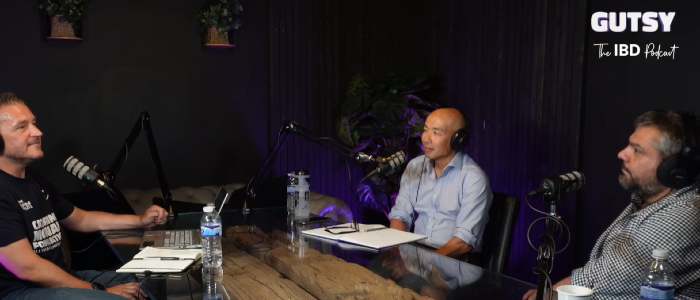
In Season 2, Episode 9 of the show, 'Ask the Experts', Professor Gwo-Tzer Ho joins Professor Konstantinos Gerasimidis on the Catherine McEwan Foundation's GUTSY podcast, demystifying IBD research for patients and the public.
Catherine McEwan Foundation
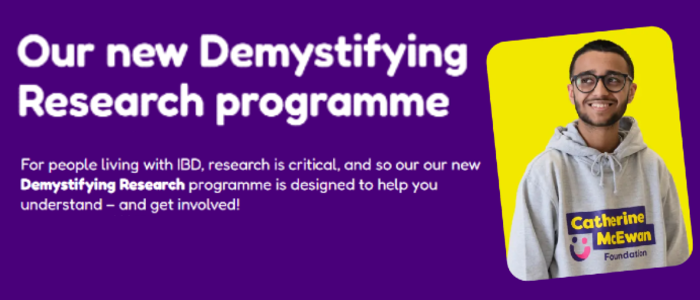
Scotland's leading IBD charity founded in memory of Catherine McEwan, who lived with severe Crohn's disease. The foundation partners with Glasgow Royal Infirmary and other leading centres to fund specialist care, research, and patient-focused support for people living with Crohn's and Colitis. We are proud to be working with the foundation on Demystifying IBD Research to People Living with IBD - a community engagement event to be held in Govan, Glasgow in September 2026. This exciting project will bring the science directly to the people it is designed to help.
Crohn's & Colitis UK
The UK's leading IBD patient charity, Crohn's & Colitis UK has supported our work through both research funding and patient engagement, including the MARVEL trial and our patient wellbeing surveys. We work with the charity to increase public awareness of IBD and the value of participation in clinical research.
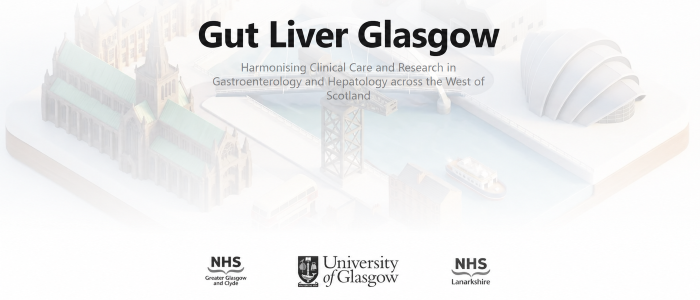
Gut Liver Glasgow
The West of Scotland clinical research network harmonising gastroenterology and hepatology care across NHS Greater Glasgow & Clyde and NHS Lanarkshire. The Ho Lab's studies - including MUSIC and FATE-CD - are embedded in this NHS infrastructure alongside multiple industry-led portfolio trials, ensuring our science operates at the clinical coalface.