

African ontologies of nature: Insights from the Igbo practice of ‘territorial communion’
Published: 9 July 2026
Part of the World Order Narratives of the Global South (WONAGO) lecture series, with Dr J. Kelechi Ugwuanyi at the University of Hamburg, Wednesday 15th July at 6:00-8:00 pm (CEST)
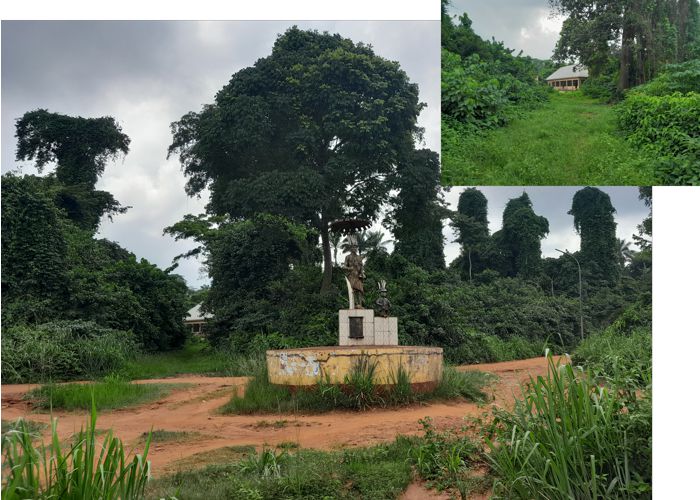
Photo: Dr J. Kelechi Ugwuanyi
The modernist extractive tendencies separate humans from nonhumans and nature from culture. But such dichotomies differ from many other worldviews whose ontologies of nature recognise the interconnectedness of these elements within a ‘living community of beings’.
Among the Igbo of Nigeria in West Africa, Ala is the life entanglement of the universe, the fountain of fertility, the mother of all things - humans and nonhumans, the Mother Earth. This ontological understanding led many Igbo communities to symbolise Ala with various animals and tree species, and to revere and sacralise different landforms and water bodies in a reciprocal relationship that preserves them and their associated biocultural diversities. Consequently, birth, living and death in Igbo communities involve rites that continuously re-enact these human-nonhuman relational ontologies, a practice I conceptualise as ‘territorial communion’.
In this lecture, I will explore the Igbo heritage of territorial communion to demonstrate how their practice retains invaluable lessons for living in relation to and sustainably with the Earth, as opposed to the violence of modern capitalist extractivism in the so-called Anthropocene.
The event is part of the lecture series of the project World Order Narratives of the Global South (WONAGO) led by the University of Hamburg and the German Institute for Global and Area Studies.
Location: University of Hamburg, Phil-Turm, Von-Melle-Park 6, 20146 Hamburg, room Phil Am 13004 (13th floor) and online via Zoom
For online participation, please register on the WONAGO Lecture Series website.
First published: 9 July 2026
<< Latest news