

Summer School Speakers
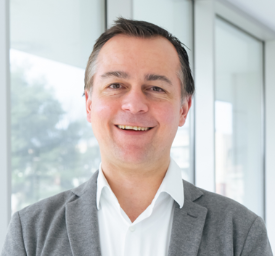
Prof. Martin Weides, University of Glasgow
-
Martin Weides is Professor of Quantum Technology at the University of Glasgow and Director of the James Watt Nanofabrication Centre (since 2024). His research focuses on superconducting quantum circuits, quantum device fabrication, and scalable quantum technologies. Prior to joining Glasgow, he held a professorship at the University of Mainz (2014–2017) and led a research group at the Karlsruhe Institute of Technology (2012–2020). Earlier in his career, he worked as a research affiliate at the National Institute of Standards and Technology (NIST) in Boulder and as a postdoctoral researcher at the University of California, Santa Barbara, and Forschungszentrum Jülich, where he also completed his PhD. He currently serves on the Editorial Board of Applied Physics Letters.
Title: Escaping the Millikelvin Bottleneck: Superconducting qubits based on Niobium
Abstract: Superconducting quantum processors currently rely on aluminum-based Josephson junctions operating at millikelvin temperatures, where the limited cooling power of dilution refrigerators constrains system scalability and integration of control electronics. In this work, we explore an alternative approach based on niobium superconducting qubits. Owing to its larger superconducting gap and higher critical temperature, niobium offers the prospect of qubit operation at elevated temperatures and improved resilience to quasiparticle generation. We present the development of an all-niobium qubit platform based on a trilayer junction process, enabling improved interface quality, reproducible junction fabrication, and compatibility with scalable nanofabrication techniques. Initial device implementations demonstrate coherent qubit operation while opening a pathway toward higher-frequency devices and operation beyond the traditional millikelvin regime. This approach aims to alleviate the cryogenic cooling bottleneck and support more scalable quantum computing architectures.
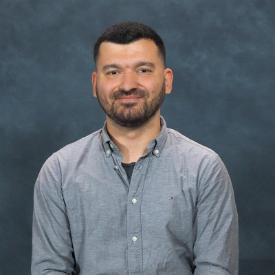
Dr. Valentino Seferai, Quantcore
-
Valentino Seferai is a University of Glasgow Research Affiliate and the CTO of Quantcore, a superconducting manufacturing company based in Glasgow, with experience in superconducting quantum devices. His PhD was conducted in the University of Glasgow where he was able to demonstrate high internal quality factors for superconducting microwave devices based on niobium, tantalum, and their nitrides, and scalable manufacturing of Al/AlOx/Al overlap Josephson junctions. His experience during his PhD includes micro and nanofabrication of devices with speciality in ebeam and optical lithography, superconducting deposition and dry etching optimisation. During his Research Associate position with the Critical Technologies Accelerator, he researched a scalable process for niobium-based superconducting qubits and subsequently co-founded Quantcore, translating his research from the laboratory into commercial applications and contributing to the development of a sovereign UK supply chain for superconducting technologies.
Title: Manufacturing superconducting circuits for quantum computing applications
Abstract: Superconducting circuits act as artificial atoms with micrometer-scale features that can be individually controlled and read out. These circuits are composed of elements such as capacitors, inductors, and coplanar waveguides for signal routing, with the Josephson junction serving as a key nonlinear component. Most current technologies rely on aluminium-based Josephson junctions; however, their relatively low critical temperature and small superconducting gap impose constraints on operation, including limited thermal margins and restricted maximum frequencies. One promising alternative is the use of niobium-based Josephson junctions, which offer higher critical temperatures and larger superconducting gaps, enabling operation at elevated temperatures and higher frequencies. In this presentation, I will discuss our recent progress in the fabrication and characterization of superconducting qubits based on niobium Josephson junctions.
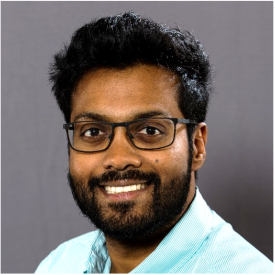
Vivek Chidambaram, National Quantum Computing Centre, UK
-
Vivek Chidambaram is the Superconducting Hardware Development Manager at the UK’s National Quantum Computing Centre (NQCC). He did his PhD at University of Cambridge on superconductor-semiconductor quantum devices, followed by postdoctoral research in the group of Dr Peter Leek at University of Oxford on scaling superconducting qubits. Now he leads a team of researchers at the NQCC to design and build open-architecture superconducting quantum computing systems. Developing these systems grows NQCC’s trusted independent expertise in quantum computing, and enables collaborative research with the wider ecosystem to address shared scaling challenges.
Title: Scaling Superconducting Quantum Computers
Abstract: Superconducting qubits are one of the leading quantum technologies for quantum computing that is being pursued by industry and governments, and a number of prototype systems are available today. However, systems with wider utility will need significantly higher qubit numbers and performance. In this talk I will discuss recent progress in superconducting quantum computers, from hardware scaling and improving qubit performance, to quantum error correction and fault-tolerant system architectures. I will then outline NQCC’s programme in superconducting quantum computing, our approach to open-architecture systems to build core capability and enable collaboration, and our current collaborative research in evaluating certain emerging enabling technologies.
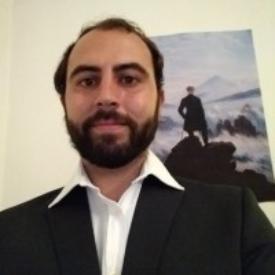
Agostino Apra, Equal1, Ireland
-
Agostino Apra is a specialist in semiconductor quantum dot devices. During his PhD in CEA-Grenoble, his research focused on silicon quantum dot arrays. Since 2023, he has been working as a Senior Quantum Engineer at Equal1, leading quantum experiments and working for the development of a scalable quantum computing platform.
Title: Quantum computation with spins in Si/SiGe quantum dot arrays
Abstract: Reliable and scalable initialization and readout of quantum registers is a fundamental requirement for fault-tolerant quantum computing. In this work, we demonstrate an algorithmic approach to reliably initialize spin qubits in a Si/SiGe quantum dot array[1]. We experimentally implement this scheme using gate-defined quantum dots, achieving single qubit fidelities exceeding 99% and two-qubit fidelities above 98%.
We evaluate the qubits’ performance metrics at 300mK and 740mK [2]. The latter temperature lies within the realistic thermal budget for integrated cryogenic electronics. We show that qubit performances are not significantly degraded at higher temperatures, paving the way for integration with cryo-cmos controller.
Marion Bassi, QuTech, The Netherlands
-
I am currently working as a post-doctoral researcher in the group of Menno Veldhorst in QuTech (Delft), where I focus on the shuttling of hole spin qubits in germanium and on ways to scale this platform further, namely exploring the possibility to stack the quantum dots in 3D. Previously, I obtained my PhD degree under the supervision of Silvano de Franceschi in CEA Grenoble (France). Here, I studied the sensitivity of hole spin qubits to charge noise and to which extent this coupling is detrimental to their operation; this time in Silicon Metal Oxide Semiconductor or Si-MOS platform. During my master, I also had the opportunity to work at KIT (Germany) with Matthieu Le Tacon on the characterization of perovskite crystals for optoelectronic applications.
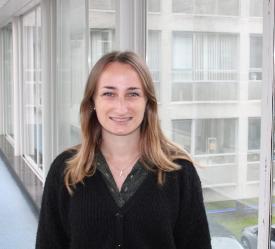
Title: Linking Distant Qubits: Spin Shuttling and Entanglement Distribution in Germanium
Abstract:Spin qubits in semiconductor quantum dots hold great promises for building large-scale quantum computers. With high-fidelity qubit control already achieved in rudimentary linear and two-dimensional spin qubit arrays, challenges such as wiring density and qubit-to-qubit interconnectivity limit further scaling. As a solution, quantum processors are more and more envisioned to turn to modular architectures, in which qubit arrays are interconnected by quantum links. Shuttling spins, meaning their physical transportation, has recently emerged as an efficient interconnect, enabling high-fidelity transfer, single and two-qubit operations and multi-qubit entanglement protocol. In this talk, we discuss the new opportunities opened by single hole spin shuttling in germanium heterostructures. We focus in particular on the realization of a shared-control shuttling link integrated between distant qubit arrays. By characterizing the local qubit frequency variation and leveraging the large spin-orbit coupling of holes during shuttling, we proved genuine entanglement of a Bell state formed by two spins residing in distant qubit registers (more than a micron apart), therefore constituting a first proof-of-concept modular quantum processor in germanium.
Dominik Zumbühl, University of Basel and NCCR SPIN, Switzerland
-
Dominik received his physics Diploma from ETH Zürich, a MSc from Stanford University and his PhD at Harvard University in 2004 on quantum coherence and spin in semiconductor quantum dots after. After a 2-year postdoc at MIT, Dominik started his own group in 2006 at the University of Basel where he has been working since. In 2008, he received a starting grant in the first ERC call. He was promoted to associate professor in 2012 and to full professor in 2023. He served as Department Chair from 2015-2019 and since 2021, he is the director of the NCCR SPIN, the Swiss National Program on Quantum Computing with Si and Ge spins. In 2023, Dominik was elected as a fellow of the APS.
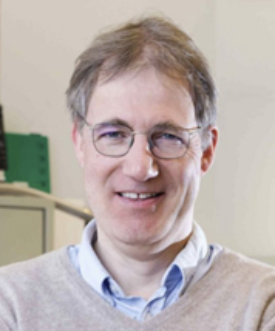
Title: Spin qubits with holes in Silicon and Germanium
Abstract: Semiconductor spin qubits are leading candidates for full-scale quantum computation due to their compatibility with industrial nanofabrication and their advantageous quantum properties. Holes spins can be coherently manipulated with all-electrical control due to the spin-orbit interaction (SOI) without requiring micromagnets, but this also opens the door for decoherence by charge noise. Across a broad range of qubits, a pervasive trade-off becomes obvious: increased speed seems only possible at the cost of qubit coherence. This qubit speed-coherence dilemma is posing a fundamental challenge for quantum computation.
In this talk, I will present recent progress on building spin-orbit qubits with holes in Ge/Si core/shell nanowires and Si fin FETs. Employing machine learning, we have demonstrated fully autonomous tuning of a qubit from grounded gates to operational qubit [1]. The physics of the hole spins is highly interesting and non-trivial, starting with pronounced anisotropies of the g-factor reflecting the heavy-hole light-hole mixing in the strongly confined quasi-1D geometry, leading to a new type of SOI taking place fully in the valence band – the direct Rashba SOI. The two-hole exchange is also highly anisotropic [2], opening the door for fast high fidelity gate operation.
Finally, we demonstrate how the qubit speed and coherence can be maximized together at the same time, thus boosting the Q-factor by over an order of magnitude [3]. Here, this is made possible by heavy-hole light-hole mixing providing a maximum of the spin-orbit strength at finite electrical field. This maximum leads to a minimum in g-factor, decoupling charge fluctuations and enhancing coherence exactly where the drive speed becomes maximal. This proof-of-concept experiment resolves the speed-coherence trade-off and shows a new way forward for fast and coherent quantum computing with Si and Ge.
This work was supported by the NCCR SPIN, the Swiss National quantum computation program of the Swiss NSF, the Swiss Nanoscience Institute (SNI), the Georg H. Endress Foundation, and the EU H2020 European Microkelvin Platform EMP, TOPSQUAD and QUSTEC.
Yashna Lekhai, National Quantum Computing Centre
-
Yashna Lekhai is a quantum hardware engineer at the UK National Quantum Computing Centre. Having completed her PhD at the University of Warwick on addressing single NV centres in diamond for quantum computing, she moved to the ion-trap team at the NQCC building the first of the organisation’s experimental hardwares, transferring the optics and measurement skills between modalities. Continuing this theme, on an inter-team placement in the superconducting team she is exploring the commonalities between these key QC modalities. This cross-discipline work is a keystone to scalability in quantum computing and works to the NQCC’s mission of supporting the quantum ecosystem from suppliers to full-stack companies.

Title: Trapped-Ion Quantum Processors for Scalable Quantum Computing
Abstract: Ion-trap quantum computing is a promising candidate for quantum computing and of particular importance in the UK ecosphere, where several academic groups and companies focussed on it, operate. As with all modalities, scaling challenges throughout the QC stack are at the forefront of innovation and exploration. In this talk I will introduce the key concepts and performance of this technology, and discuss progress in the field, before outlining paths to scaling and the remaining challenges. Lastly, I will present current work at the NQCC, including recent results and collaborative projects.
Zhaoqun Guo, TU Braunschweig, Germany
-
The speaker is a PhD student at the Institute for CMOS Design, TU Braunschweig, Germany. His research focuses on analog and mixed-signal IC design for quantum computing, particularly scalable control electronics for trapped-ion systems.
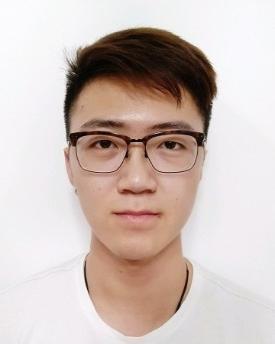
Title: Integrated Circuits for Trapped-Ion Quantum Computing
Abstract: Introduction and considerations for integrating CMOS technologies toward scalable trapped-ion quantum computing, focusing on system architecture, circuit implementation, and key challenges in more compact and integrated control systems.
Oscar Bettermann, Zurich Instruments
-
Oscar Bettermann is an Application Scientist in Quantum Technologies at Zurich Instruments, based in Zurich. He has a background in experimental physics, specializing in the quantum simulation of many-body physics using ultracold atoms trapped in optical lattices. At Zurich Instruments, he enjoys engaging in technical discussions with researchers and managing collaborative projects with key partners in the field.
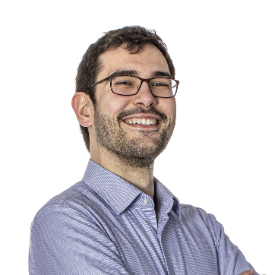
Title: High gate fidelities and advanced experimental control with Zurich Instruments
Abstract: Room-temperature electronics designed to precisely control and read out the state of physical qubits play an essential role in every quantum computing experiment. Lowering qubit error rates and increasing the number of qubits in quantum processors currently represent two major challenges on the path to practical quantum computing. In this talk, we will tackle these challenges by exploring the pioneering QCCS and ZQCS Quantum Control Systems from Zurich Instruments. We will review the requirements for high gate fidelities, stable synchronization, fast feedback for quantum error correction and more, backed by detailed technical explanations and multiple scientific success stories.
Piotr Kot, Qblox
- Piotr is a Quantum Application Scientist at Qblox, a Netherlands-based leader in quantum control electronics. He specializes in experimental quantum physics, with a focus on electron spin resonance scanning tunneling microscopy (ESR-STM). Before joining Qblox, he completed a postdoctoral fellowship in South Korea, where he researched on-surface single atoms as potential spin qubits.

Title: Modular control electronics for salable and high-fidelity qubit control.
Abstract: SThe path to practical quantum computing requires control electronics that can scale without sacrificing high-fidelity performance. Here, we introduce the Qblox Cluster, a modular control system designed for flexibility across various qubit modalities. By utilizing proprietary SYNQ and LINQ technologies, we achieve seamless synchronization and real-time communication between hardware modules. Furthermore, we will discuss the technical advantages of our Q1 sequencers, which provide the backbone for high-quality analog performance and autonomous pulse execution. We conclude with a showcase of diverse applications and highlight success stories where these control solutions have accelerated state-of-the-art research.
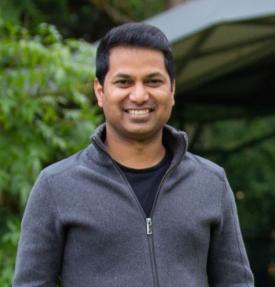
Dr. Abhilash Amsanpally, VIQTHOR, France
- Abhilash Amsanpally is a photonics R&D lead at VIQTHOR, specializing in quantum control systems and scalable photonic architecture for next-generation quantum computing. He focuses on designing advanced photonic systems such as multi-channel RFoF transmitters and cryo-compatible photonic transceivers with minimal heat dissipation that can bridge photonics and microwave engineering for large-scale quantum control. With experience in both academia and industry, now he drives innovation in scalable quantum computing infrastructures for precise and low-noise qubit control and readout.
Title: Scalable Photonic Control System for Large Scale Quantum Computers
Abstract: Scaling quantum computers to thousands or millions of qubits is constrained by electronic control systems due to heat, bandwidth limits, and signal loss; Viqthor addresses this with a photonic control architecture built around Menthor, a multi-channel RF-over-Fiber WDM transmitter supporting up to 18 GHz analog modulation for low-noise, long-distance qubit control in direct or multiplexed modes, integrated with IceQube WDM photoreceiver and the Menthor RF processor to maintain signal fidelity even at cryogenic temperatures down to 2.8 K; Our cryo-photonic experiments show stable RF demodulation with flat response up to 18 GHz, demonstrating that photonic controlling of qubits enable lower heat load, better signal integrity, and scalable, high-fidelity quantum control.
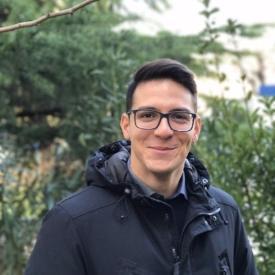
Miltiadis Alepidis, CEA, France
- Miltiadis Alepidis (B’15) (M’18) holds a Ph.D. degree on micro and nano semiconductor devices from Université Grenoble Alpes, France for his work on the research & development of a biochemical FET sensor. Since 2022, he is a compact model research engineer at CEA-Leti, Grenoble at the simulation and modelling laboratory. His current activities include, semiconductor modeling of Fully Depleted Silicon-On-Insulator (FD-SOI) structures in cryogenic environments, electrical characterization at extremely low temperatures, development of SPICE model libraries for novel FD-SOI technologies and variability modeling.
Title: L-UTSOI: a standard SPICE model for Cryogenic circuit design
Abstract: The latest years there is a strong need for cryogenic circuits for quantum applications where circuits are placed closer to Qbit cores reducing the need for long and slow connections. However, efficient circuit design requires accurate compact models intergraded into SPICE simulators. This talk will focus on the developments of L-UTSOI standard compact model and its extension to cryogenic applications. We will demonstrate both the importance and need for a SPICE model for cryogenic circuit design but also how L-UTSOI could provide with useful insights for device physics.
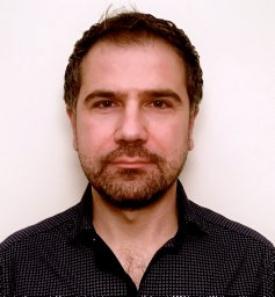
Dr. Alessandro Rossi, University of Strathclyde
-
Dr Alessandro Rossi is a Reader and a UKRI Future Leaders Fellow in the Department of Physics at the University of Strathclyde where he leads the Semiconductor Quantum Electronics Lab (SEQUEL). He is jointly appointed at the UK National Physical Laboratory where he holds a Measurement Fellowship. Alessandro carried out his doctoral studies in Physics at the University of Cambridge (UK) and his undergraduate in Electronic Engineering at the University of Naples (Italy). Before joining Strathclyde, Alessandro has held research appointments across academia and industry at the University of New South Wales (Australia), Hitachi Research Labs (UK), and TUDelft (The Netherlands).
Title: Cryogenic Chips for Quantum Control: Scalable Testing Approaches and Emerging Material Platforms
Abstract: The scaling of quantum processors from laboratory prototypes to large-scale systems places increasing demands on the classical electronics used for qubit control and readout. In silicon-based quantum technologies, cryogenic integrated circuits offer a promising route to reduce wiring complexity and enable more scalable control architectures. However, designing electronics that operate reliably at cryogenic temperatures introduces new challenges, including changes in device behaviour, strict power dissipation constraints, and the need for accurate models for circuit design. In this lecture I will briefly introduce the emerging field of cryogenic electronics for quantum technologies and discuss the role of CMOS-based control hardware operating at low temperatures. I will then present research aimed at enabling this vision through scalable testing approaches that allow the efficient characterisation of large numbers of integrated devices—such as transistors, resistors, and superconducting interconnects—directly on silicon test chips. These measurements provide the statistical insight required to support reliable cryogenic design frameworks. Finally, I will discuss exploratory work on emerging semiconductor platforms, including silicon carbide, to assess their potential for future quantum electronic systems.
Grayson Noah, Quantum Motion, UK
-
Grayson has led the Quantum Integration and Validation team at Quantum Motion since 2021. He received his Bachelor's degree in electrical engineering and Master's specialising in optics, both from Georgia Tech. Prior to joining Quantum Motion, Grayson was a Product Engineer at Texas Instruments where he developed automated SoC tests and latch-up testing procedures. His current focuses include cryo-CMOS RF and mixed-signal measurement and modelling, deep-cryogenic thermometry and thermal modelling, and scalable quantum system hardware development.

Title: Scalable Modelling and Integration of Cryo-CMOS for Quantum Computing
Abstract: A variety of electronic instruments and circuits are required to control and interface with cryogenic-temperature quantum devices (e.g. superconducting qubits and semiconductor spin qubits) for quantum computing. As larger-scale quantum computers are pursued for higher-impact applications, wiring bottlenecks pose limitations on the practical scaling of room-temperature equipment. At the same time, constraints in cooling power, thermal isolation, available space, and lack of mature modelling tools pose challenges to realising scalable tightly-integrated cryogenic-temperature electronics. In this talk, I will discuss recent technological developments and demonstrated practical approaches to tackle these challenges. Topics include thermal and electrical modelling, exploitation of superconducting material in a commercial CMOS manufacturing process, and particular advantages offered by spin qubits in silicon.
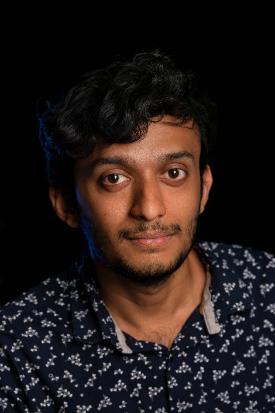
Vishnu Suresh, TNO, Netherlands
Vishnu Narayanan Suresh is a quantum scientist at TNO in Delft, working in the Quantum Technology Department, specializing in superconducting circuits and devices. He earned his PhD from the Université de Sherbrooke, Canada, investigating mesoscopic systems based on two-dimensional electron gases (2DEGs) and superconductors. Prior to joining TNO, he conducted postdoctoral research at Institut Néel (CNRS), France, focusing on superconducting qubits and devices.
Title: A pathway to scaling: Development and integration of superconducting modules for quantum computing applications
Abstract: Realizing large scale superconducting quantum processors requires the cryogenic integration of wide-band range of supporting devices and modules such as on‑chip calibration modules elements, TWPAs, cryogenic microwave signal pump generators, and other control measurement electronics. In this talk, we review these integration challenges and present the realization of an on‑chip calibration module, cryo-JoKerr, designed to fully characterize the drive and readout lines of dilution refrigerators in a range from 1-10 GHz. We will explore the underlying physics of this Josephson based module and show how its nonlinear dynamics can be leveraged to extract relevant information such as input line attenuation, output added noise and thermal occupancy, parameters that are crucial for high-fidelity qubit operations.
Jonathan Fletcher, National Physical Laboratory (NPL), UK
-
Dr Jonathan Fletcher is a Senior Research Scientist at the National Physical Laboratory (NPL) in Teddington, the UK’s National Measurement Institute. He obtained his PhD from the University of Bristol, specialising in superconducting materials and high-field, low-temperature measurement techniques. Jonathan joined NPL in 2009 to work on electrical standards based on the controlled transport of single electrons. He now leads several projects in cryogenic electronics focusing on the metrology tools and techniques required to design, characterise, and validate cryogenic electronics for quantum control systems.
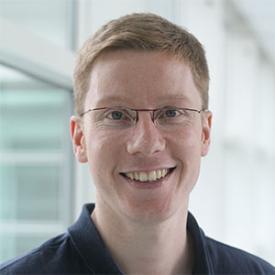
Title: Metrology Challenges for the Design and Validation of Cryogenic Electronics
Abstract: The National Physical Laboratory (NPL) is the UK’s National Measurement Institute, supporting industrial and academic research through measurement science, standards, and calibration. This includes the maintenance of primary standards, the development of new metrology techniques, validation and calibration activities, and contributions to international standards frameworks.
NPL’s Quantum Technology Programme underpins emerging applications in quantum computing, sensing, and communications. In this talk, I will highlight, as a representative example, the metrological challenges associated with the development of scalable cryogenic control electronics for quantum computing. These challenges span electrical, thermal, and radio-frequency domains within increasingly complex device architectures, and clearly demand a collaborative, interdisciplinary approach across metrology, device physics, and system engineering.
Isabelle Sprave, Forschungszentrum Jülich GmbH
-
Isabelle Sprave is a PhD researcher in experimental quantum physics at the JARA-FIT Institute for Quantum Information. Her work focuses on one of the key challenges in building large-scale quantum computers: overcoming the wiring bottleneck and protecting sensitive quantum states from heat. After studying physics at RWTH Aachen University, she joined Prof. Hendrik Bluhm’s group. In close collaboration with electrical engineers at Forschungszentrum Jülich (ICA, PGI-4), she works on integrating control electronics with semiconductor spin qubits and developing thermal solutions for cryogenic quantum devices. Her research particularly explores how interfaces can be engineered to manage heat and enable scalable quantum hardware.
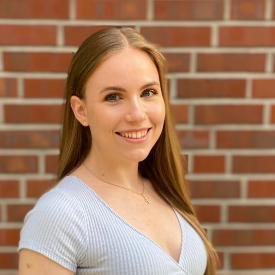
Title: Scaling Up Quantum Computers: Spin Qubits, Cryogenic Control, and the Challenge of Heat
Abstract: Semiconductor spin qubits are a promising platform for building large-scale quantum computers. While small systems already achieve high-fidelity control, scaling them up to millions of qubits introduces new challenges that go far beyond individual devices. One key challenge is how to control many qubits efficiently at cryogenic temperatures. Bringing control electronics closer to the qubits can reduce wiring complexity, but it also introduces heat that threatens qubit performance. This creates a central tension in quantum hardware design: improving integration while maintaining a sufficiently cold and stable environment. In this talk, I will give an overview of current approaches to this challenge, with a particular focus on thermal engineering for cryogenic quantum systems. I will discuss emerging strategies for managing heat and designing interfaces between different components, including approaches to thermal isolation and interconnect design for cryogenic environments, as well as recent developments in integrating control hardware with spin qubits. Selected experimental results will illustrate how these ideas are being explored in practice. The aim of this talk is to provide a broader perspective on how thermal management and system integration shape the path toward scalable quantum processors, and to highlight open challenges and research directions in this rapidly evolving field.