

GIST video
An overview of our GIST Research Section from the previous Section Head, Professor Steve Brewster.
What is GIST?
There is no effective human-computer interaction without a deep understanding of the ever-changing boundary between people and technology. Our approach in GIST starts at the infrastructure level, through perception and action, and moves to the social context.
Our research focuses on ensuring the security of human-centred systems, optimising the information flow between technology and human senses, making machines capable of human-like social interactions, and making sense of digital traces left by human communities.
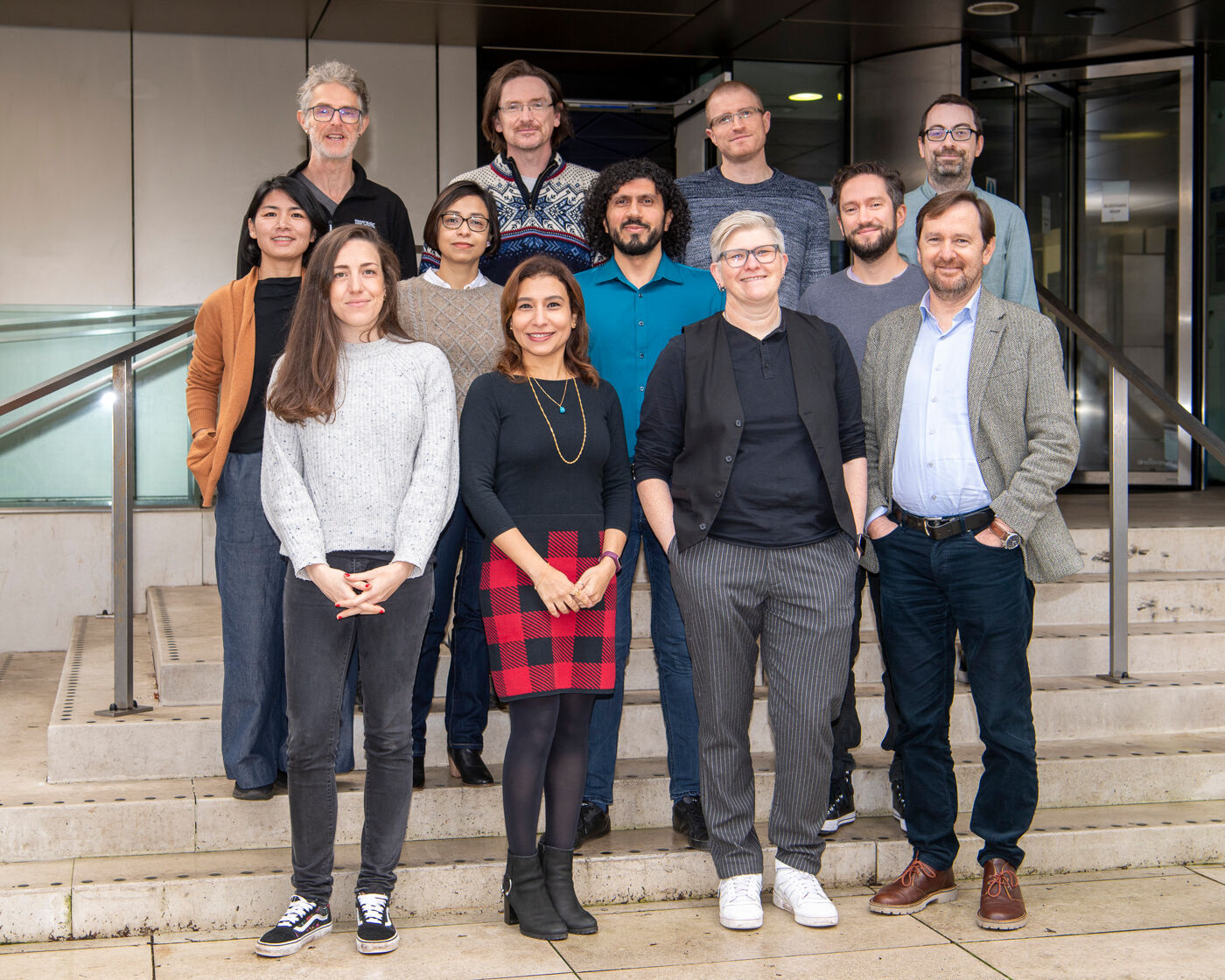
The Human Computer Interaction research section is known as GIST (Glasgow Interactive SysTems). In our research, we create and use novel, interactive systems to better understand, entertain, protect, and support humans in their everyday lives. GIST is a research section made up of several research groups, including:
- Animal-Computer Interaction (led by Ilyena Hirskyj-Douglas)
- Behavioural AI (led by Marwa Mahmoud)
- HIWA: Human Interactions With ArtificIal intelligence (led by Simone Stumpf)
- MIG: Multimodal Interaction Group (led by Stephen Brewster)
- Care Computing Group (led by Xianghua (Sharon) Ding).
- Future Immersive Interaction Group (led by Julie Williamson)
- Social AI (led by Alessandro Vinciarelli)
- SIRIUS: Secure and prIvacy RespectIng Ubiquitous Systems (led by Mohamed Khamis)
- Social Robotics and Social Signal Processing (led by Mary Ellen Foster and Alessandro Vinciarelli)
- SUMgroup: Social, Ubiquitous, Mobile (led by Matthew Chalmers)
A lot of the research we undertake is collaborative and interdisciplinary. We work closely with other groups in Computing Science and other schools, including Psychology and the Institute of Health and Wellbeing. We also work closely with other world-leading Universities and many private and public sector organisations.


RESEARCH GROUPS IN GIST
Animal-Computer Interaction Group
The ACI group is led by Ilyena Hirskyj-Douglas. Find out more about our research exploring the design of technology tailored for animal usage.
Behavioural-AI Lab
The Behavioural AI lab is led by Marwa Mahmoud. Find out more about our research into multimodal behavioural modelling combining visual AI and multimodal perception.
Human Interactions With Artificial Intelligence Group
The HIWA group is led by Simone Stumpf. Find out more about the group's research here.
Multimodal Interaction Group
The MIG group is led by Stephen Brewster. Find out more about our research into audio and haptic feedback, gesture and pressure input, accessibility, mobility, in-car and in-home interfaces, extended reality, novel interaction techniques, and more!
Care Computing Group
The Care Computing Group is led by Xianghua (Sharon) Ding. Find out more about our research on interactive and collaborative computing to empower people, transform care, and enhance wellbeing.
Future Immersion Interaction Group
The Future Immersion Interaction Group is led by Julie Williamson. Find out more about our research focus on the social future of extended reality and immersive technologies.
Social AI Group
The Social AI group is made up of many academics. Find out more about our research into AI technologies for detecting, interpreting, and generating human-centric social and emotional phenomena.
Secure and Privacy RespectIng Ubiquitous Systems Lab
The SIRIUS Lab is led by Mohamed Khamis.
Find out more about our research into secure and privacy respectIng ubiquitous systems.
Social Robotics and Social Signal Processing
Social Robotics and Social Signal Processing is led by Mary Ellen Foster and Alessandro Vinciarelli. Find out more about this research area here!
Social, Ubiquitous, Mobile group
The SUMgroup is led by Matthew Chalmers. Find out more about the research here!