

From Bad Apples to Safer Systems: Preventing Professional Misconduct and Sexual Harm in Health and Social Care
Published: 2 September 2026
Professor Rosalind Searle’s research examines why professional misconduct and sexual harm take root in health and social care, and how changes to workplace culture, reporting and regulation can prevent harm and better support those affected.



Moving beyond the ‘bad apple’
Since 2017, Professor Rosalind Searle has led a programme examining professional misconduct and sexual harm in health and social care. The work asks not only why harmful behaviour occurs, but also how workplace culture, organisational structures and regulatory systems can allow it to develop and continue
Professional misconduct in health and social care causes serious harm to individuals, workplaces and the wider systems on which patients and professionals depend. Yet responses have often focused on identifying and removing a problematic individual, the ‘bad apple’, without asking why the behaviour developed or continued.
Professor Rosalind Searle’s research shows why that is not enough. Misconduct is shaped not only by individual behaviour but by the workplace around it. High-pressure environments, steep hierarchies and cultures in which speaking up carries personal or professional risk can create conditions in which harmful behaviour is normalised, repeated or left unchallenged.
The programme examines these conditions across health and social care, with a particular focus on sexual harassment and abuse. It brings together research on perpetrators, workplace culture, reporting, regulation and the experiences of people who have been harmed.
Understanding how harm becomes embedded
Three findings run through the research.
First, workplaces can weaken the safeguards that normally help people regulate their behaviour. Extreme competition, pressure and unequal power can increase the risk of misconduct and make intervention more difficult.
Second, people who perpetrate harm may minimise or rationalise their actions: denying that harm occurred, blaming the person targeted or using their professional status and contribution to justify their behaviour without other challenging their actions. When others fail to challenge, poor practice can become normalised across teams.
Third, reporting is not simply a matter of whether an individual chooses to speak up. Organisational culture, professional hierarchies and the design of formal processes all shape whether people feel able to report and what happens when they do. The programme’s work on ‘harm chains’ examines how processes intended to resolve misconduct can sometimes create further distress or vulnerability.
Making hidden experiences visible
Recent work has developed the ‘Lateral View X-ray’ theory to explain why people working in the same organisation can have very different perceptions of sexual misconduct.
Like an X-ray taken from a different angle, changing perspective can reveal something that was previously hidden. Those with greater power or less direct exposure to misconduct may see little evidence of a problem, while those who experience or witness it encounter a very different workplace.
Understanding these different vantage points can help organisations recognise hidden patterns of behaviour and challenge assumptions about workplace culture.
From evidence to prevention
The programme moves beyond documenting harm to identify where prevention can happen. Drawing on a public-health approach, it considers action at several levels: changing workplace norms, reducing vulnerability, recognising problems earlier, improving investigation and reporting processes, and supporting people after harm has occurred.
This work has been developed with people affected by misconduct alongside regulators, Royal Colleges, NHS organisations, professional bodies, legal representatives and policymakers.
Its findings have contributed to national conversations about sexual misconduct in healthcare and informed practical resources including professional guidance, policy development, training and freely available prevention animations. The research has also contributed to wider work in surgery to improve workplace culture, reporting and support.
By shifting attention from isolated ‘bad apples’ to the systems in which misconduct occurs, the programme gives organisations a stronger basis for prevention and for creating workplaces where people can raise concerns safely and be taken seriously.
For further information, please contact business-school-research@glasgow.ac.uk
First published: 2 September 2026
Related links
- Professor Rosalind Searle
- Professional Standards Authority (PSA)
- NHS health service employers
- Royal College of Surgeons of England
- Royal College of Surgeons of Edinburgh
- Royal College of Physicians and Surgeons of Glasgow
- Statutory health and social care regulators (all 13 UK)
- NHS Resolution
- Department of Health and Social Care / NHS England (Domestic and Sexual Violence Working Party)
- Health and social care users and patient groups
- Legal representatives
- HR practitioners and CIPD
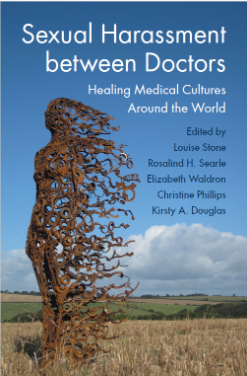
- Book - "Sexual Harassment and Abuse of Doctors by Doctors: Healing Medical Culture Across the World" (2026)
- Report - "Sexual Misconduct in Health and Social Care: Understanding Types of Abuse and Perpetrators' Moral Mindsets. (2019)
- Report - "Bad Apples? Bad Barrels? Or Bad Cellars? Professional Standards Authority"
- Research Paper - "Sexual harassment, sexual assault and rape by colleagues in the surgical workforce" (2023)
- Research Paper - "Social, cultural & structural factors in reporting: a paradigmatic case study" (2025)
- Research Paper - "Seeing the unseen: a theory of sexual misconduct perception in the surgical workplace" (2026)
- Research Paper - "Iatrogenic injustice: an institutional ethnography of Fitness to Practise hearings" (2025)
- Animation - "Facts & Myths"
- Animation - Who is Affected?
- Animation - Return to Work
- Model policy - "MODEL Sexual Harassment Prevention and Action Policy. Engender" (2022)