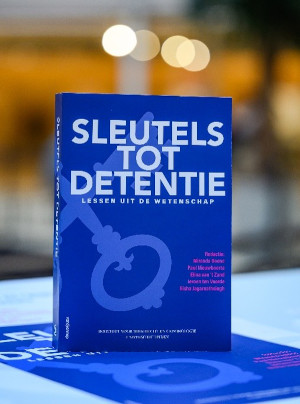
Prof Miranda Boone of Leiden University and one of the Lead Researchers for the RaRiE Project co-authored "Keys to Detention: Lessons from Science".
Published: 21 October 2026
Ulla Coumans researcher at Leiden University provides a short blog on the event which was held at Dome Prison in Haarlem, Arnhem, Netherlands.
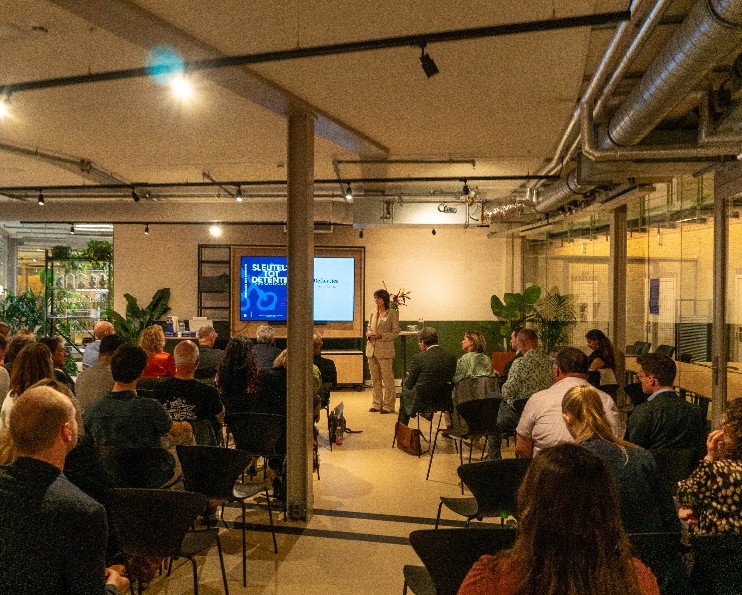
Last Friday, I attended the book launch event of Keys to Detention: Lessons from Science, co-authored by Miranda Boone, one of the lead researchers on the RaRiE project. The event took place at the Dome Prison in Haarlem, which has been closed as a prison since 2016.
The day began with a plenary session during which the Dutch State Secretary for Justice and Security accepted the first copy of the book and emphasized the importance of linking academic research, policy and practice. She stressed the need to improve public understanding of the realities of punishment, particularly considering the current discrepancy between public perceptions of detention and actual realities.
The plenary session was followed by parallel sessions featuring presentations by researchers, each in individual prison cells. Various topics were closely linked to key issues addressed by the RaRiE project. Presentations by researchers, including Jan de Keijser, Hilde Wermink (also a co-investigator within RaRiE) and Miranda Boone, explored the central question of what we aim to achieve through detention. Although ‘tougher sentencing’ has become a hot topic in politics in recent decades, the presentations pointed out that harsher sentences do not automatically lead to lower recidivism rates. For instance, Hilde presented evidence that community service orders are more effective than prison sentences in reducing recidivism among otherwise comparable individuals; perhaps because they are less detrimental for socioeconomic integration and may help maintain connections with society and social networks. Miranda Boone highlighted the potential of the use of home detention as way of implementing prison sentences. But she stressed the importance of legal safeguards to ensure that it is imposed only as a substitute for detention, and not on individuals who would otherwise have received a lighter sentence.
The day concluded with a plenary session during which Jessica Westerik, a board member of the Dutch Probation Service and a member of the Advisory Board of the RaRiE project, highlighted the importance of creating a sense of belonging for successful reintegration: “Exclusion makes survival more difficult; belonging somewhere means having something to lose. (…) You can ask someone to participate again in society, but then there must be a place for that person.” She illustrated how belonging and reintegration are interdependent, and how we, as society, play a key role in this process.
Piet Broenland, expertise coordinator at the Salvation Army, emphasized the need to include lived experiences in research and policymaking: “Don’t simply create policy about people, but together with those who have experienced its consequences.”
Overall, it was an insightful and meaningful day, centered on linking academic research, policy and practice. The discussions highlighted the importance of bridging the gap between public perceptions and scientific evidence regarding punishment and rehabilitation. By learning from and sharing the lived experiences both of those implementing rehabilitative measures and of those subject to them, the RaRiE project aims to contribute to a better understanding of how rehabilitation works in practice and how policies affect people’s lives during and after a sentence.
Photo credits: Studio Arash
Keys to Detention: Lessons from Science
The book "Keys to Detention: Lessons from Science" by researchers at the Institute of Criminal Law and Criminology in the Netherlands offers practical lessons for policymakers, the judiciary, and the public. It addresses the Dutch prison system's challenges, such as staff shortages and capacity problems, and emphasizes the importance of scientific knowledge in shaping detention policies. The book includes recommendations for a more restrained use of pre-trial detention, community service as a form of punishment, long-term prison capacity planning, and improved healthcare in detention. It also covers visitation arrangements, fatherhood in detention, forensic care, immigration detention, housing, and debt after release, as well as reducing reliance on Certificates of Conduct (VOGs). The book aims to contribute to a better-informed debate about the future of detention in the Netherlands.
First published: 21 October 2026
<< News