Starting Two Journeys: How preparing for Motherhood has made me think differently about rehabilitation
Published: 24 July 2026
As RaRiE Research Associate Fern Gillon prepares for two significant life transitions, beginning work on the RaRiE project and becoming a first-time parent, she reflects on the shared themes of identity, change and uncertainty that connect motherhood and rehabilitation.
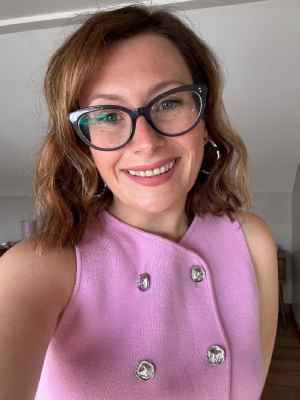
Fern Gillon, RaRiE Research Associate, University of Glasgow
It’s all go here! As I prepared to join the RaRiE project, I was also preparing for maternity leave and becoming a first-time parent, and that maternity leave is already upon me. At first glance, these two journeys seem pretty unrelated. But you catch me thinking about how both provide an opportunity to reflect on themes of identity, uncertainty and change.
Motherhood is often spoken about as though identity changes overnight -- ‘oh well that’s you for the next 18 years’ -- ‘this is you now’ -- ‘everything is going to change when the wee one arrives’. But of course, we know motherhood is something much more gradual and uncertain.
Similarly rehabilitation is often, unhelpfully, framed as a linear process: there’s some intervention, a resultant change and then a period of reintegration. Again, we know the process to be much more complex, as people’s identities are shaped over time. Neither experience is something that just ‘happens’. Both are ongoing processes of change between who we have been, who we are becoming and how others respond to us.
The first stage in RaRiE (the bit I’ll be away for!) involves the complex task of trying to measures the scale and shape of rehabilitation in each jurisdiction, using the 6-forms model as a framework. Motherhood is similar. Sure, you can count feeds or nappy changes, but what about the emotional labour, the stability and nurturing you are trying to provide? In rehabilitative terms, we can measure programme completion, rates of further offending, or contact with services. But what about feeling accepted, finding hope and belonging, reconnecting with family and so on?
When I was preparing for my RaRiE interview, I actually returned to my roots in Feminist Economics and specifically the work of Marilyn Waring (taught to me by the wonderful late Ailsa McKay), perhaps subconsciously influenced by the little human growing inside. It made me reflect on how systems of measurement shape our understanding of the world. If we only measure what is easily visible, we risk overlooking the relationships, care and community which often make change possible. Using the 6-forms model and our innovative method of Dialogical Comparative Penology, the project aims to understand and critique rehabilitation in richer and more holistic ways.
As I begin one journey, and hit pause on another, I reflect that some of life’s biggest transitions go beyond simple measurement and explanation. They are uncertain, relational and shaped by the people and the world around us. I’m looking forward to rejoining the RaRiE team after maternity leave to contribute to diverse conversations about how we engage with, understand and reimagine rehabilitation.
First published: 24 July 2026
<< News