


RaRiE goes to Warsaw
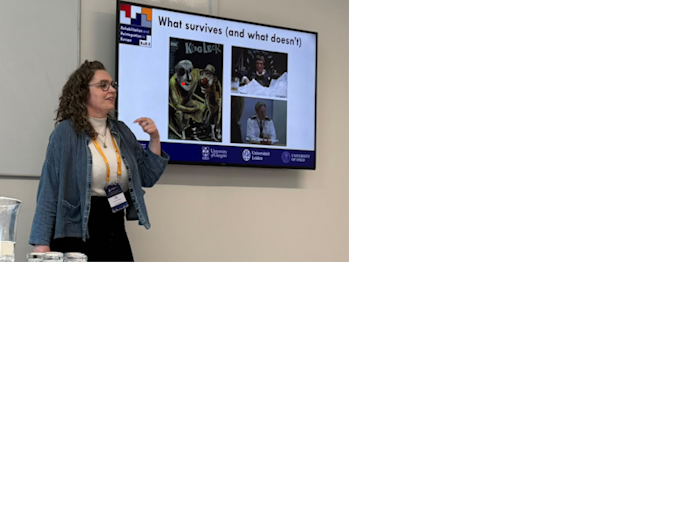
This week will find members of the RaRiE team sharing some of the ‘first fruits’ of our labour. We’ll be at the European Society of Criminology’s annual conference, this year hosted by the University of Warsaw.
The University of Glasgow uses cookies for analytics. Find out more about our Privacy policy.
Necessary cookies enable core functionality. The website cannot function properly without these cookies, and can only be disabled by changing your browser preferences.
Analytical cookies help us improve our website. We use Google Analytics. All data is anonymised.
Clarity helps us to understand our users’ behaviour by visually representing their clicks, taps and scrolling. All data is anonymised.
Until recently, the study of penal systems has focused mainly on their most severe or repressive features (like imprisonment or the death penalty). However, there is now much evidence that these systems often do great harm even when aiming to do good, not least by expanding the scale, reach and intensity of penal control.
By examining evidence from three countries that are often considered to have relatively ‘progressive’ penal systems and approaches (the Netherlands, Norway and Scotland), the RaRiE project aims to help better understand whether and where rehabilitation lives up to its ideals, and to creatively, critically and comparatively interrogate its development and prospects, its coherences and contradictions, its rhetoric and its realities, its pitfalls and its possibilities.
Wed, 30 Sep 2026 10:13:00 BST
Dr Amy Cullen, University of Glasgow, reflects on the team's presentations at EuroCrim 2026
