

Professor Sandosh Padmanabhan
Pontecorvo Chair of Pharmacogenomics, School of Cardiovascular & Metabolic Health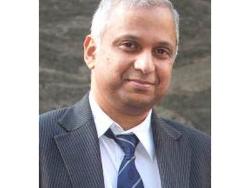
We asked Professor Padmanabhan to answer a few questions about his background with data science and AI and his hopes for the future of the Centre for Data Science & AI.
Can you tell us about your background in Data Science and AI, and how your experiences have shaped your approach to the programme you'll be directing?
I have a strong background in data science, AI, and health informatics, with a focus on applying these methodologies to cardiovascular genomics, pharmacogenomics, and precision medicine. My expertise spans genomics, clinical trials, and population health research, integrating AI for risk stratification, drug-gene interaction modelling, and digital biomarkers. I have led the development of Trusted Research Environments (TREs) to enable AI-driven research while ensuring robust data governance. My experience across academia, the NHS, regulatory bodies, and industry has given me a broad perspective on embedding AI into healthcare. My approach to directing the AI in Health and Life Sciences programme will emphasize real-world impact, data-centric innovation, interdisciplinary collaboration, and workforce development to advance AI adoption in biomedical research and clinical practice.
What are your key goals and aspirations for the programme you're leading, and what do you hope and/or envision the Centre's impact on the wider University will be?
My goal is to establish the University of Glasgow as a leader in AI-driven biomedical research and healthcare innovation by creating an ecosystem where AI, data science, and health research converge to enhance patient care, accelerate discovery, and drive economic growth. A key priority is developing AI and health data science training programmes for clinicians, researchers, and students while promoting responsible AI adoption in healthcare. This programme will enhance Glasgow’s leadership in national AI healthcare initiatives, foster interdisciplinary AI research across medicine, veterinary, and life sciences, and strengthen connections with engineering, computer science and other disciplines to broaden AI’s impact beyond healthcare. Ultimately, it will establish the University as a global hub for AI-driven biomedical innovation and precision medicine.