

AlphaFold Database adds viral protein complexes for the first time, to support pandemic preparedness
Published: 9 October 2026
Centre for Virus Research collaborates on groundbreaking work creating open-access AI-generated predictions of protein structures.
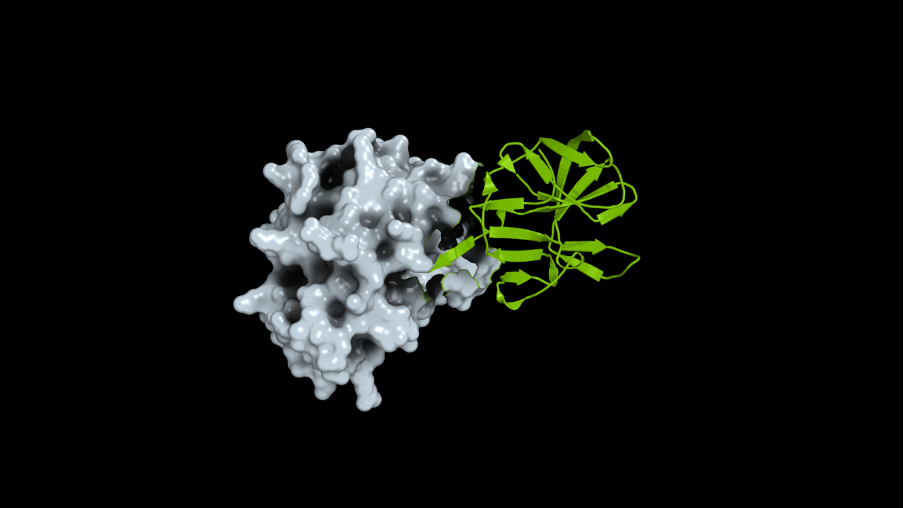
Over five years ago, Google DeepMind partnered with EMBL’s European Bioinformatics Institute to create the AlphaFold Database, giving scientists around the world open access to more than 260 million predicted protein and protein complex structures.
However, until recent collaborations with the Centre for Virus Research, the protein structures of viruses had not been represented.
In February 2026, researchers at the CVR began by integrating their Viro3D database with AlphaFold. Now AlphaFold has been further expanded to include viral protein complexes - networks of proteins that latch onto and invade human cells - and more thorough coverage across the range of viruses that infect humans.
The database now includes the AI-predicted protein structures of over 2,800 viruses – and includes proteomes from key viral families known to infect humans, including those that cause mpox, measles and hepatitis B. All of this expanded data has now been made freely available though the new Pandemic Preparedness Portal.
The major announcement follows an international collaborative effort across data, AI and bioinformatics, with virology expertise from the Centre for Virus Research.
The response to future viral pandemic threats will be a race against time. Scientists globally will need to design vaccines to suppress viruses that may be new to our understanding, before they cause a pandemic. Predictions of previously unknown viral protein structures will accelerate their work straight off the starting block.
When the next pandemic happens, there may be something that comes out of the blue, and we’ll be lacking the knowledge we had for COVID.
What we’re trying to do is stockpile some of that knowledge ahead of time.”
Joe Grove, professor of molecular virology at the CVR and a collaborator on the project.
All of this was made possible by an international collaboration between EMBL’s European Bioinformatics Institute (EMBL-EBI), NVIDIA, Google DeepMind, the MRC Centre for Virus Research at the University of Glasgow, Seoul National University, the Swiss Institute of Bioinformatics (SIB), the Coalition for Epidemic Preparedness Innovations (CEPI), and Sungkyunkwan University (SKKU) in South Korea.
“Our ambition with the AlphaFold Database has always been to democratize access to foundational biology at scale,” said Risha Patel, life sciences partnerships manager at Google DeepMind. “This collaboration to bring thousands of viral complexes into the database will equip scientists around the world with insights they need to help prepare for future outbreaks.”
Researchers worked together to co-develop a large-scale prediction workflow leveraging accelerated software - including optimizations from NVIDIA BioNeMo Inference Runtime - and computed a curated set of viral proteomes, benchmarking models and tools to reach high throughput and accuracy (1).
Then, the generated data was carefully analysed to discover new hypotheses, and the predicted structures released through the AlphaFold Database. This analysis, led by Joe Grove at the CVR and virologists at the Swiss Institue of Bioinformatics ensures that the new dataset is fit for its purpose: supporting virologists to develop vaccines and other countermeasures if a viral outbreak were to occur.
Viruses rely on a complex network of proteins to latch onto and invade human cells. Visualising the 3D structure of these proteins and the way they interact with host cells and antibodies can reveal the regions on a virus’s surface that are key targets for diagnostics and vaccines.
“When I did my Ph.D., there were no structures for any of the proteins we were investigating. It was like working in the dark — we had to guess what was going on,” said Grove. “This dataset is a powerful tool for all the researchers doing their Ph.D.s now, giving them high-quality structural data that’s going to accelerate fundamental science.”

The dataset launch was part of a Roundtable Event on AI in Global Health Security, attended by project representatives NVIDA, Google DeepMind and the CVR. The release coincided with the United Nation’s General Assembly High-level Meeting on Pandemic Prevention, Preparedness and Response, that took place on 25 September at the UN headquarters in New York (2).
The meeting reviewed progress towards commitments made in 2023 to strengthen global pandemic preparedness.
Jens Bosse, a virologist at the Centre for Structural Systems Biology in Hamburg, Germany, says that the new database will be key to this work. “Making these predictions openly available is a major step forward for virology.”
References:
- Han and Narain et al. Preprint at bioRxiv https://www.biorxiv.org/content/10.64898/2026.09.29.755321v1 (2026).
- World Health Organisation. Second United Nations General Assembly High‑Level Meeting on Pandemic Prevention, Preparedness and Response
https://www.who.int/news-room/events/detail/2026/09/25/default-calendar/second-united-nations-general-assembly-high-level-meeting-on-pandemic-prevention-preparedness-and-response
First published: 9 October 2026
<< News