

University of Glasgow to lead major initiative to enhance preparedness for mosquito and midge-borne diseases in the UK
Published: 9 October 2026
Building on the successful foundation of the recent UKRI-funded Mosquito Scotland project, researchers at the University of Glasgow have secured funding for a major new initiative focused on mosquito and midge-borne diseases in the UK
Mosquito Scotland project, researchers at the University of Glasgow have secured funding for a major new initiative focused on mosquito and midge-borne diseases in the UK.
The new four-year programme, PAMEC (Preparing for and mitigating the impacts of environmental change on Dipteran-borne disease in the UK), is funded with £3.75m by UKRI as part of a £20m interdisciplinary research fund to tackle epidemic threats.
Led by Professor Heather Ferguson, Professor of Medical Entomology and Infectious Disease Ecology at the University of Glasgow and Dr Emilie Pondeville, from the MRC-University of Glasgow Centre for Virus Research, the new interdisciplinary One Health research programme will focus on identifying emerging risks from mosquito and midge-borne diseases across the UK, with the aim of guiding national preparedness.
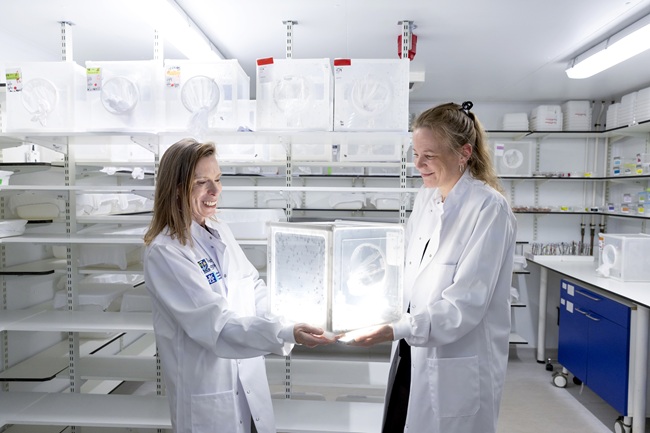
The PAMEC programme will be carried out in collaboration with the UK Health Security Agency, the UK Centre for Ecology and Hydrology and SRUC, and builds on results from the Mosquito Scotland project: the first comprehensive investigation of mosquito and mosquito-borne disease risk across Scotland, with a focus on emerging diseases that can be spread to humans and wildlife from infected bird populations.
Professor Heather Ferguson said: “We’re delighted to continue our work to assess risks of vector‑borne diseases in the UK, and grateful to our partners, collaborators, and the public for supporting the Mosquito Scotland project. This has laid the foundation for the next phase through PAMEC.”
While traditionally considered to present risk to human and animal health mostly in the tropics, climate and other environmental changes are driving the expansion of many insect-borne diseases into Northern Europe including the UK. Historically this area of research has been neglected in the UK, and particularly in Scotland despite the presence of multiple native mosquito species that can transmit emerging diseases and some of the highest reported densities of biting midges in the world.
In 2025, Mosquito Scotland researchers supported the Scottish Government’s response in the first detection of Usutu virus in Scotland. Usutu is an emerging zoonotic disease that has been linked to Blackbird declines in the UK. While Usutu is not considered to present a public health risk, it is considered a potential precursor to the arrival of West Nile Virus, another emerging mosquito-borne disease that can be spread to people from birds.
In addition to risks from mosquitoes, there have also been several outbreaks of midge-borne diseases such as Blue Tongue, and Schmallenberg virus over the last two decades, causing substantial losses to the UK livestock sector. Whilst Blue Tongue Virus has previously only been found in England, it was just recently report in Scotland for the first time in September 2026. This coincided with another new finding, this time the detection of the mosquito Aedes aegypti, responsible for the transmission of Dengue and other arboviruses in the tropics, in a neighbourhood in east London.
However, at present there is still relatively limited knowledge about the ecology of midge and mosquito vectors across the UK.; including their capacity to transmit established and emerging pathogens, risk factors for human and animal exposure, and which of available control strategies will be most effective. Working together with SRUC, UKCEH, UKHSA and industrial partner APS Biocontrol, these and other crucial gaps will be addressed through the PAMEC programme.
Dr Emilie Pondeville said: “Taking a One Health, multi-disciplinary approach we will bring insights from cutting-edge lab work alongside data from field work carried out by our team of researchers in locations across the UK. Together this information will help inform new mathematical models that should enable us to better understand the current and future risks we face, as well as how to best prepare for any emerging vector-borne diseases in the UK.”
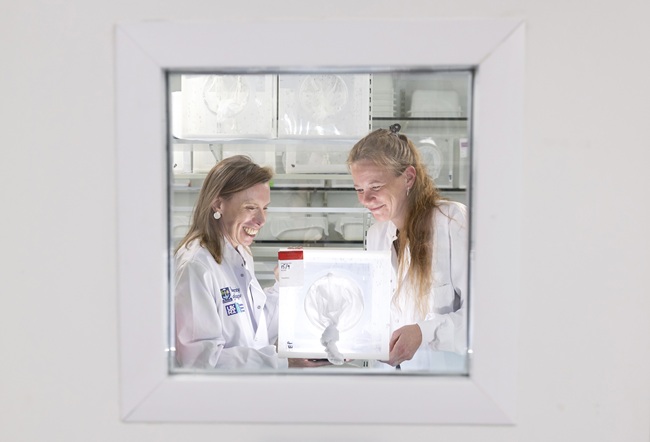
The project will first seek to address key knowledge gaps on midge and mosquito ecology, which will help predict how vector-borne disease will respond to environmental change and interventions. The team will then develop innovative approaches for detecting emerging diseases in midge and mosquito populations in the UK, while also assessing the same populations for the ability to carry high-risk diseases as the climate changes.
The research team will also focus on building an understanding of sociological and environmental risk factors for human and animal exposure to midge and mosquito populations, as well as assessing risk awareness and potential mitigation options amongst highly exposed communities.
Finally, teams will integrate biological, environmental and sociological data into statistical and mathematical models to improve disease prediction and help inform robust response strategies.
Professor Ferguson added: “In this project, we will work together with citizen scientists and public partners in the farming sector, public and animal health agencies and other government bodies and environmental NGOs. By strengthening the UK’s capacity to identify, limit and respond to vector-borne diseases, our project will directly benefit human, livestock and wildlife health.”
The research team will work with stakeholders in the UK and Scottish governments and project partners Public Health Scotland, the Wildfowl and Wetland Trust; the Scottish Society for the Prevention and Cruelty to Animals; the French Agency for Food, Environmental and Occupational Health and Safety; Queen's University Belfast; the Royal Zoological Society of Scotland; Animal and Plant Health Agency (APHA); The Pirbright Institute; and the Centre for Expertise in Animal Disease Outbreaks.
Dr Kate Lamont from SRUC said: “We are looking forward to working with individuals and groups who are most likely to be exposed to risk of disease from midge and mosquito bites, including people who are unaware of this risk currently and farmers who are increasingly aware as they hear of livestock diseases such as Bluetongue. We are keen to explore what findings from the project mean at local community and individual farm level and to work with people to consider together what practical steps can be taken to reduce risk.”
Professor Dominic Mellor, Consultant in Veterinary Public Health at Public Health Scotland, said: "Environmental changes are increasing the potential for mosquito and midge-borne diseases to emerge in the UK, therefore it's important that we strengthen our understanding, surveillance and preparedness. Public Health Scotland is pleased to participate in the crucial work of the PAMEC project, building on the partnerships developed through Mosquito Scotland, to improve how emerging vector-borne threats are identified, assessed and communicated to help protect public health.”
Members of the UK public are encouraged to support this research by letting the team know when and where they see mosquitoes, and if they get bitten. They can do so by submitting a report either via the Mosquito Scotland (for sightings in Scotland - https://www.mosquito-scotland.com/) of the UK Health Security Agency 'Mosquito Watch' site (all of UK, https://www.gov.uk/guidance/mosquitoes-how-to-report).
Enquiries: ali.howard@glasgow.ac.uk or elizabeth.mcmeekin@glasgow.ac.uk
First published: 9 October 2026