

Isle of Jura research casts new light on how rivers carve through landscapes
Published: 7 September 2026
The waters of the remote Scottish island of Jura have long been famous for making whisky. Now, the island’s rivers have helped geologists learn more about how rivers erode rocks, providing new evidence that what streams carry play an important role in how they carve through landscapes.
The waters of the remote Scottish island of Jura have long been famous for making whisky. Now, the island’s rivers have helped geologists learn more about how rivers erode rocks, providing new evidence that what streams carry play an important role in how they carve through landscapes.
A team of researchers led by the University of Glasgow used the unique geology of the island, which is home to around 250 people as a natural laboratory to show that hard rock fragments can act like sandpaper to scour softer bedrock when they are carried downstream.
Their findings suggest that the contrast between the hardness of the riverbed and the sediment which causes the erosion helps determine how quickly rivers wear down rocks.
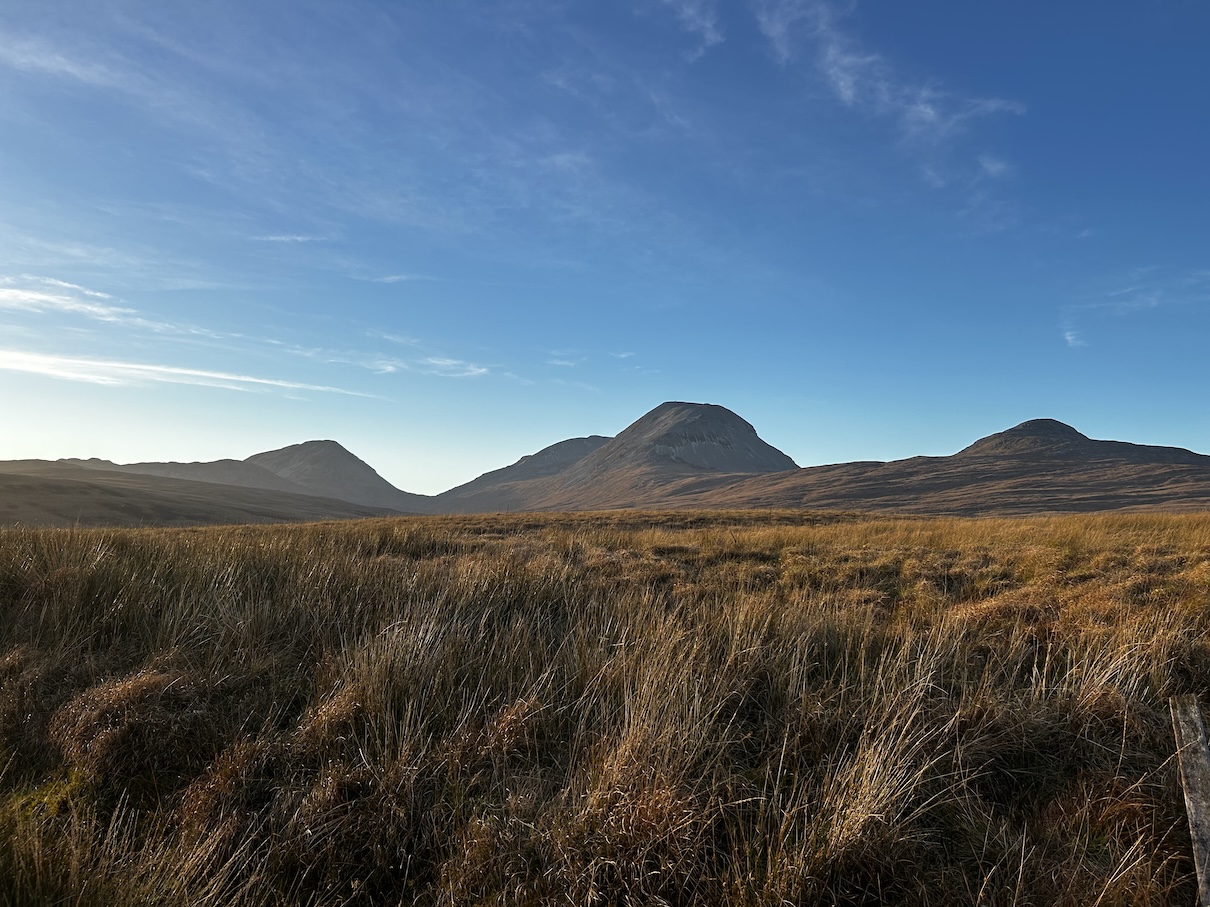
The research, published as a paper in the journal Earth Surface Processes and Landforms, could help geologists build a more complete picture of the complex interactions which govern fluvial erosion, the process by which water shapes land.
Better understanding the process of erosion helps geologists reconstruct how continents were changed by river flow in the past, and predict how climate change will impact landscapes in the future.
Around 13,600 years ago, as the last ice age ended, Jura’s land rose rapidly as the weight of the ice covering the landscape was reduced. The strain of the process caused drops in the land across Jura, creating small waterfalls called knickpoints in rivers across the island.
Waterfalls erode gradually as water wears away the rock lip of the waterfall un til it collapses. Over time, the waterfalls creep upstream against the flow of the river, giving geologists a way to measure how quickly it has eroded.
Dr Adam Smith, of the University of Glasgow’s School of Geographical & Earth Sciences, led the research and is the paper’s corresponding author. He said: “It’s natural to assume that hard rocks will take longer to erode than soft rocks. However, previous studies of rivers have shown that this isn’t always the case, and that differences in the strength of the rock and the bedload may cause unpredictable erosion. What the Isle of Jura has given us in this study is a fantastic opportunity to explore the role that sediments carried by rivers play in causing erosion.
“Jura’s bedrock rivers flow over Jura Quartzite, one of the hardest rocks found anywhere on Earth, and over a much softer band of slate called the Easdale Subgroup. Some rivers cross only the hard quartzite, while others run over the hard rock and then the soft slate. That set up a natural test of whether rock type really changes how a river erodes.”
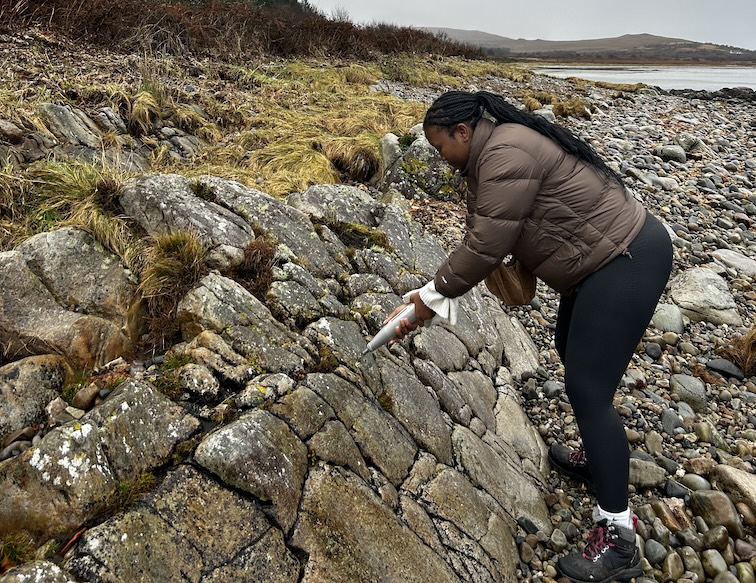
The team travelled to Jura to gather data on the rock across the island’s outcrops of exposed rocks using a tool called a Schmidt hammer. The tool measures the hardness of rock with a spring-loaded head that measures how far it rebounds when it hits a surface, with harder surfaces causing it to rebound further.
The researchers took 832 separate readings across 35 outcrops along Jura’s single road, providing them with a wealth of data about the relative hardnesses of the island’s rocks. Their data, which showed that the quartzite is around three times harder than the slate, enabled them to build a map of the strength of rocks across Jura.
Back in their labs, they used the data as the basis of three computer models of bedrock and sediment strength which simulated different scenarios for how the knickpoints might change in response to river flow since their formation.
One model was based on the assumption that the type of rock made no difference to erosion patterns. A second assumed harder rocks are always more difficult for rivers to erode than softer ones. The third took into account both the strength of the riverbed and the hardness of the sediment the river carried.
They compared the results of each model against the actual knickpoints on the island to find which simulation best fit how the landscape changed over time in the real world.
Dr Smith said: “What surprised us was that simply assigning different erosion rates to hard and soft rocks didn't improve the predictions. In fact, it performed slightly worse than assuming erosion rates were the same everywhere.
“What our modelling showed actually mattered was the difference in hardness between the sediment being carried by the river and the bedrock beneath it. In some cases, hard sediment moving over softer bedrock can increase erosion far beyond what we'd predict from the bedrock strength alone."
The researchers are careful not to overstate the effect. River erosion is dominated by two main factors: the amount of water flowing, which is driven by rainfall and the size of the area feeding the river, and the steepness of the channel. Rock hardness is a plays a smaller, but still significant, role.
At the scale geologists use to model whole landscapes, over tens to hundreds of kilometres, even a modest improvement in understanding and modelling rock hardness could enable valuable new research. The researchers say that current landscape-evolution models, which tend to treat hard and soft rock as separate blocks, can be blind to the mixing of different rocks moving through a river system.
As computing power grows, the researchers hope the additional nuance uncovered by their research could one day help inform the development of large-scale models and ‘digital twins’ of the planet’s geological processes.
Dr Smith said: "Scotland has a long history of making important contributions to geology. The country is home to some of the oldest rocks in the UK, and some of the earliest knowledge of geology came from here.
“Jura’s rugged, exposed terrain made this possible in a way it would not be in other places in the UK like the farmland-covered south of England. This research is the latest example of how the unique nature of country’s landscape has helped us produce new science.”
Researchers from University College London and the University of Southampton contributed to the research and co-authored the paper. The team’s paper, titled ‘How does lithology influence fluvial erodibility? A study of knickpoint retreat in small bedrock rivers on the Isle of Jura’, is published in Earth Surface Processes and Landforms.
First published: 7 September 2026